
First, I apologize for the year-long silence. As I'm in my final year of university, I spend most of my days chained to the lab. But don't worry—I've been steadily chipping away at this project in the background.
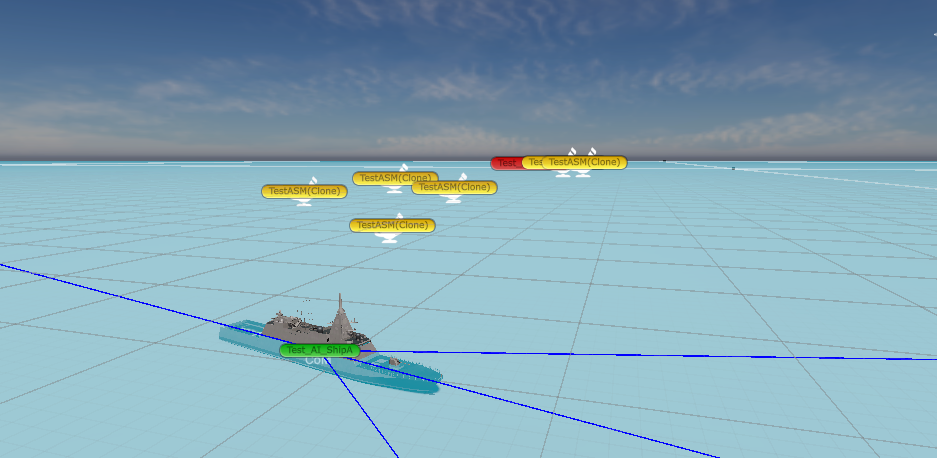
Most of my recent progress involves friendly and enemy AI. As you know, many games feature AI-controlled enemies or racing cars. But let's face it: those aren't real enemies. Their actual job is to hold out for a few minutes before gracefully losing. They aren't genuinely trying to beat you.
In military sims, however, balancing this handicap with realism is a constant struggle. For sim enthusiasts, realism is king. But if the AI attacked with the uncompromising ruthlessness of a real military, you'd have to restart the first tutorial 68 times just to beat it.
I didn't want to do that, so I started researching how to build optimal AI. I began with a simple Switch-case finite state machine, and later even dabbled with the infamous neural networks. Skipping a year's worth of trial and error to get straight to the point: I ended up combining multiple algorithms to model the entire naval kill chain.
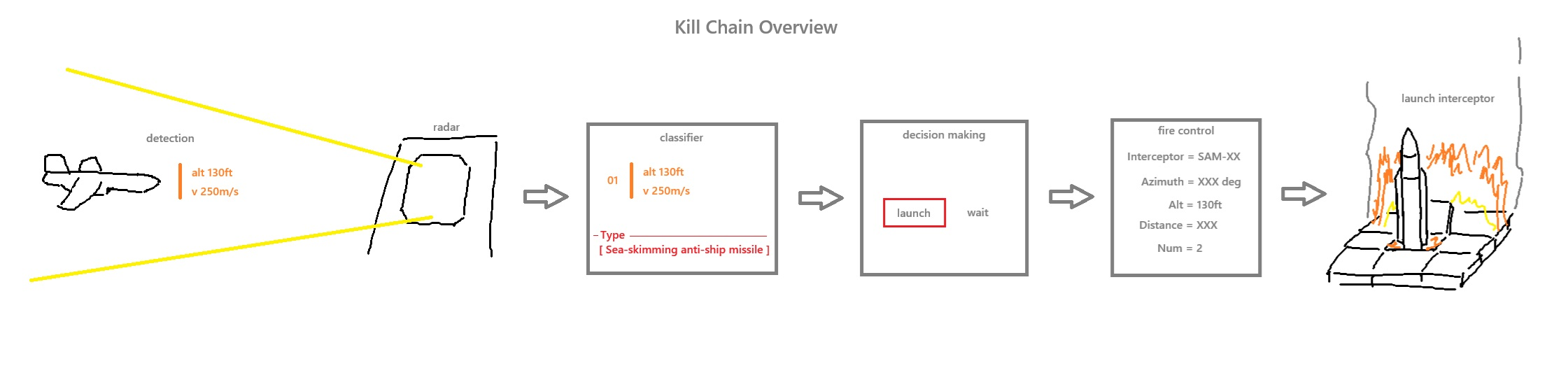
For example, the radar system uses a self-contained classifier to automatically identify whether a contact is a missile or an aircraft based solely on radar signatures and maneuvering patterns, without consulting any of the game's background data tables.
That might sound like over programming, but I wanted a human-like system that makes natural mistakes without relying on random number generators. This lets me build an AI that can be intentionally weak while maintaining realism.
You can see a prototype of the AI system in the video below. My AI ships can successfully navigate complex mazes and chaotic combat scenarios.
The only issue is that these AI systems are a bit too real. And realistic combat isn't always fun. Modern blue-water surface combat essentially boils down to two fleets exchanging massive salvos of missiles. Because modern air defense systems are so advanced, the only way to break through is by projecting enough firepower to deplete the enemy's interceptors. Assuming both sides have equal information, victory largely depends on weapon specs and sheer throw weight. Play that on repeat, and it gets boring fast. (And this is why there are so few games like the modern version of World of Warships.)
Of course, we're making a game about submarines, not surface ships, so we're not too worried about that right now. But we might need to make some intentional changes for game balance reasons.
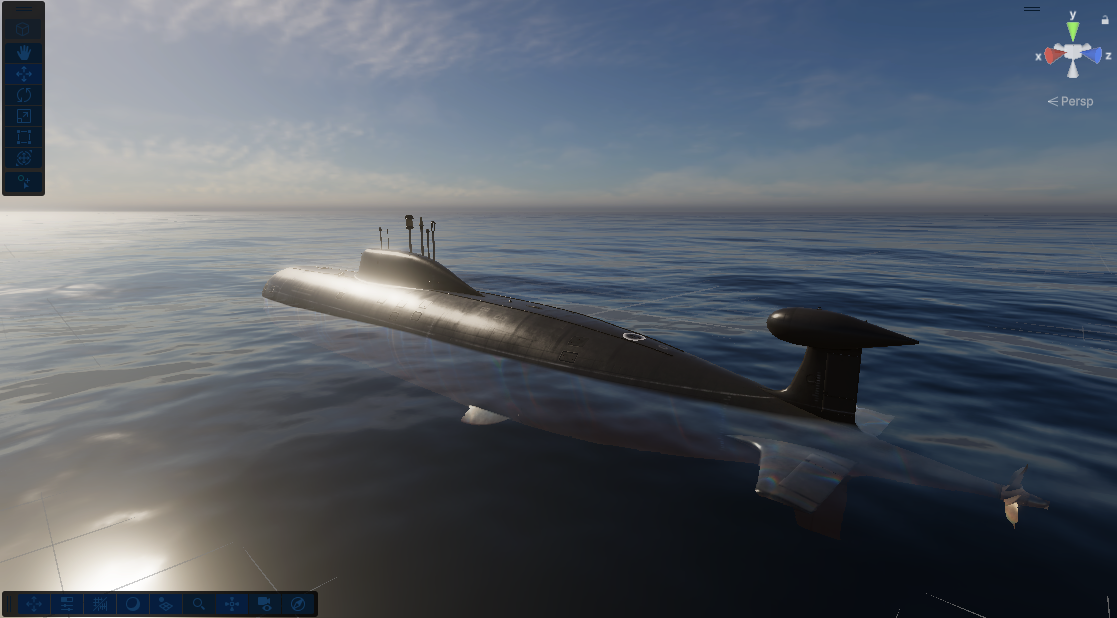
Either way, it will take a little more time before these prototypes are fully integrated and running in-game. I'm hoping to have something playable to show you by the end of 2026 at the latest. Until then, you can pass the time by watching the atomic nuclei in your kitchen bananas undergo beta decay!