
We already had a game we could, in theory, have released.
We chose to rebuild it from the ground up.
That decision deserves more than an explanation about foundations. It deserves work you can actually look at. So we have put together our biggest devlog yet: the earlier Mithrall, the cities taking shape, and the systems behind the weapons, maps, skies and persistence of the game we are building now.
Bring a coffee. There are ten films in the full article.
Read the complete devlog and watch all ten films
Want to help shape what comes next? Join the Mithrall playtest platform. We are looking for players who want to explore deeply, share honest feedback and stay involved. Internal and closed tests will come before a public opening.
The game before the rebuild
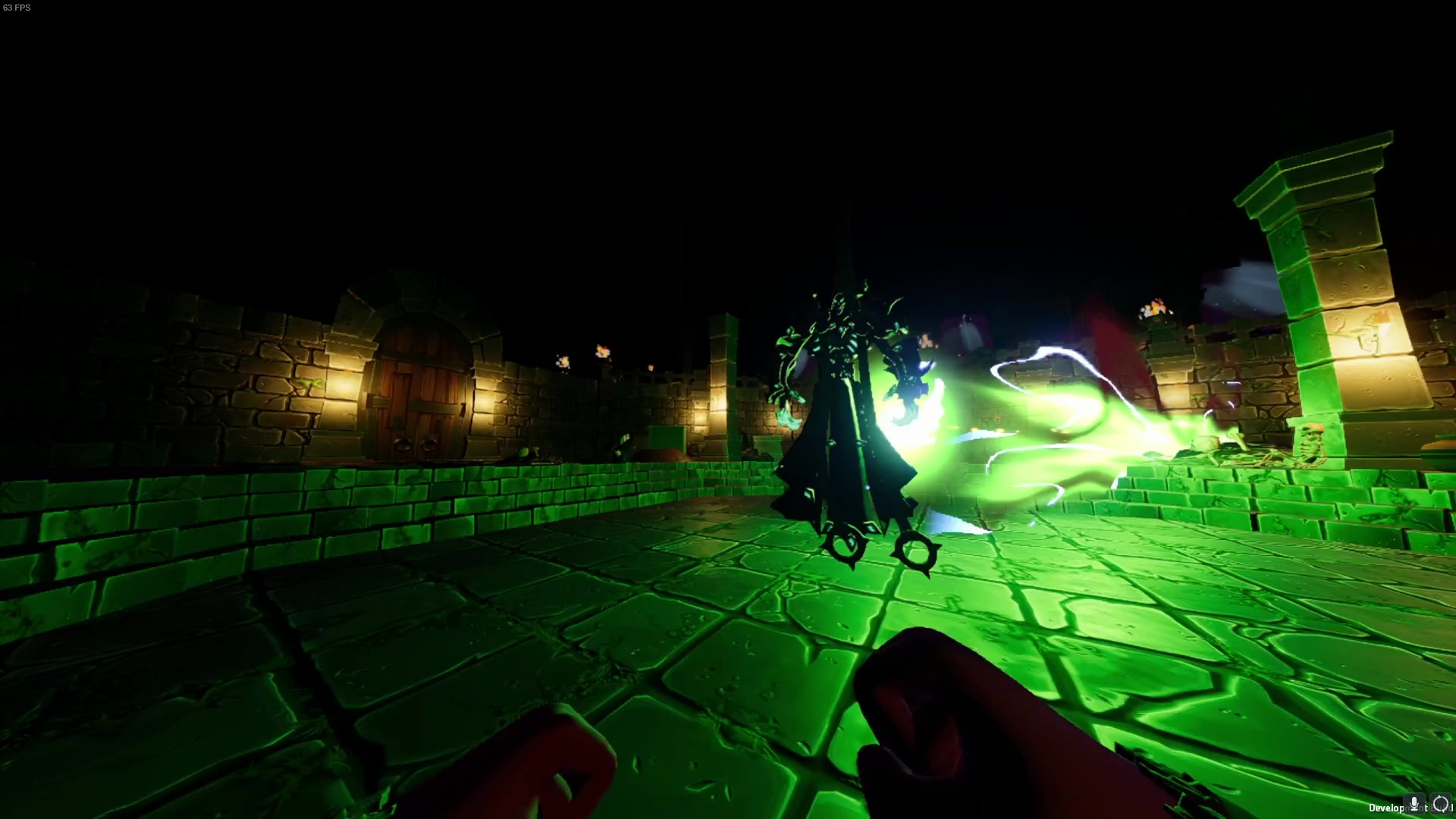
Earlier Mithrall, recorded in April 2024. The first-person view belongs to that version.
The old Mithrall was real. People played it. You could move through the world, gather resources, change the ground and start building a place of your own. Creatures occupied the forests. Equipment gave you something to work towards. Going underground with a sword could end badly.
Our new archive film, Before the Rebuild, brings those April 2024 recordings together. Watch the ordinary actions as well as the fights: an axe meeting a tree, a pickaxe working ore, building pieces fitting against a wall. The beginnings of a survival loop are there.
Showing this matters because we were choosing what kind of game we could stand behind. Releasing that version was theoretically possible. But we want to build and support a world people might give years of their lives to. You deserve our best effort, including the difficult work of questioning something we had already invested so much in.
That earlier work taught us a great deal. We carry the experience into the rebuild.
From an arsenal to weapons worth learning
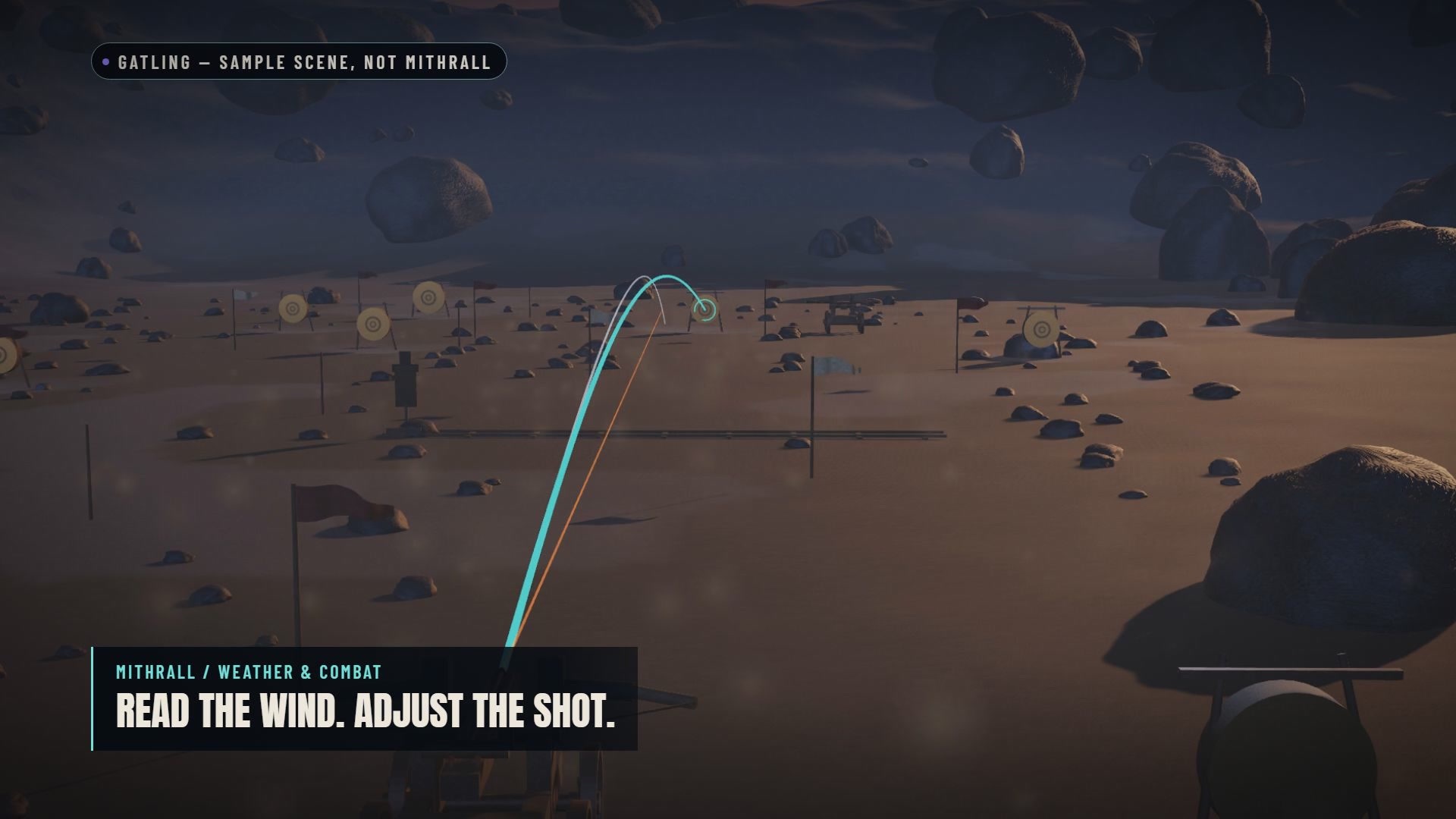
Gatling in a sample scene used to inspect and test projectile behaviour.
The concepts in our previous devlog showed the direction of Mithrall's arsenal. Gatling takes us into what happens after a projectile leaves a weapon.
The film demonstrates different ammunition, drop, zeroing, wind, penetration and ricochets. A bolt, an arrow and a siege stone can share a foundation while behaving differently. That gives us a way to test and tune those differences.
The ambition is for a shot to give you something to understand. Distance, trajectory, ammunition and the conditions before you fire should matter. A missed shot should help you make a better decision next time.
The film also includes a reference stress test. As with the other demonstrations in this article, a sample scene's results belong to that scene and its conditions. They help us inspect the tool; they are not a promise about the finished MMO's performance.
A map that belongs to the world
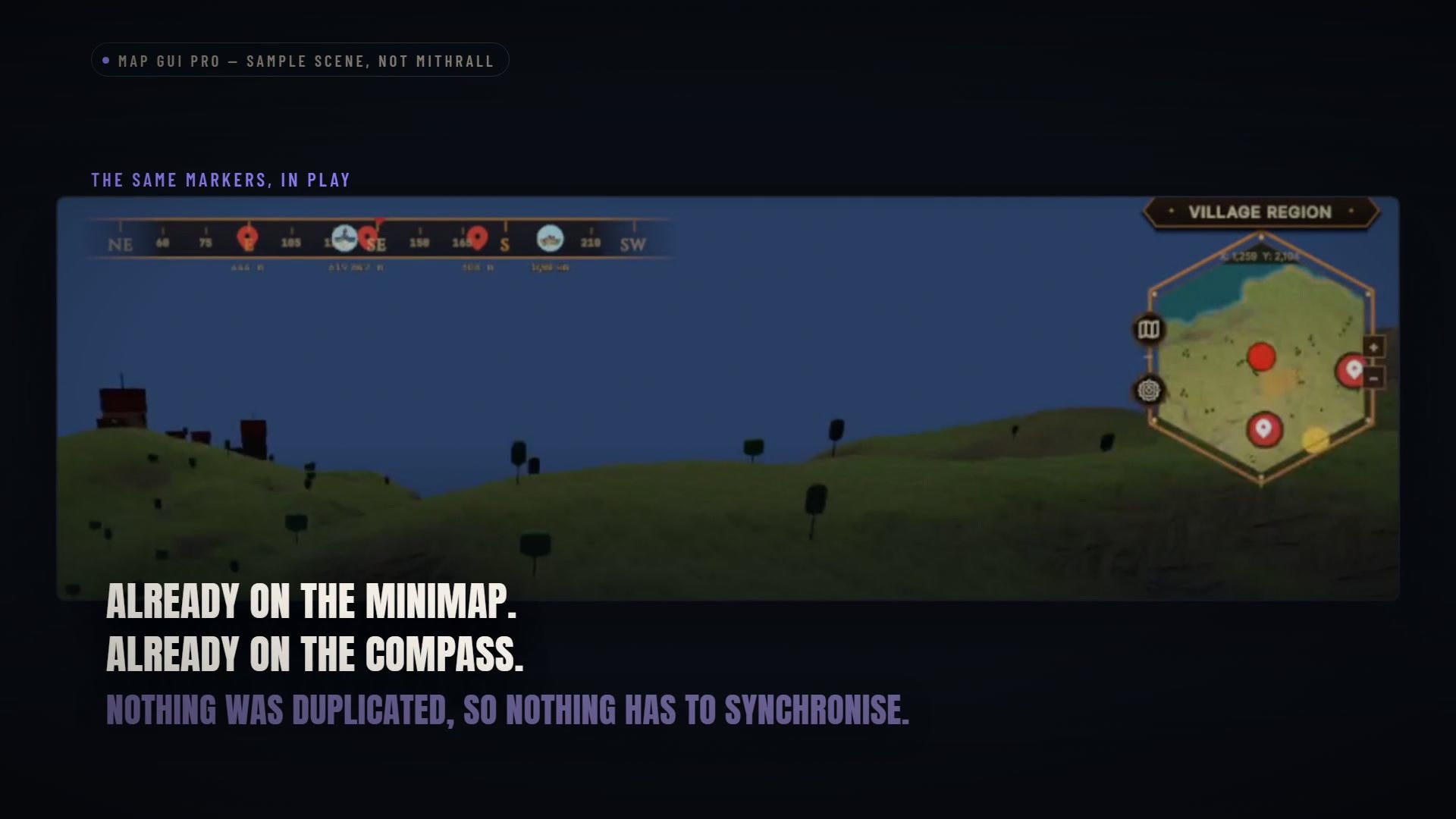
Map GUI Pro in its demonstration scene: shared information across the world map, minimap and compass.
Cartograph and Map GUI Pro handle two connected jobs.
Cartograph turns world information into map textures. Its film shows different visual styles and ways of generating the map, including workflows suited to changing terrain. A generated region needs a map that follows the place we actually built.
Map GUI Pro brings that information to the player through a world map, a minimap and a compass. All three use the same underlying data. The demonstrations cover markers, discovery and presentation, with examples of how the system can be configured.
We want navigation to help you learn a place. It should support the journey between recognising a shape on the map and understanding what it means when you reach it.
Both films are in the complete devlog, with the differences between the tool demonstrations and Mithrall's future use explained alongside them.
The bones of immense capitals
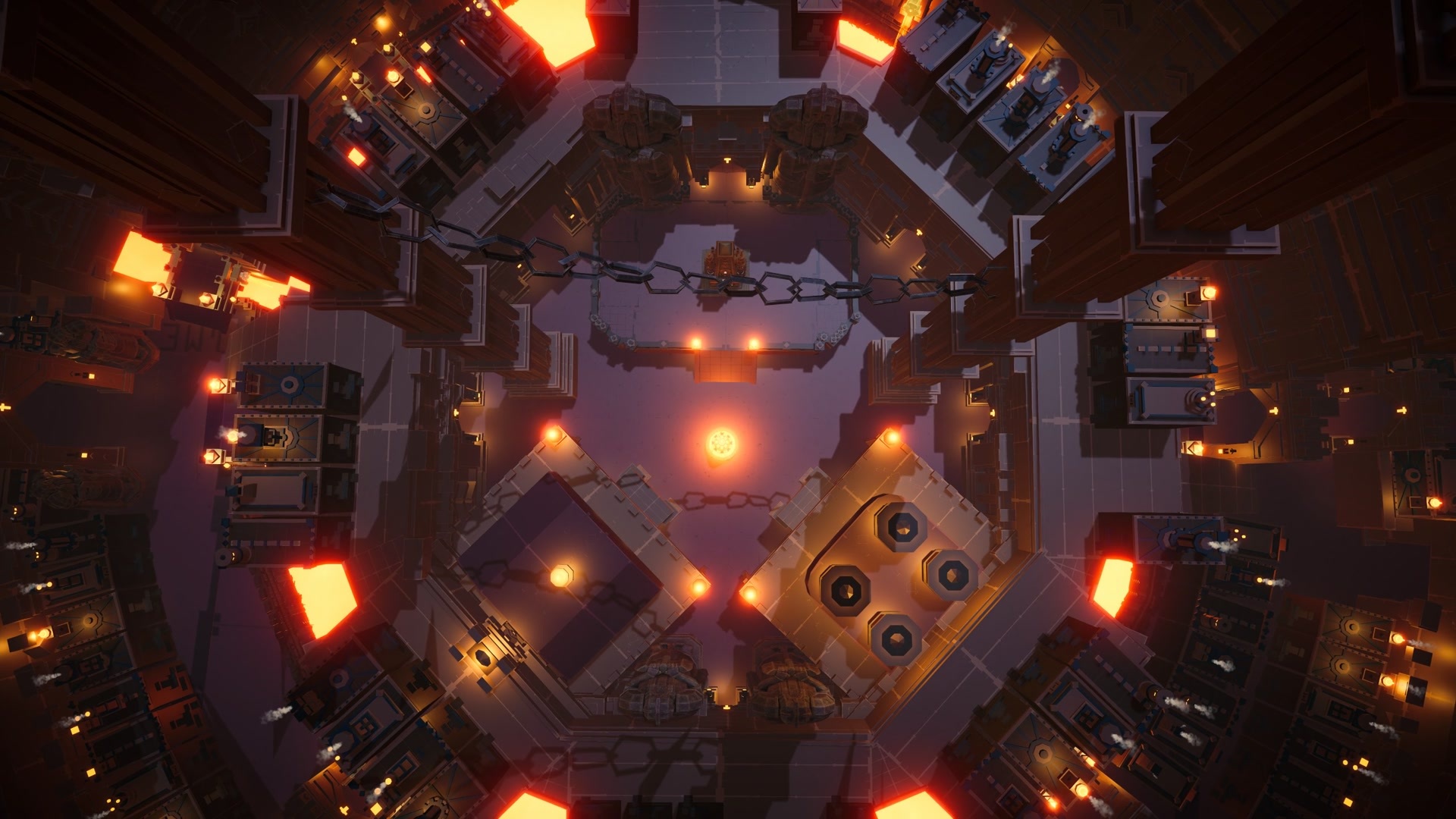
A city blockout study. Every design shown is provisional; no design is final.
The second new montage, The Bones of a Capital, follows the work of AnkleBreaker Studio's level designer through three city studies.
Forest, Desert and Darkstone are working labels for these studies. They are not announced city names. The footage lets us compare approaches, entrances, elevation, routes and the way a large space reveals itself from ground level.
We are excited about the prospect of immense, majestic capitals that feel worth exploring. The blockout is where their scale and structure can be questioned while changes are still practical.
Every design shown is provisional. None is final. Layouts, proportions, routes and even the underlying structure can change. These captures show work along the way and may not reflect exactly where it stands today. We are sharing that work progressively.
We look forward to the stage when players can put these spaces to the test with us: walking routes we thought were clear, finding the corners we overlooked, and telling us where the scale feels magnificent or where it stops being useful.
The same place, a different sky
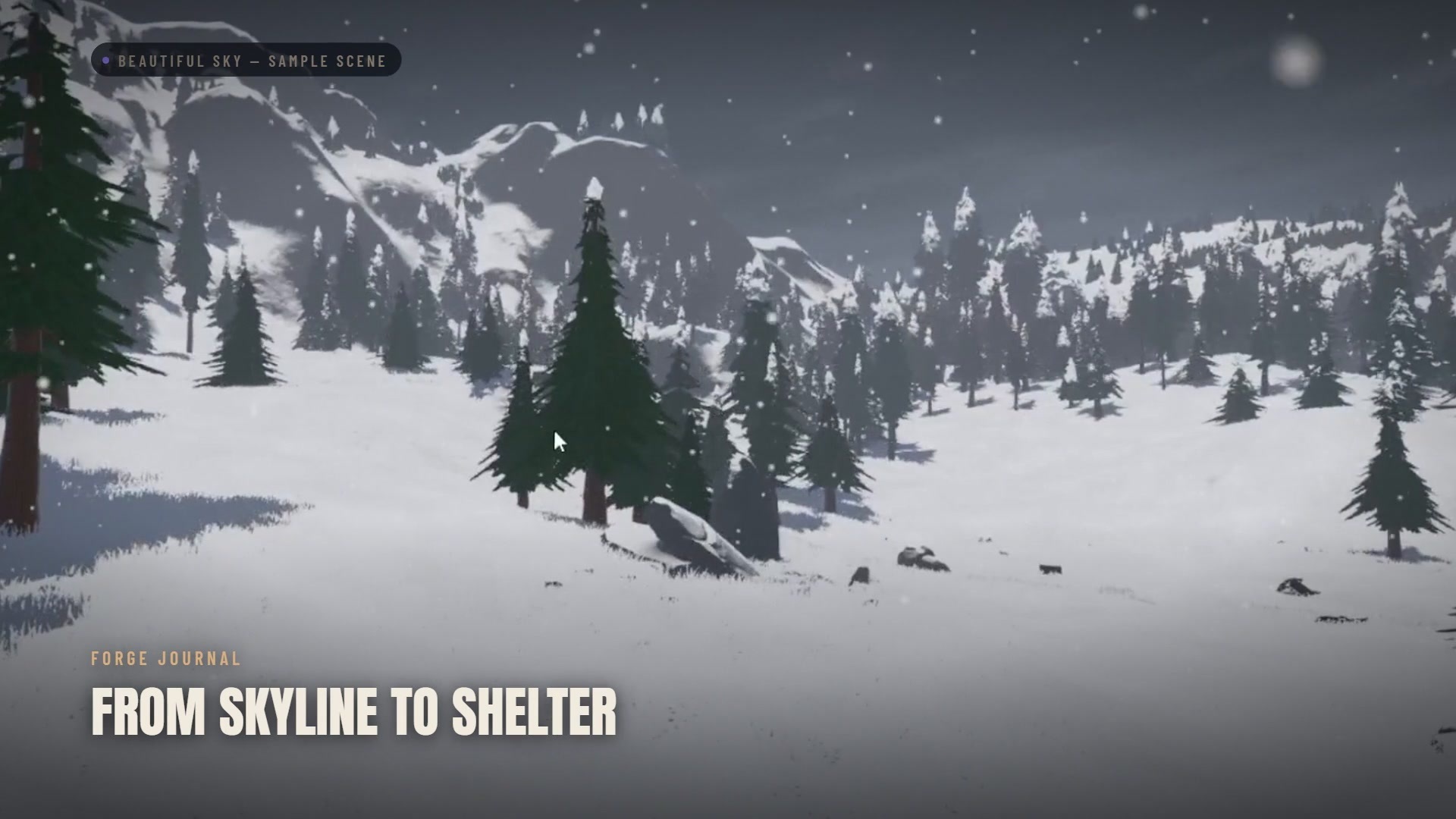
BeautifulSky tested in a sample landscape, not a final Mithrall location.
Beautiful Sky's film changes the conditions around a scene so you can see what each part contributes: time of day, light, fog, clouds, rain, snow and more demanding weather tests.
The landscapes in that demonstration are sample environments. They show the system under inspection, rather than a set of finished Mithrall locations.
For the game, we care about the way conditions work together. A place should hold its identity as the weather changes, while the experience of moving through it can feel different. These are systems we need to understand and tune together.
More time to build, better ways to inspect
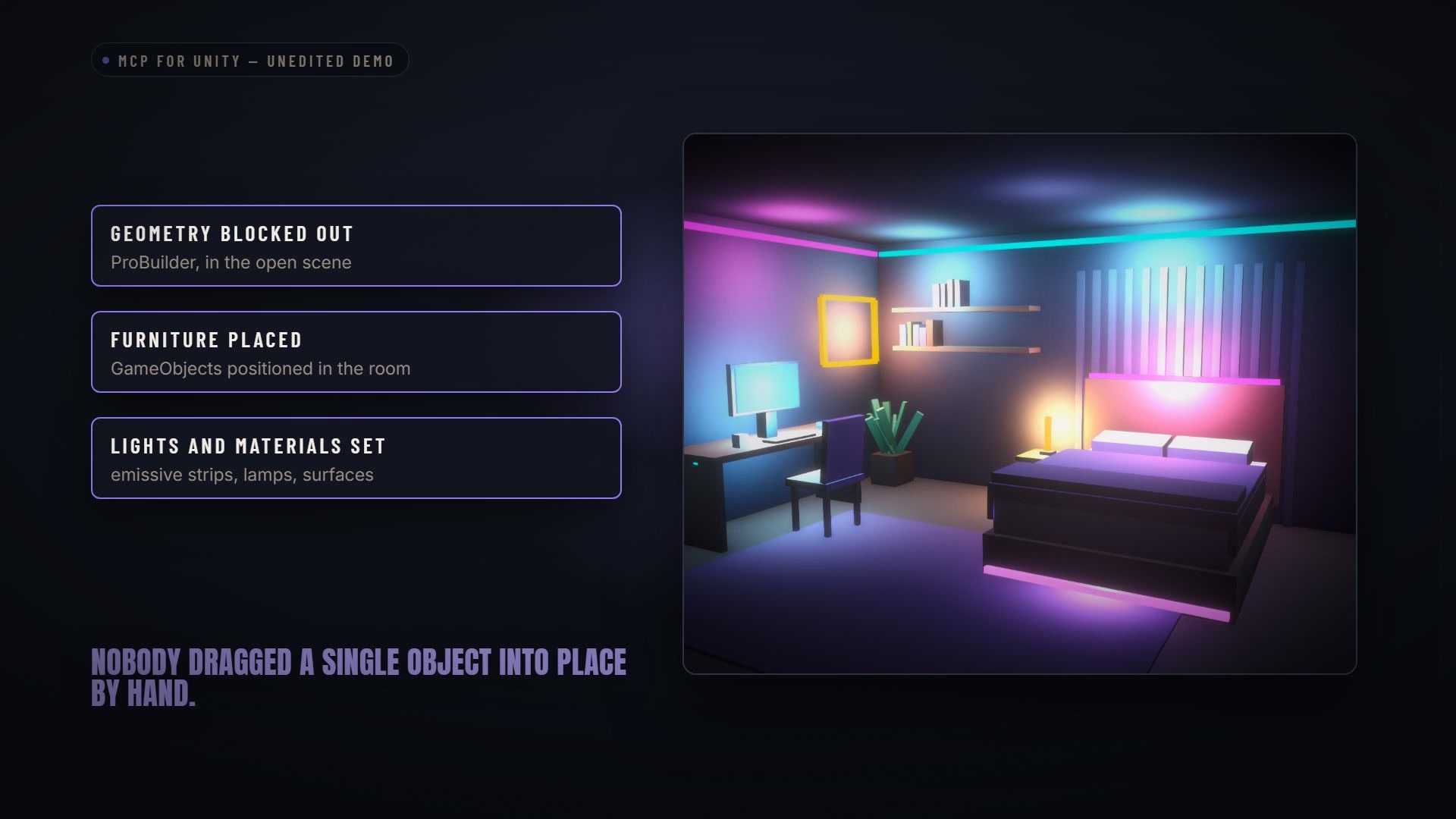
MCP for Unity demonstrated inside the editor. The example scene is not a Mithrall location.
Our MCP for Unity demonstration shows an assistant interacting with the editor and inspecting the results of its work. The film uses dedicated example scenes, including a bedroom and an interface. Those scenes demonstrate the workflow.
AI and our production tools help the team move through jobs much faster. Our engineers, designers and artists still decide what belongs in Mithrall, what needs changing and what is worth keeping.
This connects to the larger reason for rebuilding: the next weapon, region or system should benefit from the work that came before it. We want to spend more of our time making the details players will remember, with tools that help us create and inspect them.
Changeling: more room for a crowd
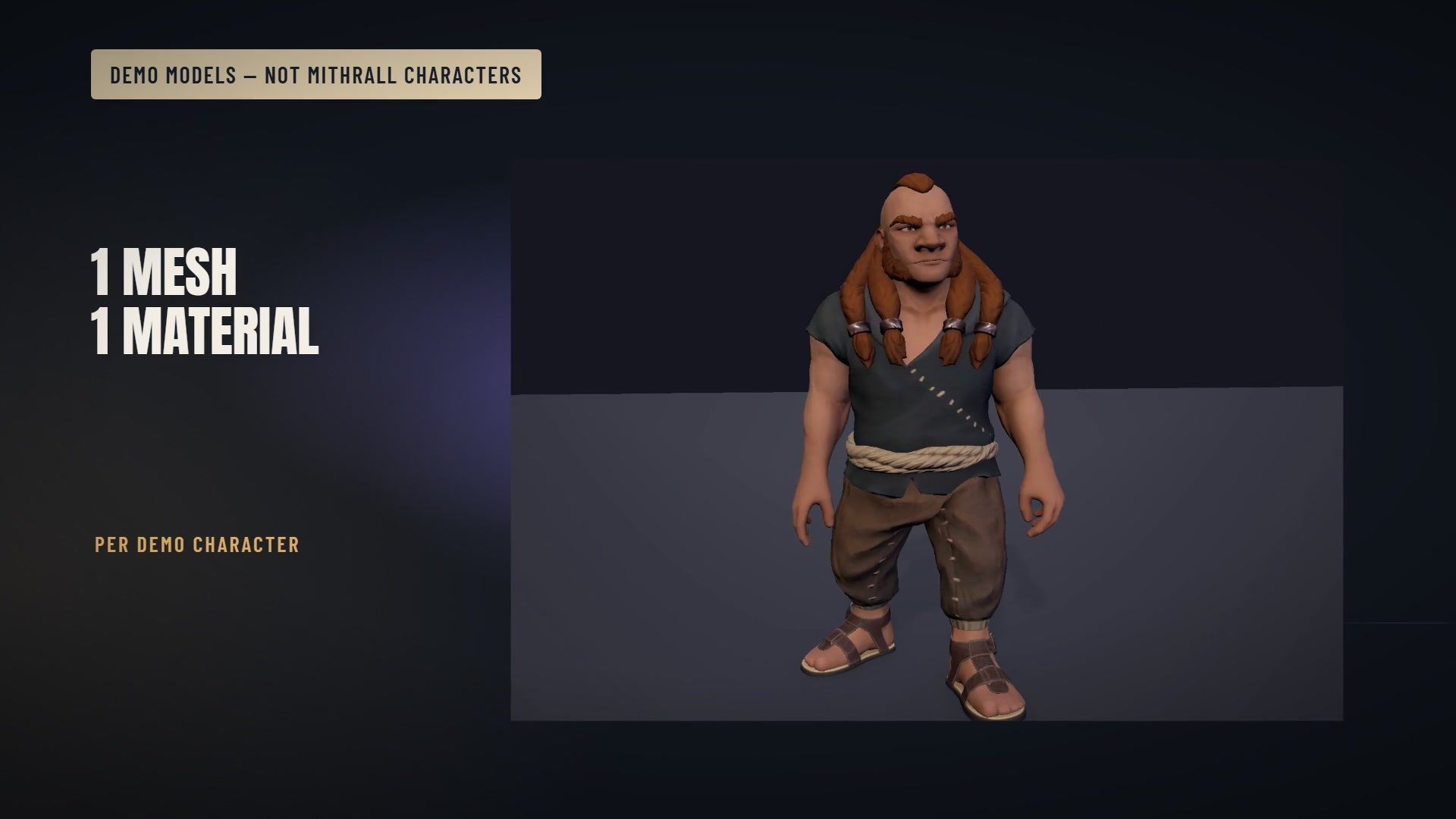
Changeling's customization demonstration: one mesh and one material per character. Sample models, not Mithrall characters.
A busy town should make you notice the people in it. Changeling tackles part of the work needed to draw them.
A character can contain separate pieces for the body, hair and equipment. Changeling merges the equipped pieces into one animated mesh and packs their textures into atlases, so the demonstrated character can use one material.
In The Cost of a Crowd, the pieces and skin appearance change while the result stays at one mesh and one material per character. That gives us a way to build variety into the system from the start, with room for your questionable fashion choices.
The demonstration models are not Mithrall's characters. Its opening crowd and frame-rate figures are illustrative, not measured game performance. Geometry, animation and shadows still cost time; combining parts addresses one piece of that work.
The aim is a world where you can enjoy the people gathering in a square. Watch the complete Changeling film in the full devlog.
Protecting the world you invest in
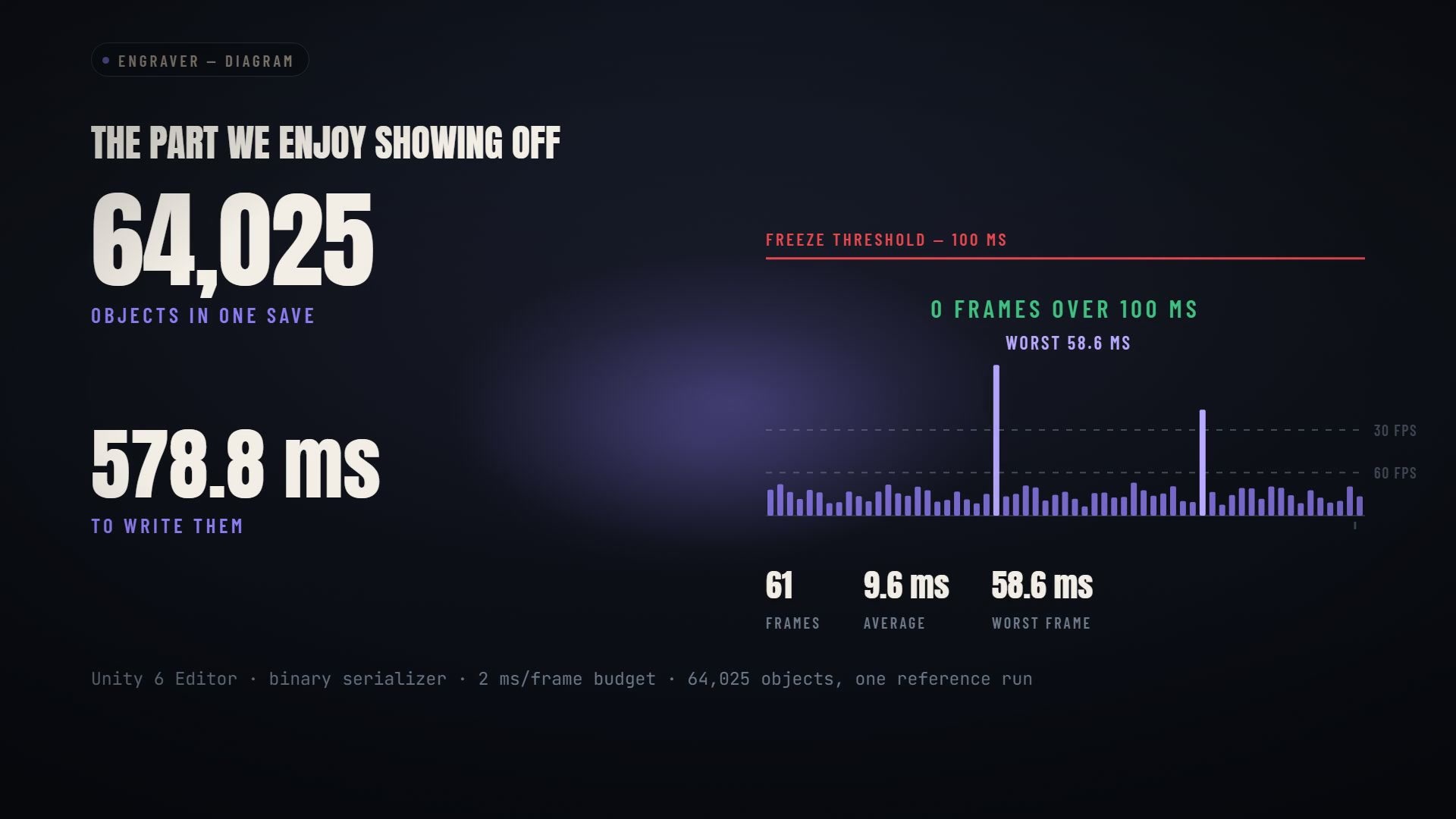
Engraver's reference save test; the results belong to the conditions described in the film and full devlog.
Engraver is our save and persistence system. In a survival game, a save contains the result of gathering, digging, building and working with other people. Reliability protects the reason you did all of that.
The film explains atomic writes: new data goes to a temporary file before replacing the previous save. The existing good version remains intact while the new one is being written. It also shows how saving work can be distributed across frames.
Its reference run saves 64,025 live objects, with 578.8 milliseconds of write work spread across 61 frames. The worst recorded frame was 58.6 milliseconds; no frame crossed that test's 100-millisecond threshold. The full article includes the test conditions so those numbers can be read in context.
TombStack handles another side of looking after a game. When something breaks, we need a useful trail.
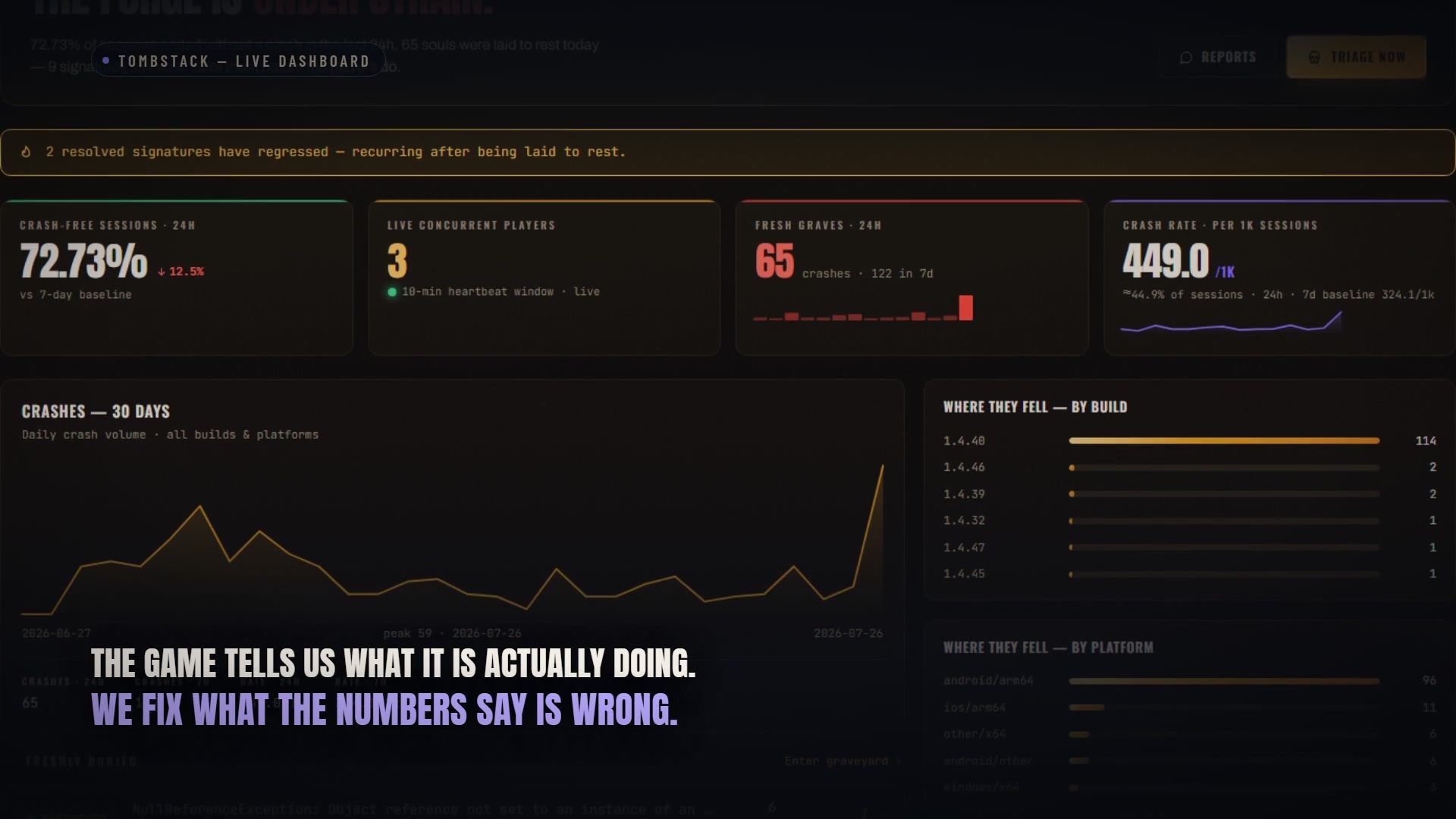
TombStack's dashboard and the production workflow around it.
Its film shows errors grouped by signature, information about affected builds and sessions, and the work of turning native crash reports into something we can investigate. It also includes experience from Kickdom, a game we have shipped, alongside TombStack's role in the Mithrall workflow.
No tool makes a game incapable of breaking. Better evidence helps us understand what happened and check whether a fix worked.
Support for the ambition
We also have studio news: internationally renowned investors have taken a stake in AnkleBreaker Studio.
We are proud to have that backing as we continue building Mithrall and the studio around it. What matters to players is where the support leads: work you can see, a better game, and the ability to keep developing the world over time. The responsibility to deliver remains ours.
For readers who make games themselves, some of the tools in these demonstrations are available separately on our Unity Asset Store publisher page. That includes Gatling, Cartograph, Map GUI Pro and Engraver.
We have put great care into making these systems robust, and we recommend them with pride. Sales of our paid tools increase Mithrall's production budget while making that work available to other developers and game creators. If you recognise a problem from one of the demonstrations, take a look at the current catalogue and package details.
Help us build the Mithrall we keep looking for
We want to make the best survival MMO to come along in a very long time. A world with its own identity, depth worth learning, and places that make you want to return. That is the ambition we work toward, and a standard we want to earn with you.
There is still a lot to do. There is also a lot more to show than a list of intentions.
Register on the Mithrall playtest platform
We want to form a core of players who care enough to spend time with a system, try the things we missed, explain what felt right or wrong, and return after a change to tell us whether it helped.
The first stages will be internal and closed playtests, before a public opening. Registration expresses interest; invitations will depend on the needs and capacity of each test. We will share dates when we are ready to announce them. The playtest platform itself is still being improved step by step.
For everyone who has followed us through the earlier builds and the rebuild: thank you. We want to repay that patience with work you can see, questions we can answer and a game worth the effort.
Watch all ten films and read the complete devlog
Join the conversation on Discord
Help shape the next chapter through the playtest platform
Now we keep building.
See you in Mithrall.
François