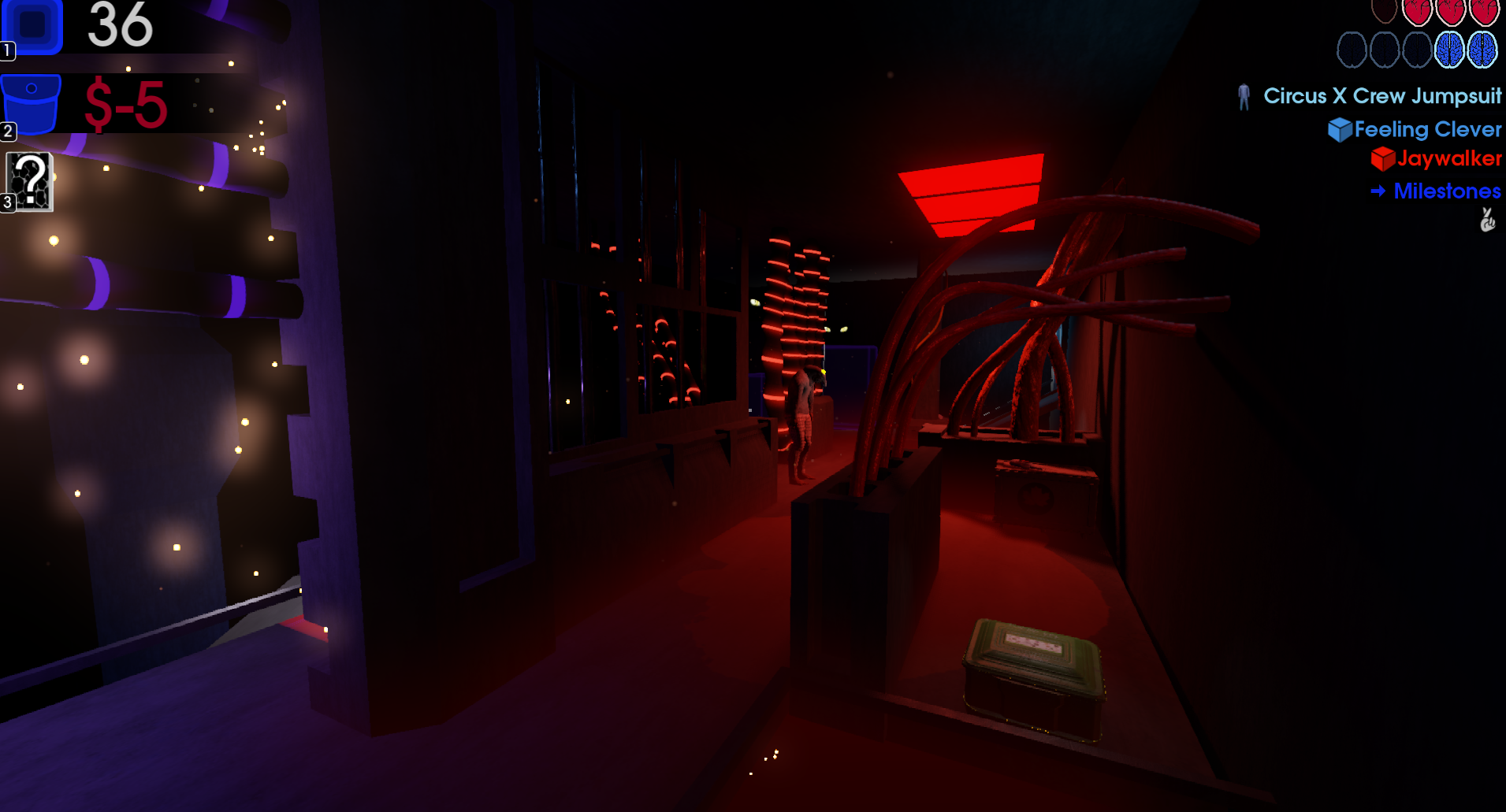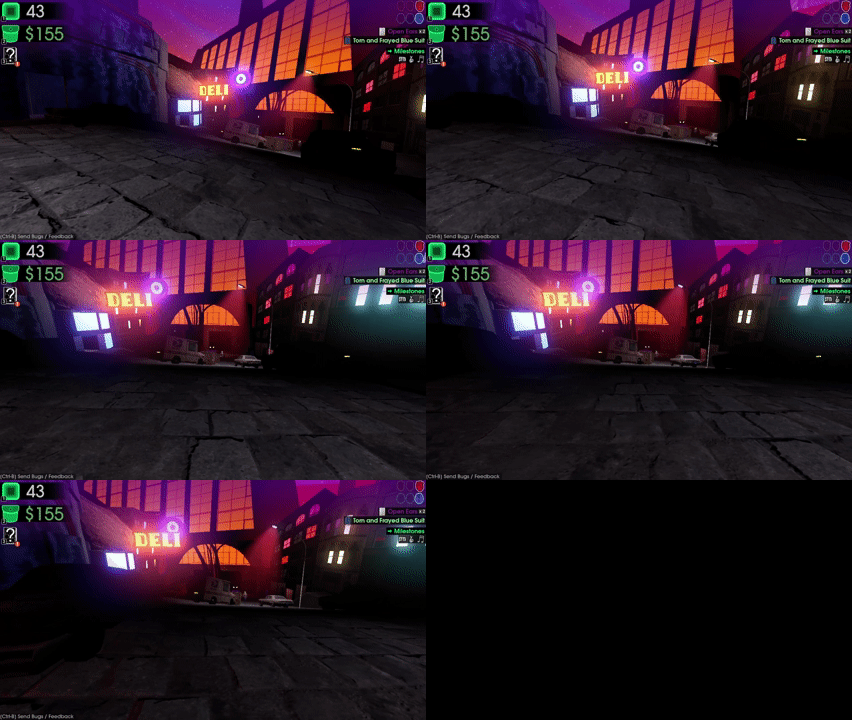
I've arrived at the point in my development work where a lot of what I've been doing over this past year is coming together. The various areas that I've been playtesting internally in discrete sections are getting connected through a “hub zone”. Specifically, it’s a street scene reminiscent of what I did in Tales of Off-Peak City Vol. 1, but it’s much more dense and meant to evoke the classic street hub levels from games past. Think Santa Monica from Vampire Bloodlines or Detroit from Deus Ex: Human Revolution. Any of the Deus Ex street levels, honestly. I’ve come to realize that the street level is quite unique in its technical and design needs. It serves as a portal to other more descreet challenge areas, but it also has its own distinct zones and unique mission design opportunities.
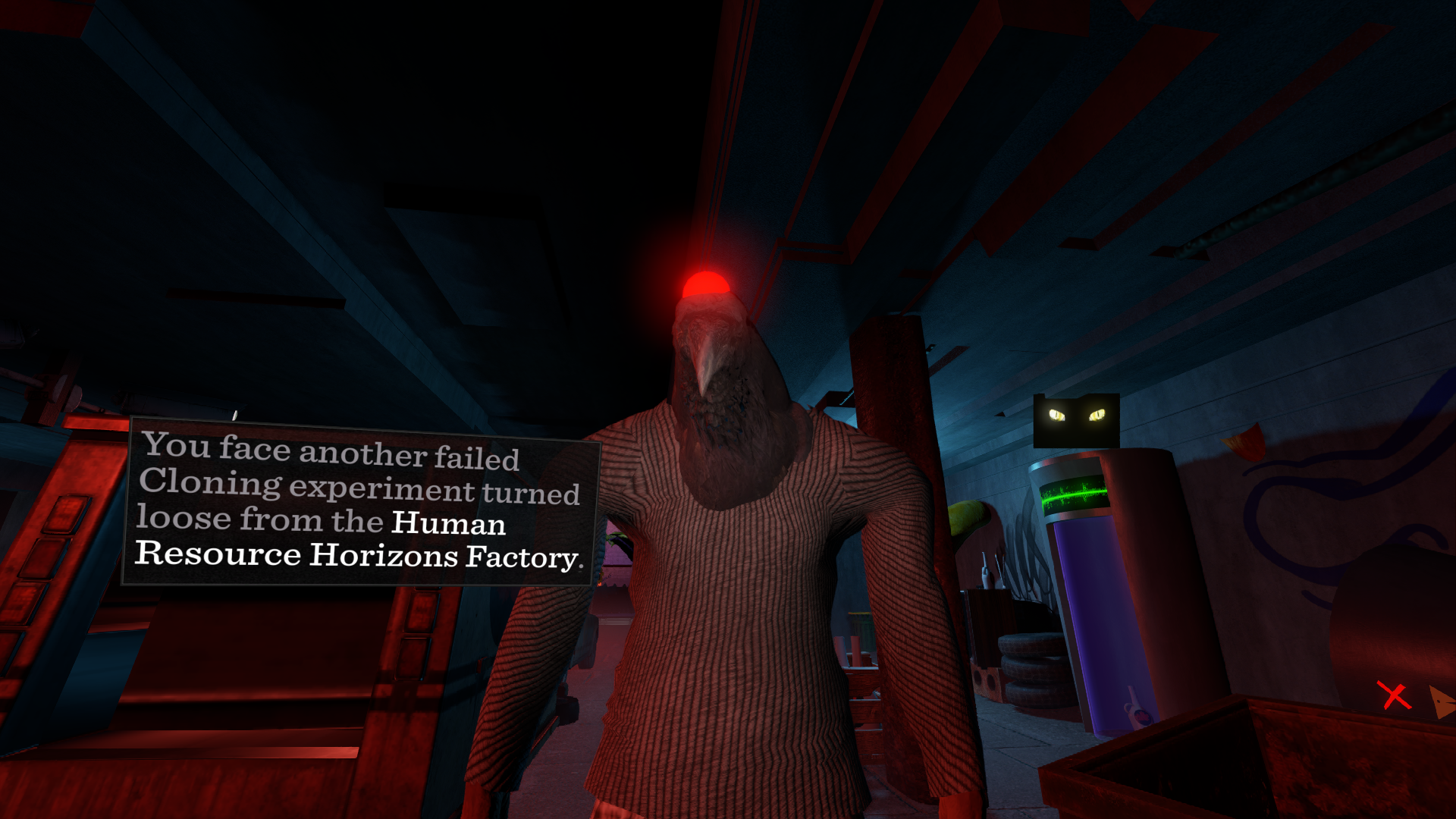
Question: Do all the “shops” in the hub world get clustered one place?
Answer, for now: I'm spreading them out to offer variety, but not too much so it feels like a slog to get across the map just to partake in a particular type of transaction. At best, I can offer shortcuts and alternate transactional locations which are thematic appropriate.
Question: Is the space meant to be totally safe, or have zones of danger and challenges?
Answer, for now: I mix up the danger and the safety. Just to keep it interesting and players on their toes. It should feel like you're flowing through a dense space, filled with purpose.
Question: Do I give players an in-game map? Or do I let them use their own natural sense of direction and land-marking to find their way around?
Answer, for now: No map for now. I think the space is intimate enough and dense enough that players can use real-life direction finding skills to get around.
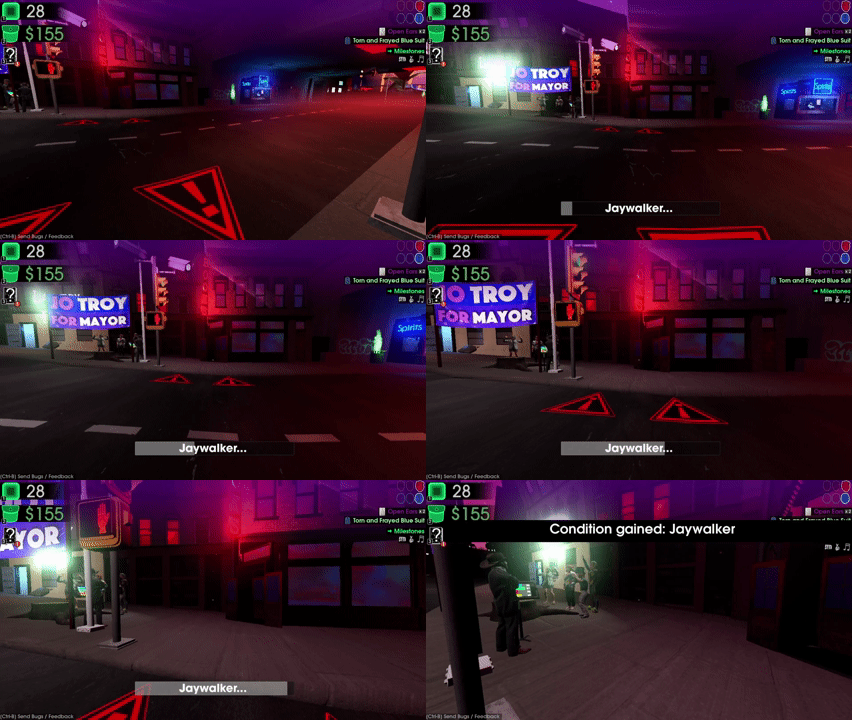
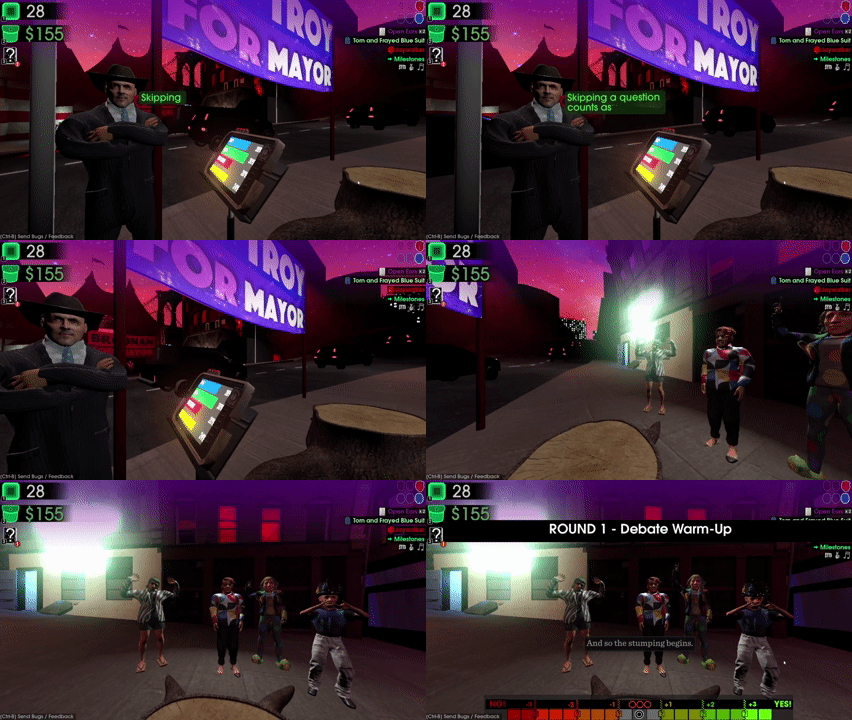
Question: because of the connective nature of this space, as well as its density, how do I manage the technical load?
Answer, for now: Loading in discrete zones for the different areas. This is a tried and true technique I've done with all my games, but this area is promising to be one of my most elaborate.
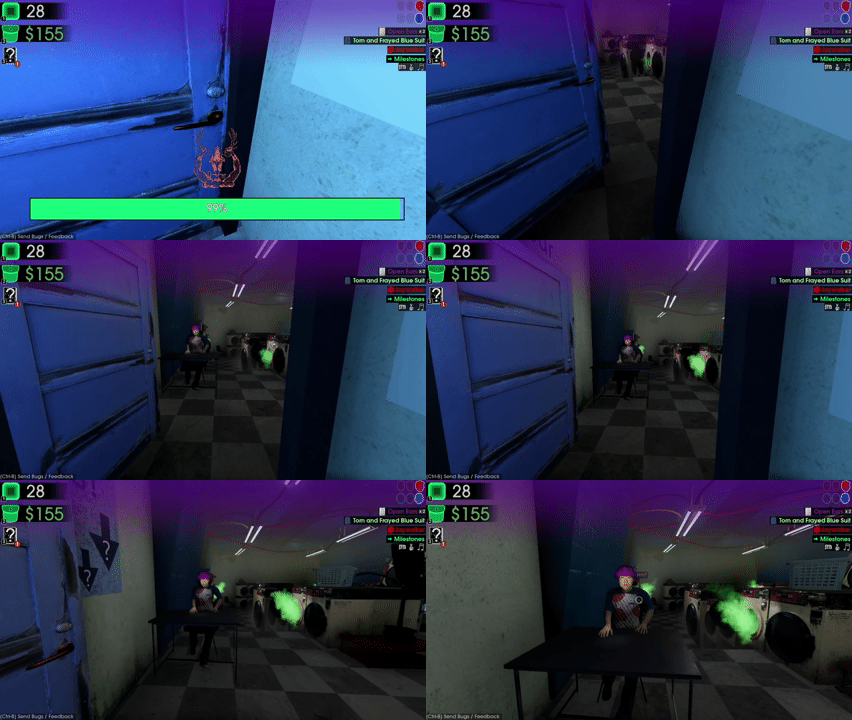
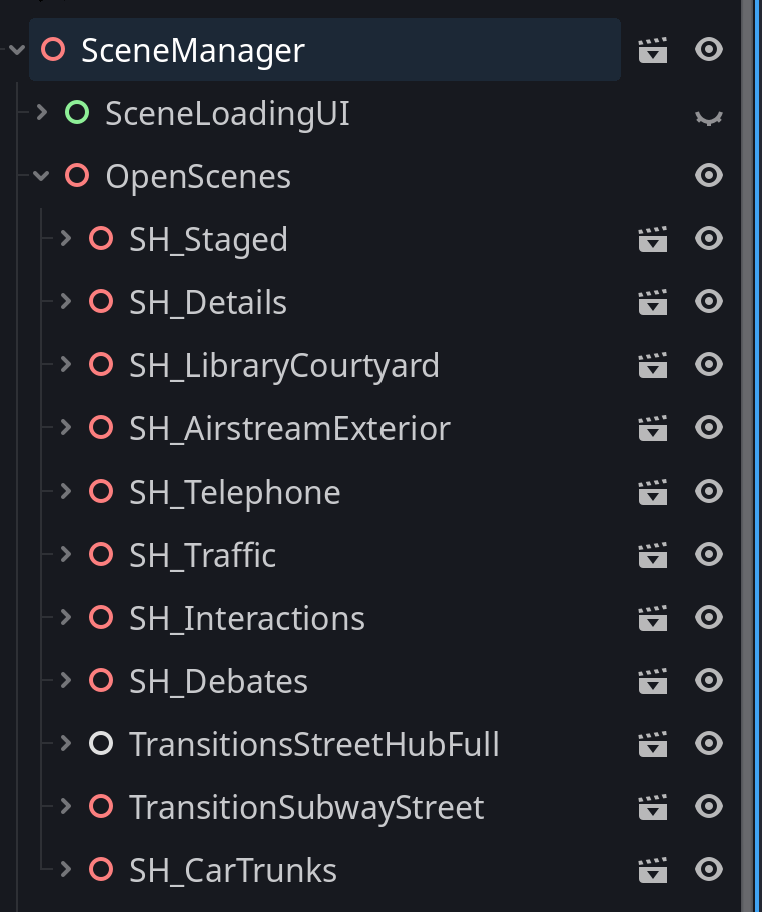
The scene collection has a lot of unrelated things going on in tandem. One moment you’re sneaking by a wandering guard - the next, you’re making a pizza on a balcony nearby.
Other strategies I’m thinking about to address these design challenges:
Moving through the hub world in a cyclical nature. Ideally I want to create a space that players can flow through and meet all their needs / desires, like wandering through a bazaar or carnival.
Anywhere you look, there’s something enticing from any angle. Neon signs abound.
The variety of spaces that are distinct from one another visually, as well as functionally.
Shopping.
The newsstand that also sells booze on the sly
A kiosk allows you to sell items back.
Challenge and rewards,
A local “lair” where a vagrant creature hoards his treasures. At first he's docile, but if you want his treasures, you'll have to face his ire.
Simply learning about the world.
Circus X, your ultimate destination, is right in the middle of everything. It serves as your ultimate destination, but also a reminder of how far you have yet to go.
Like in previous games, I've created layered sky-boxes so that you see what exists beyond the immeidate street life, while also learning about the city's layers of history and lived-in feel, (the graffiti, the architectural details)
Differences in height to give players a sense of verticality, different activities and zones of importance exist on different actual vertical planes.
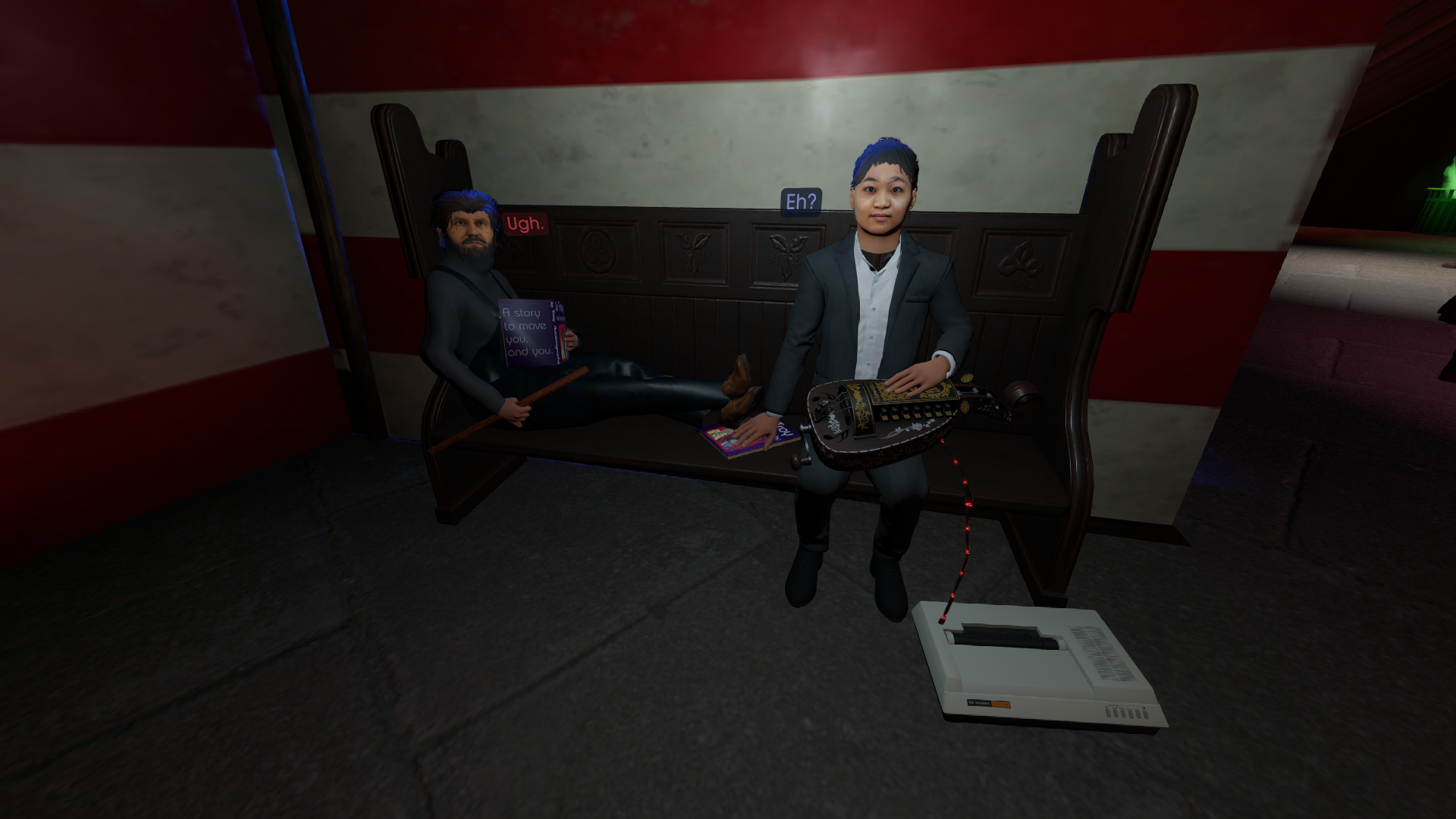
All of these elements are coming together to create a distinctive hub world that offers its own challenges, mysteries and opportunities. It’s taking a lot of work, but it feels dense, alive, carnival-esque. I look forward to having you traverse it.