
Salvete amici mei,
Bringing this blog to a close took a bit longer. However, something special has come out of it. I had this idea for a long time and finally got around to implementing it. I interviewed our historical consultant, Lukas Grüning, and asked him about his work with us. Some interesting anecdotes emerged, which I am happy to share with you here. To avoid straining our usual format, the interview is divided into two parts. The second part will be available next week. I hope you find this new insight as exciting as I do. Enjoy with Lukas:
Can you tell us something about your background and your current studies? What inspired you to specialize in the history of ancient Rome?
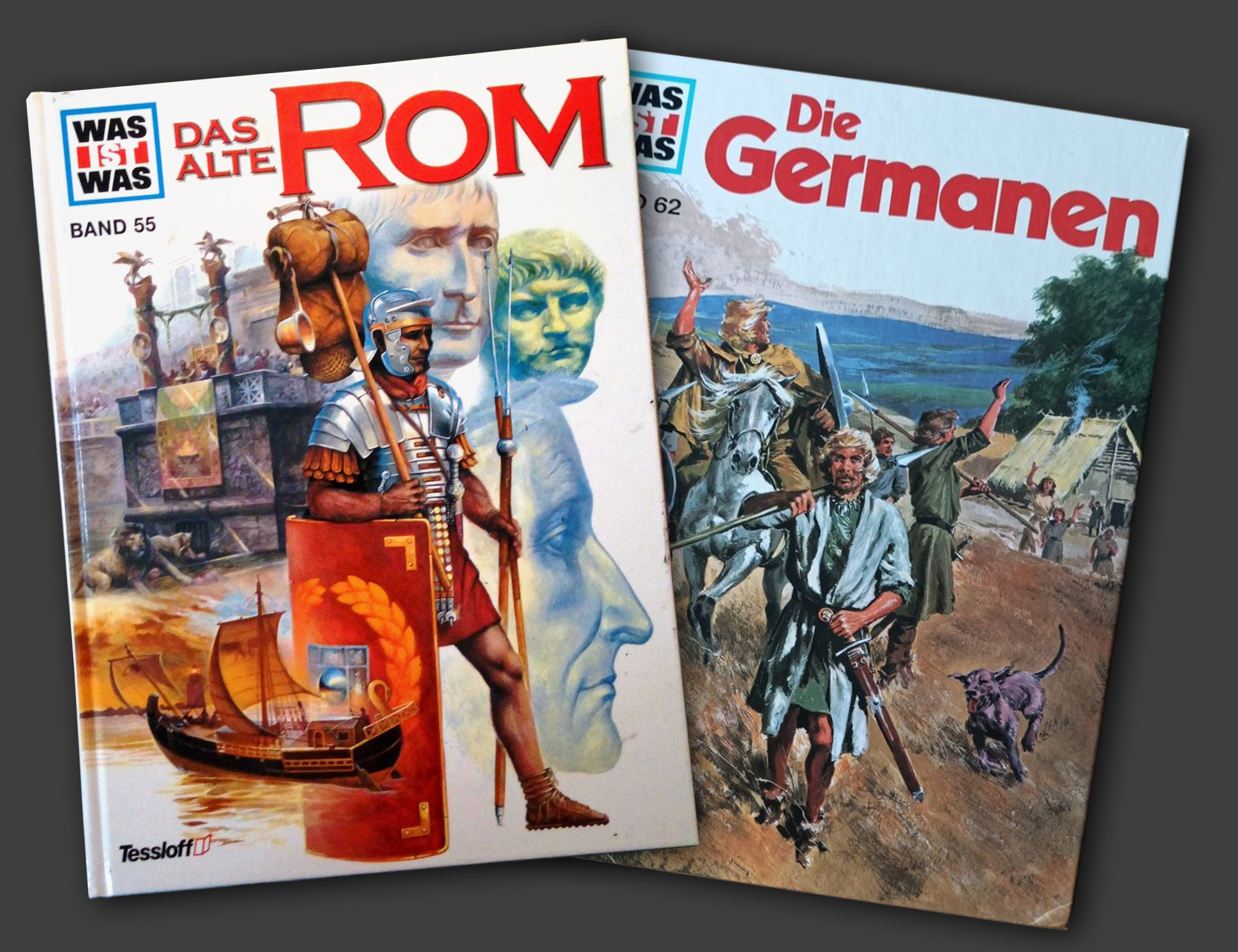
Even as a child, I devoured factual and audiobooks about the ancient and feudal world. I was particularly fascinated by the illustrations. It wasn't always clear that I would become an archaeologist, but after high school and experiences abroad, I knew: My interest in ancient cultures, the tactile experience of ancient objects, and the visual aspect of this lost world captivated me. That's why museums have always drawn me in. An anecdote from my Interrail days: I spent almost six hours alone in the British Museum in London while my buddy had long returned to the hostel. The next day we were leaving, but I went back for another three hours and had to literally run(!) to catch our train at the station.
Currently, I am a Master's student at the Humboldt University of Berlin in Classical Archaeology at the Winckelmann Institute and will complete my studies next year. I did my Bachelor's in Heidelberg, where I ultimately decided on Classical Archaeology. Roman culture is similar to ours in many ways, especially in terms of values and law. At the same time, there are significant differences, such as slavery and militarism. This mix of familiar and foreign fascinates me and drives my interest.
"Philologist Uvo Hölscher already postulated in 1965 that the Roman and Greek antiquity is our 'closest foreign': The ancient world is sufficiently foreign to question our habits of thought and at the same time close enough to be relevant."
What are the career prospects for a trained archaeologist?
There are indeed historical consulting firms. Conventionally, a request is made to a research institute to look at the material for a few hours. You then do the necessary work. Or you have an in-house team or person, but these positions are rare. Both in the private sector and in academia and education, there are only a few jobs for trained archaeologists. Therefore, many aim for the highest possible degree, as competition for these positions remains tough even with declining student numbers. It is therefore advisable to have a second career path. Besides working in research at universities or museums, it is advantageous to find a position in the private sector, for example as a consultant. My interest and the opportunity to gain practical experience during my education are particularly valuable in this context.
Are there specific historical sources or references that you find particularly valuable for your work on "Lost Legions"?
I use various online search engines, not Google or the like, but from libraries, scientific journals, or sites that upload the latest publications in any form of ancient studies. Sometimes I find something in digital form and have access to it through Humboldt University, but in about 85% of the cases, I have to go to the library for research. Sometimes the book cannot be borrowed, and I have to work on it on site. For this project alone, I currently have an additional 10-12 books here, with a tendency to increase.
Can you share an example of a historical detail or event that was particularly interesting or surprising to you and how it is integrated into the game?
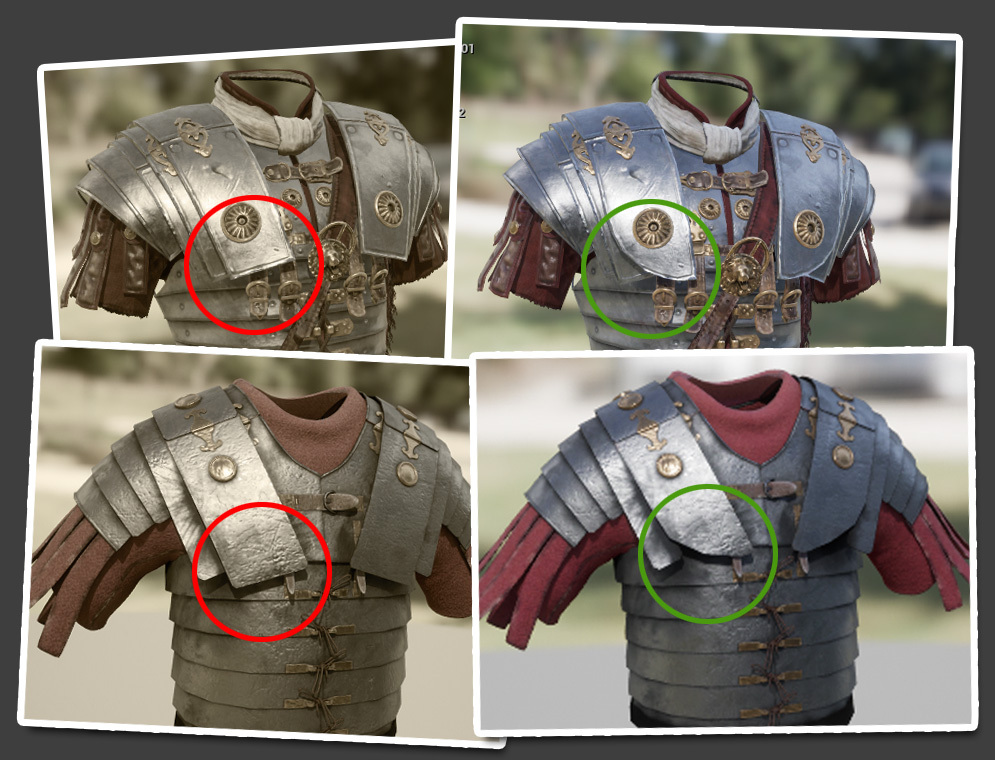
There was an incident that shows exactly how our joint work operates on different levels and can be applied further down the line. It involves the topic of armor. Previously, a specific variant of the plated armor Lorica Segmentata (Corbridge) was included in Lost Legions. I knew this type as the usual equipment of the legion from that time. So I wasn't surprised to see it in the game. Then, a very attentive online community pointed out that this armor was not accurate. The team alone couldn't follow up on this detailed criticism but forwarded the issue to me. Following the clues, I was able to verify that there is a specific type (Kalkriese) that is explicitly associated with the battle of 9 A.D. Notable are the pointed shoulder plates and the reduced number of ornaments. So if we know that this armor was there and the Corbridge type only appears a few years later, then we are well advised to adjust the representation to the new findings. Incidentally, my research has shown that the use of Segmentata (plate) and Hamata (chain) could have been about 40:60. So NPCs in the game will also appear accordingly equipped. That's how it works in archaeology; you do it typologically. I think this example shows a good engagement with the topic. The team presents something, it is challenged by the community, then it is reviewed, and the result is implemented in the game.
What common misconception about antiquity do you hope to address or correct through this game?
Hmm, what comes to mind right away, because it was just a topic within the team: You can't say that the Germans were dirty barbarians living in filth. We know a lot more about the Romans because there is much more information about them. There are many (hobby) experts who are very knowledgeable about Roman legionnaires and their armor. Knowledge about the Germans is often less. However, the Germans were very well-groomed and had various hygiene items. They invented soap and used combs, tweezers, and razors. Even Tacitus, who also portrayed the Germans as barbarians, reports that they bathed frequently and washed their hair. Not everything was dirty and pigs were not wallowing everywhere. Of course, you can't compare the living standard of a Germanic person to that of a Roman nobleman in a magnificent villa with a water supply. But the simple German had his own standard. A provincial legionnaire who has been marching for 30 days is a rough fellow. So a simple Germanic farmer might have looked much cleaner.
Thank you for your interest in part 1 of the interview with Lukas. We are happy to discuss the content here in the comments or on our Discord.
Best regards
Jens