
Salvete my friends,
Lost Legions has made a significant leap forward in the last sprint, especially in the past week, and I couldn't be happier about it. We've known for a long time that our project has great potential, as there are already many systems that function well individually. Now, for the first time, the team has integrated these components into a cohesive flow. Immediately, the feeling of experiencing a real game emerges, rather than just individual parts.
We are working on the demo for Gamescom, which also marks the alpha milestone. Felix has designed the concept for the demo, which aims to showcase all the important elements of the game within 15 minutes. We are adhering to this strict time limit because we will only have short meetings with our guests at the fair. To minimize risks during the presentation, the demo will only be demonstrated in single-player mode.
In broad strokes, here is what will happen:
The player emerges from a tent in a small Roman camp. A superior soldier gives the player a selection of tasks, suggesting they can either handle them personally or delegate to NPCs. Additionally, preparations are underway for an attack on a Germanic village, which will commence shortly and which the player must lead, so haste is necessary.
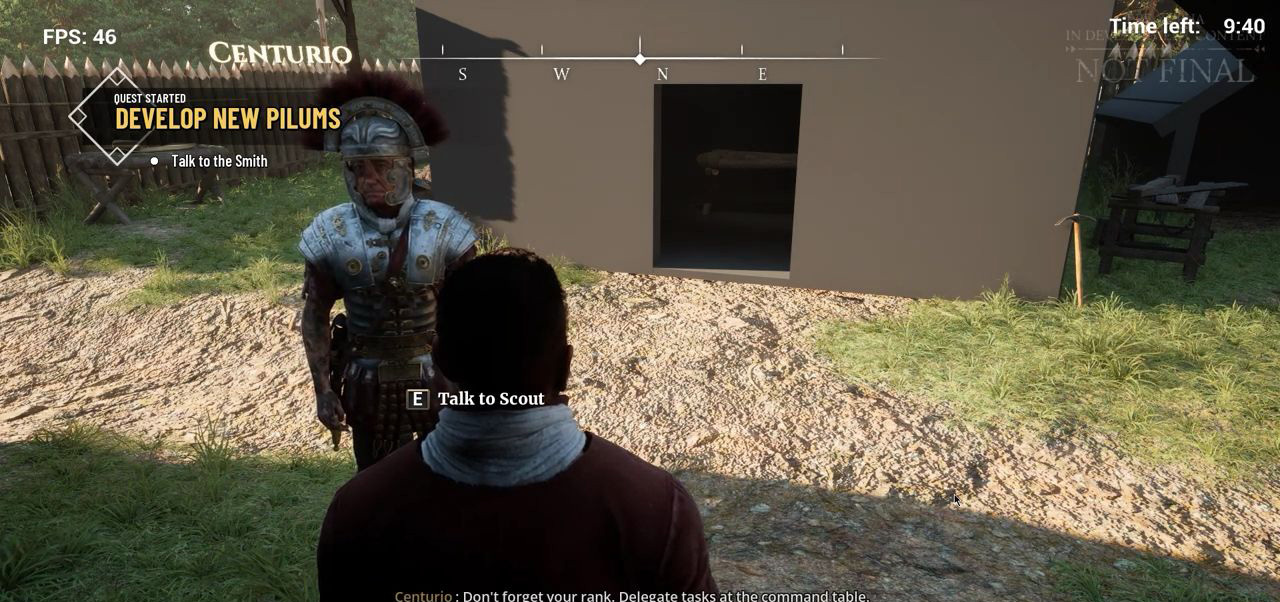
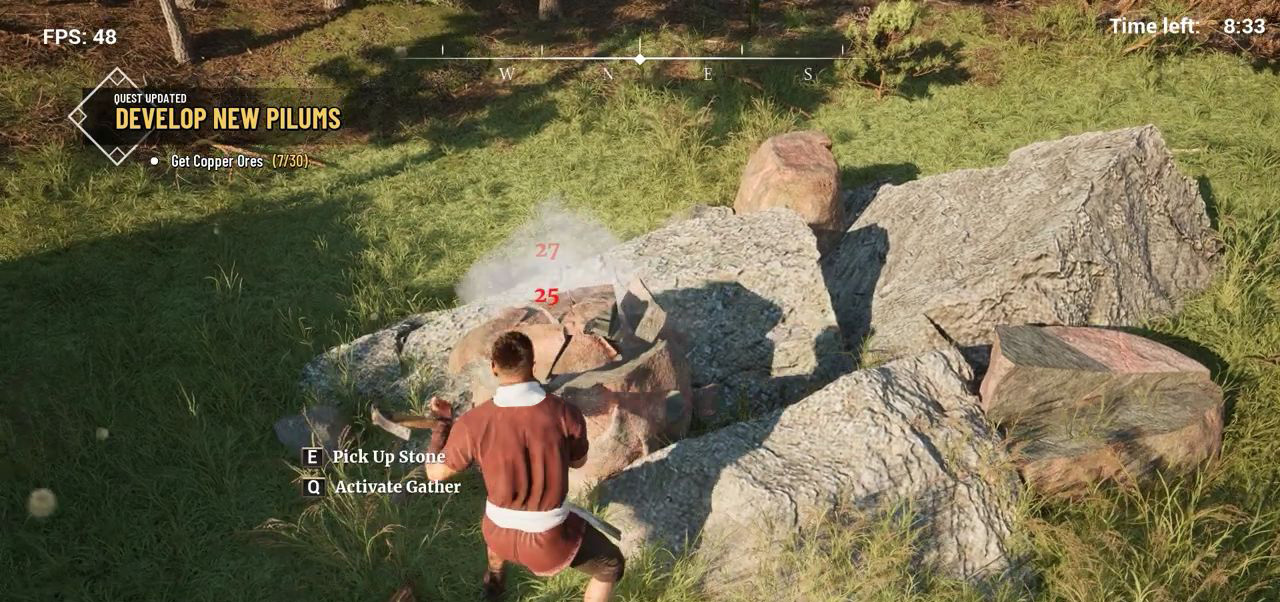
Then the player gets to work. Various NPCs need to be addressed at different stations, providing the player with additional information to fulfill the tasks. Resources need to be procured, weapons upgraded, missing soldiers rescued, provisions restocked, and defenses expanded. There is much to do and many decisions to make.
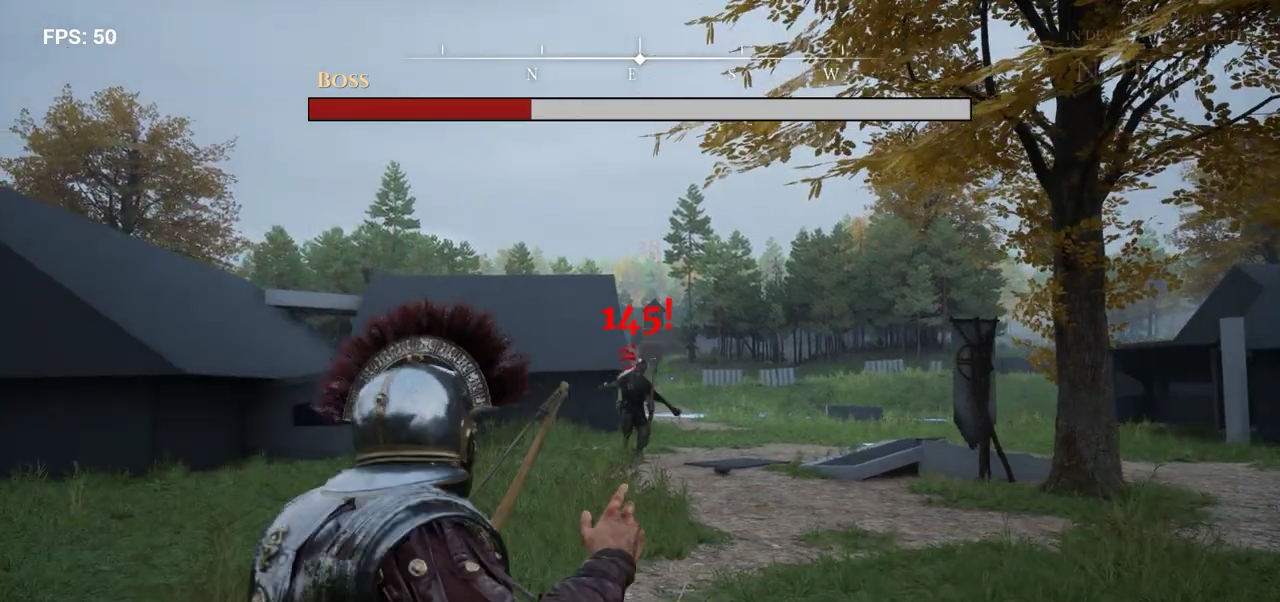
Once the path to the enemy village is clear, the attack can begin. A bloody skirmish takes place in the village square. After defeating the final boss, the player pursues the fleeing villagers into the misty swamp. Their trail disappears, and it becomes eerily quiet... too quiet... Something terrible emerges from the fog. The demo ends with an exciting revelation, hopefully leaving the audience eager for more.
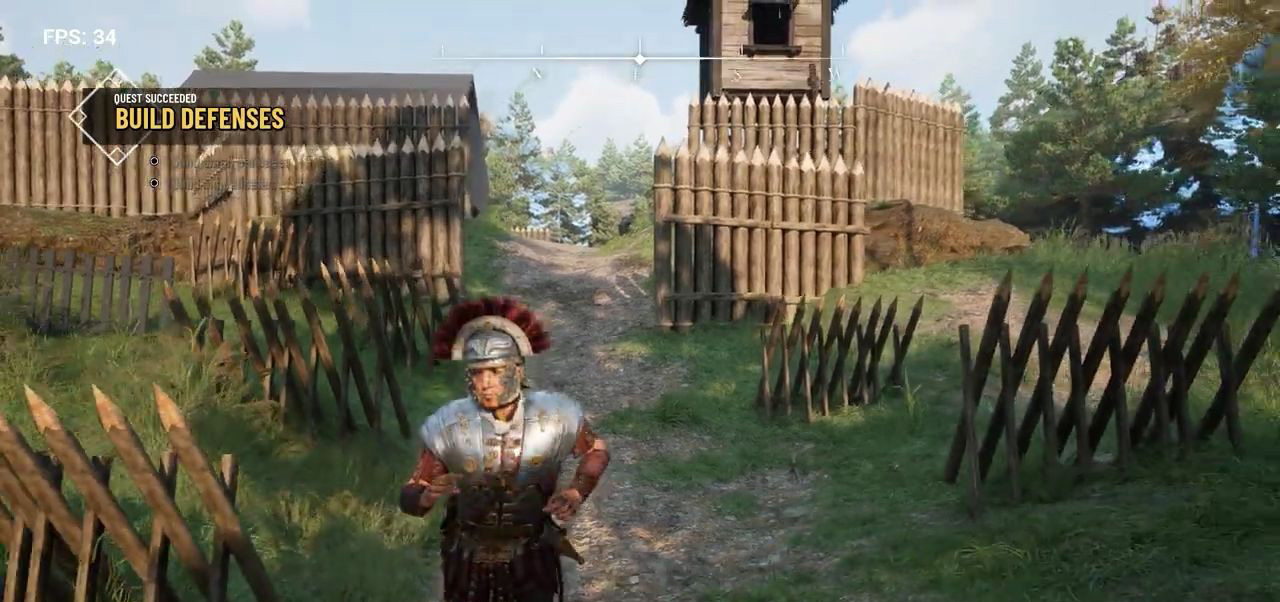
Previously, our game consisted of a large empty game world where various features could be tested independently at isolated locations. Since last week, however, we have reached a stage where these systems have gained meaningful context and build upon each other to convey a narrative arc. The current state still includes placeholders in many areas for final graphics. Voiceovers, effects, and animations are often still missing. Tasks cannot yet be delegated to NPCs. Closing these gaps, resolving issues, and enhancing gameplay will be our focus for the next 3.5 sprints leading up to Gamescom.
To achieve this ambitious goal, we need good organization of our workforce. If you want to get insight into our process:
Many work from home or optionally on-site in the co-working space at the S4G School for Games. Lost Legions is hosted as a repository on Github.com. From there, all developers can synchronize the latest version of the game to their PCs, upload their own new data, and make it available to others. Other files and documents are shared via a cloud service or our own NAS. In the art department, we use various tools for different applications: Blender for modeling and animation, Substance Suite for texturing. Additionally, tools like Krita, Photoshop, Clip Studio Paint are used. A newcomer is Cascadeur, for refining animations. Much of the work, such as programming via Blueprints, as well as VFX or level design, is done directly in the game engine, specifically Unreal Engine 5.3 in our case.
I've mentioned sprints several times. This term comes from the Agile SCRUM project management method. I want to note that we follow a heavily adapted version ourselves. Genuine SCRUM is something we cannot (yet) afford. A sprint for us spans two weeks and represents a development phase culminating in a new version of the game. It is planned with the premise: "What will increase the value of the product the most?" and "What do we most urgently need to reach the next milestone?" The entire team commits to this shared goal. Then the sprint is conducted undisturbed (hopefully), evaluated at the end, before the next interval begins. The contents implemented in successive sprints serve to achieve a milestone. For a game production like Lost Legions, these milestones are broadly divided into "Concept," "Pre-production," "Alpha," "Beta," and "Master."
In April, we completed the pre-production phase and have since been working towards our alpha milestone in August. In our case, this is very ambitious because it coincides with Gamescom, where we will present our game in the business area. So our goal is not only to achieve an alpha version of the game but also to create an impressive demo that our guests can play themselves!
So how does a sprint proceed?
Sprint Review & Planning
-Daily Scrum meetings: "What did I do yesterday?", "What do I plan to do today?"
-1-3 playtests with publishers or investors
-2 internal team playtests
-3-4 task force meetings
-Approximately 2 external/freelance meetings
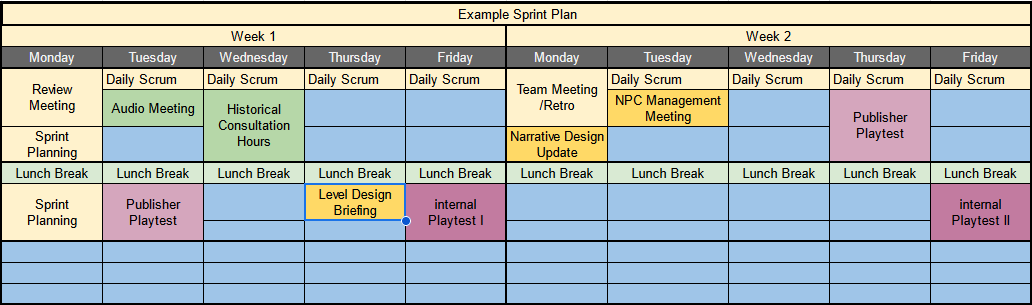
This is just an example of the recurring and expected events during a sprint. It's also clear that only those involved in a role attend a meeting. We also try to schedule meetings mostly at the beginning of the week and in the morning, so the rest of the time can be used for free work. As a small team, we also organize a lot among ourselves and on the fly. This still works well in our structure, although it means documentation sometimes gets neglected. But that's a problem for future Tarock. What could possibly go wrong?
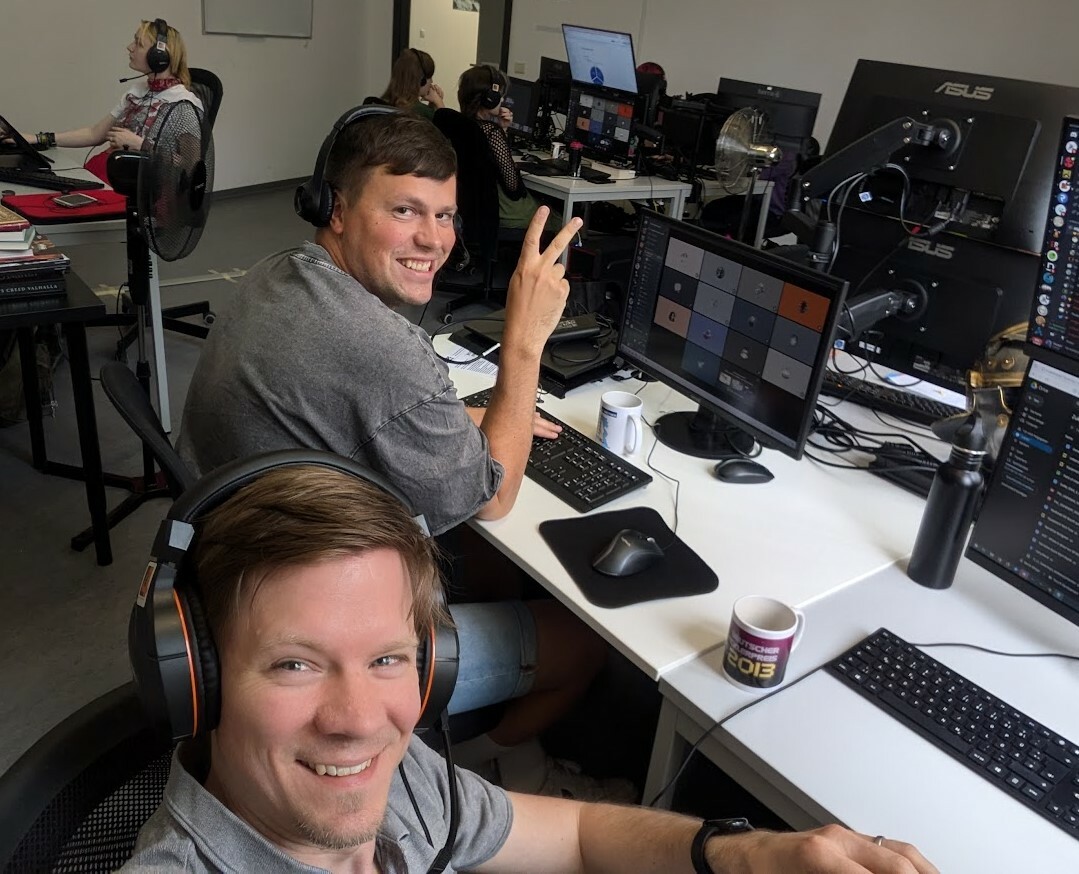
I can tell you, experiencing ideas come to life as the parts come together is exactly the feeling that makes me not want to trade my profession for anything else! Our approach to establish the structure of the game as early as possible, so we have something that can be further developed, is paying off in my opinion. I look forward to detailing the demo in the coming weeks and am eager to see the reactions in Cologne.
As a closing remark, I would like to send a big thank you to the entire team who have made phenomenal efforts to reach this state!
Best regards,
Jens