
Hello flatmates,
I'm Andrea Marinelli, Lead Technical Artist at FLAT28, and I am temporarily ousting Giacomo to create my first devblog. A techno-junkie one.
Over the past few months, we’ve been focusing heavily on improving the visual side of Glasshouse. Our goal has been twofold: to define a clear visual identity and to set a benchmark for visual quality—a standard we aim to hit with every environment in the game.
To achieve that, we’ve been moving forward on multiple fronts. On one side, we kept working on new assets and building out the Dormitory 73B scenarios to maintain production momentum. On the other, we explored new pipelines to speed up development while increasing overall visual fidelity.
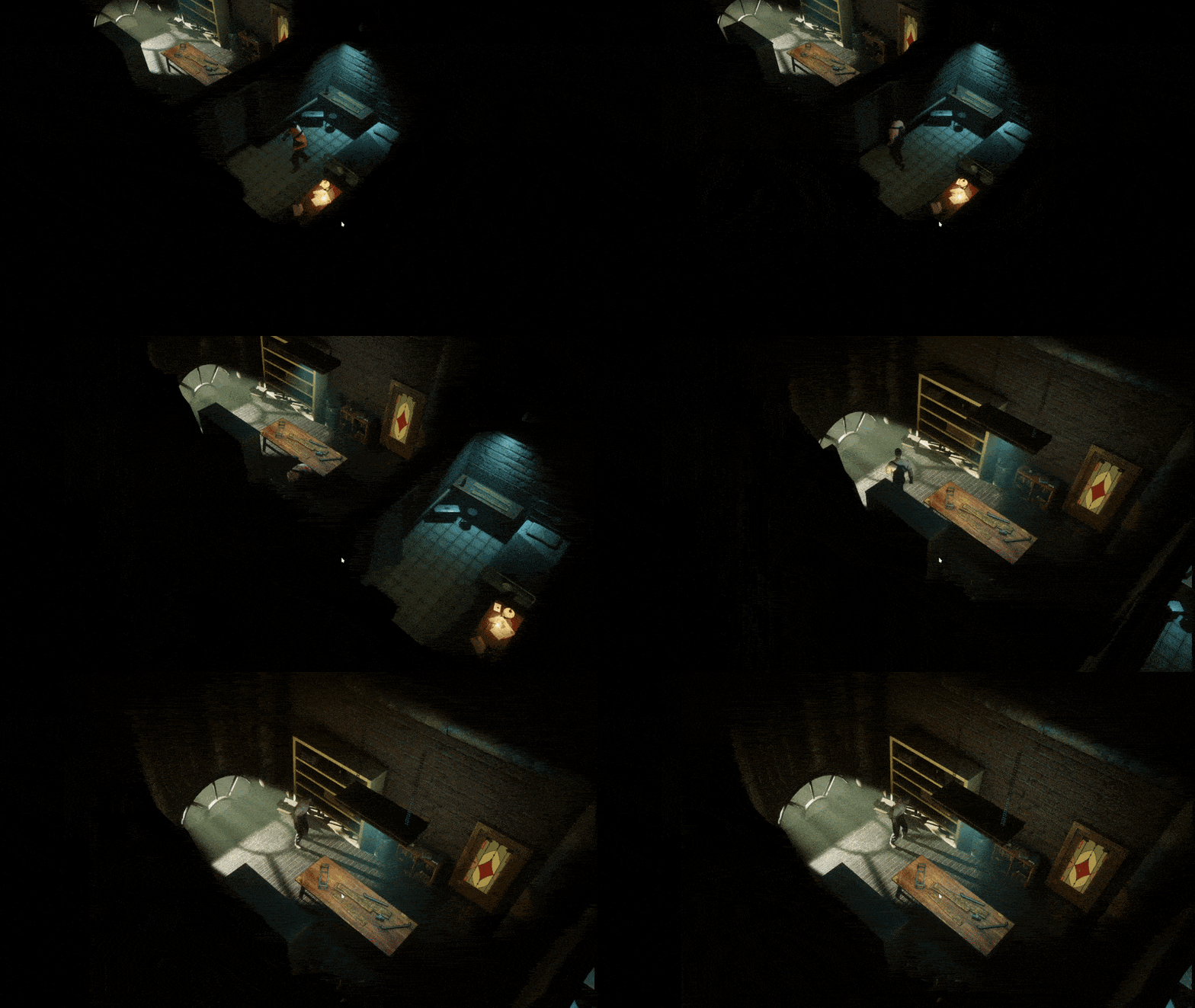
CLEANER EDGES & ROOM BORDERS
We’ve reworked the borders of every room and apartment in Dormitory 73B. The goal was to get a softer, more natural separation between the interior and exterior parts of the rooms, while staying consistent with the aesthetic we're aiming for. The result feels more polished, cohesive, and true to our vision.
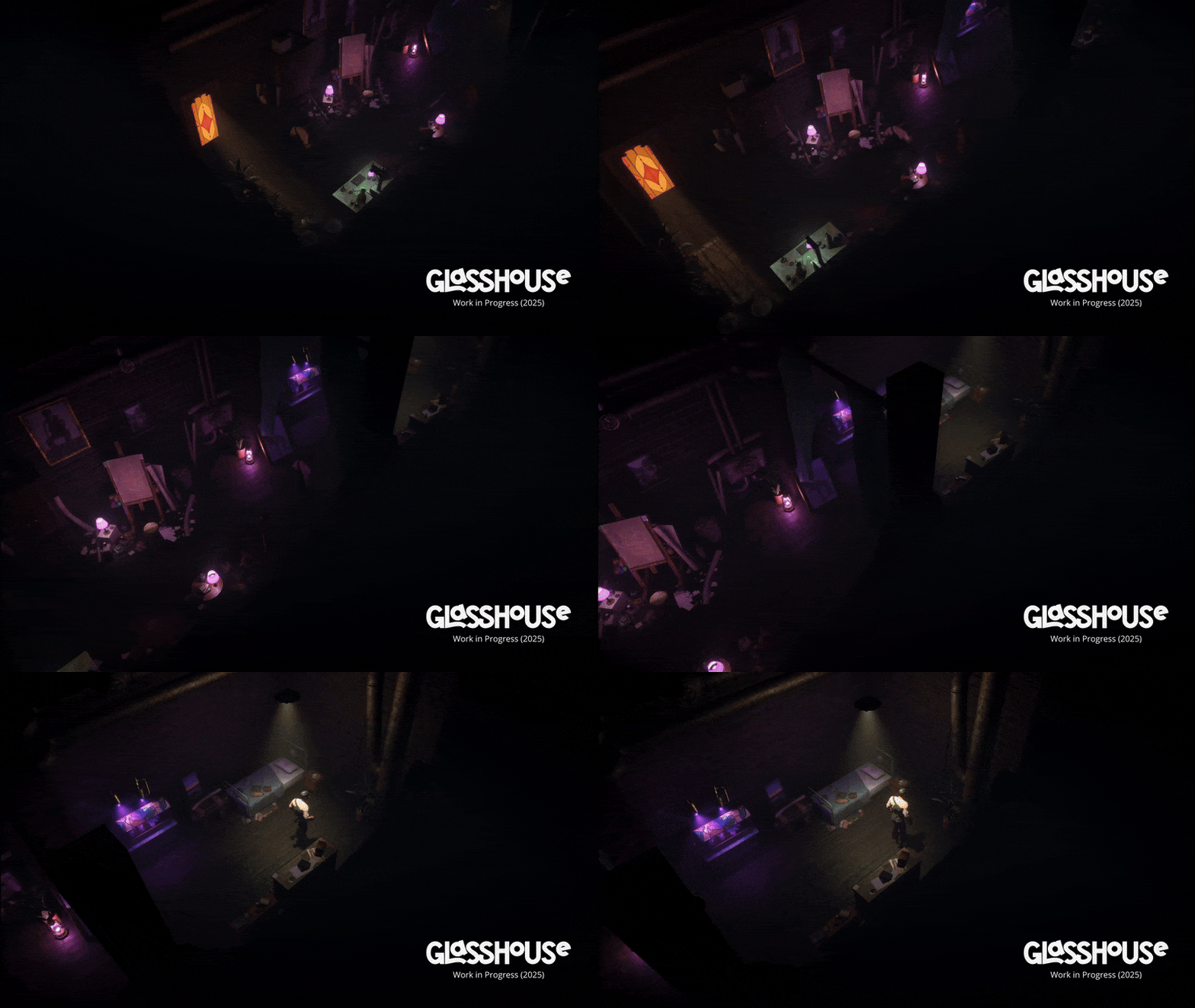
NEW POST-PROCESSING & OUTLINES
One of the changes we're most excited about—and one you’ll likely notice right away—is a new post-processing effect that adds subtle outlines across the entire scene. (well, might be actually tricky to get it via gif)
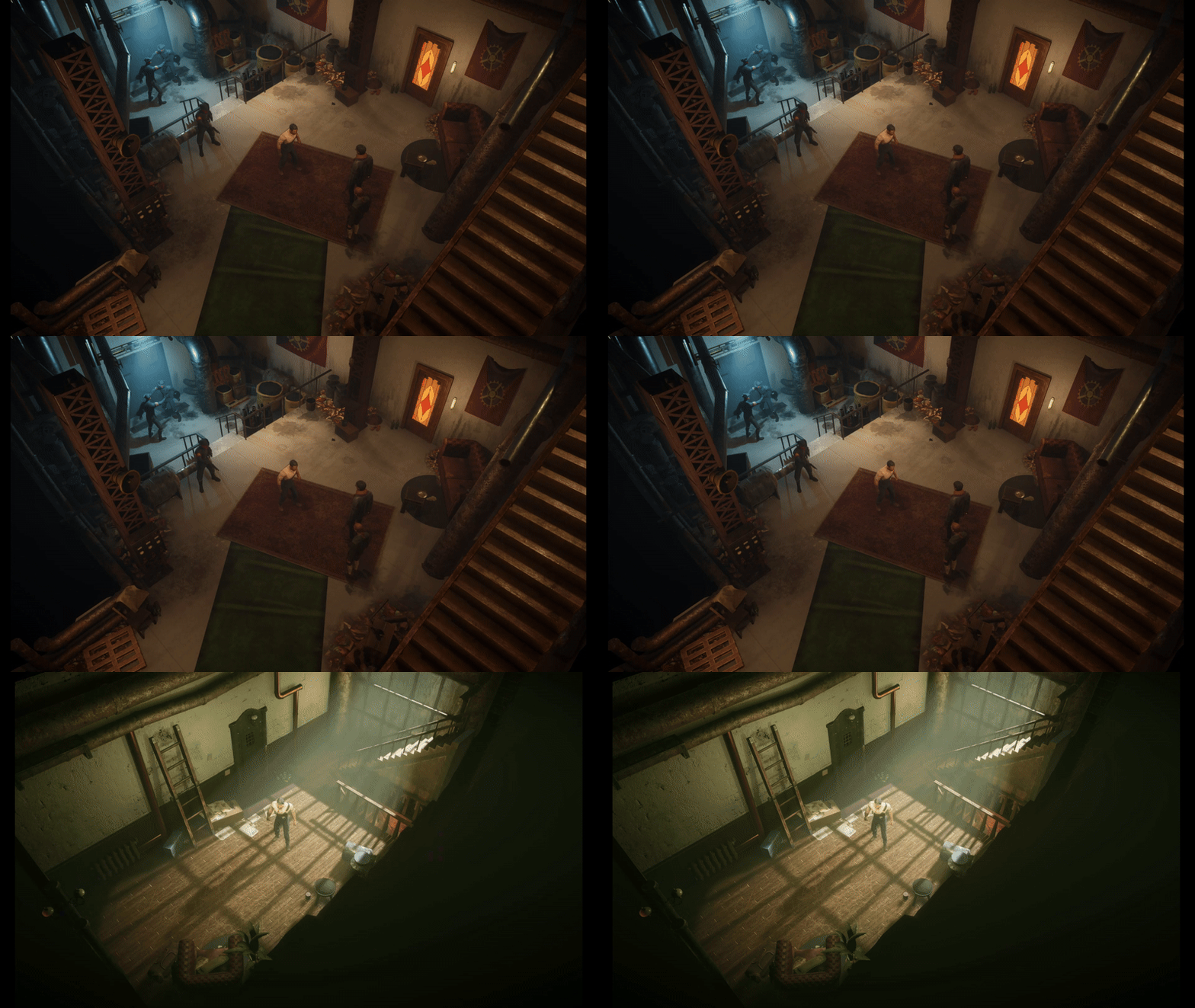
After testing various styles, we landed on an outline shader that felt just right for the tone and identity of Glasshouse. Both the characters and environments now have a light contour that enhances detail and brings out the uniqueness of our art direction.
From an isometric top-down view, this effect also makes small details more readable, giving players a clearer and sharper sense of space and depth.
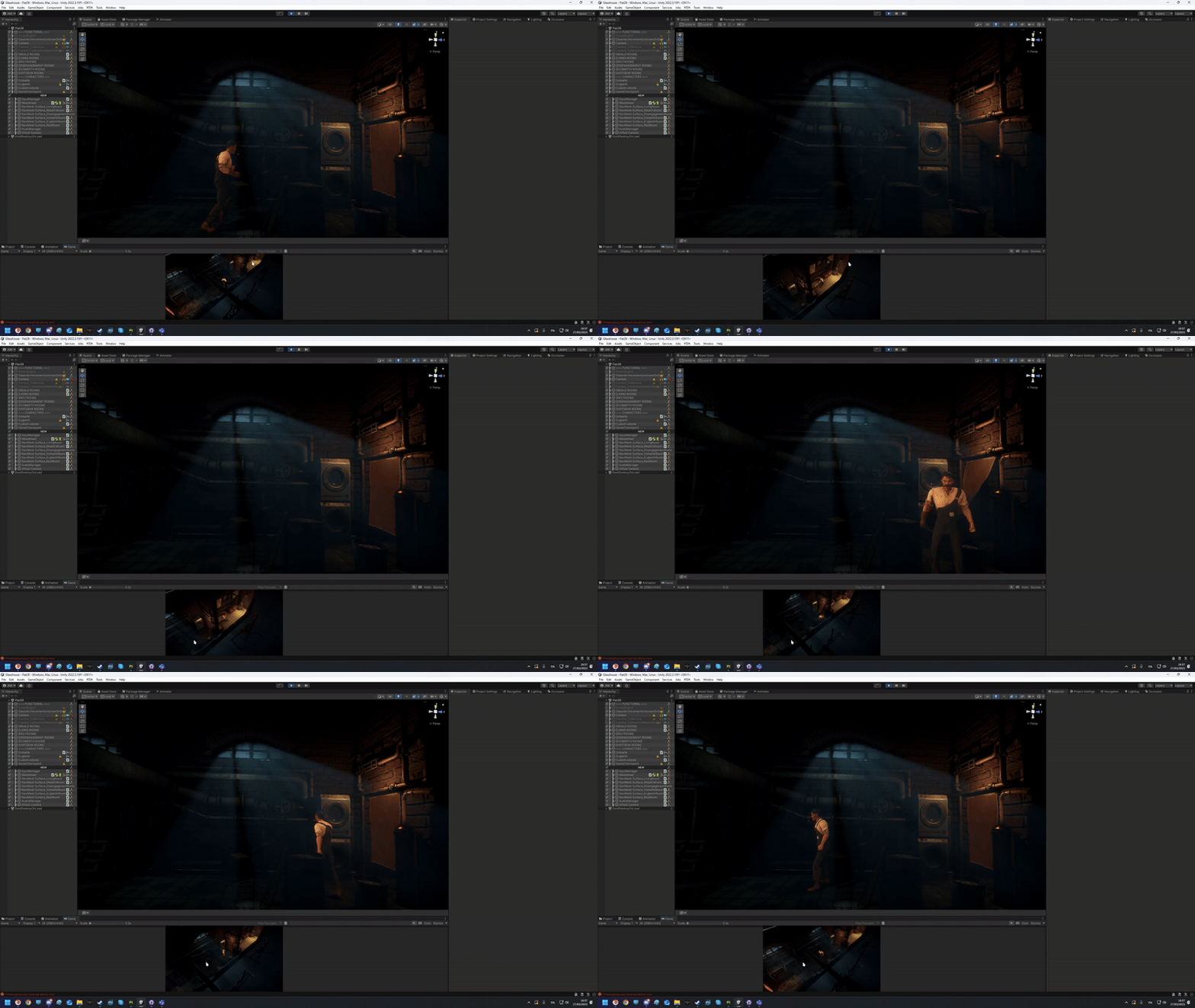
CLOTH SIMULATION
Until now, most of the cloth elements—curtains, drapes, and similar—were entirely static. That’s changing. We’ve begun integrating real-time cloth simulation for selected elements.
Not all fabrics in the game will be dynamic, due to both performance considerations and artistic direction. But certain curtains and fabrics will now react to player interaction—swaying, shifting, or sliding over characters as they move through them. It’s a small touch, but it adds a sense of life and responsiveness to the environments.
DLSS & UPSCALING EXPERIMENTS
While it’s still early to talk in-depth about optimization, we’ve started preparing for it. Glasshouse already supports NVIDIA DLSS 3 internally, and we’re exploring dynamic resolution scaling and other upscaling techniques to ensure smooth performance across a wide range of hardware.
That’s all for now—but more is coming. We can’t wait to show you what’s next.
Andrea Marinelli, Lead Technical Artist
FLAT28 Collective