
Greetings, Captain!
Today's update is going to be quite visual, as we do an annotated showcase of our recent graphical and mechanical work. So let's get right into it!
Current Situation:
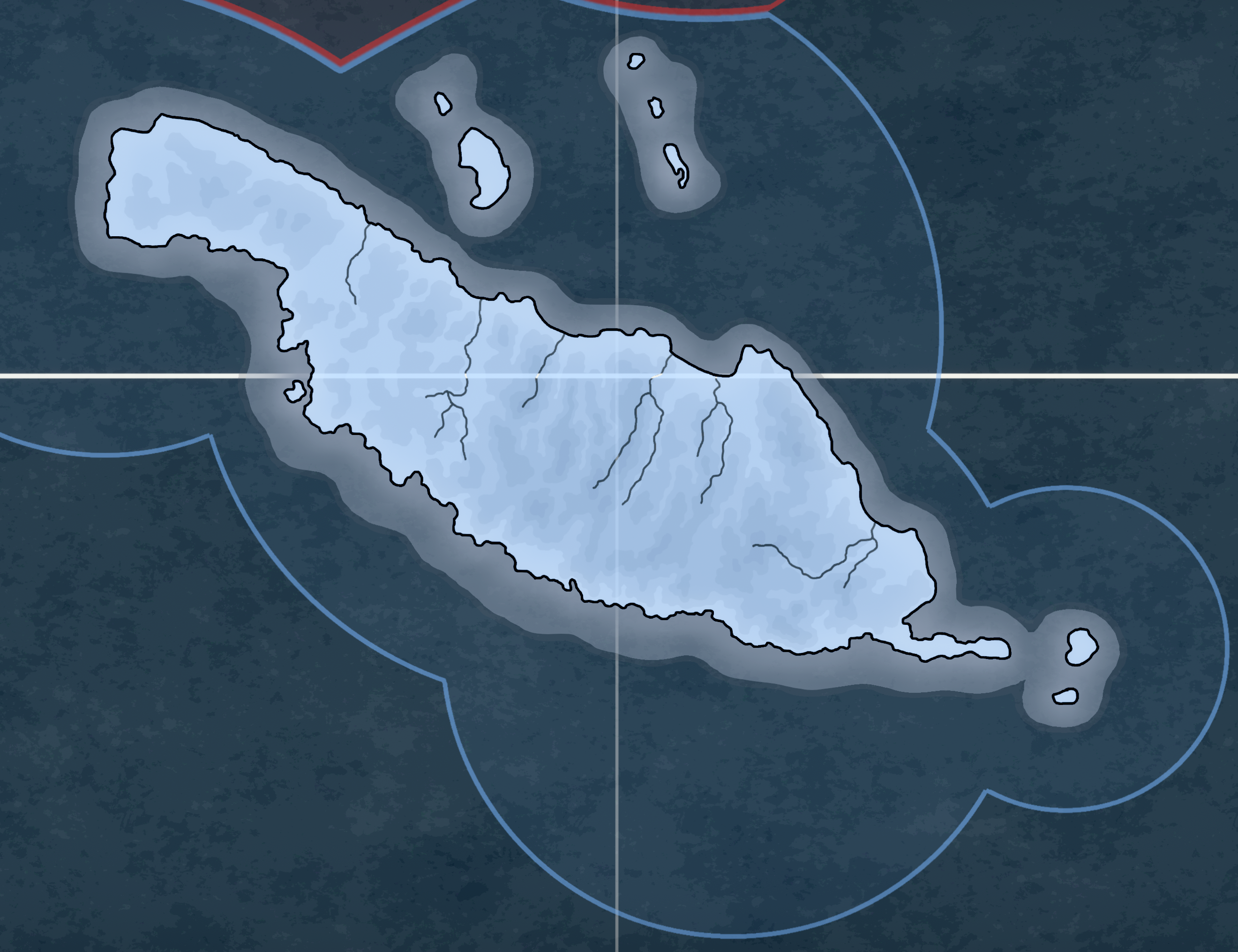
As you can see, the map has been further upgraded by including the topography, complete with rivers. The island you're seeing is Makira, or San Cristóbal, and it is the second southernmost major island in the gameplay region, as well as your starting point in the Campaign.
The map visual is made up of 1 Terrain base + 5 Topographical layers + 1 river + 1 coastline + 1 shallow water layer. Topographical data and rivers are encoded into the terrain layer, so all the chunks have 3 separate layers in final export for use by different shader passes in game.
As you can see, the new map has quite the increased complexity compared to the previous one, and has been the focus of our efforts for around a month as a result. We think that this effort was worthwhile and that this inclusion gives the map a more lifelike feeling, making the islands feel less like splotches of ink on the table. We hope you agree!
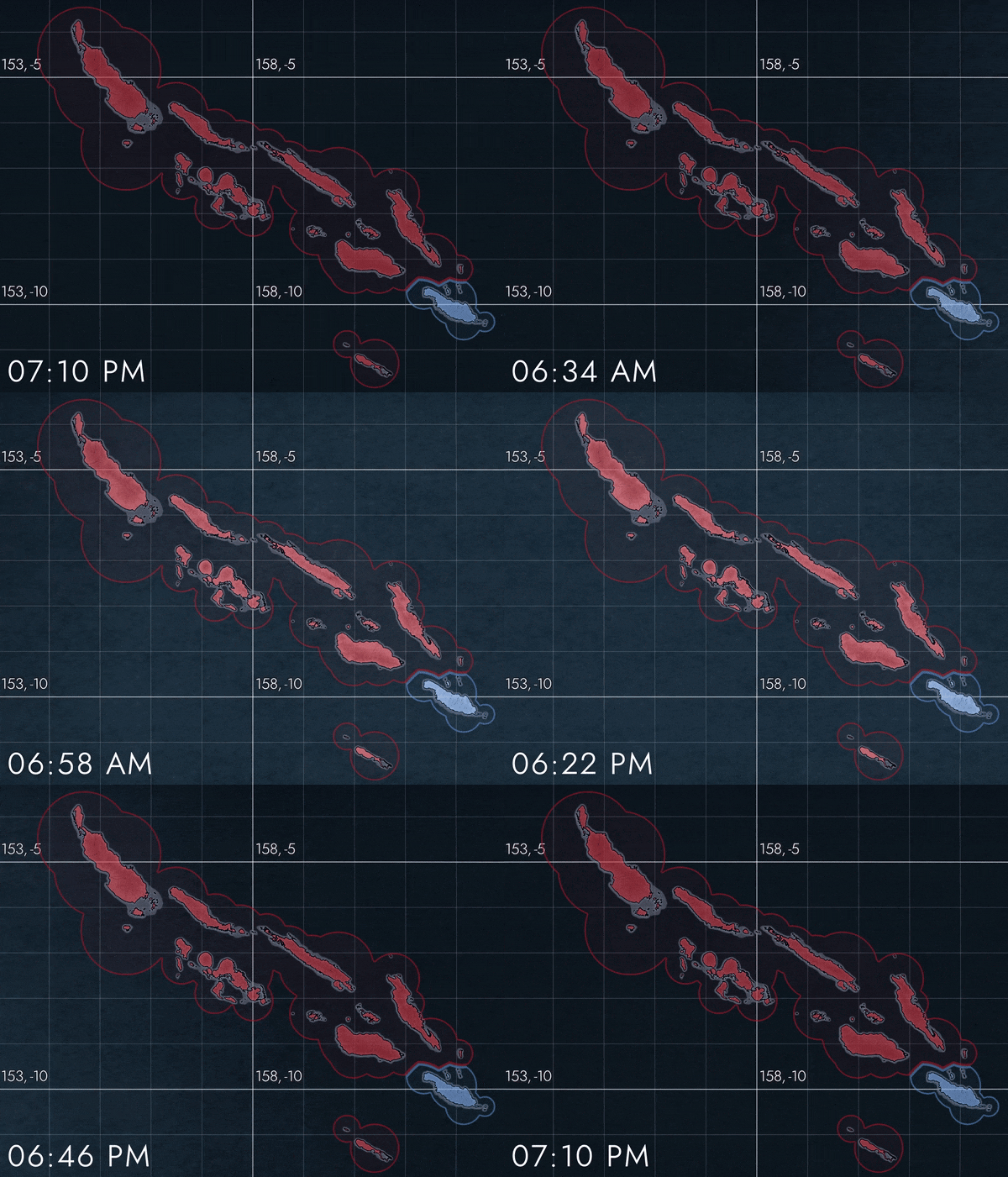
Those of you who have gone through our challenges know that there is already a day/night system in the game where lighting and visibility are adjusted accordingly, and so it shouldn't come across as a surprise that it has now been added to the Campaign map. The time of the day will be displayed as shading on the map and will directly be used in generated engagements as a result.
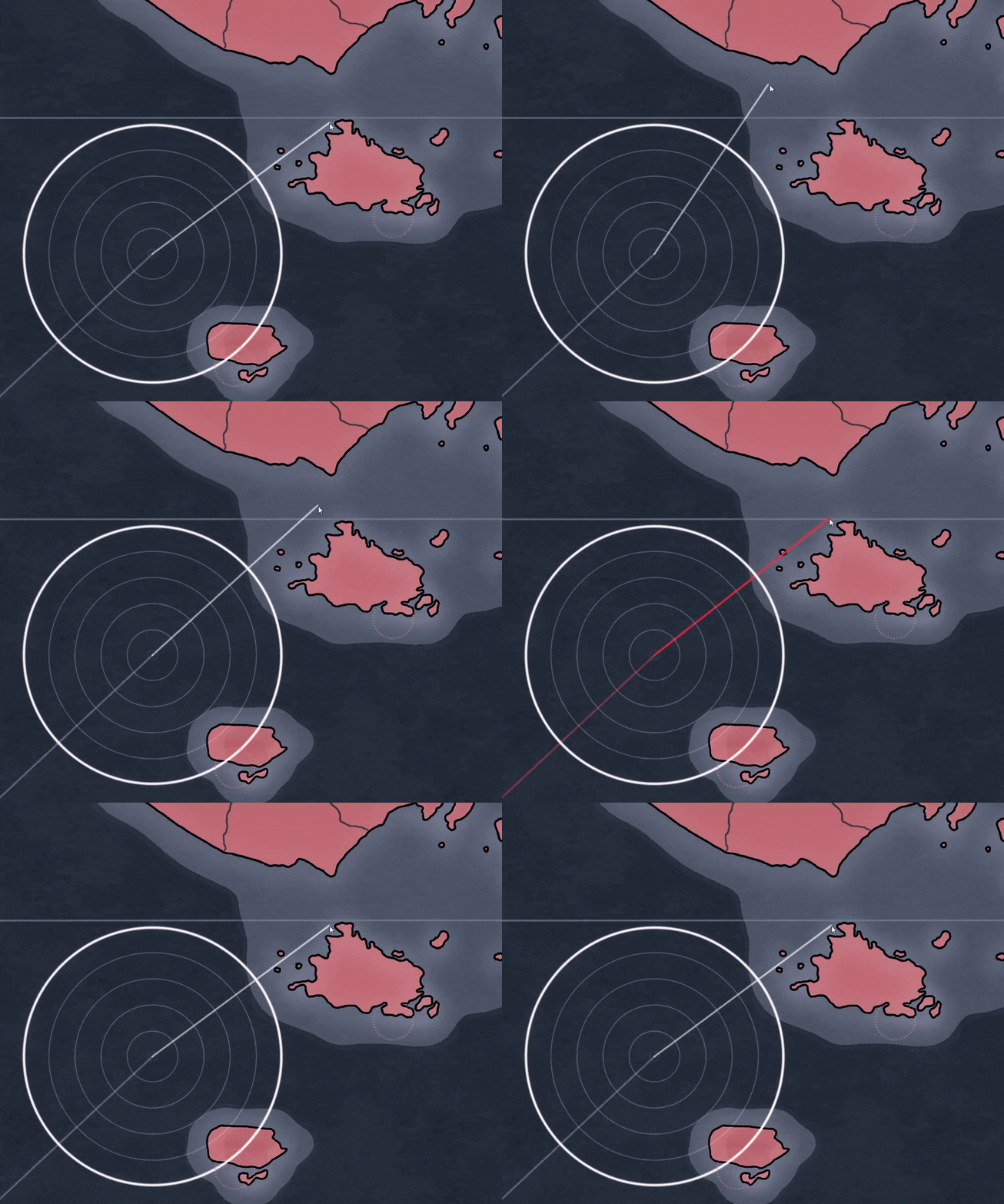
Here is our pathing tool, which is how you'll be moving around in the strategic display. Originally, the pathing tool used to detect obstacles on routes the player created by scanning the heightmap via the CPU, which was one of the reasons forcing us to keep the map resolution small (4096x2797).
The new map is made up of more than a dozen chunks and they're all quite high resolution; even a single chunk that contains Bougainville spans 5800x6724 pixels. We now detect the chunks that fall on a scan and then send them to the GPU, along with the scan vector, to be evaluated for obstacles. GPU threads are distributed on a line according to their indices and they check for terrain with a 3x3 kernel. This method gives near instantaneous results even when scanning through the entire map.
So, enabling faster and better pathing was yet another reason the map had to dramatically increase in quality.
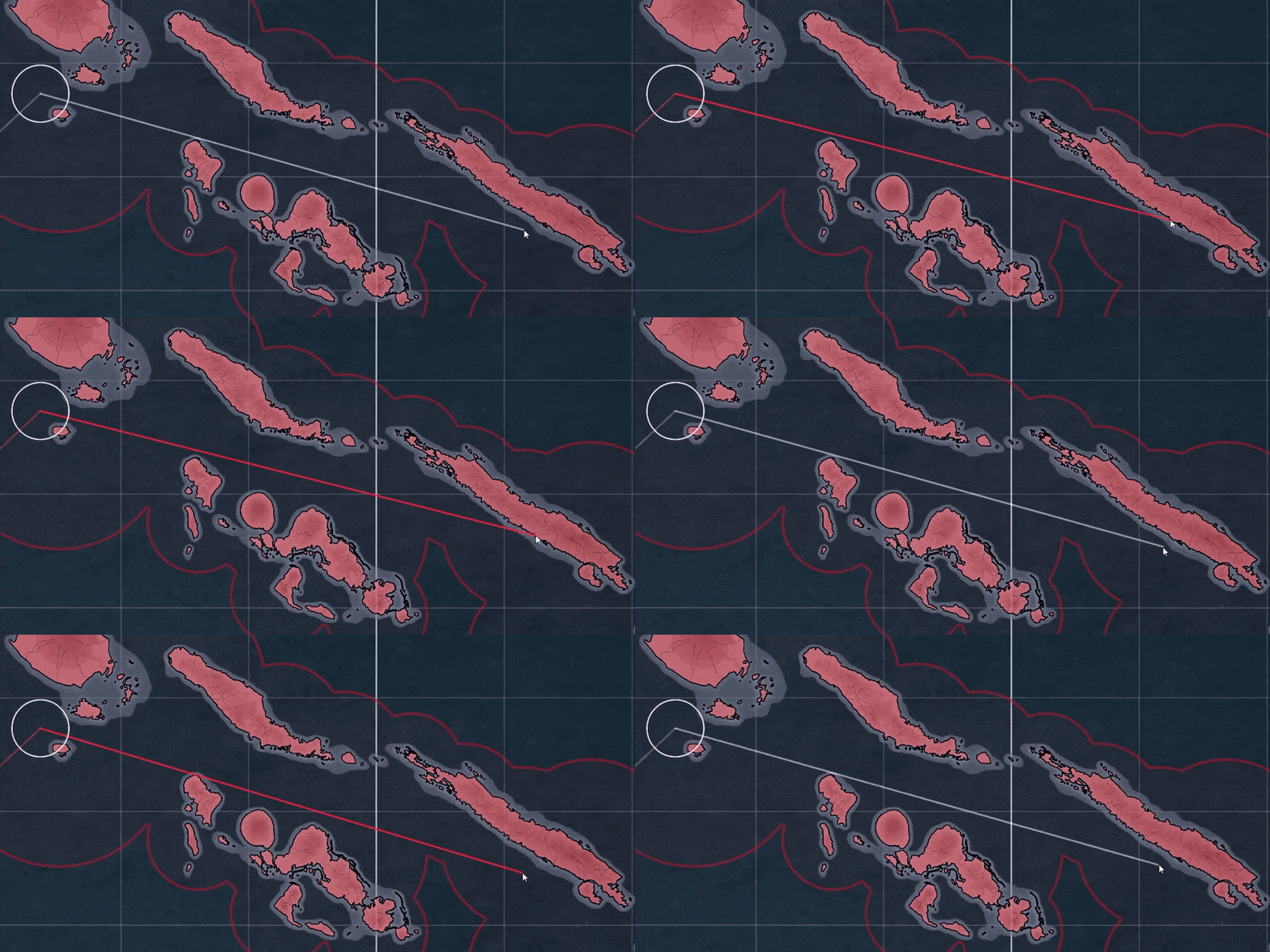
You may have noticed that even at longer distances, the paths are still a straight line. We took this as a design decision given that the game area is relatively small and close to the equator, meaning that subtle curving would have added confusion and complexity to moving around without any gameplay benefit.
There is also no automated pathfinding for the player as of now, and you will have to chart a course yourself by hand. For long distance movement, this shouldn't be an issue, but for more natural shore patrols, or just shore tracing movement overall, so improvements to player navigation are definitely not out of question for the future.
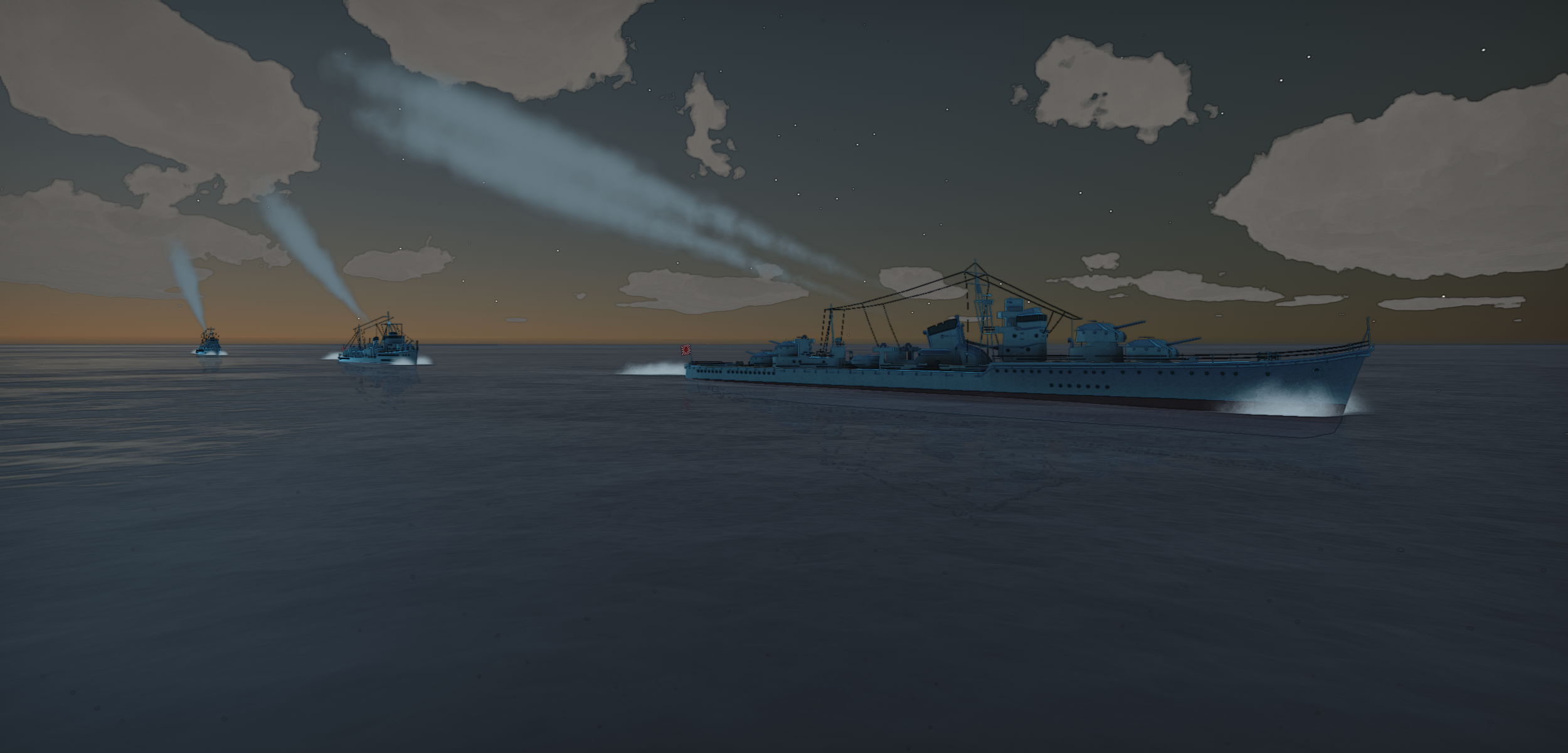
Last but not least, let's talk about the namesake Tokyo Express of this diary. Historically, due to the overwhelming air superiority of the US in the region, transport by slow barges and cargo ships was impractical, resulting in dreadful losses whenever attempted. To make up for this shortcoming, Imperial Japanese Navy admirals came up with the idea of using Destroyers on daring night resupply runs, by filling up barrels with supplies and rolling them out to the sea, hoping they would wash ashore and hoping again that they would be found by their intended recipients.
To make the long story short, it was, strategically, a failure, given it caused unacceptable attrition in the precious Destroyer fleet, and only an estimated 20% of the supply that was put out to sea ever reached its target. Now of course, it would be sensible and plausible to just ignore this experimental misadventure and leave it as a footnote in history, but we realized we might have some fun with it yet!
From the point of view of realism, the Imperial Japanese supply chain should in no way be competitive with that of the US, but we've already the conceded that they should probably mirror the mechanics so as to not take away player agency by turning every Campaign into an inevitable victory by attrition. So, creative liberties are already taken to make the Campaign engaging and interesting, and that means we can salvage the idea behind the Tokyo Express as well and actually include it in the game as a genuine and credible tactic!
Therefore, Tokyo Express will be a part of the game in the form of small, mostly lonesome Destroyer patrols moving at night with a purpose, delivering small amounts of supply to target bases. While they won't make too big of a difference for the overall supply situation of a base, they will tilt the supply balance, absent player intervention, in the favor of the enemy, and also give you a high-risk high-reward target to engage at night. After all, they do have huge barrels of supplies, some of which you might be able to pick up for a nice little extra.
Goals for the Next Cycle:
For the next cycle, we would like to move on to the resource system, which we intended to do earlier before deciding to spend more time on the map and other associated mechanics to further refine and polish them. Patrols are also on the itinenary; we've made the battle ground, so it's about time to start populating it, don't you agree?
That will be all, Captain!
T.T.