
Hey everyone!
Today, we’re going to talk about the development process of one of our gameplay systems, namely Stealth.
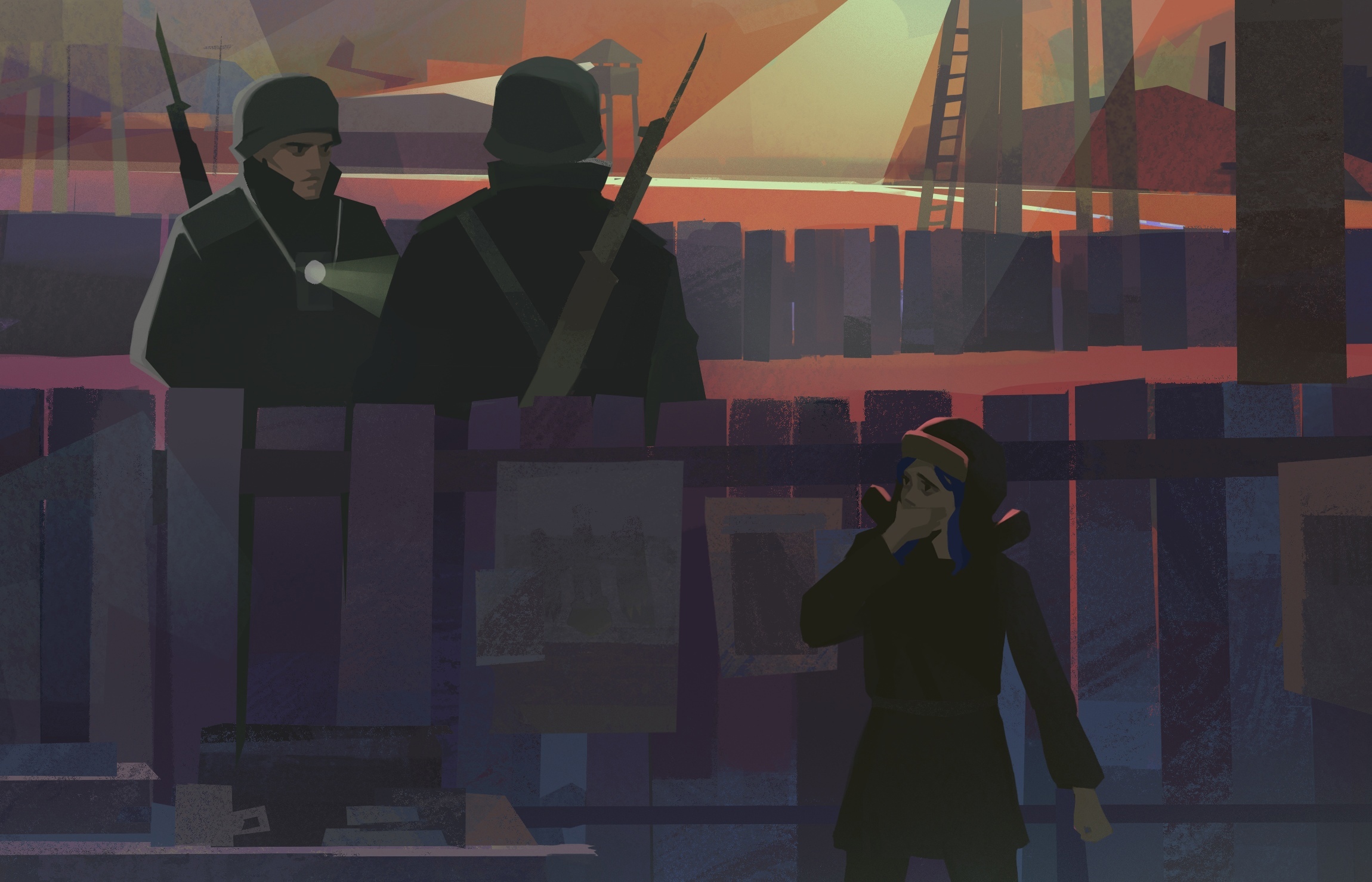
During the development process, we tried quite a few different mechanics: some of them we kept since they worked well; some just did not feel right for the game and had to be abandoned. I want to point out that, while developing the game, we prioritised the story first and our primary goal was to choose mechanics that would support the narrative.
We understood this was not the easiest approach, but felt the consequences and complexity of it wayyy after the development was already underway. We do not recommend doing this :D Of course, now we have found our footing and do not have any regrets about this approach.
So, shrugging aside the fact that we started from the narrative, we had a wide variety of other difficulties, a majority of which were dictated by the story itself. For example, as you know, our main character is the girl Asya, who, due to her age and character, cannot and does not want to fight. For a war game, the inability to use combat mechanics is quite a challenge... Another challenge is the realistic historical setting. No portal guns and flying robots! You get it.
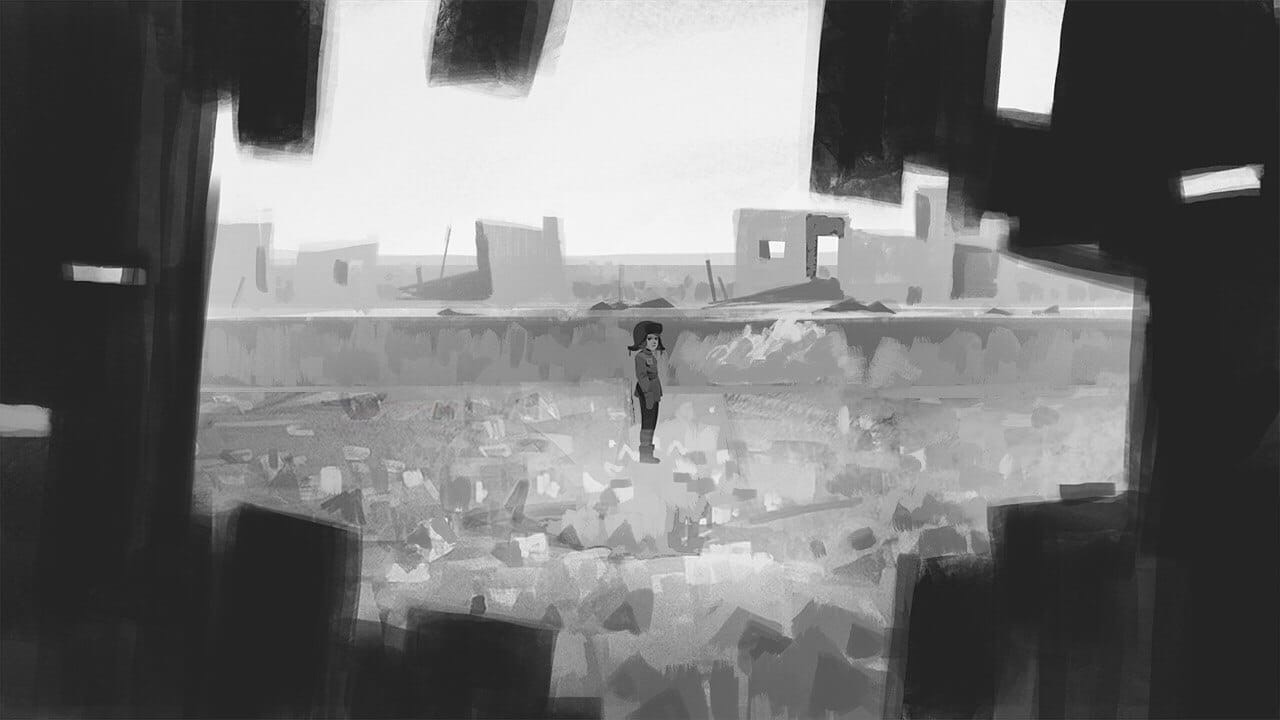
Of course, there are other narrative games out there and somehow they get by just fine. But the fact is that our story is set during a war, which means that creating tangible tension is still a challenge that we NEED to overcome.
This is how we came to the stealth mechanic.
We knew right away that stealth in our game would be pretty simple. It was very important for the team to make sure that stealth in the game is not as nuanced like in other games that rely more on the mechanic like Metal Gear Solid, but still keep the player engaged and invested in completing the level. After all, we primarily have a narrative game and storytelling is our priority.
The mechanics of basic stealth were a piece of cake. But the main issue was that it was near impossible for us to predict if the player response was going to be on a par with what we intended. Will the player believe in the reality of the situation, and won’t ‘fall out’ of the narrative?
This is generally one of the key problems when making a game with an emphasis on story: nothing is clear until the level takes on a recognizable form. No tiny nuance can be overlooked, as each plays a major role: location graphics, lights, character animations, sounds, music... but they all require veeeeery long hours of work.
All this to say, sometimes you’ve just got to suck it up, and just do the work without knowing all the details, and judge it only after it’s done, with the whole picture in view.
Back to stealth.
Another great problem we faced was threat indication. In the prototype, we were able to use indicators that everyone understands like "green = safe, red = dangerous". But this was incomplete and, as such, unacceptable in the finished product.
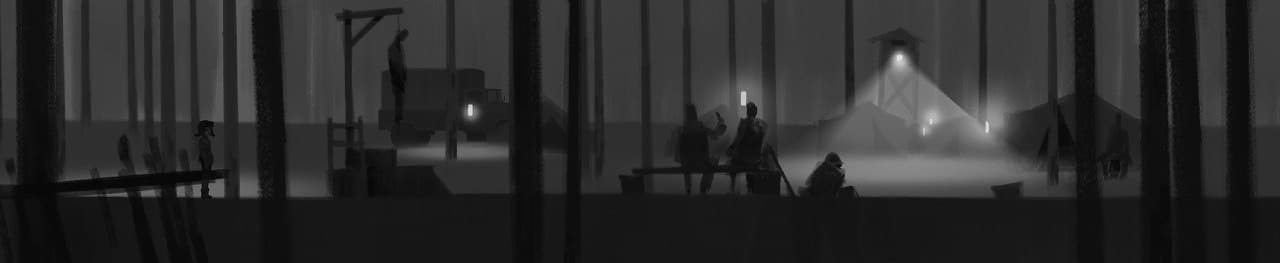
After a lot of trial and error, we settled on lantern light as an understandable indicator of danger. After sketching out the rough graphics, animations, and sound, we knew we were heading in the right direction.
Even though this is still far from the final result, you can clearly see that the main ideas were laid down during this period.
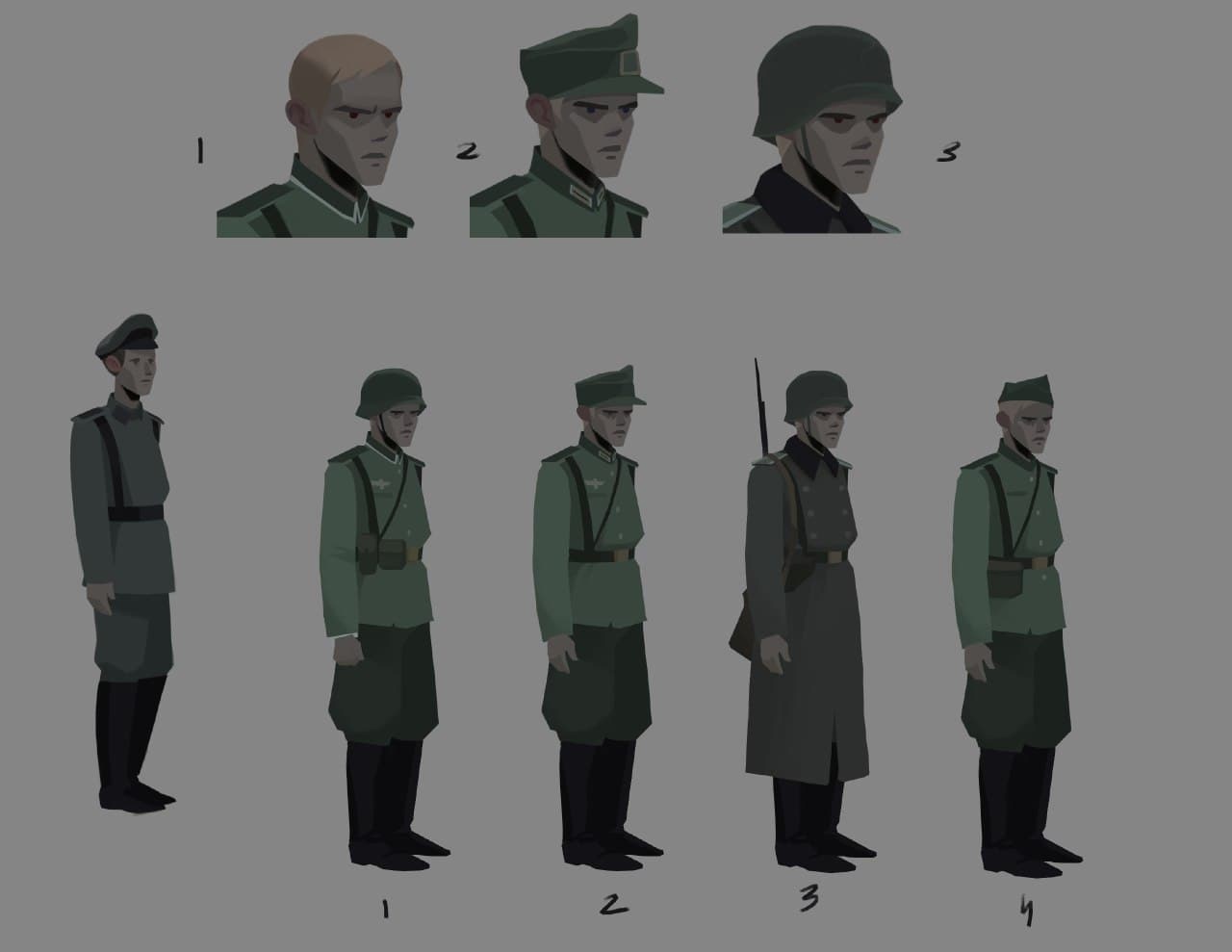
Another great idea came from our game designer, who suggested using sound to indicate danger. When the light of the lantern passes next to Asya, you can hear a crackle that indicates a light source close by. Of course, "light" has no sound in real life, but such a sound effect allows a certain feeling of immersion to be experienced. Sounds crazy, but it really works!
From a technical point of view, it works like this. There is a trigger (or several triggers), which have a link to the object of danger - in this case, a soldier. For each trigger, the viewing angle and time are set. If the player is in the trigger and enters the soldier's view within the specified time, Asya gets caught and you are taken back to the start of the level.
If the player is in the trigger, but outside the soldiers’ field of vision, then the timer gradually decreases to zero, and gives Asya some time to escape.
In parallel, a separate state can be set for the object of danger. He does not have to stand and look near the trigger, he can walk and go about his business. And after entering the trigger, this state changes.
Even with such a simple system, it is possible to make places where you cannot raise your head above the shelter. To make this happen, we just placed the trigger above the character.
Although this is not a systemic approach (like a sensor system), it allows us to conveniently set up and direct stealth sections.
At the end of the day, it is up to you to judge whether we succeeded in implementing all of these systems. We can only promise that we still have some tricks up our sleeves when it comes to this mechanic. We hope you have fun figuring it all out when the game releases!
================================================================================
Thank you for your support, we have much more content for you, so stay tuned for our upcoming DevLogs ;)