Summary
I wanted to create a post to highlight the current system for creating AAA games with Game Dev Masters. I want each new level of progression in the game to come with additional features, and increased complexity. With a focus on end game. This post outlines how I currently have achieved that for AAA games. This system may change, and or will be expanded on in the future. This is the current version of this feature for EA release.
AAA Design Requirements
The first aspect of AAA games that makes them very different is the fact you can no longer make these games alone as a studio.
You must have acquired at least 3 of the 16 available companies.
To Acquire companies you need to own 51% of more of the holding for that company. Once you have any company to which you own 51% the "Company Holdings" menu becomes available.
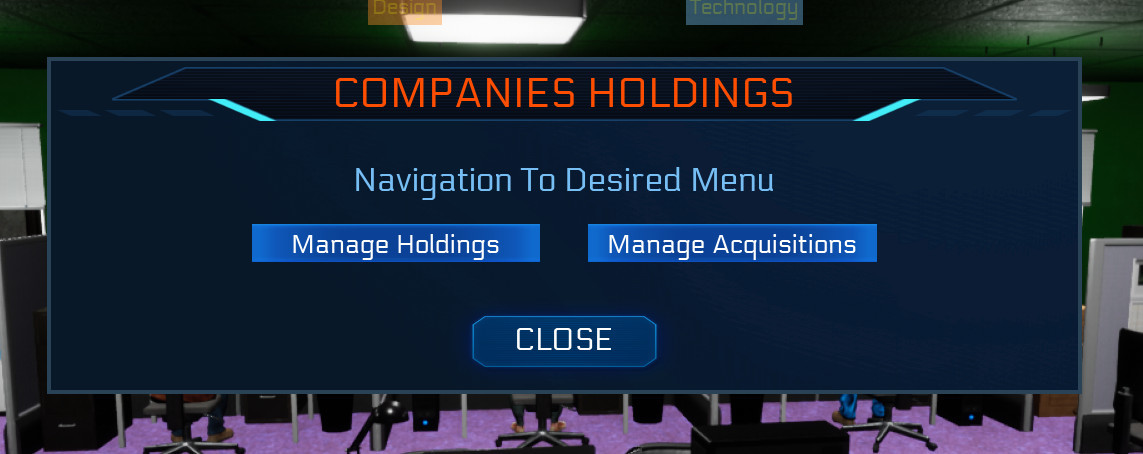
From the company Holdings menu, you can view your holdings. Which are the companies you own 51% or more in, or you can view your Acquisitions. Which are the companies that you have acquired as a directly controlled studio underneath your own.
From the holdings menu, you have the option to acquire each company listed. To do so you need to pay off any holdings for that company that you do not possess IE. If you own 51% you need to pay for the other 50% to acquire this company.
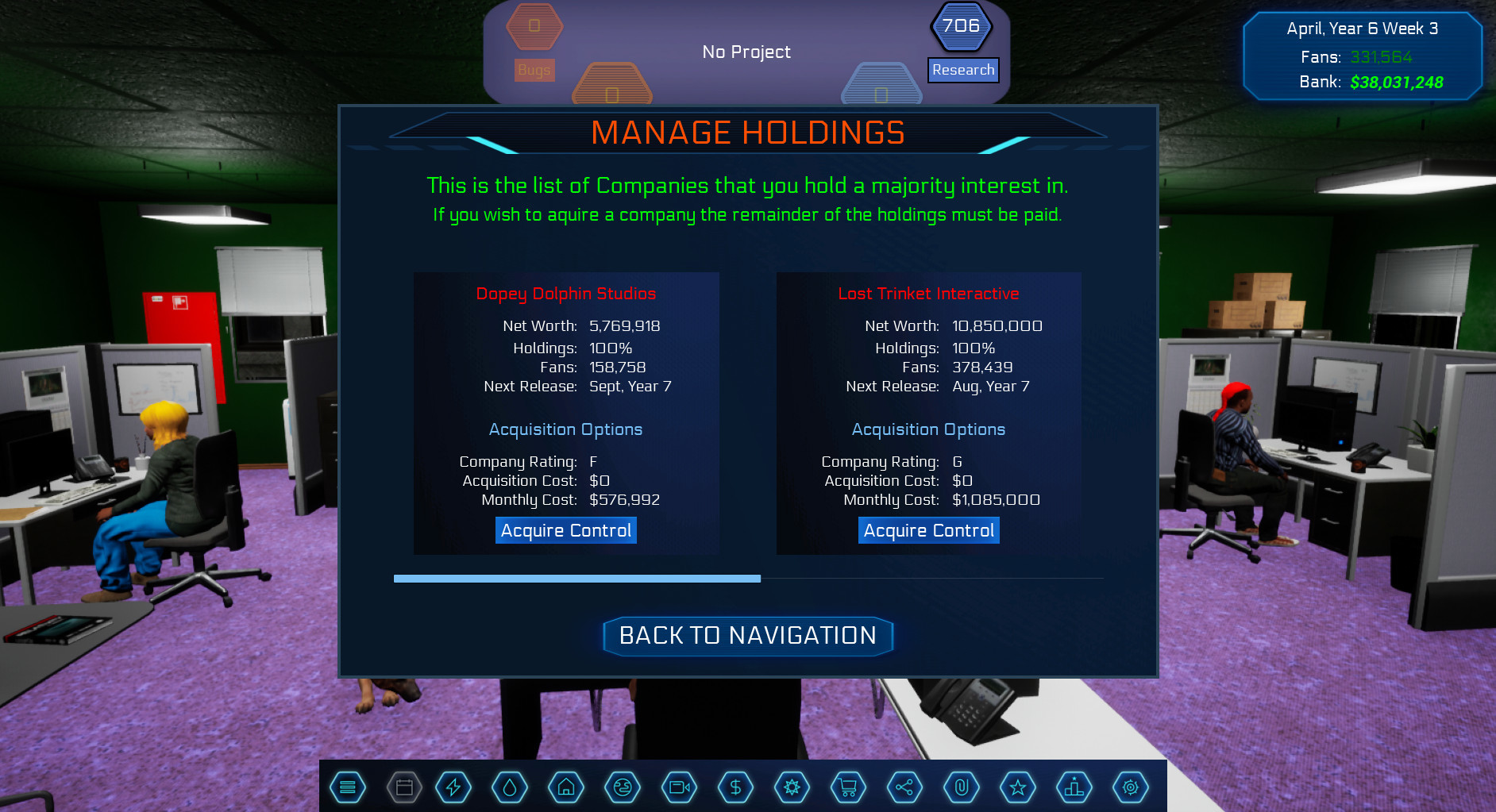
You are also shown the exact release month of the currently being developed game from that studio instead of just the "First quarter / Second Quarter" etc list you can see in the top 10 menu.
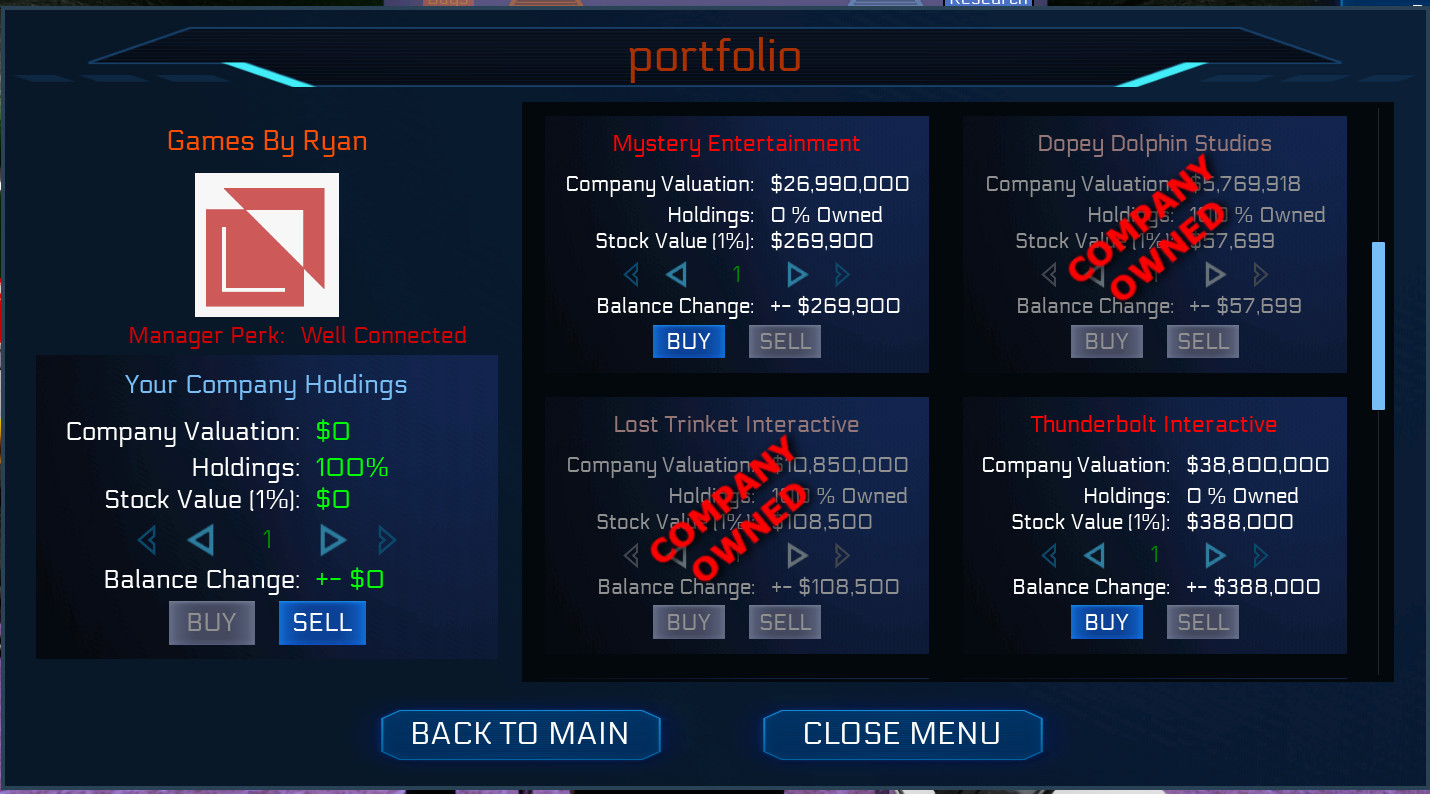
Note that when you acquire said company they will no longer produce games on there own and they will cancel whatever is in development. So if you see there next game comes out next month you might want to wait to get that subsidiary payout before you acquire said company.
Once you have acquired a company you can no longer buy / sell it's holdings. You now have direct control of the company so they are invalid in the portfolio menu show as such.
From the Acquired company section of the holdings menu you will see an entire new set of stats.
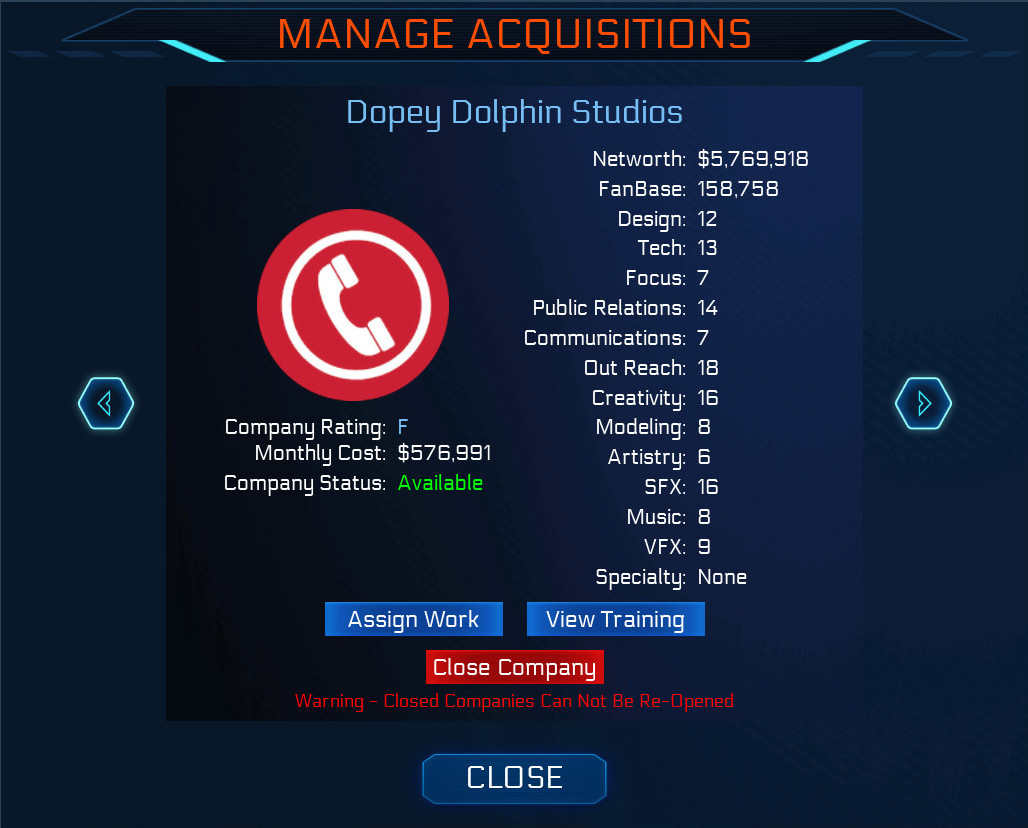
There are 12 new stats each pertaining to a section of AAA game design.
The 4 area's of AAA game design are Programming, Level Design, Sound / VFX, and marketing.
Currently your own company can only handle the programming section of AAA game design, and you can not create a AAA game without your company involved. This may change in the future, but it would take a lot to come up with a new interesting way to do the other sections. Nothing is off the table, but for now you must be apart of AAA games as the programmers.
Stats fall into the desired areas..
Programming - Design / Tech / Focus
Level Design - Creativity / Modeling / Artistry
Sound / VFX - SFX / Music / VFX
Marketing - Public Relations / Communications / Outreach.
Your initial stats are generated for each company based on the rating of the company at the time of acquisition. Basically this means a cheaper company will be easier to acquire, but have poorer stats. A higher rated company will have better stats, but will also cost more to acquire as well as monthly fees.
After you acquire a company you are then responsible for paying monthly fees to that studio equal to 10% of there net worth. Yes this does get super pricey, but the gains will far out way the costs if you create quality games.
Training Stats
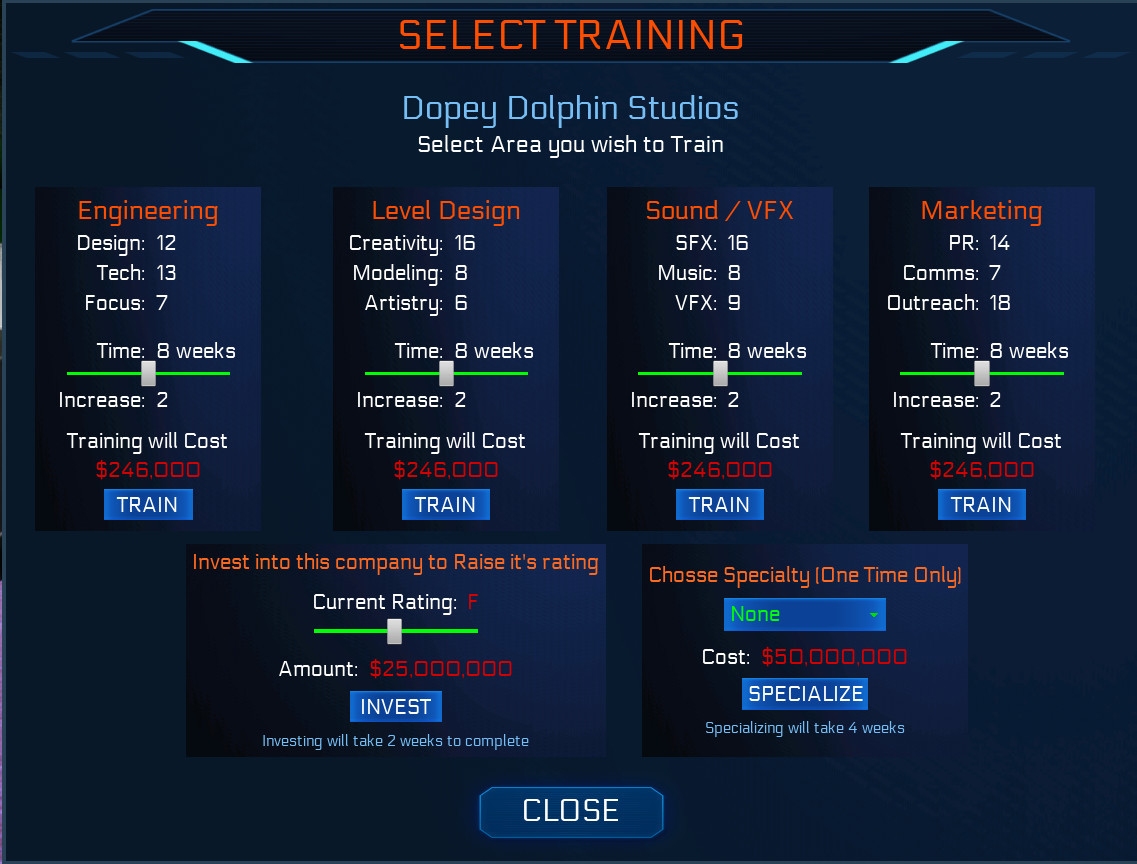
To train a stat you simply pick the section you wish to train, and scale the length of the training and hit train. Once the training weeks have past this company will receive an increase in all 3 fields of that training.
The amount of stat increase / cost of training is determined based on the company's current valuation. Higher rated companies can gain much more from training, but it does cost more. As you decrease or increase the length of training you will receive more or less stats and pay more of less cash. It's cost effective to go for max length training, but a training company can not create games. You may want a short session so you can begin your next AAA game with this company.
Investing in a company is simply putting your cash into there net value. This will increase there net value by the investment amount, and cause the rating of the company to adjust to match. This is how you can take a small 2 million dollar company and raise it to a S+ rated max stats behemoth in a shorter time, by investing to increase the rating which increases training values.
Specialties are what you might think they are at this point. They represent the 4 sections of AAA game design, and they provide a positive boost to the quality of the work being done in that section if the responsible company is specialized into the area.
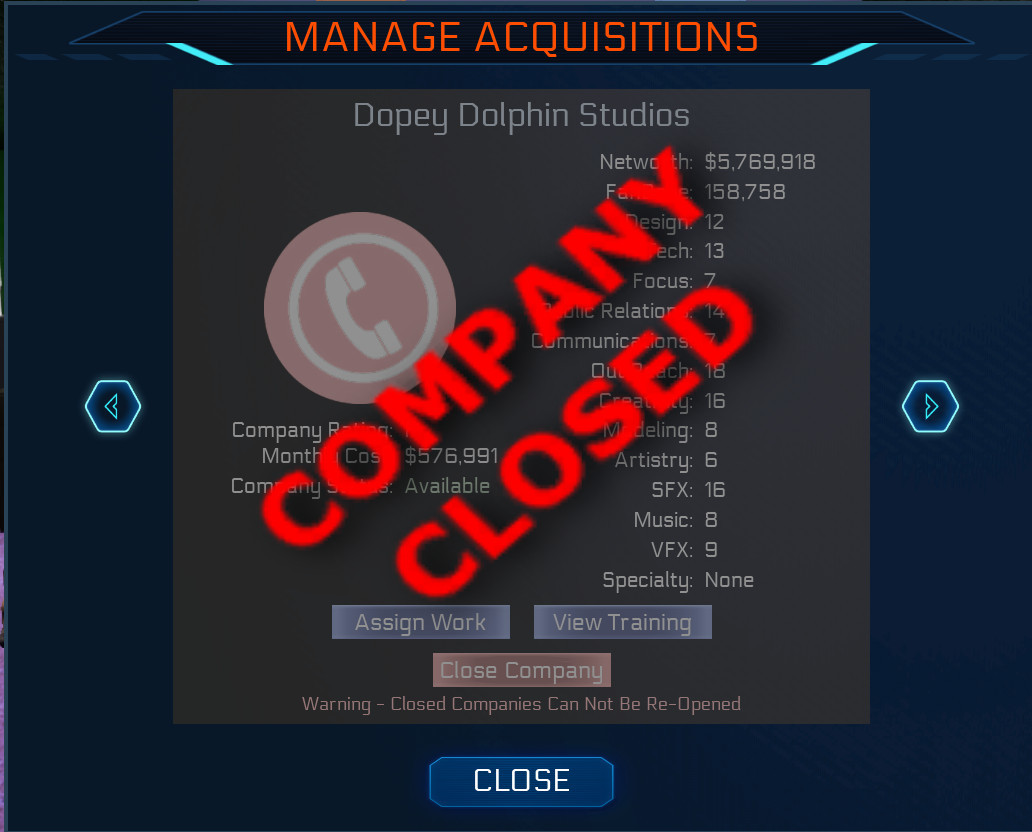
You also have the ability to shut down any company you have acquired, but no longer wish to use or pay monthly costs towards by clicking close company. This can not be undone though, so use with care.
Finally you have the ability to have acquired companies create there own small - large games without your involvement. For this you will choose what type of game you want them to make and all the choices you would expect, the main difference being you wont then do the work. They will have a timer and when it's ready they will release that game and you will get 100% of the revenue. I am over simplifying this section atm cause I am still deep into codding this one to ensure it's correctly balanced. I will share more on this section when it is available. From a player perspective you will simply make choices, then set it and forget it, but from a code stance it's significantly more complicated to do correctly.
Now to make a AAA game..
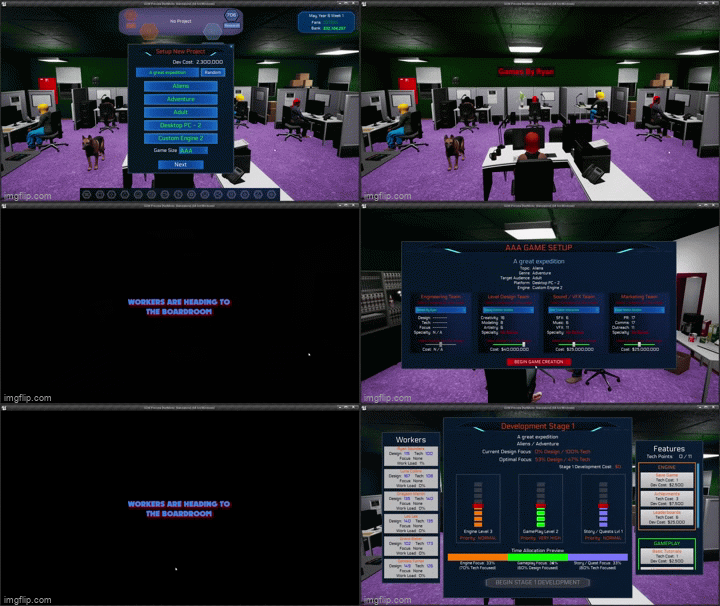
To make a AAA game you simply create a game as normal and choose AAA as the size. This will not be available to you unless you have a full staff of 6 workers in your studio, as well as 3 acquired companies that are currently not busy with work or training programs. Provided you meet the requirements you will be able to select AAA at which point you will transition to the board room.
Once in the board room you will be presented with the AAA design menu
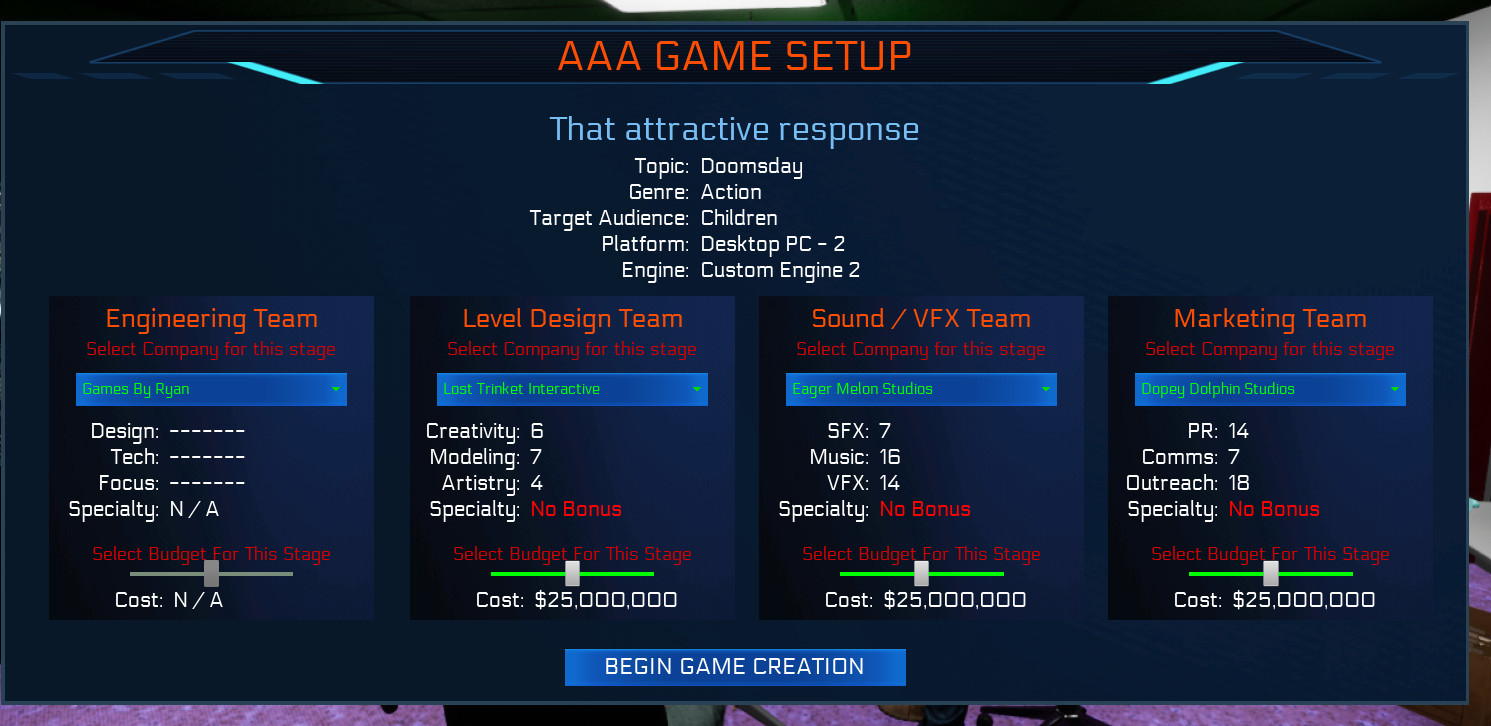
From here you will need to select the company you wish to use in each stage (your own must go in the Engineering Team). You must also decide the budget for each section minus your own, this ranges from 1-40 million per stage.
Based on the stats of the company in the stage, if they have the correct specialty or not, and the budget for that section. A score is determined for each section.
You can not run marketing routines for AAA all hype is the sole responsibility of the company slotted to the Marketing Team for that game. As it stage begins your hype will increase to represent there hard work.
On Begin creation you transition back to your office, and begin game design as normal. Mind you the tech / design totals / min engine tech lvls / workload per stage and more are all increased, and you will need a great group of workers, equipped with a variety of skills to overcome these requirements.
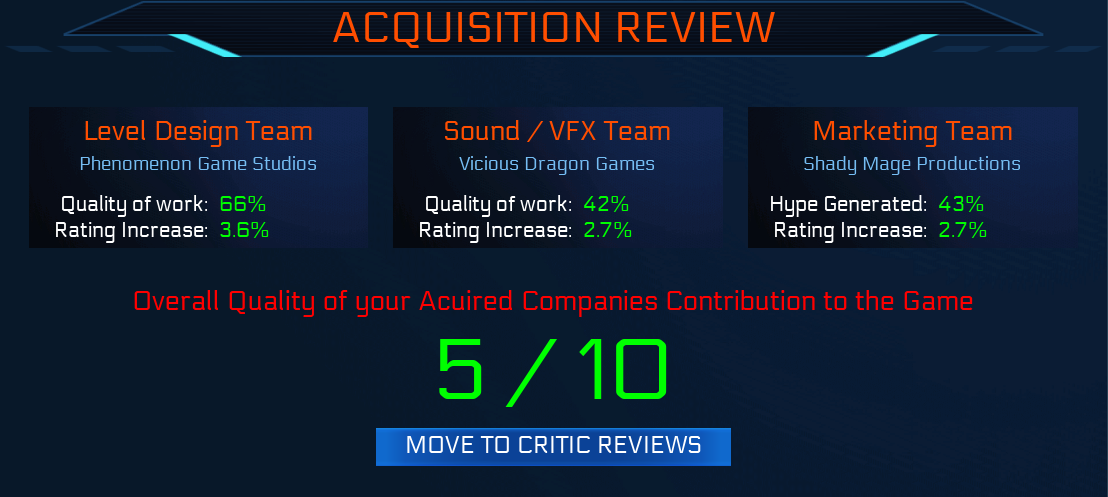
Once you complete your game, and your score is derived based on your work it is then combined with the scores from the level design team and the sound / vfx team to come up with your base_score 0-10. Then the normal review routines run and you are graded on your work then sales created. Before you move to the critics reviews as usual you will get a review of your companies, and see how they performed for you as well as how much rating they gained based on the work they did.
The aim is to have AAA games cost you a small fortune if the budget is high ranging up toward $150million with the ability to yield in the billions if you have enough fans, and the game is created well.
However not every game is GTA 5, and you can make AAA games for only a few million that can also sell just as well. However low budget games will suffer quality loss, so you better have an incredible team on hand in each section if you want to make a cheap AAA game and crush sales.
I will leave you with a small clip of the transition to and from your office / board room although it is WIP. I hope this all made sense, and I hope tycoon fans out there are excited for this level of added complexity / difficulty as we move towards a challenging and engaging end game loop.