
I recently added the 9th island to the game. It's actually the 1st one you'll play in the game, and it was a relatively smooth process to create and polish it. In fact, most things I've been working on recently have gone smoothly (I don't believe in jinxes). I'm in the process of polishing the build so it can be played by press and YouTubers, so I've been jumping around on various things and grinding out little tweaks to make the game better.
One task that I was unsure about was trying signed distance field rendering for the UI. You probably don't know what that means (there's also a 3D version of them for totally different uses), but it's basically a way to render solid shapes using gradient-ized versions of an image. Here's a part of the original UI texture for the game, and the SDF version below it:
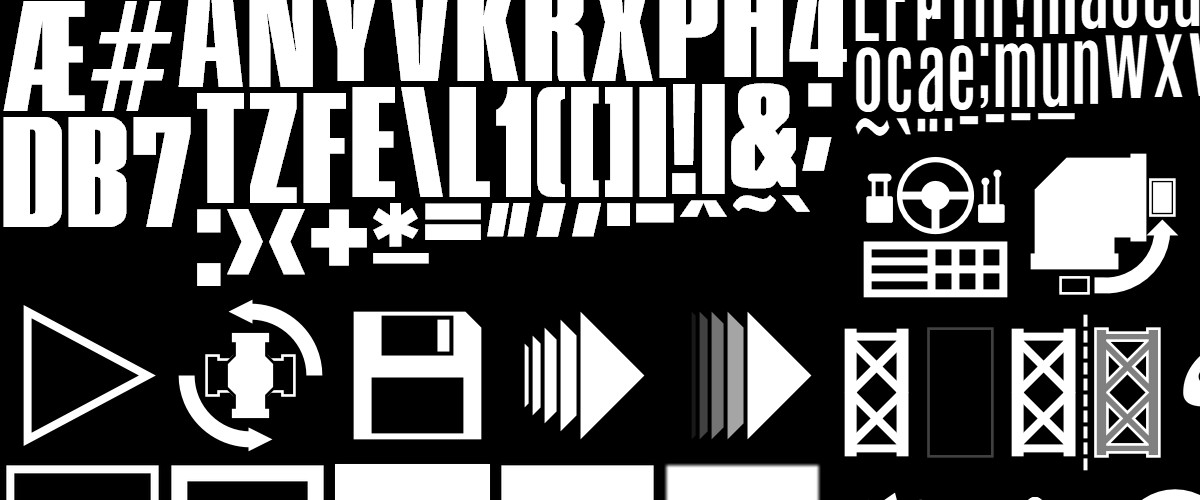
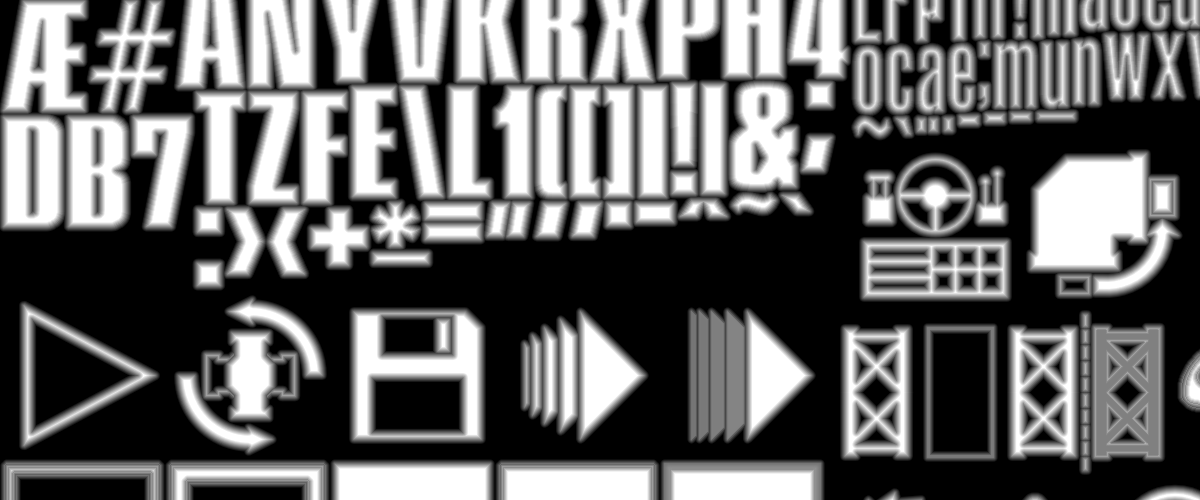
Looking at that and the shader code, which is quite simple overall, it's not clear why it makes it possible to render the UI elements at much higher resolution than the original image, but it does. Here's a cropped shot of some new objective list UI in the game at 1440p:
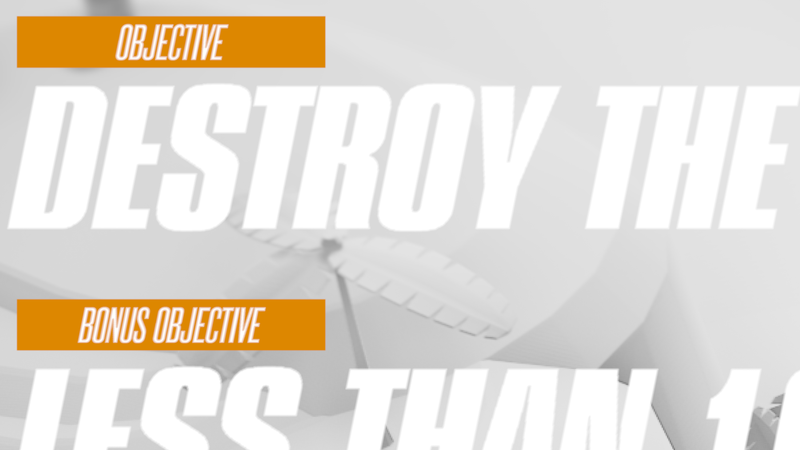
That text is higher resolution the original text from the UI texture, but it still renders quite clearly, and I can adjust some numbers so it's even sharper. That doesn't seem intuitively possible, yet it works.
Signed distance fields have been around since Half-Life 2, but they're not as commonly used (or discussed) in games as they should be. I've never used them before even though I've worked on plenty of games that would have benefitted from them. I thought it must be tricky to make them work, but it was quite simple. I didn't even need to change how I generate the UI texture. I just take the output of that and run it through a tool in Unity.
In the end, the code was straight-forward to add, and I only had to change one UI element due to the switch to SDFs (it had some color in the texture, but basic SDFs don't). The UI now scales to different resolutions a lot more cleanly, and I can use as much big text as I want. Not a bad deal for a few hours of work and tweaking.
Other than a new island and UI polish, I've also been updating the camera quite a bit, adding a new Distract Mode for the menus (that could be a whole subject for another time, trust me it's very distracting), and adding objectives to every island/mode combination. With the 9 islands each having 3 modes of play, it feels like there's a lot to do in the game. And that's not counting Sandbox Mode. I also added the part cost system and some new objective types in the past couple weeks.
Speaking of objectives, the build requirements (objectives you have to meet to start playing) are generally simpler than the demo. Instead of forcing you to use a certain part/category, unlocked parts are featured in the Challenge Mode vehicle immediately after they are unlocked. Challenge Mode also got a change so that once you complete it, you unlock the ability to build whatever vehicle you want for that Challenge Mode.
Up next, aside from some more UI polish and camera transition smoothing, is getting a simple scoring system in. It'll combine your budget and time to give you a score every time you finish an island (except Sandbox mode). Of course it'll save your best score (and time/budget) for each island/mode combo, so you can keep trying to improve on those if you like. I'll also try setting some goal scores for each combo, but I'm not sure if that kind of thing fits the game or not. Either way it won't take too long, and it's one area where Early Access feedback will help guide how far to take that system.