
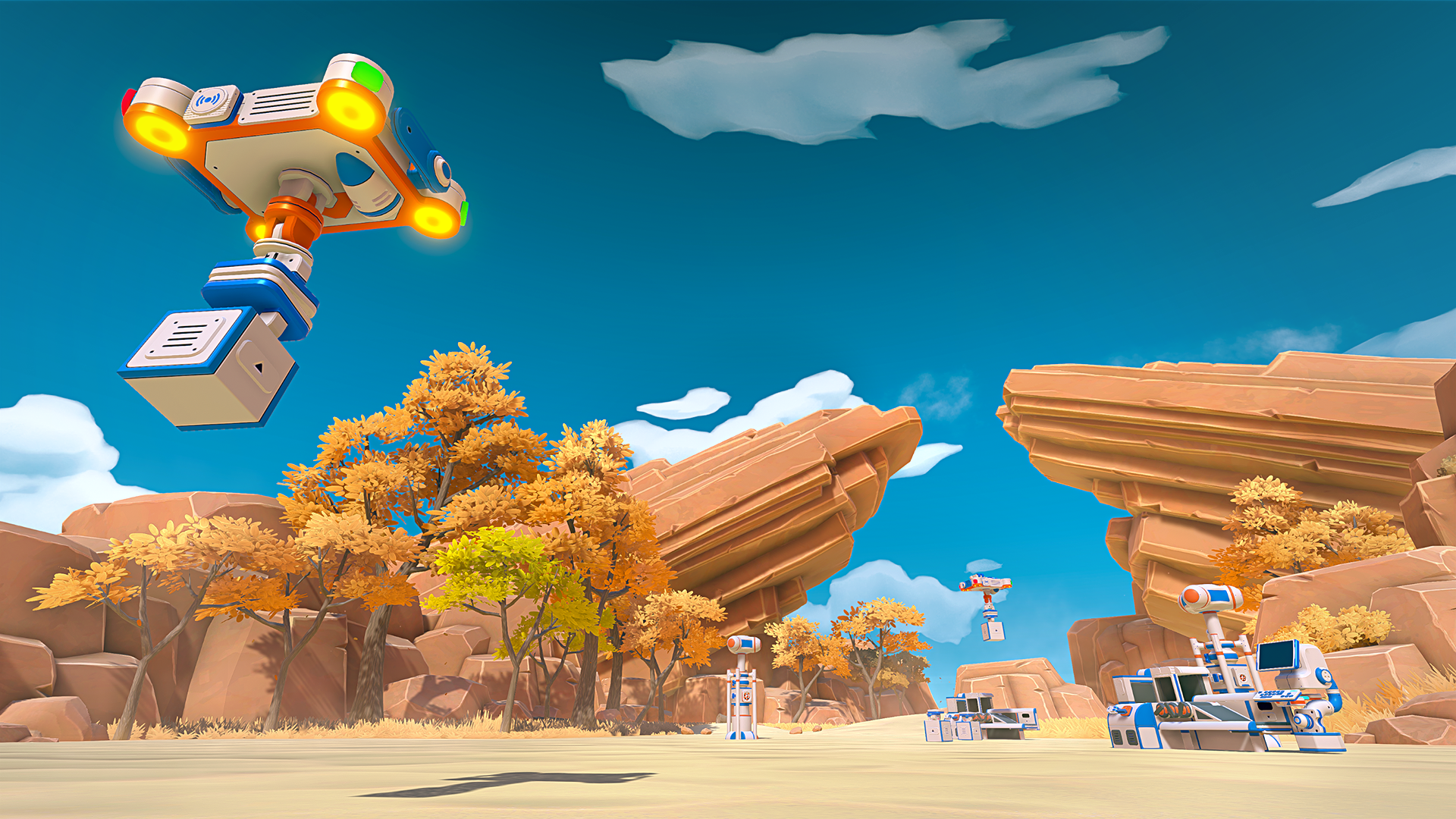
Hello everyone, I'm Javier, one of the developers of Plasma.
I've been working as an artist on the game, so here I'm going to do a quick intro to the art and visual look of the game. Let's dive in!
Visual look of components and devices
In Plasma, players can use a big library of components to give life to their devices, and the main focus of the game is to build and experiment, so the visual style of the game needed a fun and friendly aesthetic, while also being futuristic and functional.
In the first phases of development, the visual style of the game was entirely low poly, giving priority to simple and basic shapes, and enhancing the tree-like structure of the devices, starting from simple forms that acted as roots, and then using additional components on top, making the device work as intended. Later, the art style evolved to a more rounded and futuristic look, inspired by a good amount of films, tv shows and comics that almost every sci-fi nerd know and love.
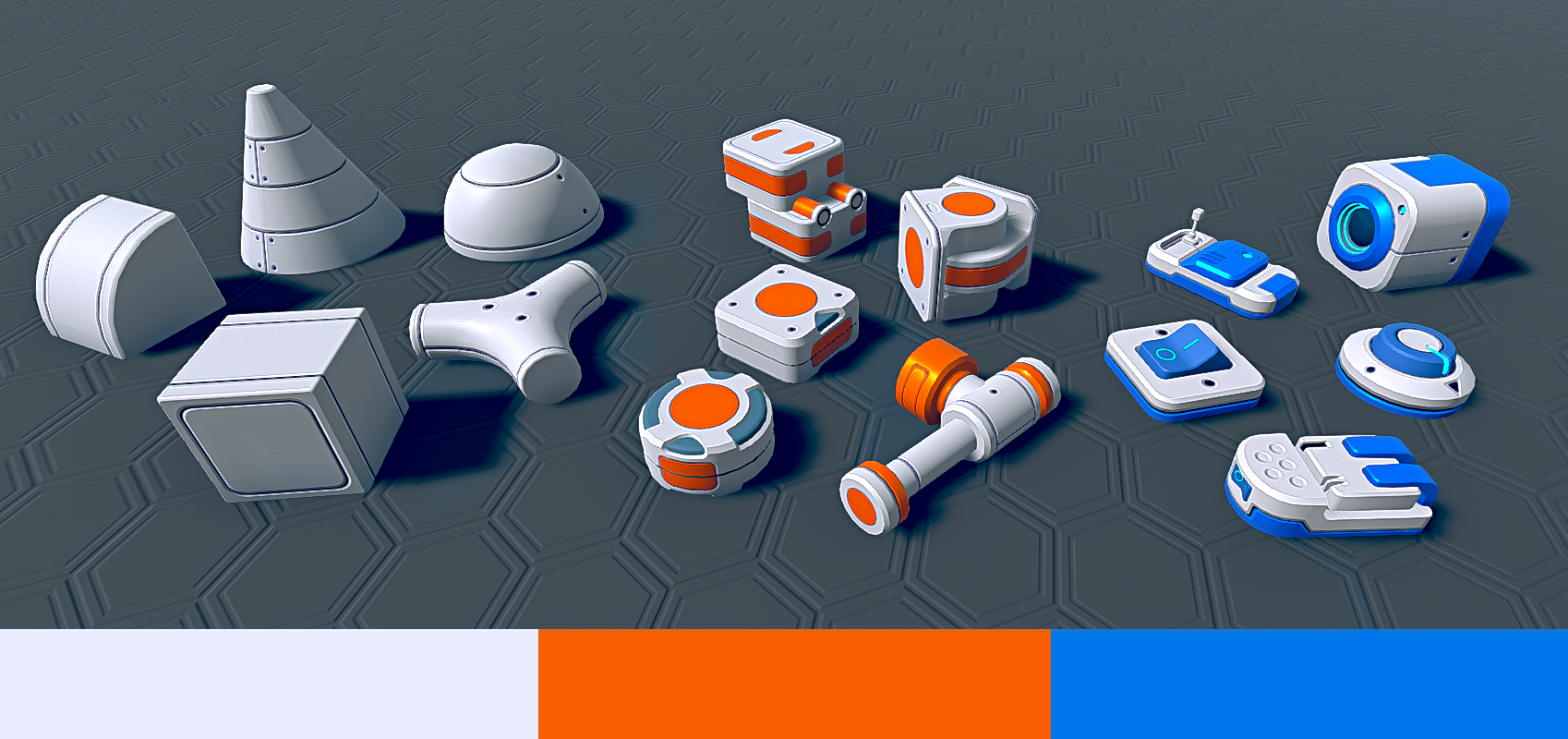
An important step in the process early on, was to assign color codes that help differentiate at a first glance the functions performed by the components, as well as to separate the devices from the environment that surrounds them. We used a white base tone for structural and static components, blue accents for behavior components, and orange for mechanical components. The small common surface details of the components help giving aesthetic unity to the whole component collection. This color coding idea can be helpful for the player in the creation process, providing visual information of the type of operation it may have, as well as the way it has been built.
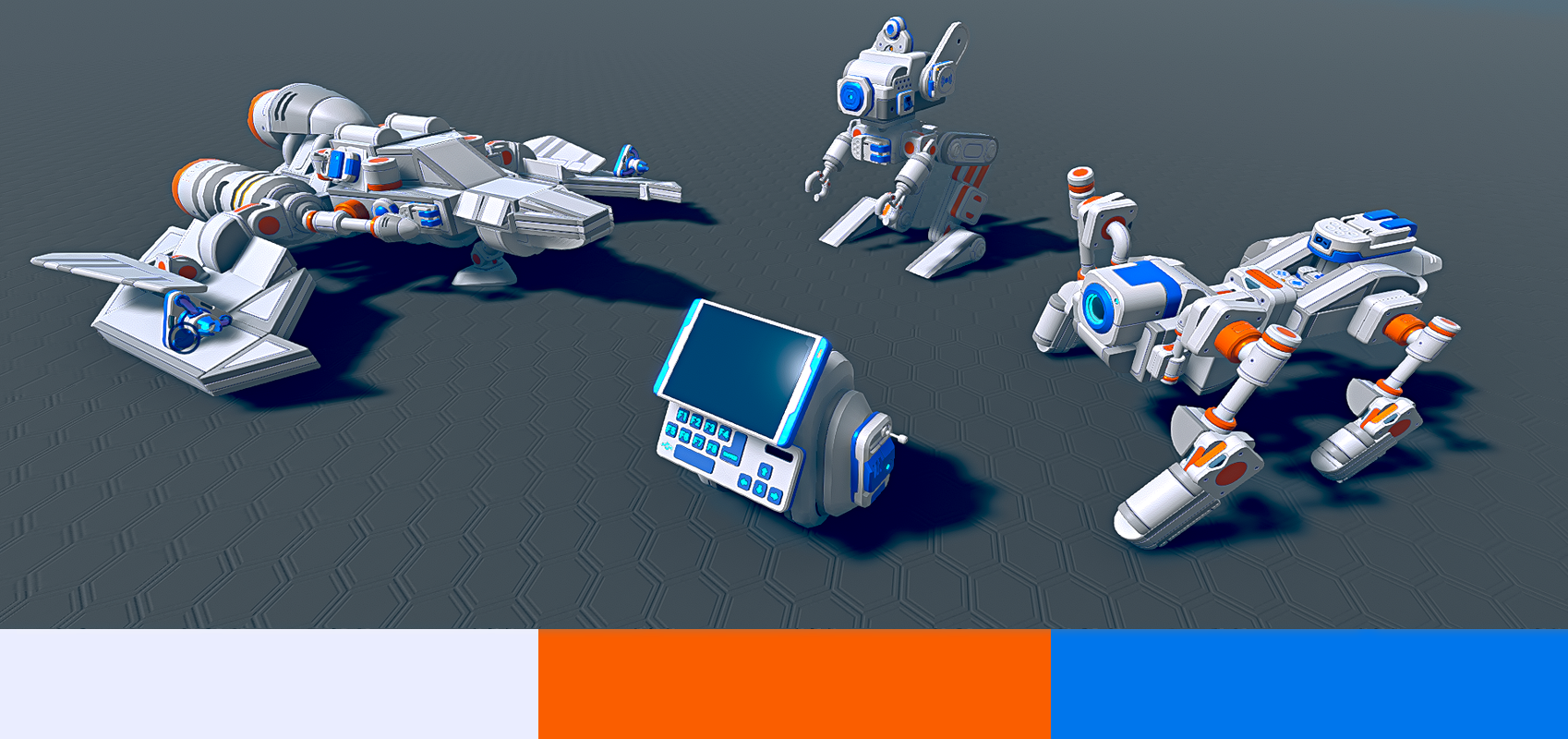
Besides this, the basic structural components have been designed to fit a grid, allowing to be scaled in one or more axes, which gives the player a great flexibility when designing varied and unique shapes, even reusing the same elements in many of their creations.
On top of that, the player has the possibility to color components using a custom color palette, giving a unique personality to each device.
Component creation
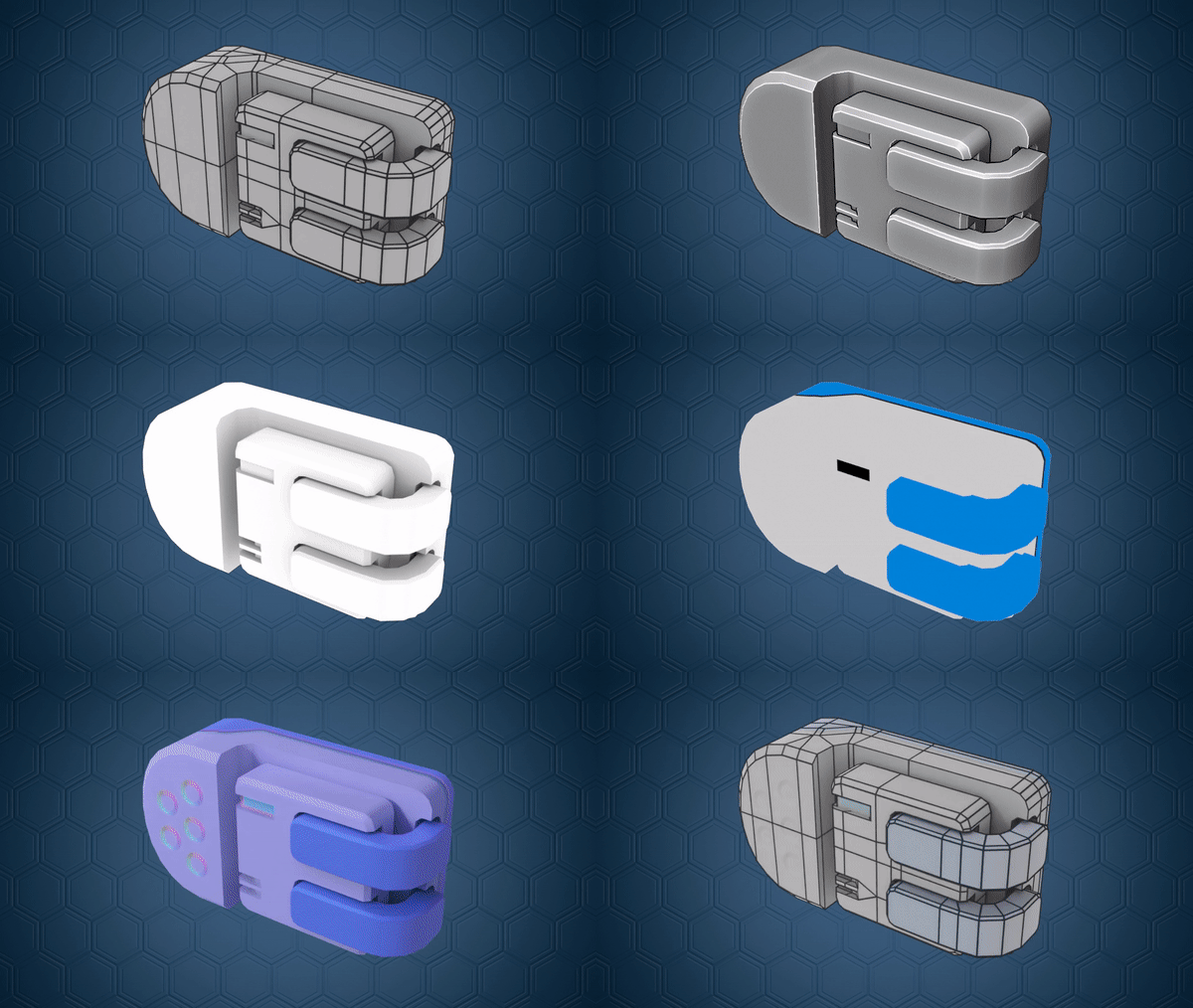
The process of each game component starts with a series of sketches to explore shapes and proportions, then the 3d model is made once the design has been approved, and after that it is textured (fun fact: all the components in the game use a single common texture as a detail atlas) before being exported to the game engine.
Environments
The game environments have been designed to encourage device creation and experimentation, with pleasant and relaxing shapes and colors, large flat and open areas to facilitate building, and some ramps and slopes for the use of vehicle devices.
Each biome uses a catalog of assets, with simple and stylized shapes and appearance that help to create visual variety and encourage the use of devices on them. A good example is the shape of rocks and cliffs, which give priority to their geometric and flat shapes, useful when used together with vehicles, walking robots, etc.
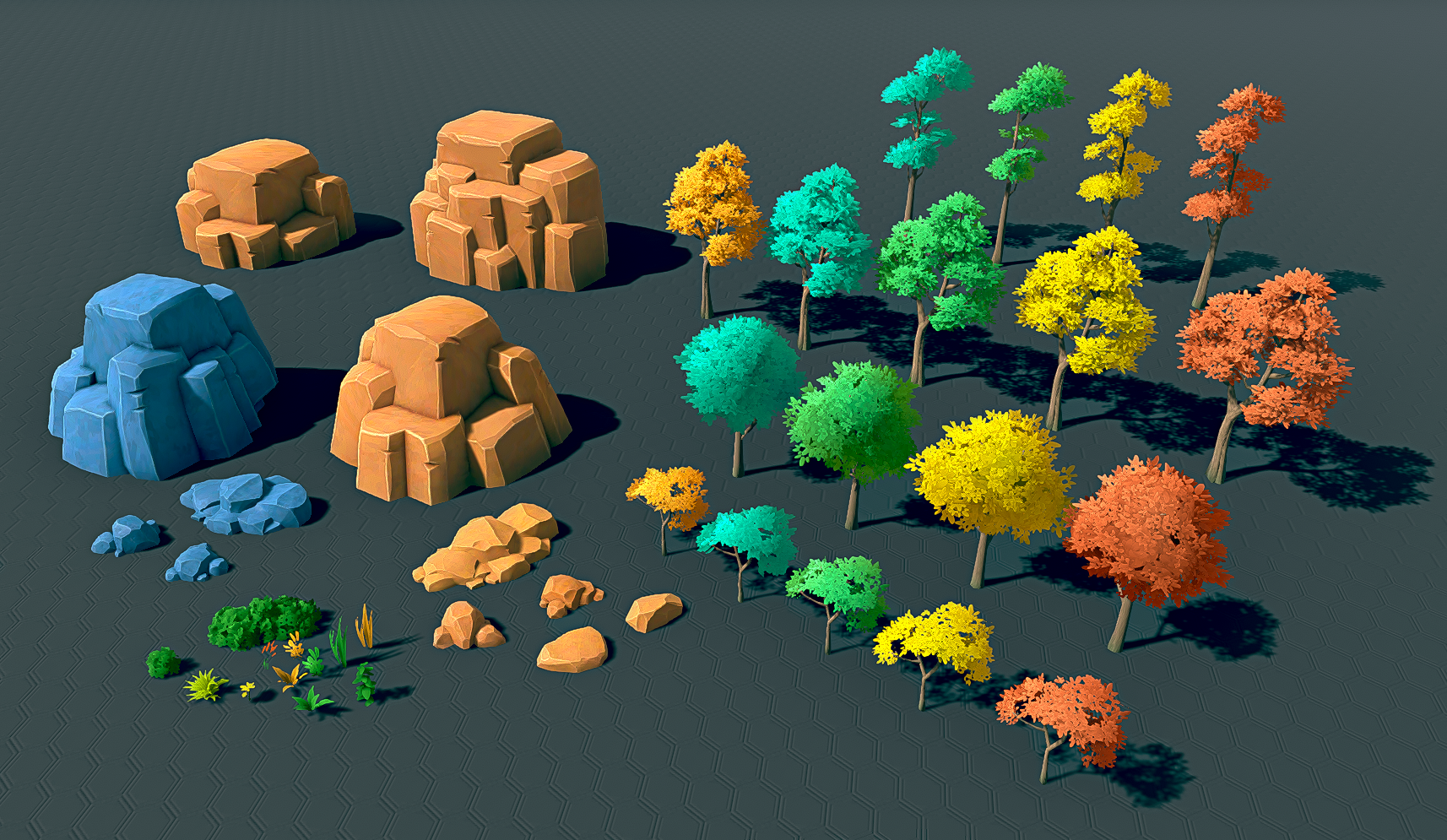
From the start, the idea was to have a collection of unique biomes, which use totally different color palettes and moods.
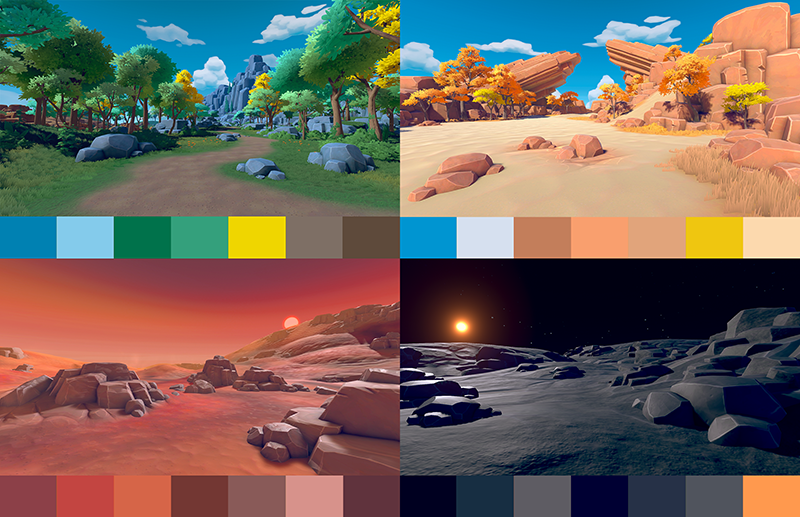
In addition, the transition from day to night within each biome allows to enhance different gameplay experiences, and to use the devices in original and unique ways.
In conclusion
In the future, new biomes will be introduced to the game, as well as new components with unique functions, increasing the possibilities of your creations.
I hope this deep dive into the art of Plasma has been interesting, let us know if you have questions or comments. Thank you very much for reading it!