
As aircraft have played an increasingly prominent role on the battlefield, anti-aircraft weapons have also increased in usefulness. The 8.8cm Flak gun that was famous for its role in World War II was an anti-aircraft gun that was used to attack bombers that had increasingly high altitude and speeds. The emergence of surface-to-air missiles after the war, especially after the U2 spy plane was shot down by surface-to-air missiles, weakened the role of anti-aircraft artillery somewhat, but anti-air cannons still played an indispensable role in defending against low-altitude attacks from aircraft like helicopters.
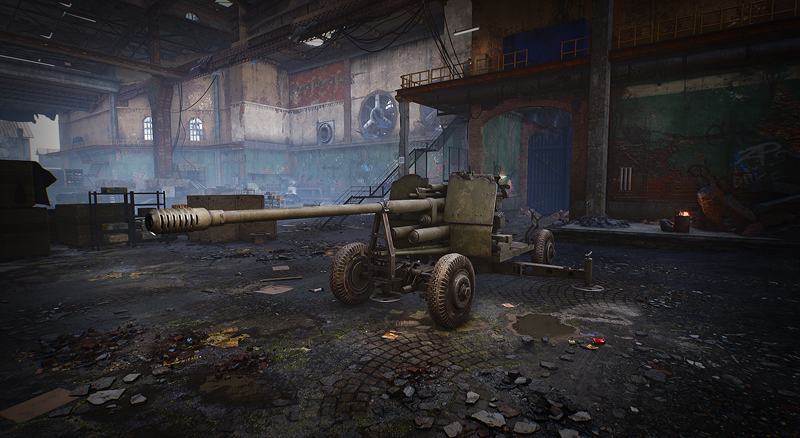
Tier 1 - KS-19M2
This 100mm towed anti-aircraft gun was mainly used by the Soviety Army to shoot down air targets flying below 12 kilometers in altitude. It was also exported to Germany, Poland, China, Albania, Egypt, Vietnam, Iraq, and other countries.
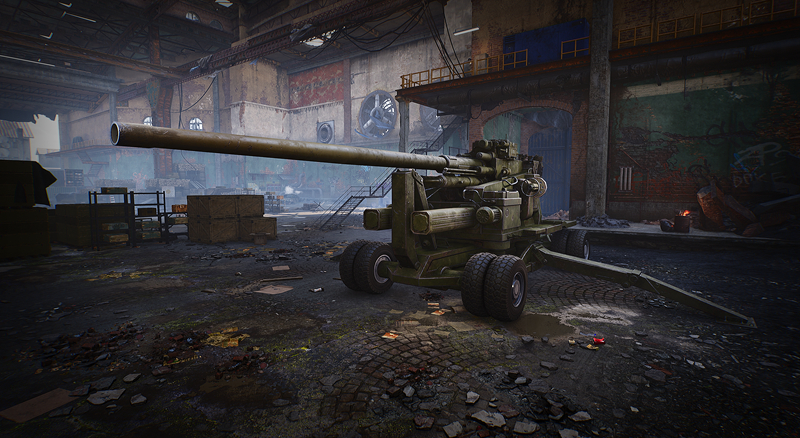
Tier 2 - KS-30
During the Battle of Berlin in World War II, the Soviet Army captured some Flak 40 128mm large-caliber anti-aircraft guns. This German-designed and manufactured weapon was capable of launching artillery shells to an altitude of nearly 15 kilometers and was considered to be a major achievement for the German army at the time, as it posed a serious threat to the large bombers attacking its forces. At the end of World War II, aviation technology began to focus on jet aircraft, which resulted in a major generational difference between new aircraft and the aircraft used ni the war. As a result, the Soviet Union began development on the KS-30 130mm large-caliber anti-aircraft gun to deal with new bombers and high-altitude reconnaissance aircraft.
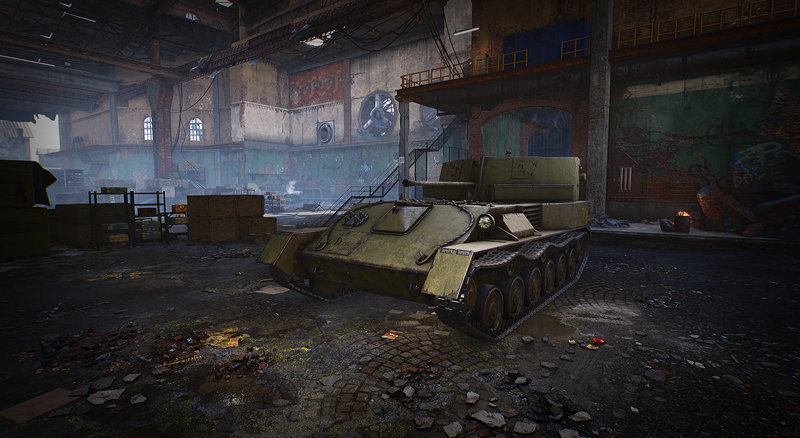
Tier 3 - ZSU-37
The ZSU-37 is a light self-propelled anti-aircraft gun (SPAAG) manufactured and produced by the Soviet Union. In 1941, the Soviet Union began looking for a weapon that could protect its armed forces from powerful German aircraft like the Messerschmitt Bf 109, the Ju 87 Stuka, and the Ju 88. For instance, on the first day of Operation Barbarossa, the Luftwaffe inflicted unprecedented losses to the Soviet Union’s forces. Therefore, the Soviets needed a self-propelled anti-aircraft gun to advance in sync with its armored troops to provide anti-air support against the enemy’s bombers and minimize Soviet casualties. To this end, the Soviets installed an open turret upon a heavily modified Su-76 chassis and equipped it with an M1939 37mm SP automatic anti-aircraft gun. This became the ZSU-37 (ZSU standing for “Zenitnaya Samokhodnaya Ustanovka,” meaning “anti-aircraft self-propelled mount”).
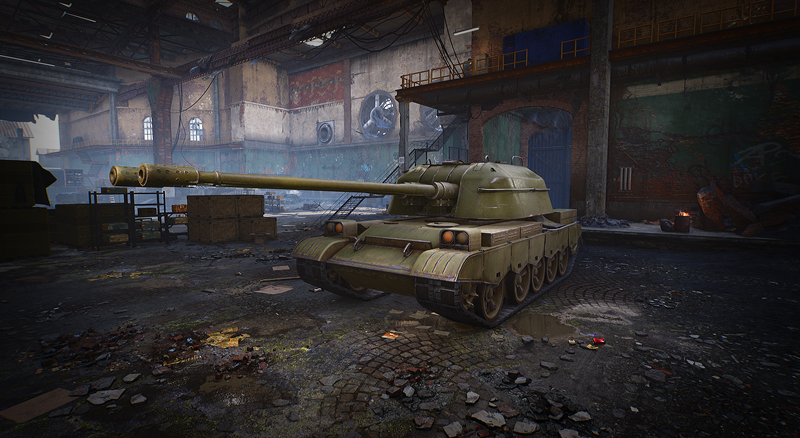
Tier 4 - ZSU-57-2
In May 1949, the Design Bureau of Works No. 174 in Omsk trial produced two ZSU-57-2s. In 1950, two 57mm anti-aircraft guns, the towed S-60 and the self-propelled S-68, were submitted for testing simultaneously. In 1962, a total of six 57mm self-propelled anti-aircraft guns were tested. The Soviet Union concluded that the weapon system has high reliability, a high degree of automation, a wide range of strikes, and enough flexibility to attack aircraft at multiple altitudes, which made the ZSU-57-2 suitable for protecting armored forces and infantry while on the move. According to the Kubinka Tank Museum, the ZSU-57-2 was finalized in February 1955 and then put into mass production. It was officially introduced in 1957, making its first public appearance in the Red Square Victory Parade on November 7, 1957.
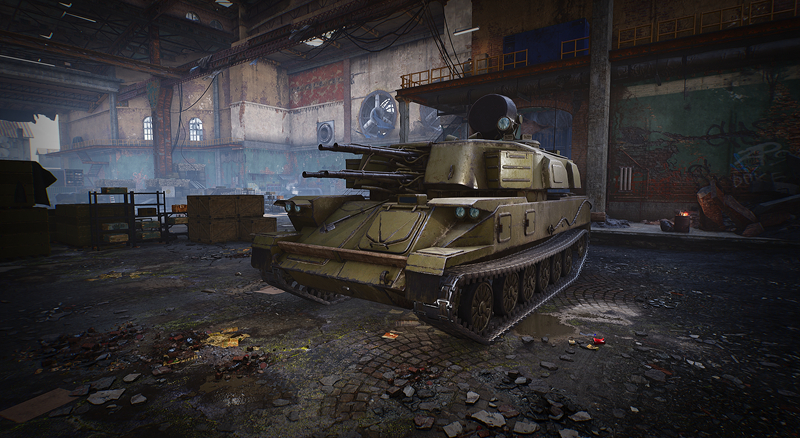
Tier 5 - ZSU-23-4
The ZSU-23-4 “Shilka” is a second-generation self-propelled anti-aircraft gun developed by the Soviet Union in the 1960s. It replaced the first-generation optical-sighting and human-controlled ZSU-57-2, and was used to accompany tank regiments and motorized infantry divisions, providing ultra-low-altitude air defense.
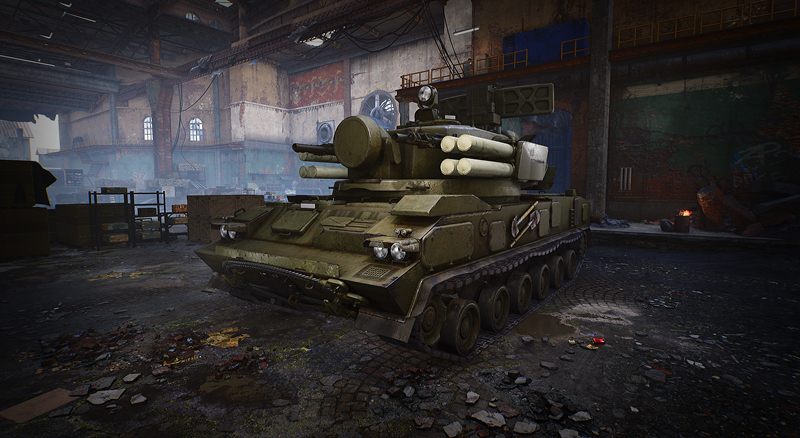
Tier 6 - 2S6 Tunguska
Development of the 2S6 Tunguska self-propelled anti-air defense system was developed in 1970 and began service in 1988. It is the main equipment of some tank regiment air defense battalions. Covering mid-to-low altitudes, it was the world’s first official weapon system to integrate both missiles and artillery. The Tunguska adopts an MT-T tracked chassis. Its steel-armoured structures are capable of protecting against light weapon and shell fire. Both sides of the turret are equipped with 30mm cannons, and beneath each cannon is a quadruple missile launcher (allowing for a total of eight SAM 19 anti-air missiles). It features tracking radars at both the front and rear of the vehicle. As a result, the Tunguska is one of the most powerful anti-low-altitude mobile weapon systems in the world.
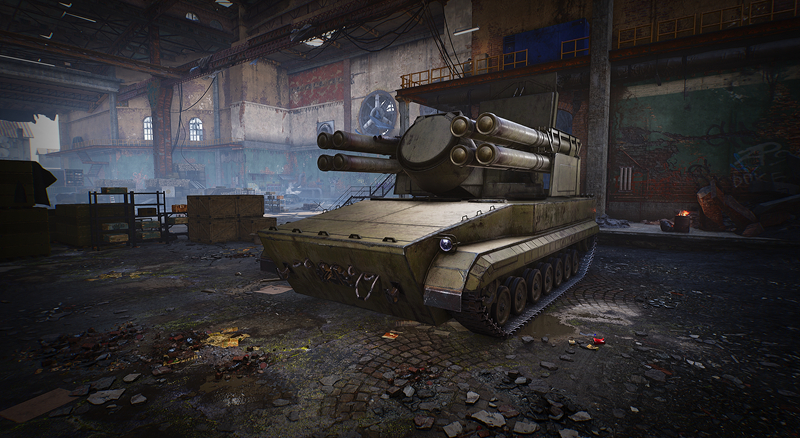
Tier 7 - Pantsir S1A
The Pantsir S1 can be said to be modified from the Tunguska air defense missile system. In the 1991 Gulf War, the Soviet-made Tunguska had extremely poor air defense capabilities, only managing to shoot down one aircraft for every 3000 sorties, meaning its air defense efficiency was merely a quarter that of the Vietnam War. As a result, the Pantsir S1 was developed. The S1 features strong multi-target capabilities and is relatively maneuverable. Its chassis appears similar to the Tunguska and its turret is the same, except that the front of the Tunguska’s turret features a tracking radar while the S1 has a set of optoelectronic devices with antenna fairings for missile guidance.
The biggest feature of the Pantsir S1 is its variable system of projectiles and artillery. Although its anti-air missile weapons are far superior to anti-air artillery when it comes to longer ranges, when faced with small, low-altitude targets, missiles are less effective. Therefore, the Pantsir combines twelve 95Ya6 anti-air missiles with a 2A38 dual-barreled anti-air gun and automatically chooses whether to use missiles or guns to destroy its target, giving it improved combat capabilities against many different kinds of threats.
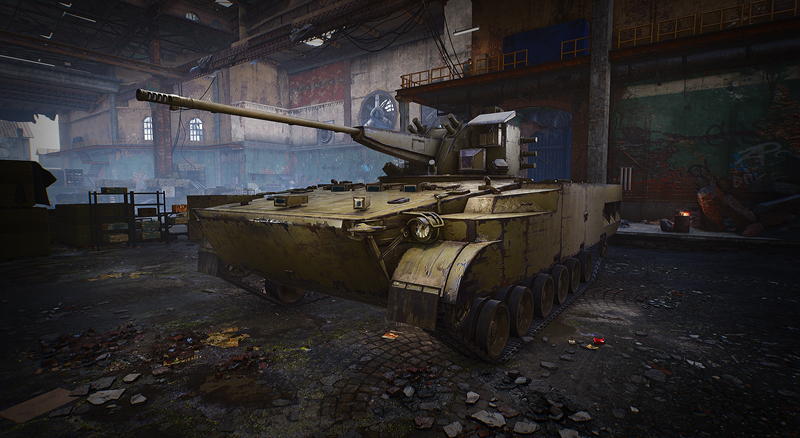
Tier 8 - 2S38
Although the 2S38 is called a self-propelled anti-aircraft gun, it can actually serve as an infantry fighting vehicle, working alongside tanks and infantry to achieve multiple uses. It is said that it may replace the 2S6 Tunguska air defense system. Its equipment uses the chassis of the BMP-3 infantry fighting vehicle, and it is powered by a 500-horsepower UTD-29 V-10 diesel engine installed at the rear of the chassis. Its system adopts a liquid-pneumatic suspension, which can be adjusted to suit different road surfaces. The 2S38 has amphibious capabilities and is powered by two propellers when traversing water.
Join our Discord: https://discord.gg/XuXPU8w