
I've seen a few questions pop up recently asking about the travel times in Starship Simulator. This is often a topic of heated debate in space games, so I wanted to weigh in from our side and explain how we intend to handle travelling the vast distances between stars in our 1:1 scale galaxy.
Space is of course unimaginably huge, where even the light from our closest neighbouring star takes 4 years to reach us. To travel 4 lightyears we obviously need to achieve some ludicrous speeds, but we also want the journey to be meaningful, so there needs to be a balance between realistic travel time and player agency.
I've been playing and loving space games for over 30 years now, and in every example, I can think of travel between stars as relatively instant, while travelling around within a star system is fairly time-consuming. To my mind, this is completely backwards and contrary to the actual distances involved, but I do of course understand its necessity when all you have is a cockpit or bridge to interact with.
This is where Starship Simulator is different to all the other space games out there. You have an entire starship to interact with, with a number of role-relevant tasks to perform each day while on duty. This means travel between star systems doesn't need to be instant, because you're not just sat staring into space waiting to reach your destination.
The following number will likely change during playtesting, but right now we're looking at our FTL speed being roughly 5 lightyears per day. This is not just an arbitrary figure, it's actually the average distance between stars in our galaxy. It should take players about 20 minutes on average to complete their daily tasks, and typically you'll spend at least one full day at warp to get anywhere.
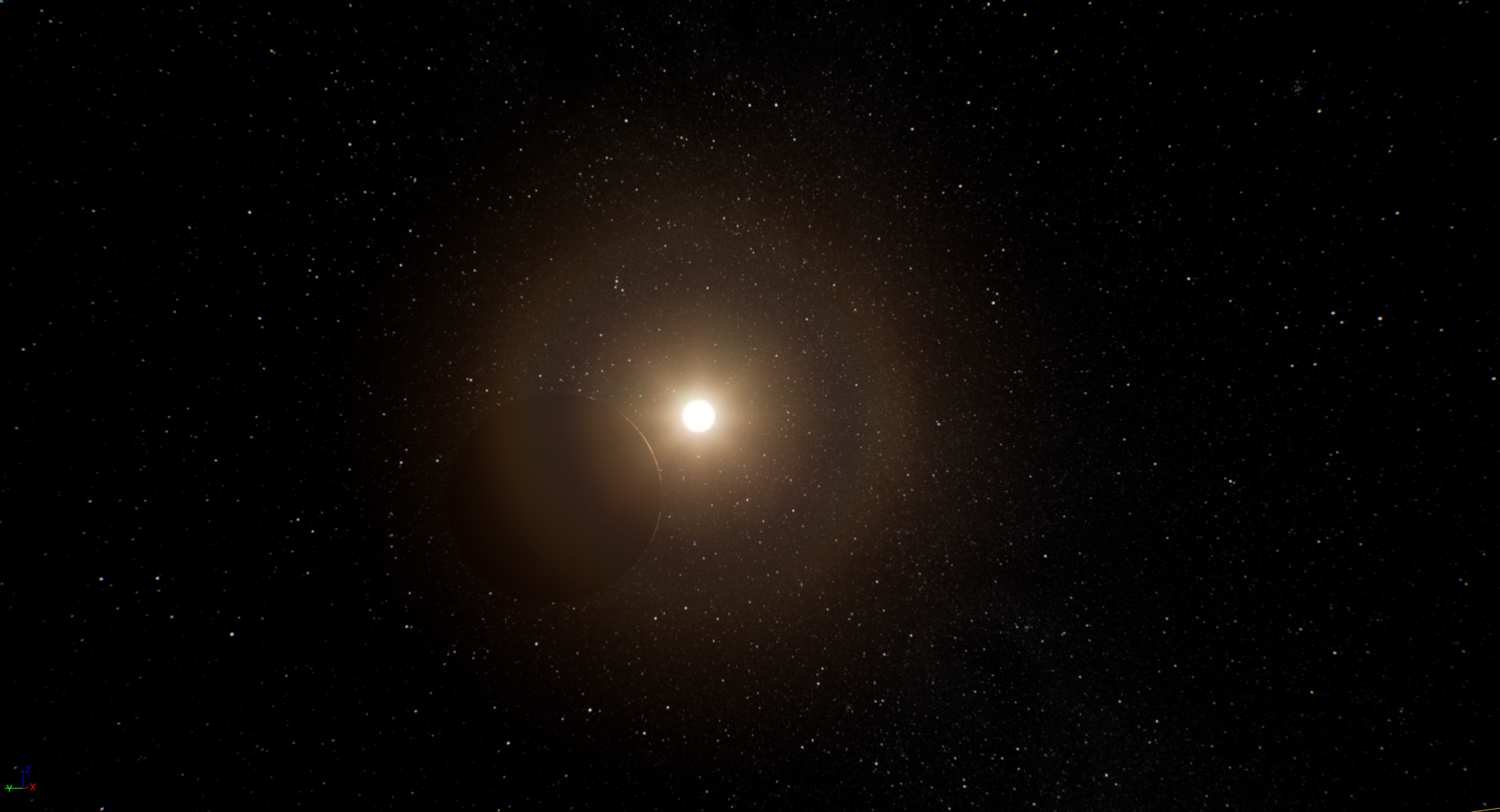
As an interesting point of note, Earth is apparently about 26,000 lightyears from the centre of the Milky Way, which means if you were to fly there without stopping it would take you 361 days in real-time (although you would need to stop occasionally along the way to refuel). Similarly, the Milky Way is 100,000 lightyears across, so flying from one side to the other would take 3.86 years. Do we have anyone insane enough to attempt that challenge?
The objective of the base game is to explore as far from Earth as possible, and then return home in one piece to receive accolades and recognition based on how far you managed to get, along with how many successful first contacts you were able to achieve along the way. With great risk comes great reward.
And speaking of first contacts, let's talk about travel within a star system. Ultimately this is where most of the interesting action will take place, and we want players to be able to fully explore a star system in a reasonable amount of time. Again, this is where most games have it backwards, because if your ship is capable of covering 5 lightyears in a single day, then it could technically cover 1AU in about 0.3 seconds.
This is however where we need to "gameify" the numbers a bit because we don't want to lose that sense of scale within a star system. So, right now we're looking at speeds within a system being limited to around 0.1AU per minute. So Earth to Mars would take about 3 seconds at its closest approach, whereas Earth to Neptune would take about 3 minutes. Did I mention space is huge?
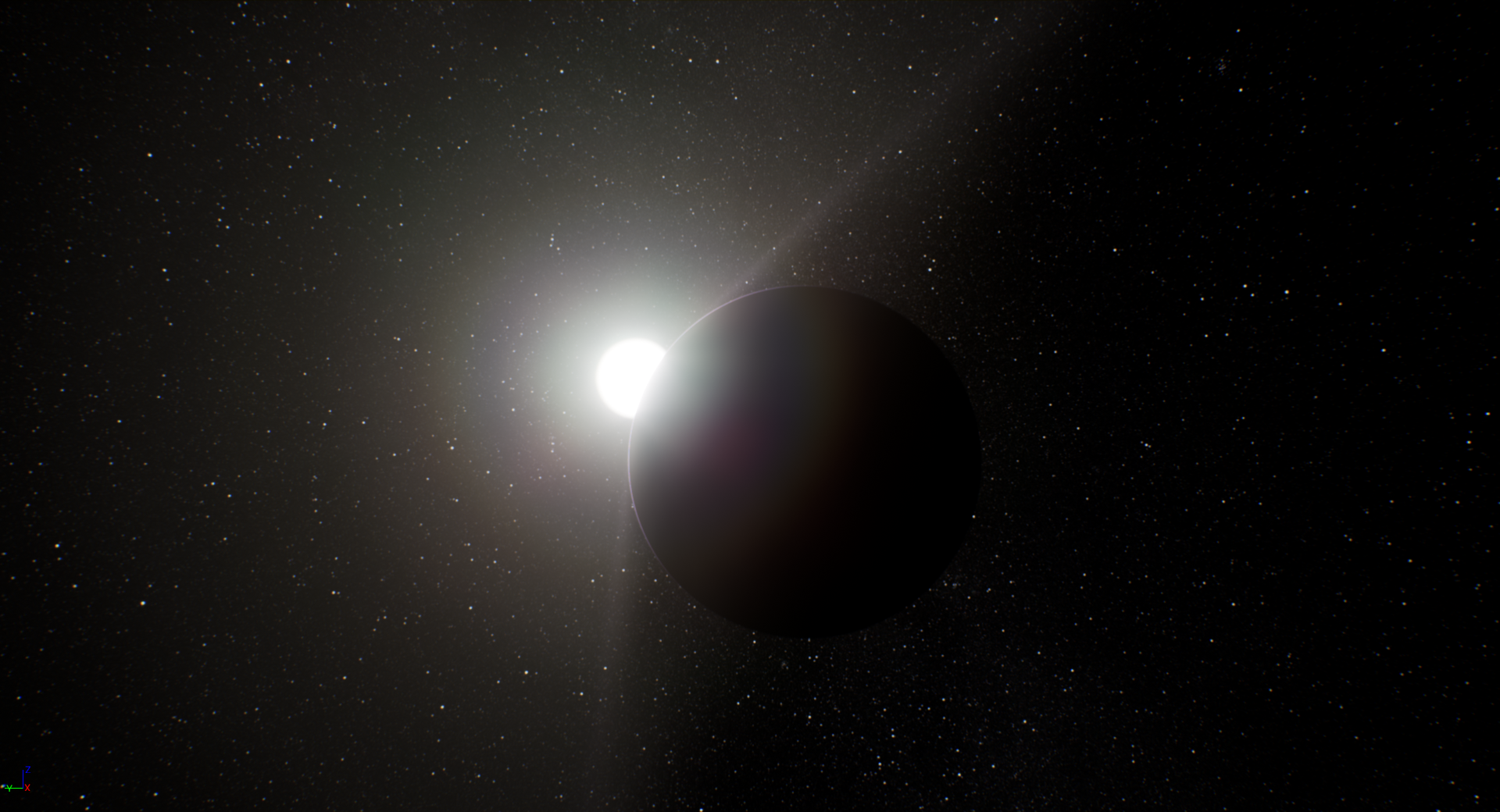
So in summary, we want meaningful but engaging travel times between star systems, where that time is calculated based on the actual distance to the star (5ly per day), and where you'll have plenty to do on the ship to make the time pass quickly. And, we want the travel times within an individual star system to be a few minutes at most (0.1AU per minute) because we want players to be able to explore all of the available content in that system in a reasonable timeframe.
Hopefully, this approach will preserve the sheer massiveness of space, while never leaving the player sitting around with nothing to do.