
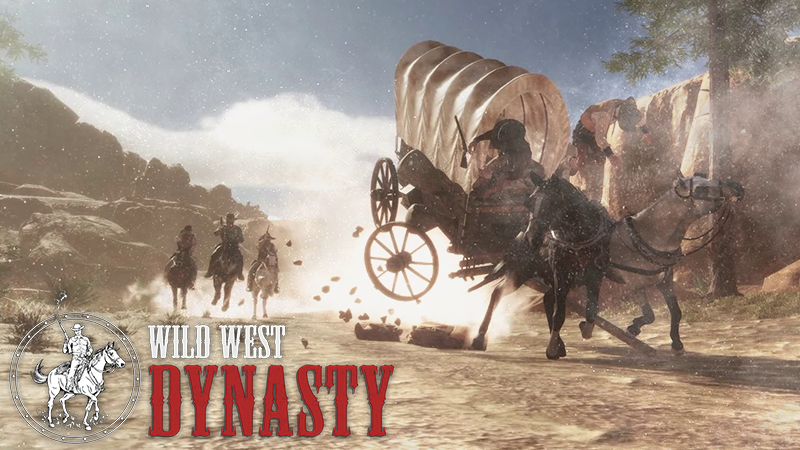
"What happened here?"
"Looks like a covered wagon was going a little too fast."
"Nasty. I wonder if the driver survived. The horses are gone, anyway!"
"Hmm, let's 'take' the rest of the junk before someone crashes into it!"
Hello cowboys and cowgirls!
People inevitably always associate Westerns with covered wagons and carriages, preferably in high-speed chases including the inevitable shoot-out.
Unfortunately, this is a romantic notion, and it only works well in fiction. Such a trip was incredibly slow and tedious. Most of the time the covered wagons were pulled by ox teams, and they covered about 25 to 30 kilometres a day. The paths on which these teams were pulled were bumpy and the lack of suspension made the journey an ordeal. The carts weighed up to 900 kilograms and had room for five people.
The Conestoga is a special wagon, but it was used for freight transport in the eastern USA and was considered the forerunner of the "prairie schooner". The wagon's wheelbase was very high to allow it to negotiate small creeks or rivers. These carriages were pulled by particularly heavy horses and the drivers were mostly professional coachmen and were considered tough fellows.
The fastest carriages were the so-called Concorde carriages. These 4-horse carriages could cover up to 190 kilometres a day and, in the best case, offered space for up to 12 passengers. However, these carriages were very expensive and only came into use in the second half of the 19th century.
Are you more the cosy family carriage driver, the professional "truck" driver or are you more into fast express carriages? Tell us about it here or on our social media channels!