
As a man of science, I never intended to go to war. My goal is revolution. Still, those tend to not be bloodless. My mutants can move silently, but on the other hand, they will always stand out. A view of a corpse with giant sword-like appendages will always be alarming. One person that will alert the authorities is enough to start a skirmish with the police or even the military. To win a war, one needs to know its rules. So I learned everything about clashing with those who I view as mere obstacles on the way to scientific progress.
Rules of combat
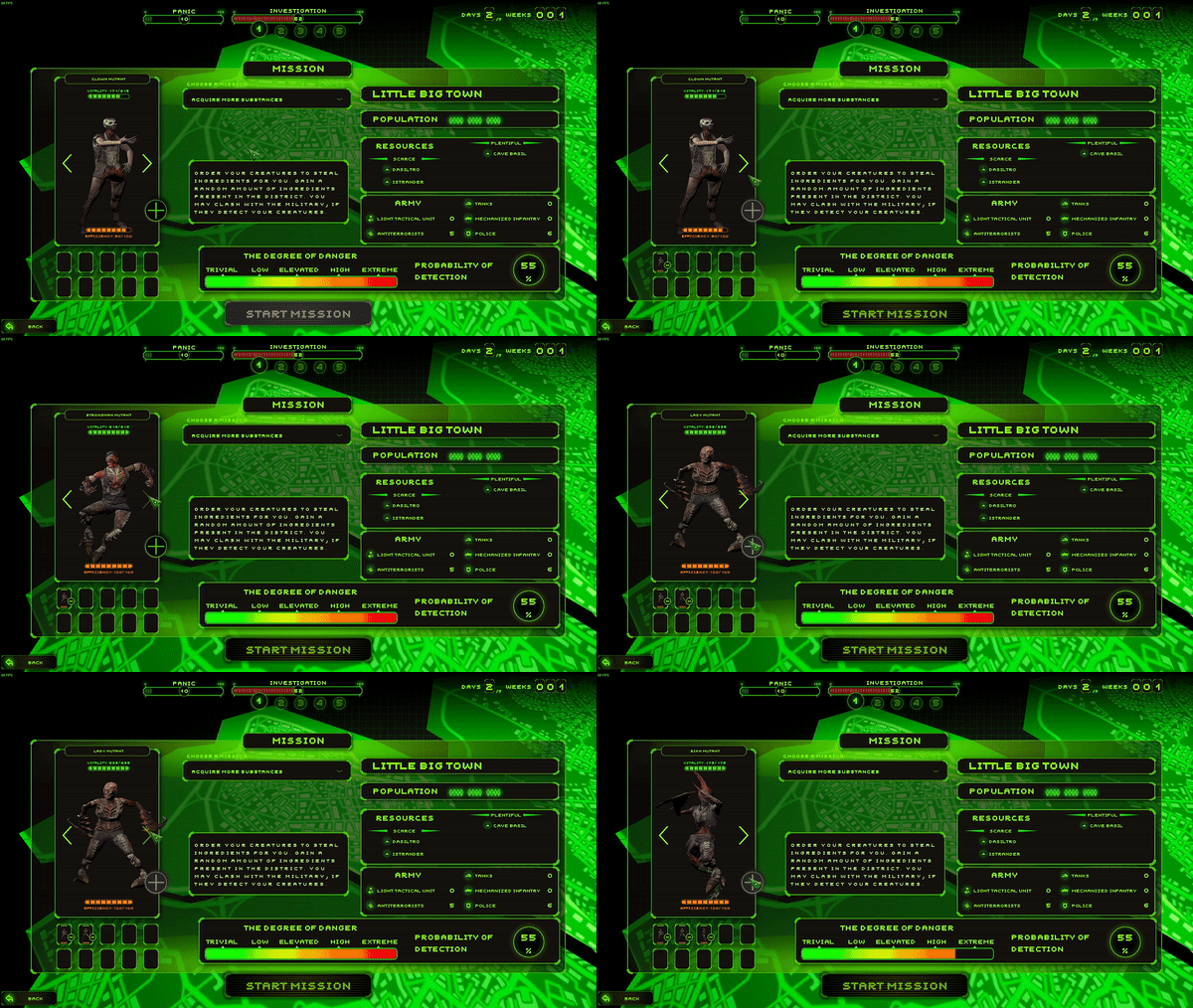
The first and most important rule to remember is that I am already out of control when combat happens. I don't always like it that way, but I can't accompany my creatures to their missions. You should never put such kind of genius as mine at risk.
In such a case, preparation is the key. Before the mission, I always click on the selected district on my ingenious digital city map. There I can view how many police and military units are stationed in the district. It is also divided by type: light tactical units, anti-terrorists, tanks, mechanized infantry, and police. This way I know exactly the size and capabilities of a potential combat force my mutants will face. This allows one to plan the encounter accordingly, selecting mutants with the right statistics, skills, and bonuses.
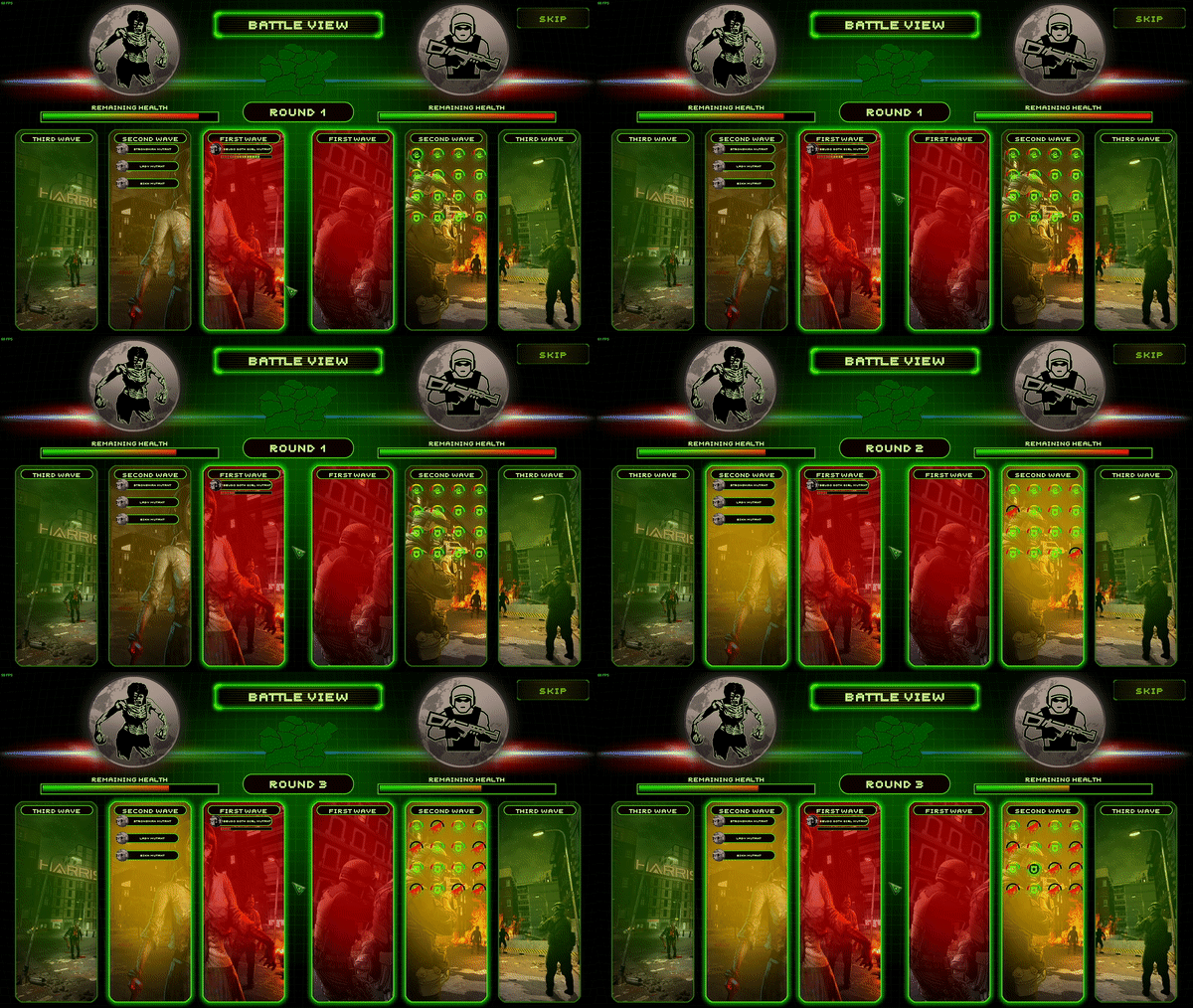
Each encounter is viewed in the special software of my secret computer as a visualization, which shows all of my mutants and all of the enemies. The combat engagement is presented in three phases for me to easily follow the events. Which units will attack in which phase is determined by their abilities. In phase one only Ranged and melee units with Fast will trade blows. The second phase is an out battle between all the units, including units with no special ability (such as normal melee mutants) except those with Slow. In the third phase, all the remaining units will fight, joined by those with Slow.
As for trading blows, the general priority of attacking in combat is targeting the Fast units first, standard monsters and military second, and Slow units last. In most cases, the Fast units on both sides will be wiped out first. Ranged units are the only units with the ability to target even those units which haven't joined the fight yet. Slow units are the safest, but they attack only on the tall end of the fight.
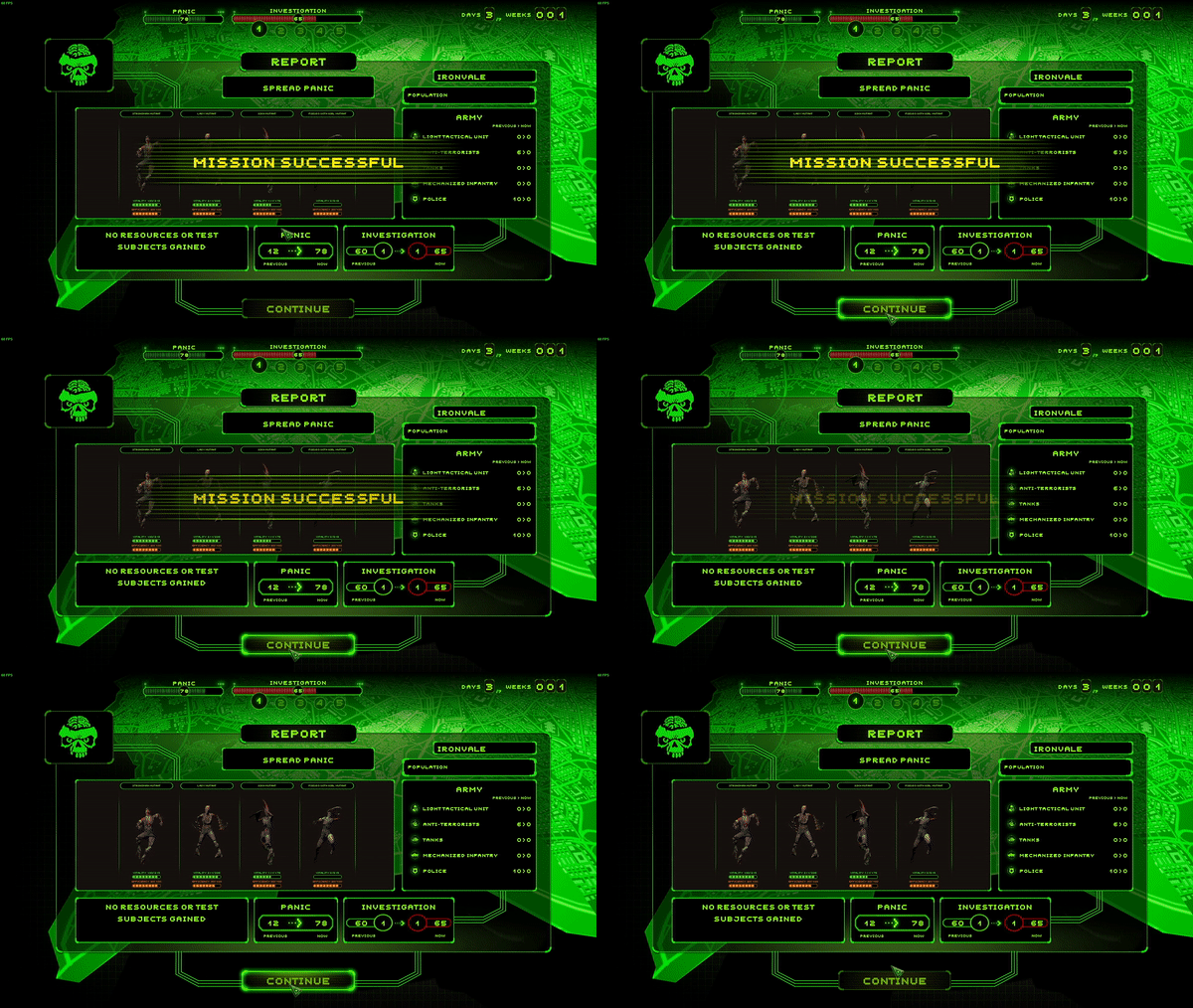
There are many nuances to combat, but two things I consider worth remembering. The first is that the damage is randomized based on units of minimal and maximal damage. The second is that the third phase is a bit different. The first two phases have only one round of fighting, after which the remaining units move to the next phase. The third phase will have as many rounds as needed to announce the victory of one side or the other - the units will fight till no units with vitality over zero remain on one side. This also means that if the military/police win, I lose all mutants. I made a habit of always checking the Degree of Danger bar on the Mission screen before I sent out the creatures to avoid such an unfavorable outcome.
This was our twelfth regular “Scientist Log”. Combat is ultimately the thing the creatures are designed for, so experiment with the variety of options when you do missions, to know which composition of units is best suited to punish the military stationing in a particular district,
Remember that you can also talk with us directly via Discord:

https://store.steampowered.com/app/1309990/Creature_Lab/