
Greetings, associate!
In the past, we have shown you various concept art for weapons, units, and structures, alongside their finished in-game models. Today, we want to briefly talk about how the models are created and why the final in-game model can sometimes look very different from its initial design.
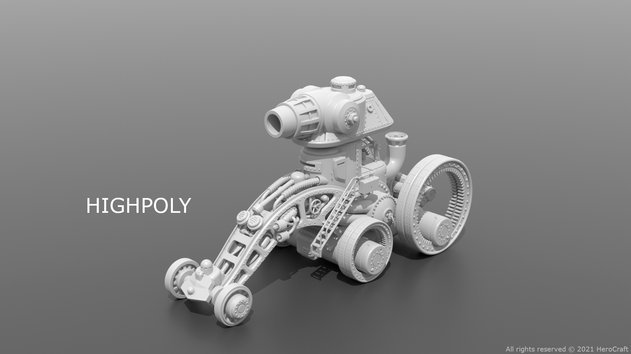
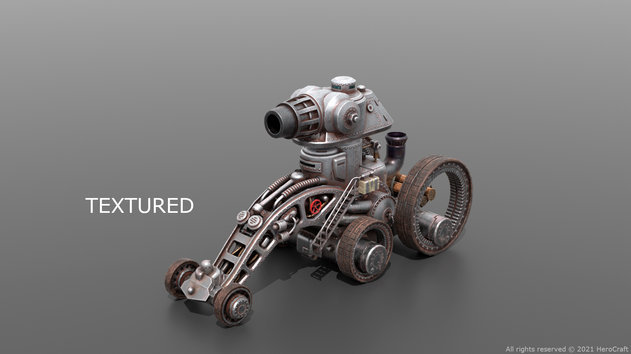
When it comes to the creation of 3D models in Revival: Recolonization, there are several stages:
- A game designer lays out specifications for the unit or structure. This involves looking at the finer details for each model, how it should look, and why.
- Concept work. The art department comes up with a 2D sketch or 3D render to be approved by the art director, which is then passed on to a 3D artist.
- In-engine implementation. This lets us test how the model looks and behaves in-game.
At HeroCraft, a 3D artist's work not only involves creating 3D models and their textures, but also working on and improving the design itself. A 3D artist can access the project directly in the Unity engine, allowing them to check the design of a particular model on the game map, in real-time and on the fly.
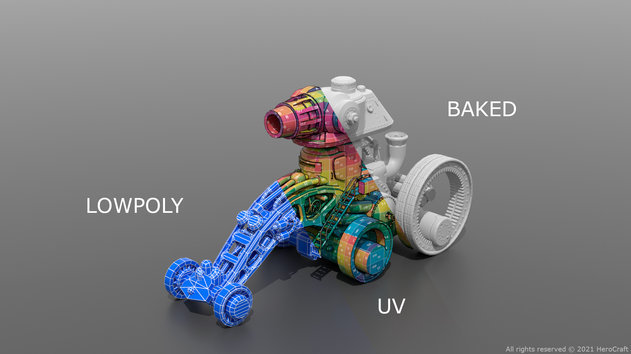
Like many other 4X games, Revival: Recolonization features a 3D map that players can zoom in and out on. While it is a handy feature for players, it can be a headache for 3D artists. There's a delicate balance between a model that is highly detailed when zoomed in and readability when zoomed out.
If key elements of the design are difficult to distinguish on the map, the 3D artist will tweak the model. Sometimes, an initial design may have lots of extra details that look great in a static image, but only add visual clutter when presented in-game.
It's not just a matter of aesthetics. In 4X games, one needs to be able to see the fighting ability of their units at a glance. Designs must be distinguishable so that different units are easy to tell apart.
The design process can have amusing results, as 3D artist Yemelyan Kholuyev explains. During a team discussion, it was suggested that the third-epoch tank should be dark green like most modern military vehicles. The third epoch in Revival resembles our own present-day level of development, so it made sense to use a similar color scheme.
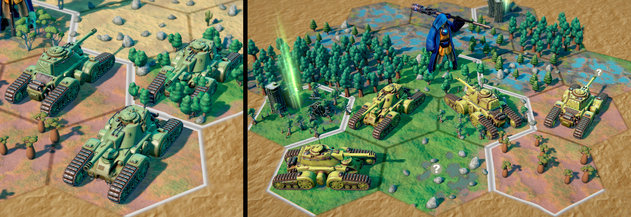
In reality, this color scheme made the tanks much harder to see on the game map. So when the tank model was placed on a forest hex, it seamlessly blended into its surroundings (see image on the left). The camouflage certainly did its job, but players would have a much harder time seeing the model on the map. And now you know why third-epoch tanks in Revival: Recolonization are light green :)
Until next time!
Respectfully,
Revival: Recolonization Team