
Hello again and welcome to the third Tribe: Primitive Builder devlog!
In this one, we’ll be focusing on the player progression and how we divided it into multiple intertwining parts.
When we first started thinking about progression, we looked into many successful titles already available on the market. There’s no point in re-inventing the wheel, but we wanted to expand and build on what we saw.
So, let’s talk about what you can expect in Tribe! First and foremost? Discovery.
A feature in which all of the game progression depends on. Discovery is our answer to an issue we encountered when discussing progression — the speed at which we want to introduce new resources, tools and building tiers is unrealistic for a tribe living in those times. It would take a considerable amount of time for any civilization to go from constructing huts made out of dried grass to using bricks. However, it made a lot of sense from the gameplay perspective and made the game fun to play, which frankly is what’s most important.
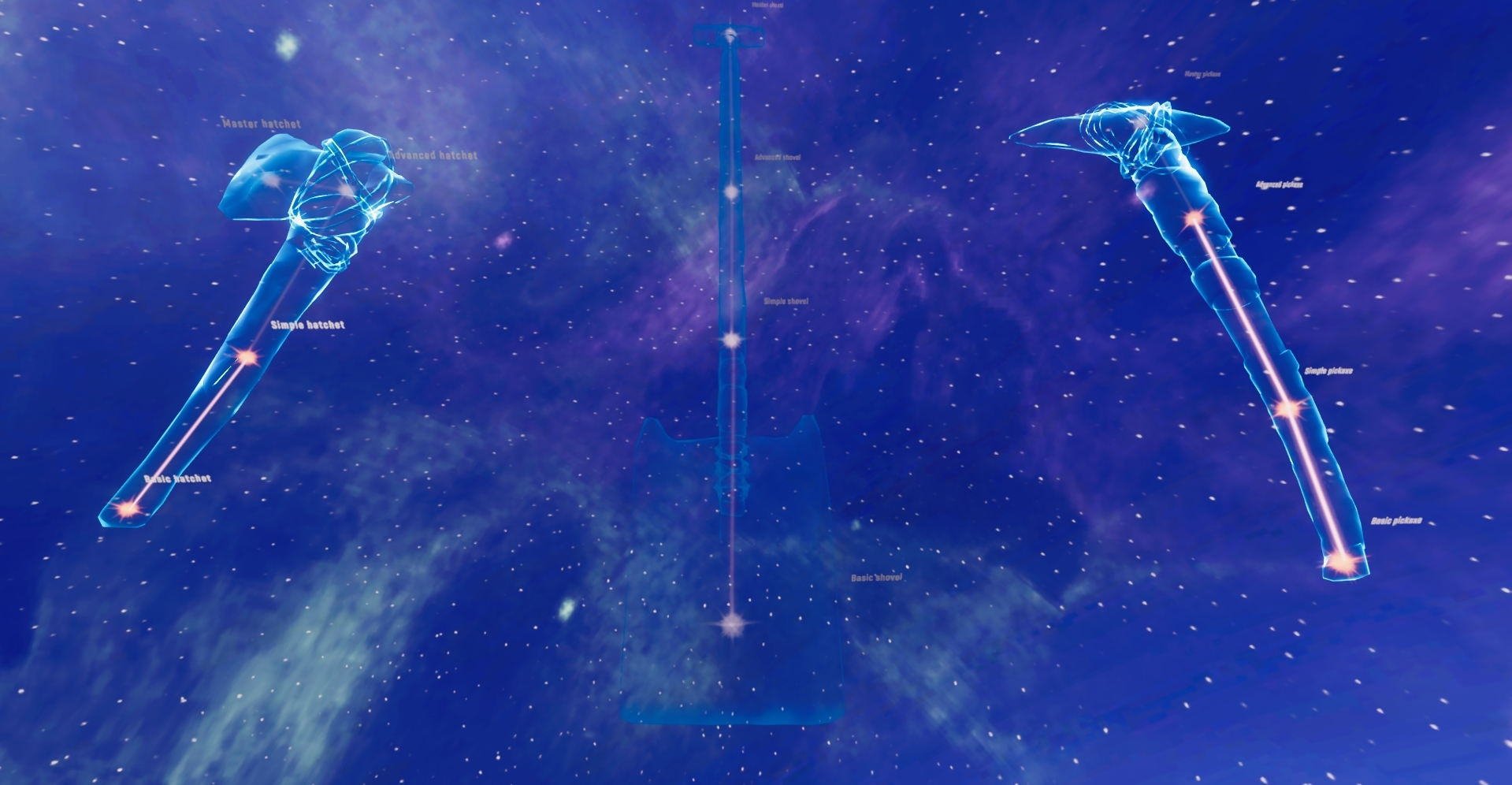
To solve this problem and make it more acceptable to the eyes of our players, we looked toward the sky. In Tribe, when you discover anything new you look to the stars for inspiration, create constellations and use them to provide you with answers on how to improve yourself, your constructions or your tools.
Though discovery doesn’t come cheap. Like many open world games we wanted you, the players, to explore the island we’ve delicately prepared and reward you for your curiosity. During your journeys across the island you’ll often encounter unique places: these, whilst visually appealing, will also award you with “sparks of imagination”. These “sparks” are what you would consider experience points in role-playing games. Each “spark” you earn can be spent in the Discovery system to progress in one of three ways: improving the tribe by unlocking new buildings and building attachments, improving your exploration potential, or unlocking new or better tools.
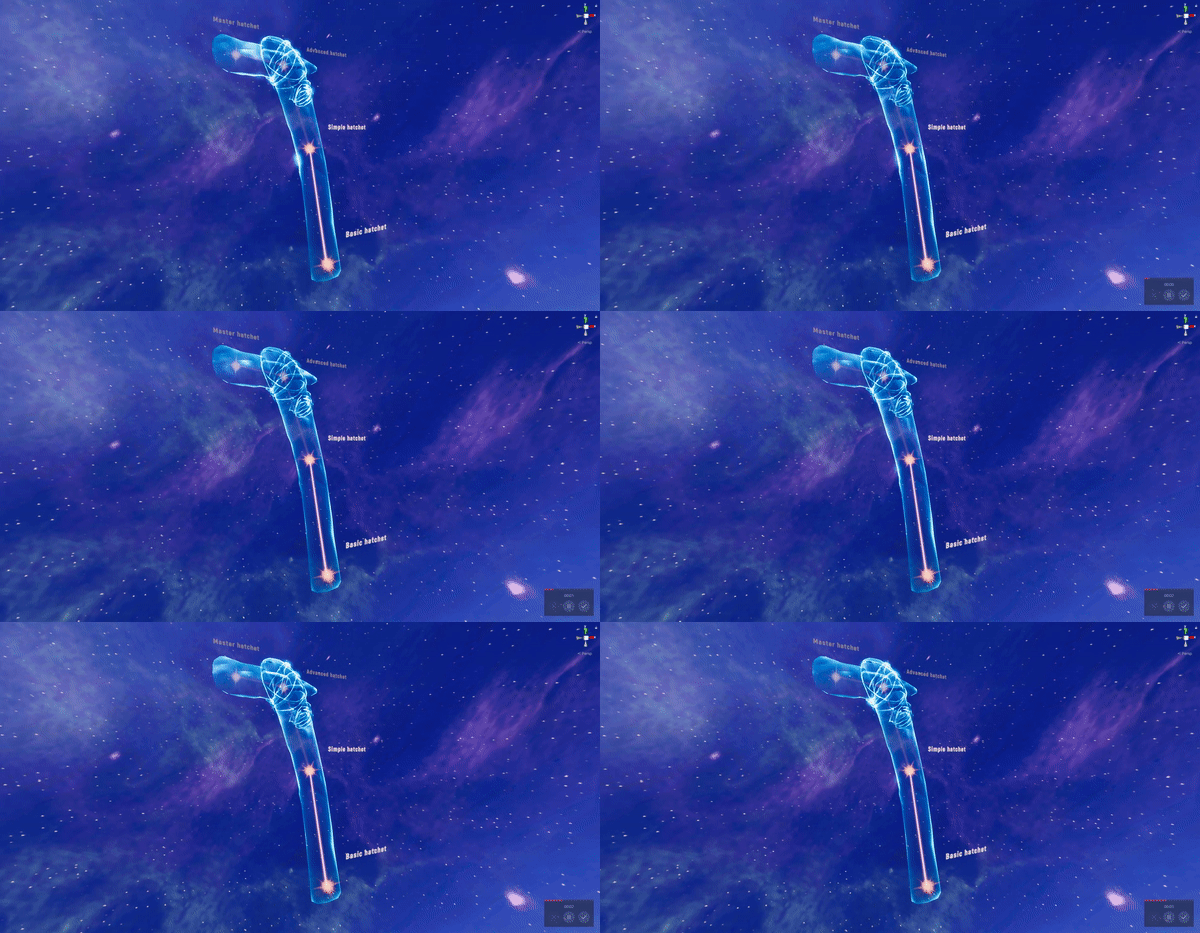
As you can most likely tell by now, progression in Tribe is divided into three parts:
- Buildings
- Tools
- Exploration gear
New and better buildings mean a better life for your tribe, and who wouldn’t want that? Each tier takes a longer time to require repair and also increases the productivity of anyone living in them, which in turn means a lot more resources that you can use to craft better tools or new buildings. However, buildings of higher tiers will require better resources to construct; resources that can only be gathered from regions you might not be able to reach without exploration gear.
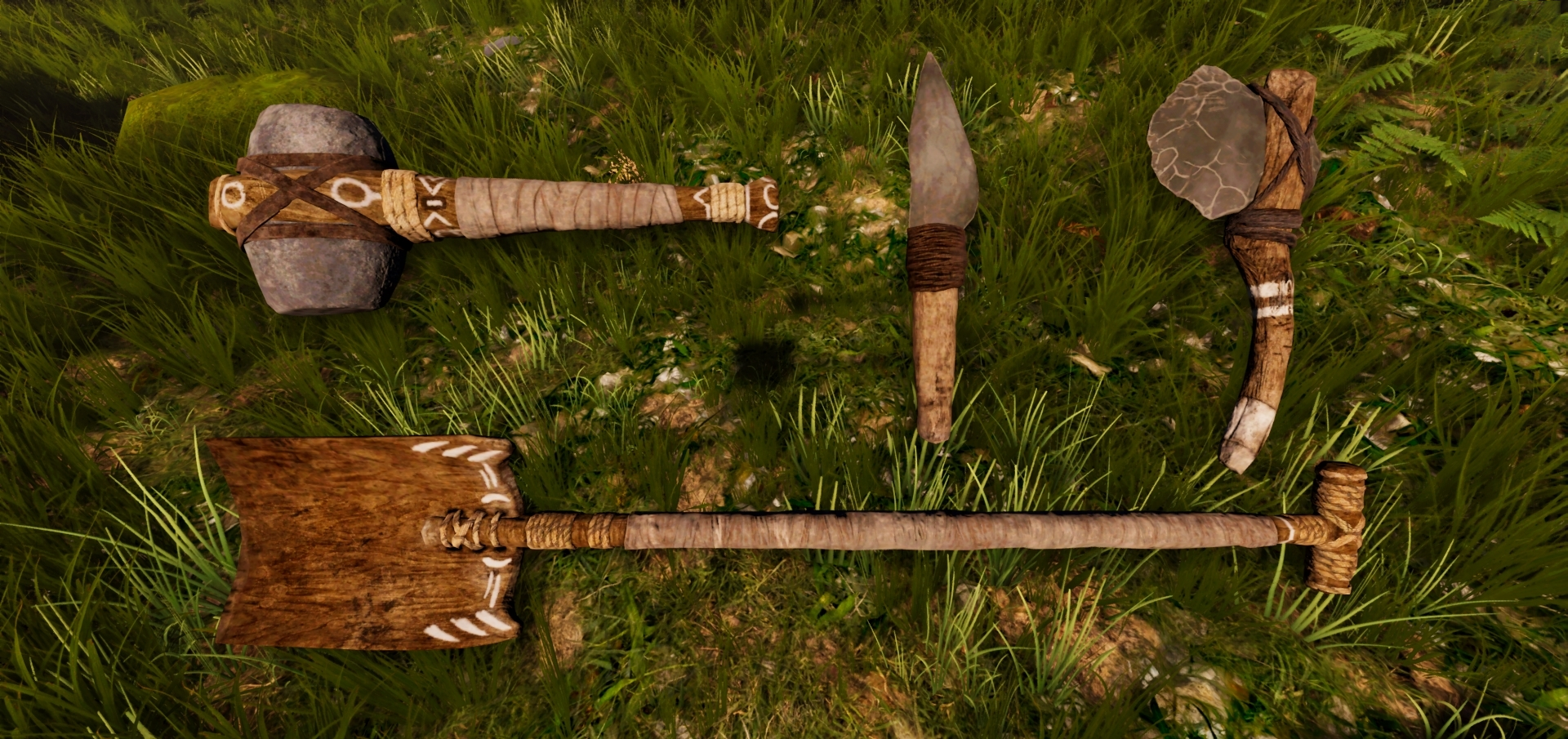
Better tools on one hand will allow you and your tribe members to gather resources faster and more efficiently, especially in higher tier buildings, but on the other will require more advanced resources and in larger numbers to craft.
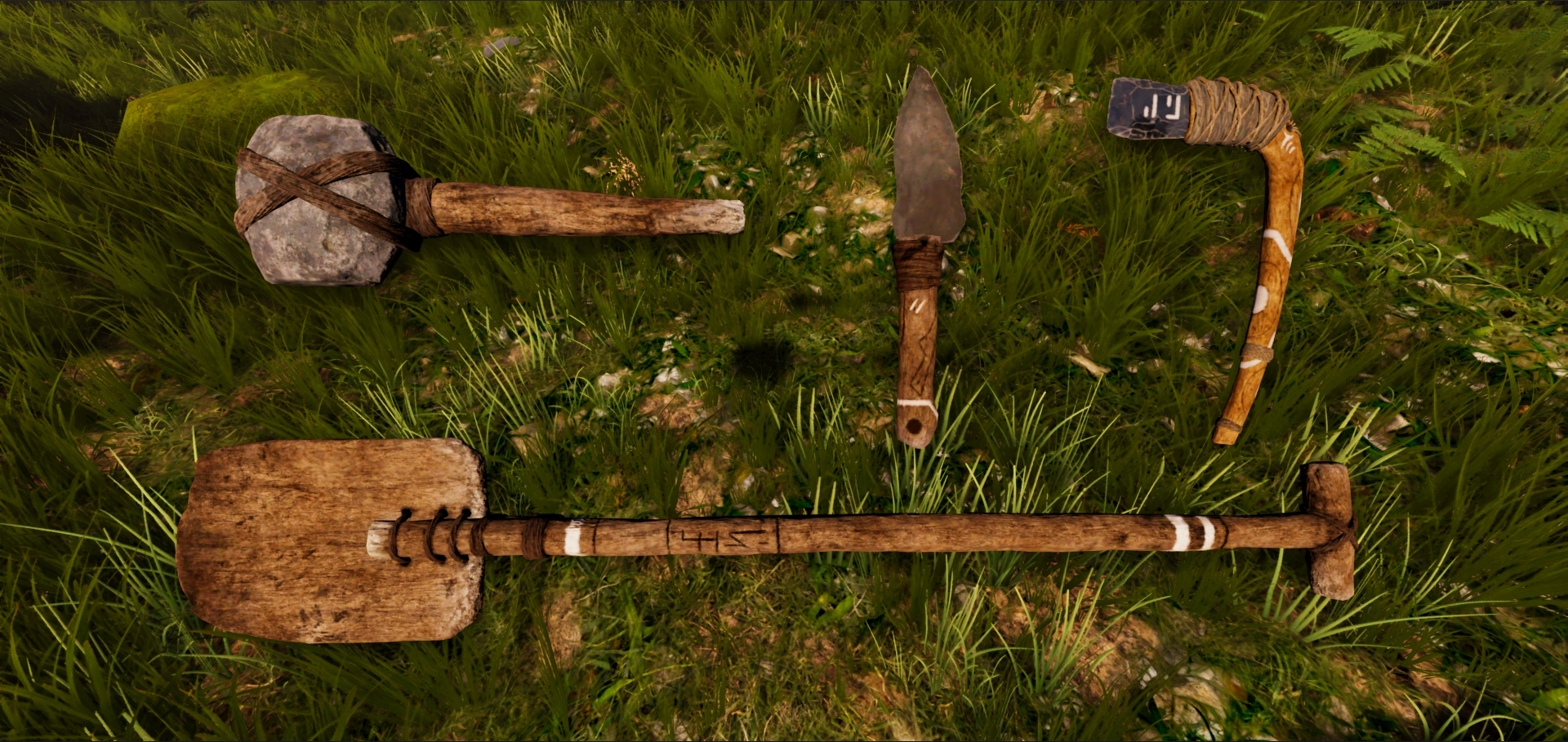
Exploration gear will unlock previously inaccessible parts of the island for you. These, while providing more advanced resources and access to new “sparks”, will also allow you to expand the reach of your tribe across the entire island and smaller islands near it. Yes, you heard us: you’ll get to build a raft and take it for a swim!
To sum it all up and make a long post short: the progression in Tribe is divided into three parts that will depend on each other to make the most out of them, all connected through the “Discovery” system. Perfectly balanced, as all things should be.
When experiencing Tribe for the first time, the question we want you to ask yourselves is: “What’s the point in reaching a further part of the island if I can’t use the resources from them, or unlock the ability to elevate brick houses when I can’t even gather clay and make bricks?”
In the end, it’s up to you to decide which progression path to go with, and experiment to see which approach makes the most sense or is the most efficient for you.
Until next time!
https://store.steampowered.com/app/1059900/Tribe_Primitive_Builder/
If you have any questions, and want to stay in direct touch with us, then join us on Discord!
----> https://discord.gg/PZmRVnt7Jv