The last patch gave your money somewhere to go, and I think that part worked. What it did not fix is that all of it still happened on a screen. You launched a coin on a screen, you watched a chart on a screen, you clicked campaign buttons on a screen. The room around the desk was scenery. You could be sitting in a cardboard box and nothing about the game would change.
So this patch takes the money off the screen and puts it in the room. You buy the place you have been renting since day one, you buy a building to put desks in, and then you hire people who sit at those desks and lose your money in ways you did not authorise. It is the first time the game asks you to be a manager instead of a trader, and it is the first time your apartment is worth walking around in.
New Feature: Buying Property
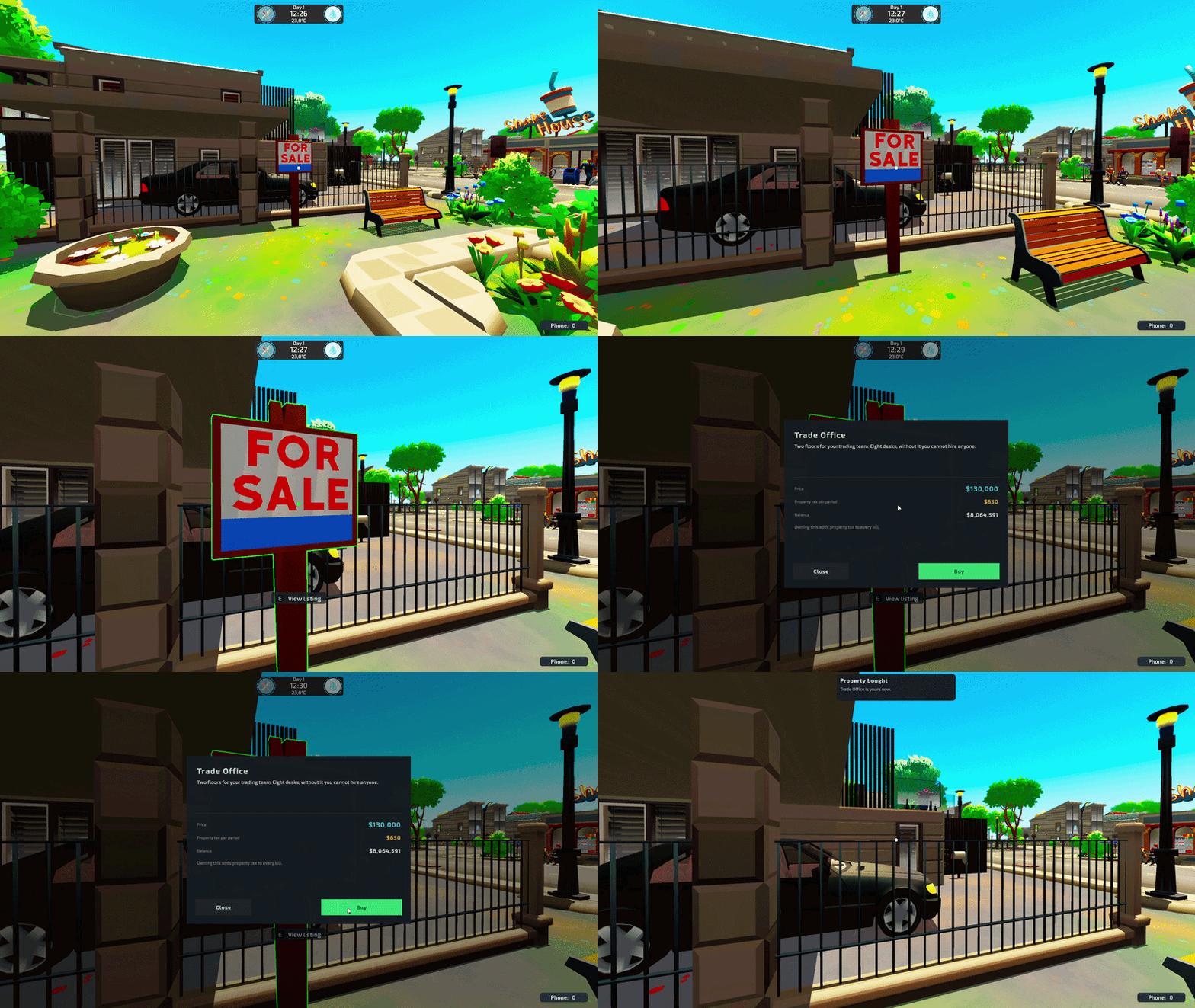
Your Own Apartment: You have been paying rent since the first day and never owning anything. You can now buy the apartment you already live in for 35,000 USDT. The rent line disappears from your bill the moment you own it.
It Is Not An Investment: Property tax replaces the rent and it is higher than the rent was, 180 per billing period against the 100 you were paying. Water and electricity also go up with every building you own. Do not buy the apartment to save money, because it will not. Buy it because it is the only thing that puts the next building on the market.
The Trade Office: The second building costs 130,000 and it is the one with the trading floor in it. Eight desks fit on that floor, and until you own the building there is nowhere to put a desk at all.
The Order Is Fixed: Apartment first, then the office, then the third building. Each one puts the next one up for sale. The signs are already out there in the world, so you can walk past the thing you cannot afford yet and see the price, which I think is more motivating than a locked menu entry. What the third building is for is the subject of the next patch.
Buildings Are Not Resellable: There is no property market and you cannot flip these. They are steps, not assets.
New Feature: The Trading Floor
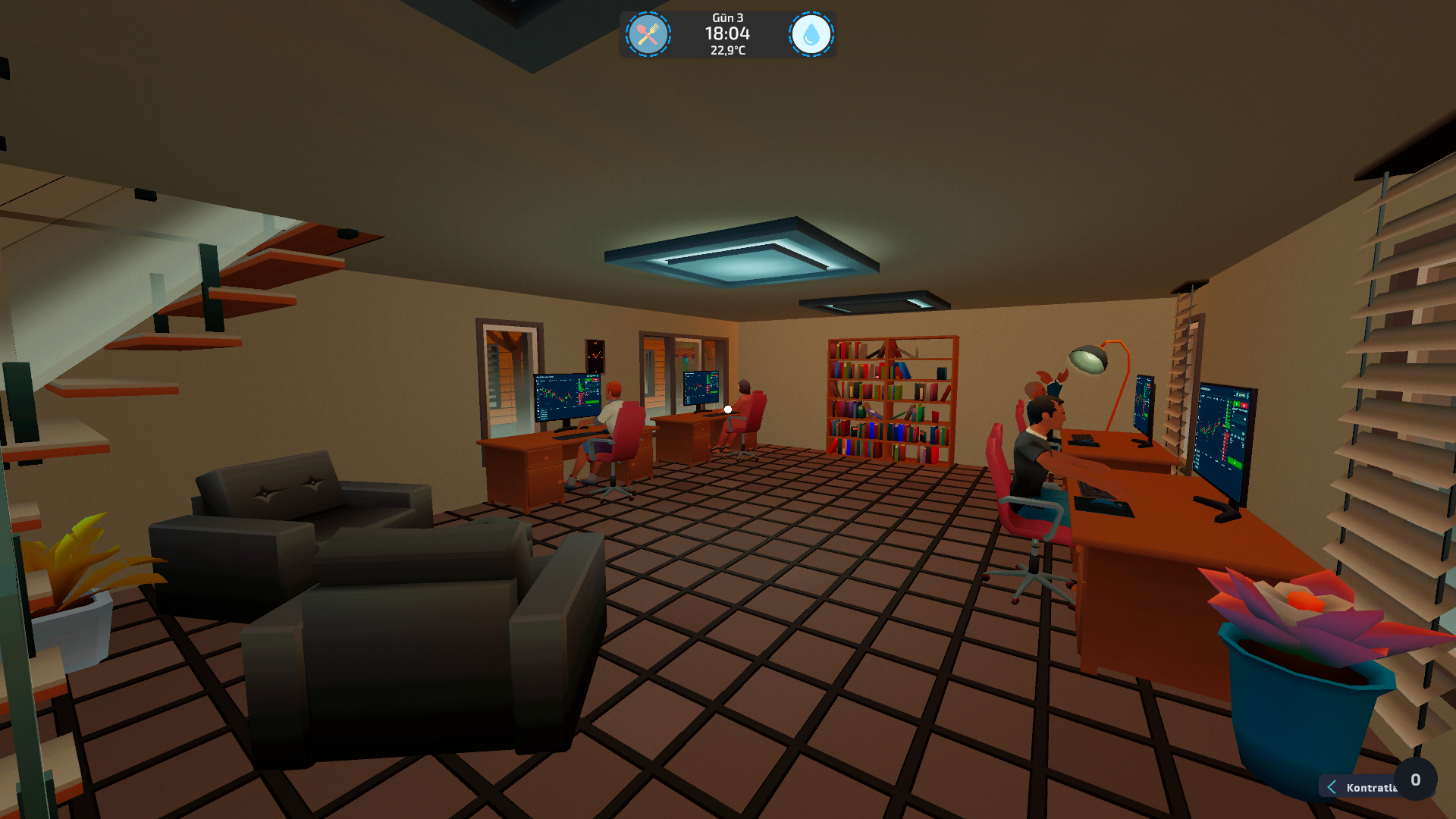
Hiring People: Once you own the office you buy desks, and once you have desks you can hire. A pool of candidates refreshes every day, and if nobody in it is worth hiring you can pay 1,200 to shuffle it once more that day instead of waiting a day for the same result.
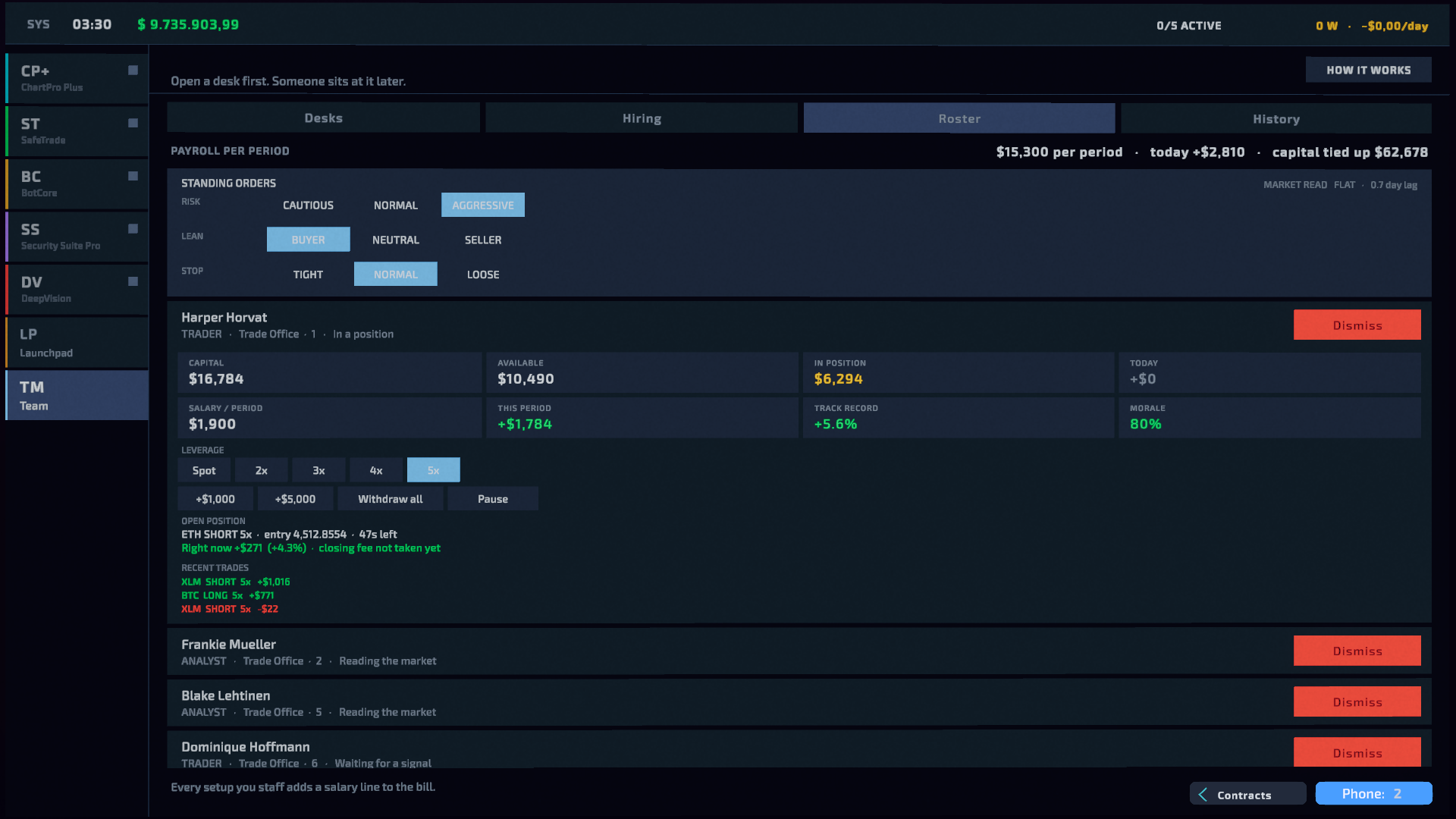
You Cannot See How Good They Are: There is no skill number anywhere and there never will be. What you get is a short record of their last few periods, and a short record is a small sample, which means it lies in both directions. A mediocre candidate who got lucky looks great and asks for a great salary. A good candidate who got unlucky is cheap. Their salary is priced from the record you can see, not from the talent you cannot, so paying more genuinely does not guarantee anything. Finding out who is actually good is the game.
Everyone Has Their Own Money: Each trader has a separate treasury and you fund it by hand. There is no shared pot, deliberately, because a shared pot hides who is earning and who is bleeding. You choose their leverage too, from spot up to 5x, and leverage multiplies losses exactly as fast as it multiplies gains, so handing a bad trader more rope does not fix them.
Giving Orders: Three dials control the floor: how much risk they take, whether they lean long, short or neither, and how quickly they cut a losing position. The dials are team wide by default, and any single trader can be split off onto their own settings when you want them doing something different from everyone else.
Being Wrong Costs Differently: Being aggressive in the wrong market loses you money. Being cautious in the wrong market only costs you gains you never had. That asymmetry is on purpose, so that when you genuinely do not know what the market is doing there is always a move that will not hurt you.
They Are Actually There: Traders are people sitting at the desks, not rows in a table. They react to their own results, they get visibly pleased and visibly annoyed, and you can walk over to one and talk to them. Doing that opens a card with their live position, what it is worth right now, their morale, their record, and the controls for that one trader, so you do not have to walk back to the monitor to pause someone.
The Analyst: An analyst does not trade and has no treasury. What they do is read what kind of market you are in, and they make that reading arrive sooner and be wrong less often. It does not tell you what to do about it, and the dials are still your call. The card shows you exactly what your analysts are buying you, in days of delay and in percent of being wrong, so a second analyst is a decision you can actually price.
History: A tab that shows every trade your floor has closed, when they went in, when they came out and what was left over, with a running total across the top. You can filter it down to one trader when you want to know whether the expensive one has earned their salary yet.
Payroll: Salaries land on the same bill as your electricity, and they will be the largest line on it. An idle trader still gets paid.
New Feature: Your Phone
One Place For Decisions: Press P anywhere, at the desk or halfway across the map, and your phone opens with everything waiting on you. A badge in the corner shows how many decisions are pending. It is not a second monitor app on purpose, because if it were, you would only ever find out about things while sitting down.
You Get Told: When something arrives you now get a notification, so you find out when it happens instead of noticing a number changed twenty minutes later.
Your Traders Want Things: They ask for raises, for permission to use more leverage, for a coin they want to trade, for a day off. Saying no is free in the moment and costs you morale later. Morale is visible on their card, it is not a hidden stat, because you should be able to see the bill coming. Low morale drags their performance down first and eventually they quit on you. Saying yes to everything is also wrong, since a raise is permanent and more leverage is more risk.
Silence Counts As No: Every card has a deadline and ignoring one is a decision, not a delay. It expires as a rejection and goes into your history rather than vanishing, so you can look back and see what you let slip.
The Market Turns: When the market changes character, a card turns up asking you to look at your orders again. Ignore it and your old orders stay live, which is sometimes fine and sometimes expensive.
New Feature: Selling Things Back
Half Your Money Back: Anything you have placed in the world can now be sold back for 50 percent of what you paid. Look at the item, hold the interact key, and it goes. The rate is a flat half on everything, so there is nothing to memorise and nothing to optimise, and it is low enough that buying something to try it out is still a real decision.
It Happens In The World: There is no sell tab in the shop. You placed the thing by hand and you sell it by hand, standing in front of it. Selling ten things means walking to ten things, which is the cost of keeping it consistent with how you put them there.
Smaller Things
Your Balance Is Visible: Your main wallet balance now sits in the top bar of the second monitor, so you can see what you have without leaving whatever app you are in.
Bug Fixes
Interaction Prompts: When an object could do more than one thing, the prompt only ever showed you one of them. A water bottle can be picked up, drunk and sold, and two of those were invisible. Every available action now gets its own line with its own key, so nothing is hidden behind an object you thought you already understood.
Staking And Open Orders: Take Profit and Stop Loss orders no longer keep trying to sell coins after those coins have been moved into staking. Staking now adjusts or cancels affected sell orders immediately, duplicate restored orders are filtered out, and repeated order failure notifications are throttled so they do not cover the speed controls.
This is the largest patch since Early Access started and almost none of it came from my own ideas. The apartment, the office and the phone all exist because of two complaints that kept coming back. The first was that money stops meaning anything, which is what the last patch started answering and this one continues. The second came out of playtesting and was blunter: you set the whole thing up and then you just wait. The phone is the direct answer to that one.
I know the floor is not finished. Managing eight people is a different game than trading and I am still learning where it is thin. Tell me where it drags, tell me which decisions feel fake, and tell me if the hiring gamble is frustrating rather than interesting, because that one is a fine line and I would rather hear it early.
The third building is next.
Thank you.