
Howdy builders,
In this release, the city becomes a little more like the real world: The job market has deeper impact in the dynamics of the city, unemployment might be an opportunity for some, and firms are sometimes born out of fear.
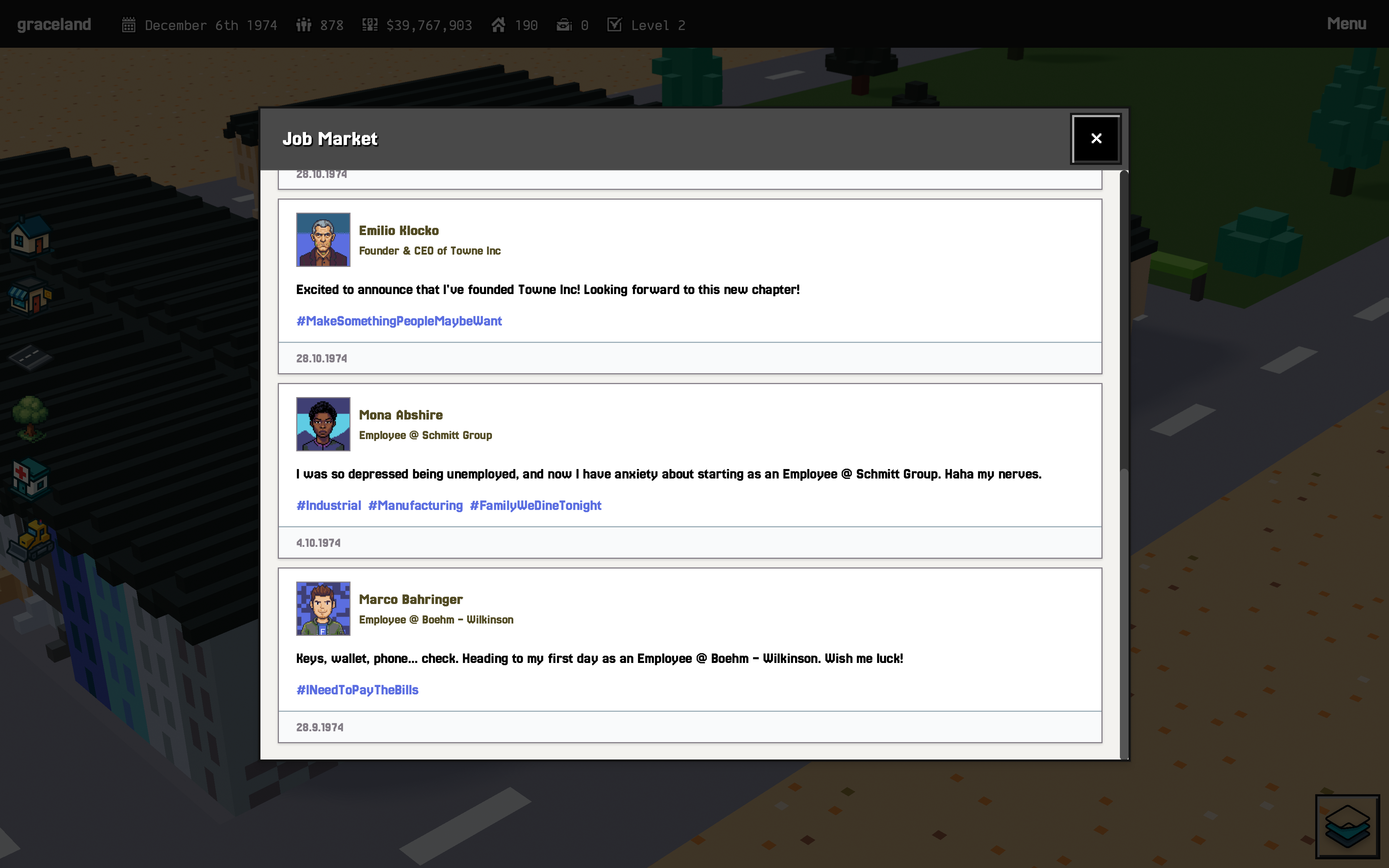
Here is what changed.
Entrepreneurs out of unemployment
When citizens lose their job and still have some capital, they now sometimes do what real people do when the system forgets them. They start firms.
No magical “spawned company” anymore. A person, once unemployed, may decide to risk their savings, open a business, suffer a few months of revenue volatility, and only then begin to hire others. Firms are now stories that begin in fear and necessity, not abstract entities that appear from the void.
Job Market panel, or how to stare at the labor maze A new Job Market information screen appears in your civic tool kit, with three views of your city's job market:
The job board shows every open position in the city, line by line, so you can see whether your economy is starving for workers or suffocating them.
The statistics view tells you which industries and professions are hiring, so you can finally see that “unemployment” is not one number, it is a misalignment of skills and demand.
The feed shows what citizens are posting in the "Locked In" social network, a real time view of who just got hired and who's starting a company.
Transportation in the census, or who really moves your city
The census now has a Transportation slide. It records every trip taken by every citizen, sorted by mode.
You will see how many people drive, how many walk to work, and how many choose the bus. This is not cosmetic. It reveals whether your road network is a genuine necessity or an expensive monument to your own illusions about mobility. Congestion, pollution, and access begin in these counts.
The boring details that only matter when they break
Visual behavior under Linux is smoother, gamepad controls are more reliable, camera movement is less clumsy, and a collection of small bugs has been squashed. Construction times, approval points and costs have been rebalanced for some buildings.
You now have more ways to observe how decisions propagate through employment, transport, and construction. The city will surprise you more often, which is the entire point.