
The Lifeblood of the Economy
If politicians are the machinery of the state, then economic goods are the fuel that keeps it turning. In State of Affairs, goods are not abstract numbers. They are grain and coal, steel and fuel, equipment and vehicles, the tangible components of daily survival, industrial might, and military readiness.
From the bread on the table to the uranium in a warhead, everything your nation produces or consumes flows through this system. Mismanage it, and you face famine, shortages, or black markets. Master it, and you can wield prosperity and power as weapons.
Why Goods Matter
Our design goal was to build a living economy that feels both historically authentic and deeply strategic. Every country has its own balance of resources, industries, and consumption patterns, but the underlying system remains universal.
The United States is rich in oil and consumer goods. The USSR must balance food security and heavy industry. Japan faces scarcity in natural resources but compensates with advanced manufacturing. The framework is the same, but the challenge changes depending on where you play.
This modular structure means we can expand to new nations without rewriting the rules, while still reflecting their real historical constraints of the 1950s.
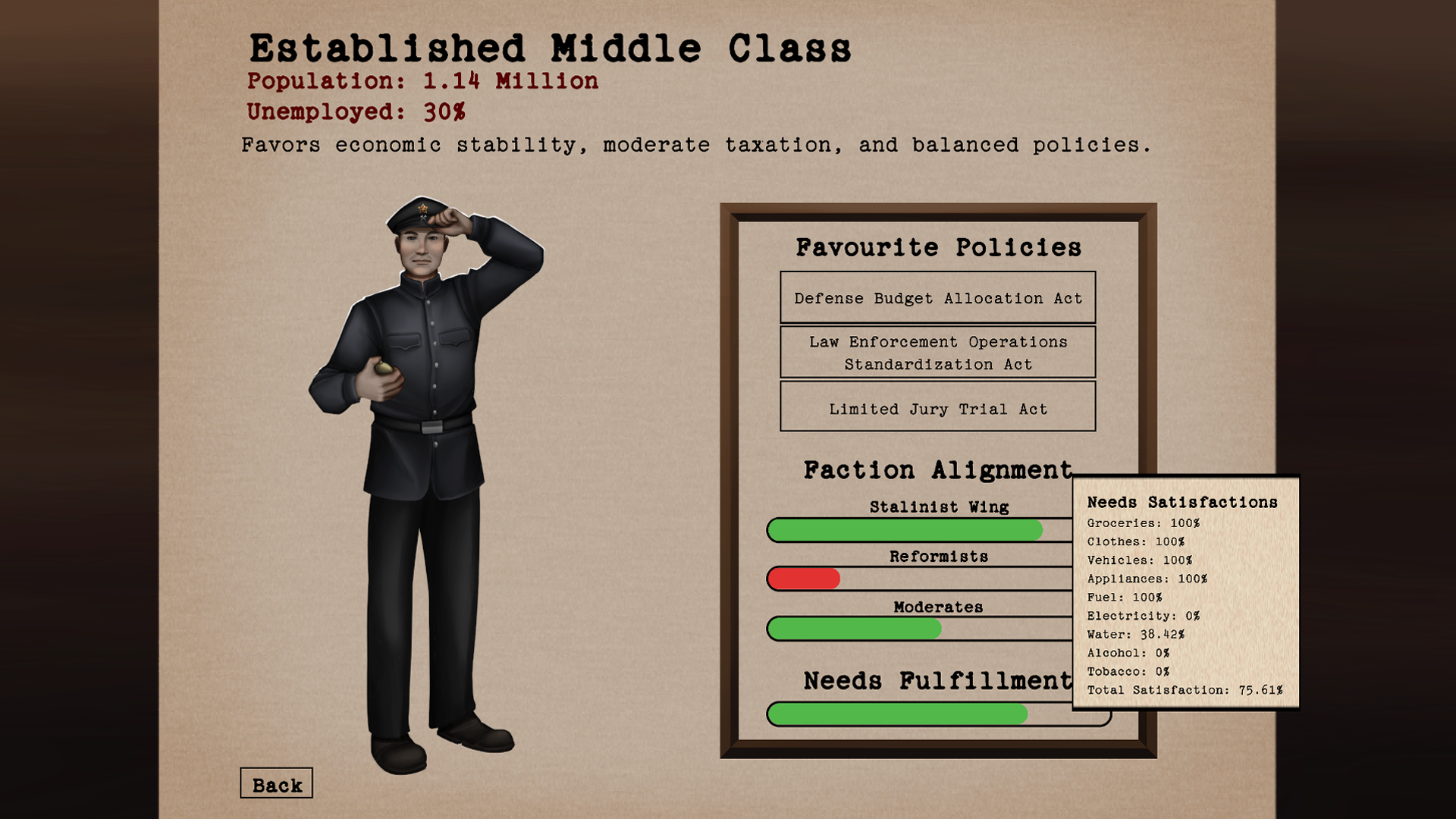
The Goods System
Each good flows through three stages:
Production - extracted from resources or manufactured in industries.
Consumption - used by industries, the population, or the military.
Balance & Feedback - shortages cause unrest, rationing, or black markets, while surpluses improve satisfaction and stability.
Goods matter because they connect every layer of gameplay: population happiness, industrial growth, military strength, and foreign trade.
Overview of Economic Goods
Resource Extraction
The raw backbone of any economy. Grain, fruits, vegetables, meat, and alcohol sustain the population. Coal, iron, oil, and uranium feed industry and energy. Rare metals and wood enable advanced projects. Shortages here cascade into crises across the whole system.
Industry (Civilian)
Factories turn raw resources into usable products. Food industries produce groceries. Textile industries deliver clothes. Heavy and light manufacturing supply vehicles, electronics, appliances, and steel. Civilian goods directly shape living standards — ignore them, and unrest will spread.
Industry (Military)
Arms industries produce the tools of war: infantry rifles, artillery, tanks, aircraft, and ships. These require both raw resources and civilian industrial inputs. A powerful military economy can secure your position abroad, but drain your population at home.
Services
Education, healthcare, finance, and culture will evolve into a fourth economic layer. For now, they are still in the early stages of the development lifecycle, but our long-term goal is to tie them into demographic stability, social policies, and civilian economy.
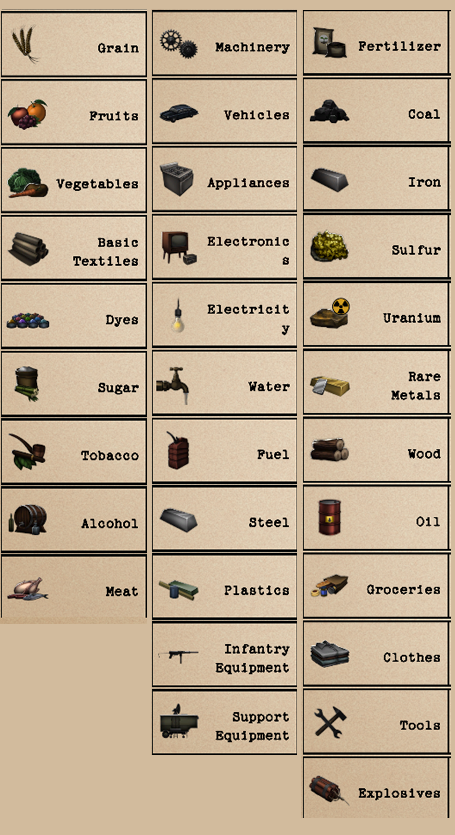
Above you can see a preliminary list of the goods that have been implemented. They all tie together to try and mimic the complexity of real-life economies.
How It Works in Gameplay
Economic goods shape your country’s ability to function as a nation:
Groceries and Clothes keep your citizens fed and clothed. Fail here, and unrest rises.
Steel and Fuel keep your factories and armies running. Shortages grind industry and logistics to a halt.
Luxury goods like Alcohol and Tobacco increase satisfaction, but risk dependency on imports. Or worse, widespread addiction.
Military goods consume huge volumes of civilian output, forcing you to choose between butter and guns.
Every slider you move in the ministries has a ripple effect across the goods economy. Raise military spending, and your population may face food rationing. Invest in agriculture, and you may ease unrest at home but weaken your global reach.
Closing Thoughts
Our vision is to make every unit of grain, every barrel of oil, and every ton of steel matter. The Goods System is where politics, industry, and society collide… and where even small shortages can spiral into crises with lasting consequences.
As with ministries, our goal is to make the economy feel alive: not a spreadsheet, not just a number on the screen, but a dynamic web of choices and consequences, shaped by the realities of the world we live in.