Every game has an origin story, and Code Alkonost: Awakening of Evil is no exception. In fact, the journey of creating this game took more than a few unexpected twists. In this first developer blog, we want to share how our initial idea morphed into the game you know today. It’s a tale of ambition, setback, reinvention, and ultimately, perseverance. We’ll pull back the curtain on our project’s early days back when it wasn’t even called Code Alkonost and reflect on how those experiences shaped the adventure that Awakening of Evil became. We hope this candid look at our development journey inspires you and gives you a deeper appreciation for the world you’re exploring in the game.
Code Gamyun – Detective Noir Meets Slavic Mythology (2022)
Back in 2022, our team embarked on an earlier incarnation of this project, then code-named “Code Gamyun” The name itself was a nod to Slavic mythology, reflecting the cultural roots we wanted to explore.
Our concept was ambitious: imagine a noir-style private detective plunging into a mythological Slavic underworld. This protagonist was heavily inspired by Leon S. Kennedy from Resident Evil – a seasoned, sharp-witted investigator type, but facing otherworldly horrors instead of zombies. By his side journeyed a fierce Slavic warrior woman reminiscent of Ciri from The Witcher, wielding medieval weaponry and ancient knowledge.
It was an unlikely duo we adored: the modern detective and the ancient warrior, teaming up against the darkness.
Early Concept Art – The Detective & The Warrior: This artwork from the Code Gamyun era shows our original protagonists in a dark, atmospheric style. The brooding detective (left) brandishes a handgun, clad in a long coat and determination, while his companion – a battle-hardened Slavic huntress (right) – stands ready with her axe. We envisioned them descending into torch-lit catacombs and misty forests beneath the mundane world, confronting nightmarish creatures from Slavic folklore.
The tone at this stage was very much action-adventure: tense shootouts with demonic foes, close-quarters combat alongside dialogue choices, and a series of boss fights against legendary underworld guardians. This early vision was cinematic and intense, blending detective noir with mythological fantasy in a way we hadn’t seen before.
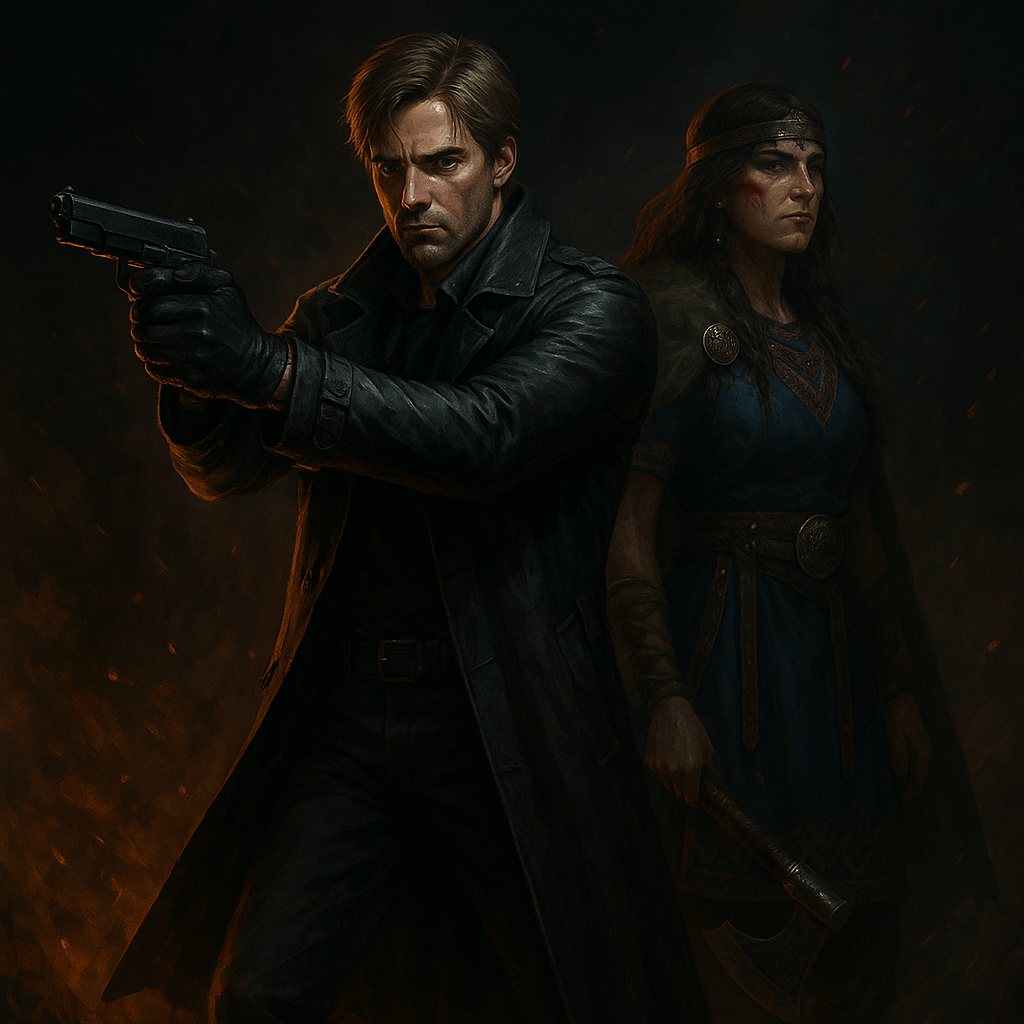
Code Gamayun - Main Characters
A Promising Start – Pitching the Vision and Early Support
With a clear concept and palpable enthusiasm, we moved forward to pitch the Code Gamyun project to potential supporters. By late 2022, we compiled concept art, a storyline overview, and gameplay prototypes to present our idea for funding. Excitingly, we earned an early approval from a Innovation fund. Getting financial support felt incredible – it was validation that our crazy detective-meets-folklore idea had real promise. We remember the day we got the news; there was joy, relief, and an overwhelming surge of motivation.
Early funding meant we could start expanding the project properly: build more prototypes, refine the art, and perhaps most importantly, work with confidence that the game had backing. It’s hard to overstate what that support did for team morale. We started planning out full production for the coming year – scheduling content creation, level design, and all those boss encounters we had dreamed up. Our small indie team was on cloud nine, fueled by the encouragement from the funding committee and our own creative drive. In hindsight, that period was a golden time of optimism where everything seemed possible.
Crisis Point – Losing Key Team Members and Funding
Game development is rarely a smooth ride, and for us a major crisis hit in 2023 just as things were gearing up.
Two of our core team members left the project: our lead environmental artist and our tech lead. These weren’t just any teammates; they were pivotal to realizing the vision. The environmental artist was the one who could bring those eerie Slavic underworld landscapes to life, and the tech lead was the backbone holding the code together. Their departure was a heavy blow to our small team. We found ourselves suddenly without the architect of our world’s atmosphere and the guide of our technical implementation.
To make matters worse, the creative fund that had approved us did so based on our original team lineup. When we informed them of the changes, they declined to accept the new team composition. In their eyes, our project had fundamentally changed; the expertise they’d trusted to deliver this game was no longer all on board. As a result, the previously awarded funding was revoked. That was a heartbreaking moment. We understood the fund’s position – it’s standard procedure, after all – but it felt like the rug had been pulled out from under us. Months of work and planning were suddenly in jeopardy. We were left reeling, faced with an uncomfortable question: What now?
For a while, we were truly at a crossroads. Do we try to replace those team members quickly and press on with the same concept, essentially attempting to rebuild the project mid-stream? Or do we accept this setback as a sign to rethink our approach entirely? It was an emotionally charged period. We had tough meetings, candid heart-to-heart discussions, and more than a few sleepless nights pondering the fate of Code Gamyun. It’s in these moments that a team’s resilience is tested. Despite the pain of seeing our original vision crumble, a spark of determination remained. We weren’t ready to give up on making a game rooted in Slavic myth – but maybe, we realized, the game we ultimately make didn’t have to be the one we first imagined.
Reinventing the Game – From Code Gamyun to Code Alkonost
Ultimately, we chose not to try resurrecting Code Gamyun as it was. Instead, we decided to reinvent the project from the ground up. This was not a light decision; it meant scrapping or reworking a lot of what we had built so far. But starting fresh also felt liberating in a strange way. We gathered the remaining team and had an honest conversation: What if we created a different game using the knowledge and passion we gained, but scoped to what our new smaller team could achieve, and more aligned with the mood we wanted to convey? The answer to that question became the foundation of our rebooted project, which we renamed Code Alkonost.
One of the first big changes was the protagonist. We moved away from the hardened male detective archetype and introduced Vera as the new lead. Vera is a young woman drawn into the darkness of Slavic legends, and unlike a grizzled detective, she isn’t equipped to charge in guns blazing. In fact, we removed guns entirely from the design. This was a deliberate pivot to make the player feel more vulnerable and to shift the gameplay focus. Vera’s strength would come from her courage, intuition, and resilience – not from firearms or brute force. This immediately gave the game a more survival vibe, which we found both challenging and exciting. We started asking ourselves what truly makes something scary or unsettling, beyond jump scares or action. The answers we landed on guided the new direction of the game.
Along with Vera’s introduction came a tone shift. We leaned heavily into dark fantasy and atmospheric tension. Instead of facing hordes of enemies with an ally at your back, the player (as Vera) often finds themselves alone in creepy, otherworldly places, with the feeling that something isn’t quite right. We drew inspiration from classics like Silent Hill and Amnesia for creating dread through environment and story, rather than firefights. The narrative became more personal and introspective – Vera’s descent is as much about confronting inner demons as it is about dealing with literal demons of folklore. This new approach allowed us to explore themes of symbolism and morality in Slavic myths on a deeper level. Every creature or supernatural event in Code Alkonost now had a meaning behind it, a riddle to unravel, or a lesson for Vera to learn, which made the writing process far more enriching.
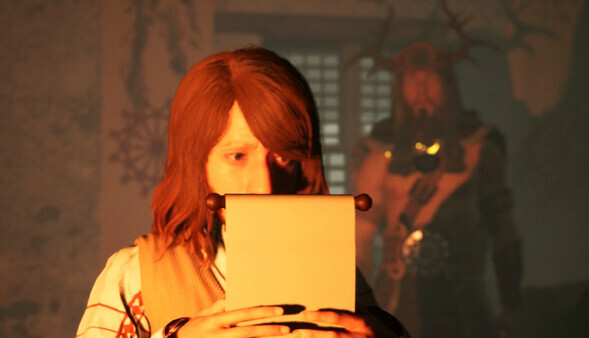
Vera - an ordinary housewife, suddenly wakes up in a surreal, alternate world
From Action to Introspection – Embracing Puzzles and Folklore
Shifting away from action gameplay, we needed new core mechanics to engage players. The answer was found in the rich puzzle-solving traditions of adventure games, now intertwined with Slavic folklore elements. We designed puzzles that would make players think and feel the lore rather than just witness it. Instead of dodging attacks and returning fire, you might be deciphering ancient Cyrillic runes, mixing traditional herbs for a ritual, or arranging symbolic artifacts to appease a restless spirit. Our goal was to have the gameplay itself tell part of the story.
Folklore Puzzle Interface: Here is an example of the kind of puzzle players face in Code Alkonost. Rather than a gunfight, you’re presented with a task steeped in symbolism – in this case, combining elemental icons in the correct way to unlock a ritual or mechanism.
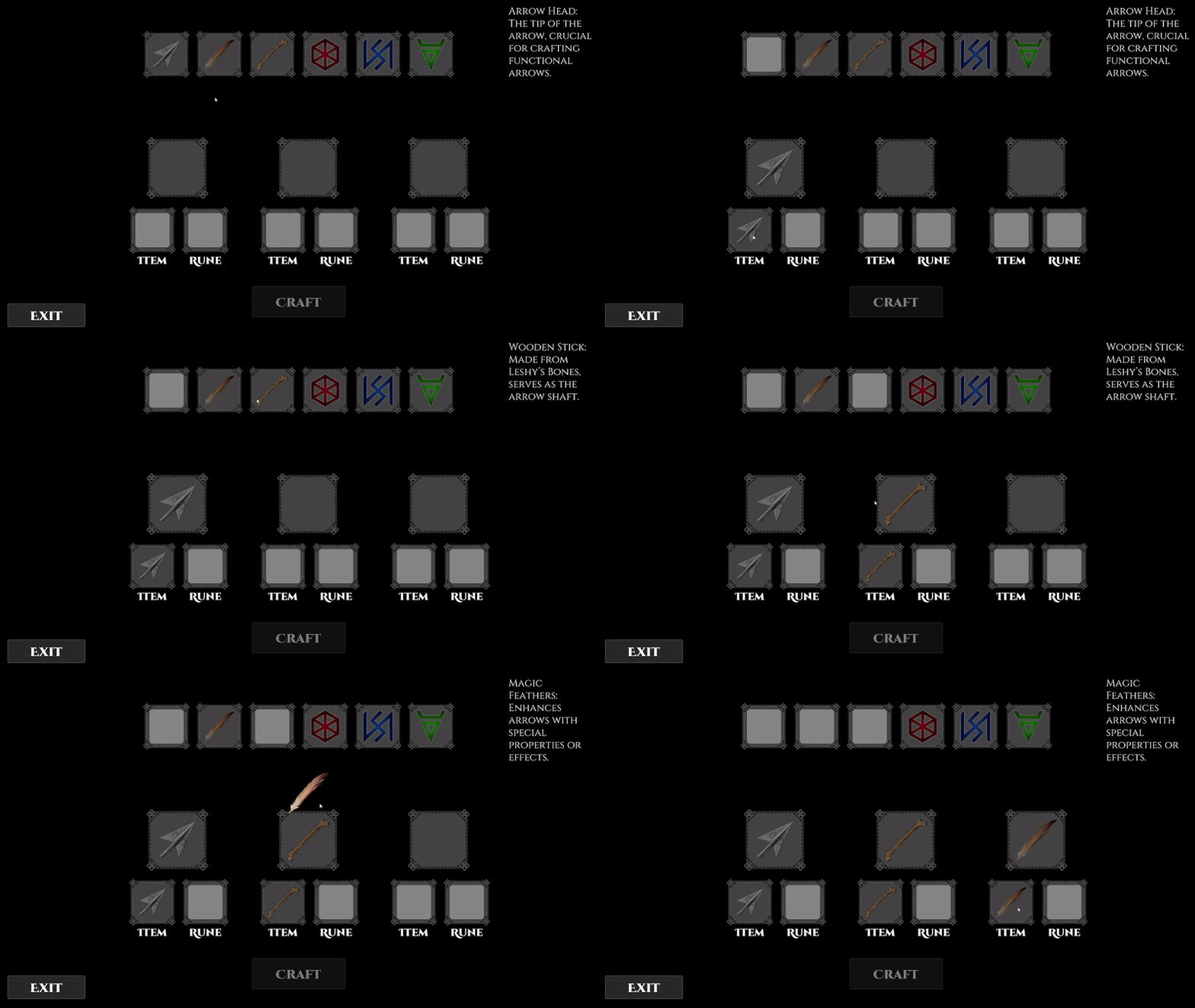
Crafting Puzzle
This interface illustrates our puzzle-centric design: it’s clean but cryptic, forcing you to ponder the relationships between natural elements. Each symbol and combination in the game has roots in Slavic myth. By solving these puzzles, players aren’t just progressing in the game; they’re also learning the logic of the folklore in Vera’s world. We found this approach creates a different kind of tension and reward. It’s not about fast reflexes, but patience, observation, and understanding – a cerebral challenge that can be just as thrilling, especially when the solution reveals a new story twist or a haunting piece of lore.
Of course, puzzles are just one aspect of the new gameplay. Exploration and discovery became equally important. Without combat, the player’s main interactions involve searching environments for clues, tools, and story bits. We revamped the inventory and interaction systems to support this scavenging style of play. Every item you pick up might help you survive the next encounter in a non-traditional way. The absence of weapons meant we had to get creative with obstacles and how the player overcomes them, often leaning on superstition and clever use of the environment.
Collecting Folklore Artifacts: Instead of ammo and guns, Vera’s world is filled with mystical items and clues to collect, as shown in the inventory interface above. Berries, herbs, strange tokens, ritual tools – these are the kinds of objects you gather and use. In this screenshot, you can see examples like berries and a wooden bucket, which might be ingredients for a folkloric recipe or offerings to otherworldly beings. The UI we designed highlights a symbolic wheel behind the grid, reinforcing that every item has a place in some greater ritual or puzzle. This shift in gameplay drastically changed the feel of the project. It slowed the pace in a good way – encouraging players to soak in the atmosphere, read notes, examine carvings, and truly immerse themselves in the storytelling. We traded the adrenaline of combat for the slow-burning suspense of not knowing what lurks around the next corner or how you’ll deal with it when it appears. And when danger does strike, Vera must rely on wit or a well-prepared plan to survive. This makes every victory feel earned and every escape from evil feel like a sigh of relief.
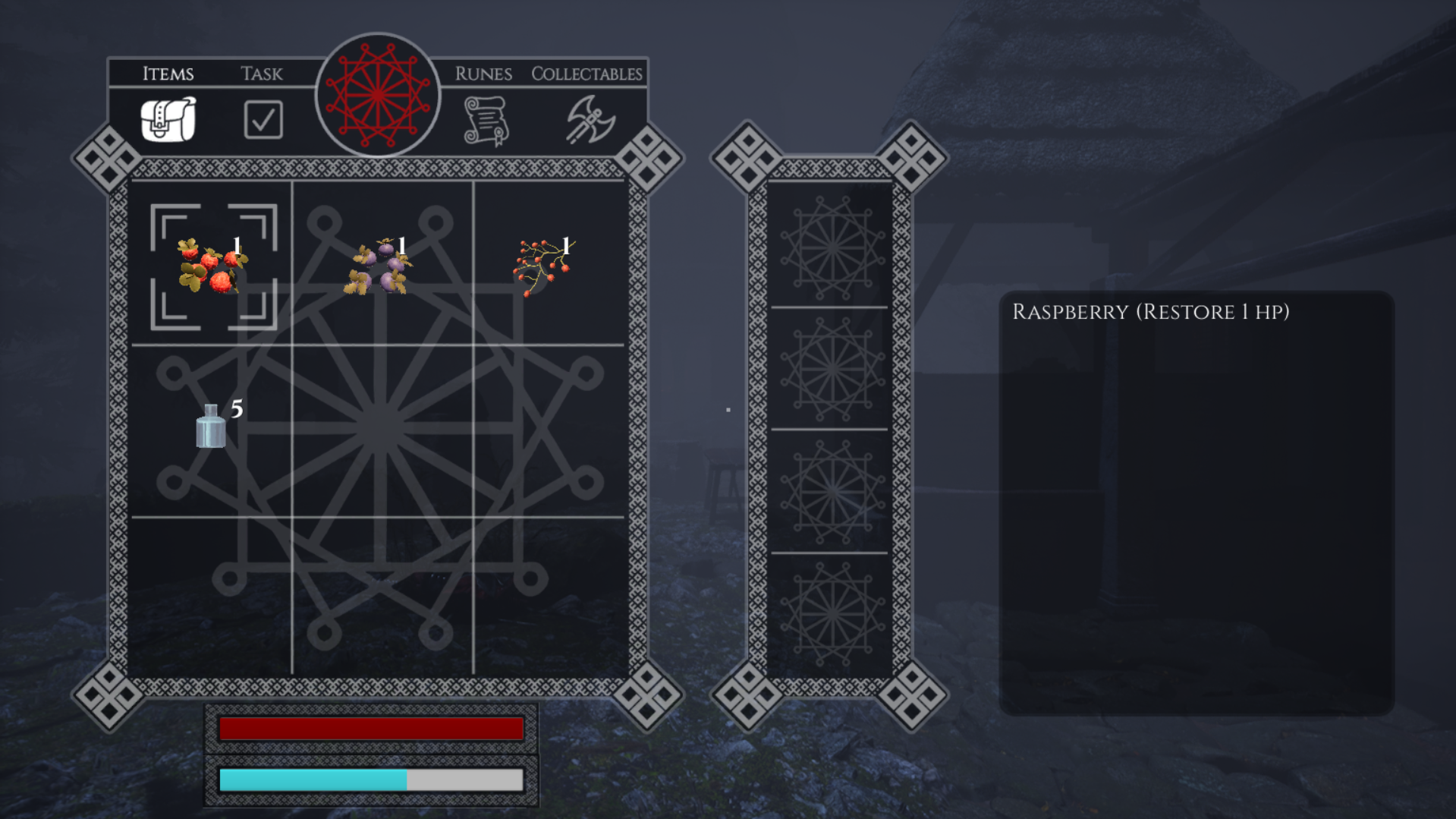
Inventory Items
Looking Back – Reflections and Gratitude
By mid-2023, it was clear that our radical pivot had given birth to something special. The game was now living up to the Alkonost name – in Slavic myth, the Alkonost is a mystical bird whose songs can induce either bliss or despair.
Likewise, our game now aimed to evoke a mix of emotions: wonder at the beautiful, eerie world and its legends, and dread at the evils slithering in the shadows. We had transformed a setback into an opportunity to craft a more original experience. It’s not the game we first set out to make, but we believe it’s a better one for having the soul of our struggles poured into it.
Now, standing on the other side of this turbulent development journey, we feel a profound sense of gratitude. It’s almost poetic – the mythical Alkonost rising from the ashes of our earlier project. The road here was not easy. We had to let go of ideas we were deeply attached to and watch an earlier dream fade. But in doing so, we found a new dream that was worth fighting for. In retrospect, losing our funding and original concept was a disguised blessing. It forced us to dig deeper creatively and personally, to ask why we were making this game and what we truly wanted to say with it. The result is a game that is more intimate, distinctive, and, we hope, more impactful for players.
Throughout this process, we learned the value of adaptability and trust. Adaptability, in that we as developers must be willing to change course when fate demands it. And trust, in that we needed to trust each other as a team – that we could build something great even when the odds were against us. We also want to acknowledge that those who left the project early on still contributed to where we are now; their work laid the groundwork, and their departure set the stage for us to grow in new ways. We harbor no ill will – only thanks for being part of the journey.
Most of all, we want to thank you – the players. Whether you’ve been following us since the early concept days or you just discovered Code Alkonost: Awakening of Evil, your support means the world to us. The fact that people out there are now playing and experiencing this game is the ultimate reward that makes every challenge worth it. Thank you for giving our reimagined vision a chance, for diving into this dark world and embracing its story. Every review, comment, and message we’ve received from the community has lifted our spirits and affirmed that we made the right choice in continuing on.
As we share this origin story in Devlog #1, we’re humbled by how far the project has come. From detective noir action to dark fantasy adventure – what a ride! We hope this behind-the-scenes look provides context and meaning to your experience with the game.
We’re excited to continue supporting Awakening of Evil and to share more devlogs exploring everything from our artistic process to the deep cultural roots behind the narrative. There’s so much more we want to talk about and we’re just getting started.
🔜 Up next:
Devlog #2 – David vs. Goliaths
How Code Alkonost outshined million-dollar productions with less than €50,000.
Devlog #3 – Is Code Alkonost a Meta-Narrative Game?
Hidden layers, secrets, and how folklore and narrative loops shape a deeper player experience.
Stay tuned and thank you for being part of this journey. 👁️🕯️