
Dear nobles,
today we return to the topic that we initially introduced in Dev Diary #4 - Peasants and villages almost a year ago (how the time flies!) i.e. the audience system.
So this time we will talk about what we want to achieve, how it connects with other systems, and even what we would prefer to avoid in the game.
Vox populi
The very idea of this mechanic crucial to the game is simple. Various people visit the player's character in his audience room, and he listens to what they have to say, talks to them and makes decisions.
The status of the visitor will affect the available options, but as we strive to reflect the reality of being a lesser noble, most visitors will be peasants or burghers - the subjects of the protagonist. Only from time to time high-born guests will appear, or even other, more exotic ones (like those described in Dev Diary #5 - Foreigners).
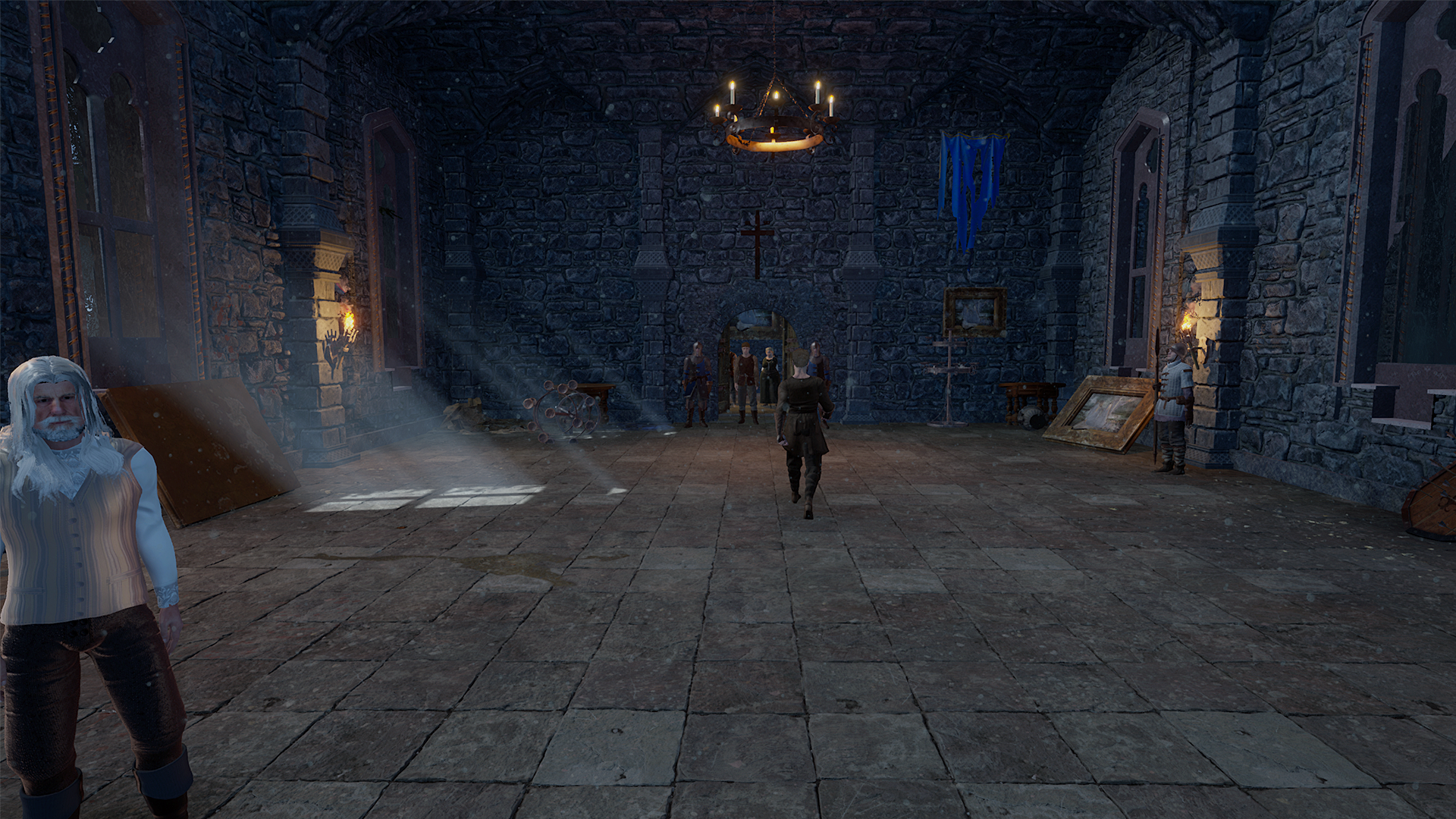
Screenshots from the current build, which of course is Work In Progress. People wait for an audience with their ruler usually in order (another petitioner crossed the threshold from the hall) related to their status. At the same time, more significant guests, and certainly nobles, will not stand with the masses in the queue, but will usually enter first.
Visitors will usually ask for something. It can be about money, various accumulated resources (which are discussed a bit in Dev Diary #2 - Economy (Resources)) or all sorts of privileges from simplest tax reduction to supporting some undertaking with an advisor (more in Dev Diary #9 - Noble court) or even the army. Sometimes they can be messengers from other magnates, because not all communication with aristocrats will be dealt with by letter (more about that in Dev Diary #6 - Diplomacy). There will also be people who, for a change from numerous requests for money and resources, will want to give the nobleman a gift. At the same time, it will rarely be 100% selfless.
As we pointed out in Dev Diary #8 - Kingdom Reborn the gameplay begins when the player's character's lands are devastated. Hence, the amount of money and supplies is limited, and the chances of quickly replenishing them are slim. You can't help everyone, so the question is who deserves the protagonist's mercy, and to what extent? Even when the player's character lands are reborn, there will almost never be enough resources to do everything perfectly.
Heavy is the head...
Audiences are therefore economic decisions. Will we give our money to crippled veterans, because this can potentially improve the morale of soldiers? Or will we support the blacksmith to rebuild his forge, which will increase the economic potential of the city? Maybe both? But will our treasury cover it? In addition, if we are interested in the first situation, will we take care to reward them with interest for their fight for their master or maybe let them vegetate on starving rations?
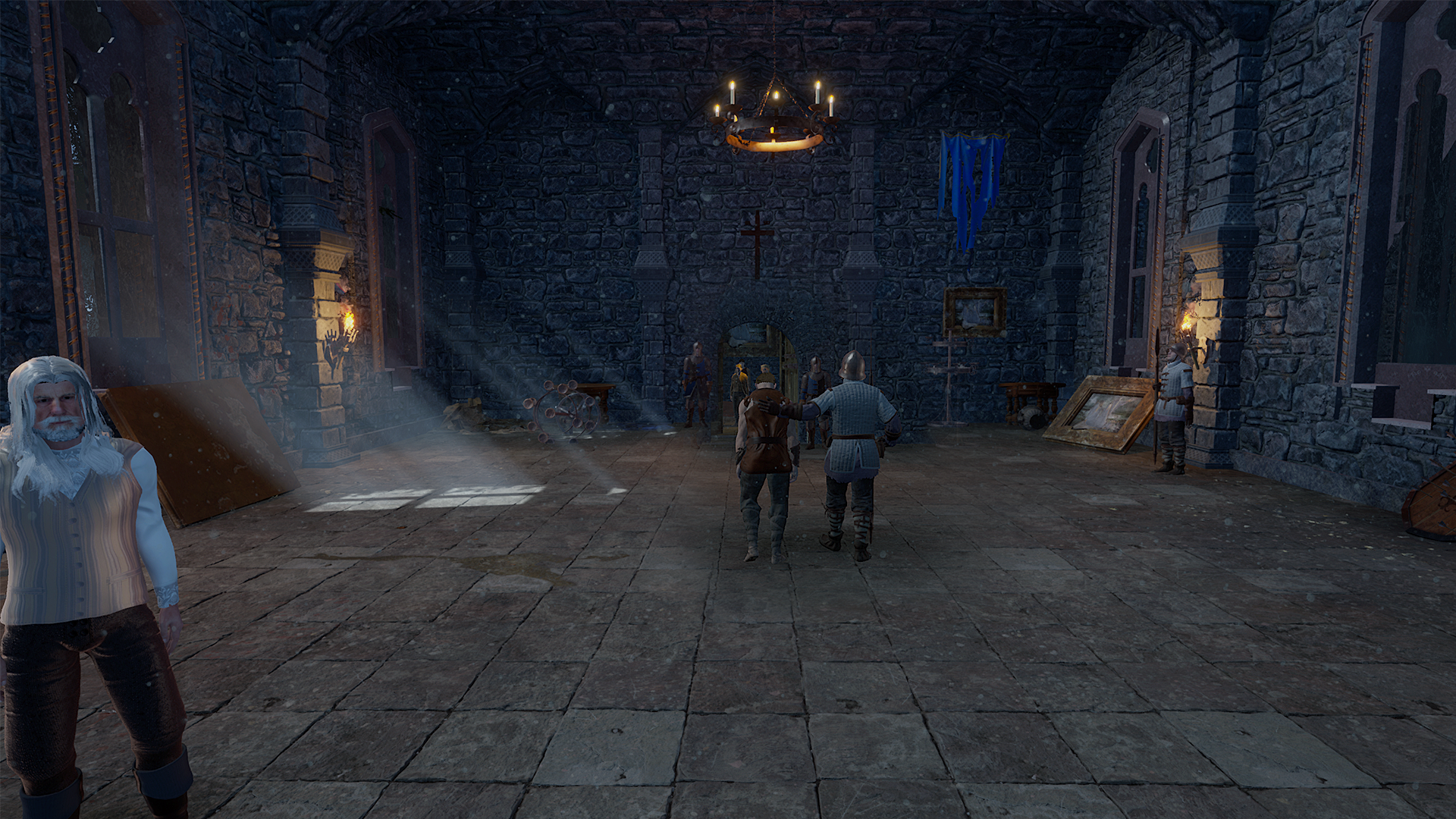
The guard, at the behest of the player's character, leads out the petitioner, who allowed himself too much during the conversation.
We also want some decisions to be dramas of individual people whose fate the player holds in their hands. Hence, it is equally possible to sentence a wayward peasant woman to pillory for insulting majesty as well as to bend over her problems. Importantly, and not so frequently in games, characters coming to audiences can simply lie, so it's not worth believing every tearful fairy tale.
…that wears the crown
So how can the player deal with it? Well, first of all, the main advisor usually has some information about each newcomer, secondly, you can question the interested person yourself, thirdly, we do not always have to make decisions immediately. In many cases, you can either hold off on the decision or order someone to investigate the matter. After all, how do we know if this peasant talking about irregularities in a neighboring village is not caused by envy? On the other hand, is it reasonable to devote resources to investigating every peasant quarrel? Maybe it's better to throw a farmhand into the dungeon, let him think about his life decisions. But after something like this, will someone from his village come to the player's character when something serious happens in the near future? Going even further, if we will help in every case, will we not start being exploited? Sometimes hard or even morally reprehensible options can have a better effect than wasting resources on a lost cause.
Phew... It sounds like a lot of options and we actually want it to be like that. However, not all of them can be used at once. Moreover, the player may as well treat matters with neglect, which was not so rare among the nobility. We want each player to find their own ruling style.
How is it made?
But how will it work in gameplay? Simply in the form of a classic role-playing dialogue with choices.
At the same time, this mechanic is not so simple, e.g. it takes into account the knowledge that the player has. That is, if we have not asked about an issue, then we do not have a dialogue option that requires this knowledge. Another thing is that the chief advisor will protest if we try to promise something that we do not have.
Finally, the decisions we make will have consequences, but not all of them will be immediately visible. We also do not want to inform about them mechanically in the style of:
I will help you [+1 to loyalty]
or:
Jean will remember that.
We believe that such measures are not very immersive. On the other hand, we don’t exclude some kind of launch option more simply presenting mechanical changes dedicated to those attached to such solutions.
Of course, every increase in taxes to the village will always lead to dissatisfaction and we will communicate it in the game, and extremely cruel or unfair treatment of the advisor can make them leave the court right away. However, not all situations will be so simple and in many cases the player will have to assess for themselves, for example, whether they conduct a firm but honest policy or become the bane of all noble neighbors who are already secretly preparing a gloomy surprise for us.
We'll stop right here. Next Dev Diary, this time about the historical realities, will appear at the end of September or the beginning of October. We will reveal the topic of the next one earlier again on Twitter ( https://twitter.com/Nobles_Life ) and Discord.