
Welcome great nobles,
This week, for the second time in total, we will talk about the strategic and economic aspect of our game. Our main topic for today will refer to those who work (peasantry) and the basics of village's management.
But, first of all, we would like to say one thing.
Kingdom Reborn
At the beginning of Noble's Life, the player's character is in a bad position. Army of enemies just passed through his territory in a very brutal manner. In the trailer we are only showing you the destroyed city, but let's be clear, most of the villages and farms are burnt, slaughtered or the people run away. Whereas the few that stayed are hoping for some kind of help from their lord in these hard times.
What will the player do, it's up to them really. At the start they will have only a few villages under their control, but if they'll focus on expansion and progression, they would certainly have more of them.
There are three basic ways of managing the lands and peasants.
The Estate Map
It should be clarified here, that the player's character won't visit the villages most of the time. That's why they can manage the rural areas from the inside of their castle or city that's built near it. The basic tool for that is the estate map (which we've shown in the trailer before or on the graphic at the top of this Dev Diary). It can be used to establish the amount of existing taxes (in a currency and nature) and recruits (mainly for military needs - because war, that's why). In addition to that, it allows the player to make investments, but also helps to quickly find the actual status of the villages that's in their possession.
We've chosen this system simply because it hits the sweet spot as the quality of life feature, but most of all, it's immersive, because it allows the player to manipulate the figurines on the board rather than soulless sliders.
Every village on the map is described and contains information about them, among others, name, the number of villagers, happiness and religious level, and it's produced materials. About the statistics and their dependency, we will be talking more in the future Dev Diaries, because they have a big impact on the village's fate.
High level of happiness will positively influence the morale and the quality of recruits, the taxes and it will help avoid many potential problems. Low levels on the other hand... Even cheering each other up saying " jacques bonhomme a bon dos, il souffre tout " (peasant’s back will bear everything), well that wasn't really true. Peasants revolts were common, in which the french Jacquerie and the english Wat Tyler's Rebellion were very important events during the Hundred Years’ War and they deserve to have a whole separate topic about them in another Dev Diary, and when that happens, we will mention our ideas inspired by Dithmarschen ;)
Audiences
Yet another important thing to be aware of, are appeals and problems of the villagers. They will come to visit the player's castle, trying to get an audition before their noble. It's also the next core mechanic too.
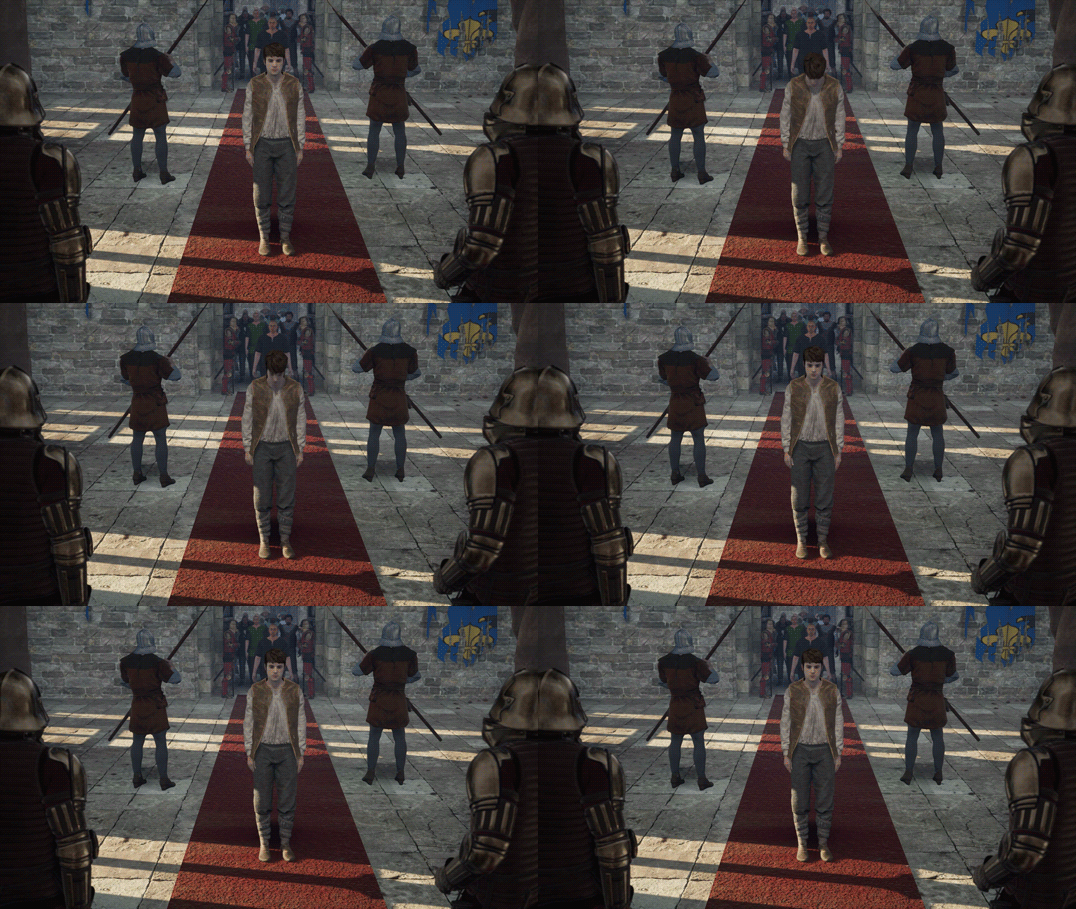
Gif from our actual, very early build, where we present you the player's throne hall in which, if they want to, they can host their petitioners and listen to their wishes, problems and propositions.
It’s here, where the peasants can plead for lowering or cutting taxes or even try to convince our noble to discharge some men from the army duty - because there is no-one to work on the fields if they all go to war. All in all, it allows the people to try to convince the player to change their mind about the decisions that they made on the estate map. Of course, the player can consider the appeals and help the village, but they can also completely ignore that fact. They can even more brutally send the peasant to lynch for asking them about such a frivolous matter.
There can be other situations such as pledging for help in financing, e.g. burnt down tavern, mill or church, alerts about the bandits in forests near the villages, rumours about heretics, bursts of epidemics, discoveries of new sources of resources, and many, many more. The multitude of these events and situations will allow the game to have more diverse gameplay.
Advisers and specialists
One last thing that's also important when governing the villages is making use of the player's character court, where they can, e.g. send their knight (with or without an army) to check on the strange rumours that emerged about some of the villages, send a scholar to help the settlement develop, or hire an inquisitor to eradicate heresy. We will come back to this topic in the future Dev Diaries too, so don't fret.
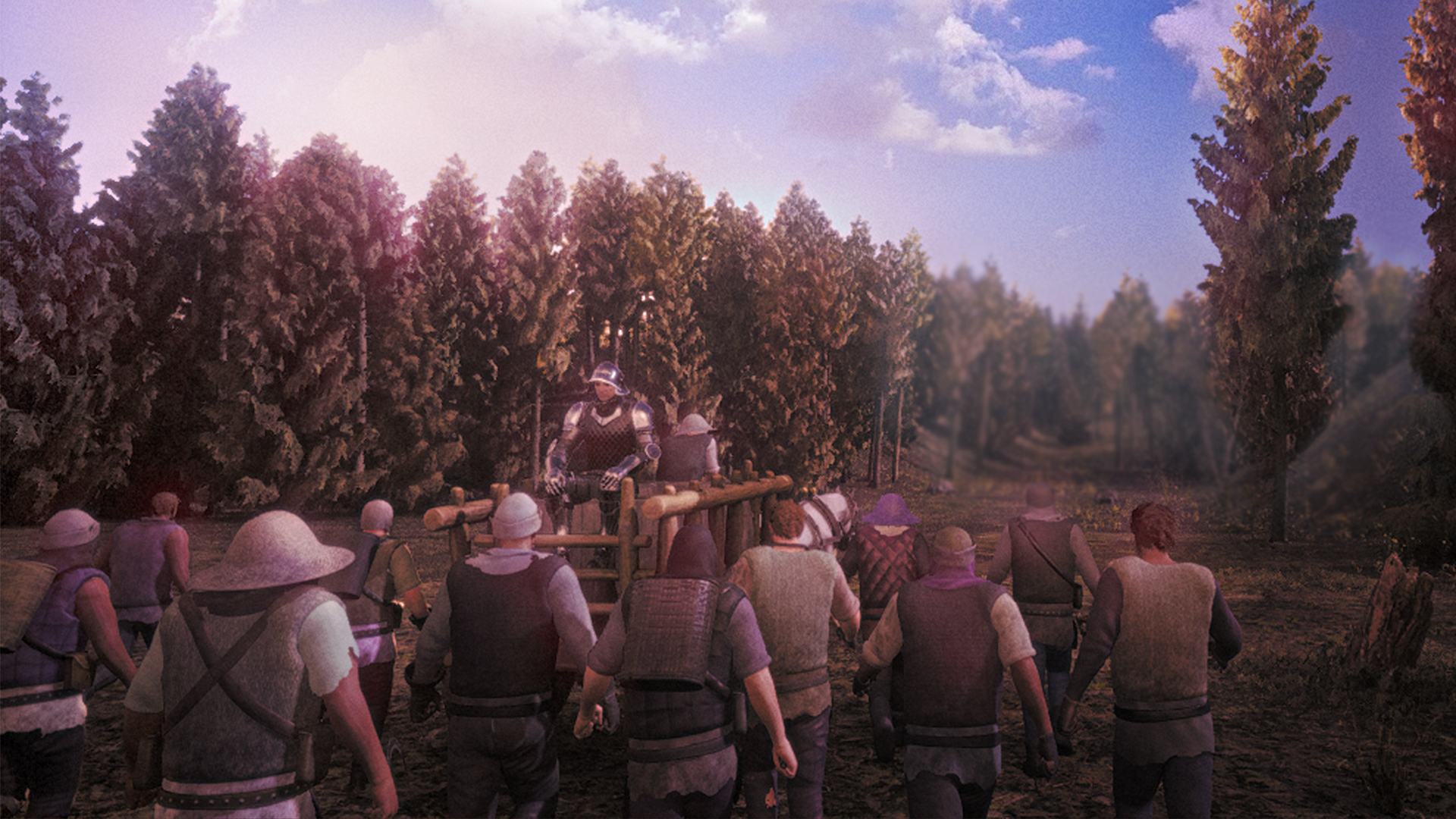
Early initial concept (render) of recruits’ alternative usage. Player's noble sends out a big group of peasants with an expert - Lokator, in order to settle new desolate lands that belong to the player, or to rebuild and recover villages that were destroyed in war or some cataclysm. In the matter of mechanics, it means creating a new or restoring previous settlement. Although internal colonization in that period of time mostly happened in the Holy Roman Empire and in Central and Eastern Europe, it wasn't exclusive only to these regions.
That's all for today. Hope it shows more of how these things work in our game ^^
On the last note, a small explanation. We've tried to publish these Dev Diaries every week and at the start it was all going as planned, but in more recent times, we can hardly keep up. That's why we've decided, as for now, to make them bi-weekly. Doing so, we will hopefully have more researched and interesting topics to talk about and show it to you guys, which obviously takes time.
That's why the next time we will see you here is in two weeks. We will open up the topic of the medieval realities again, about which the discussion on our Discord ( https://discord.gg/2mZcY9f7 ) inspired us to - we will talk about the foreigners. We’ll focus mostly on two very interesting groups that are an inspiration for many events in Noble's Life.