From the beginning, we didn’t want random events to feel like a simple loop of “something bad happens, fix it and move on.” In many games, these moments are isolated — a problem appears, you resolve it, and the system resets.
In Aurora, events are not just obstacles to clear. They’re situations that force trade-offs, reflect the state of your expedition, and shape what happens next. Every decision carries weight: addressing one issue might mean neglecting another, slowing progress might protect your crew, while pushing forward can keep momentum — at a cost.
Aurora is a dangerous place to operate. Your crew is working often under pressure, sometimes with limited resources. In that kind of environment, accidents are inevitable.
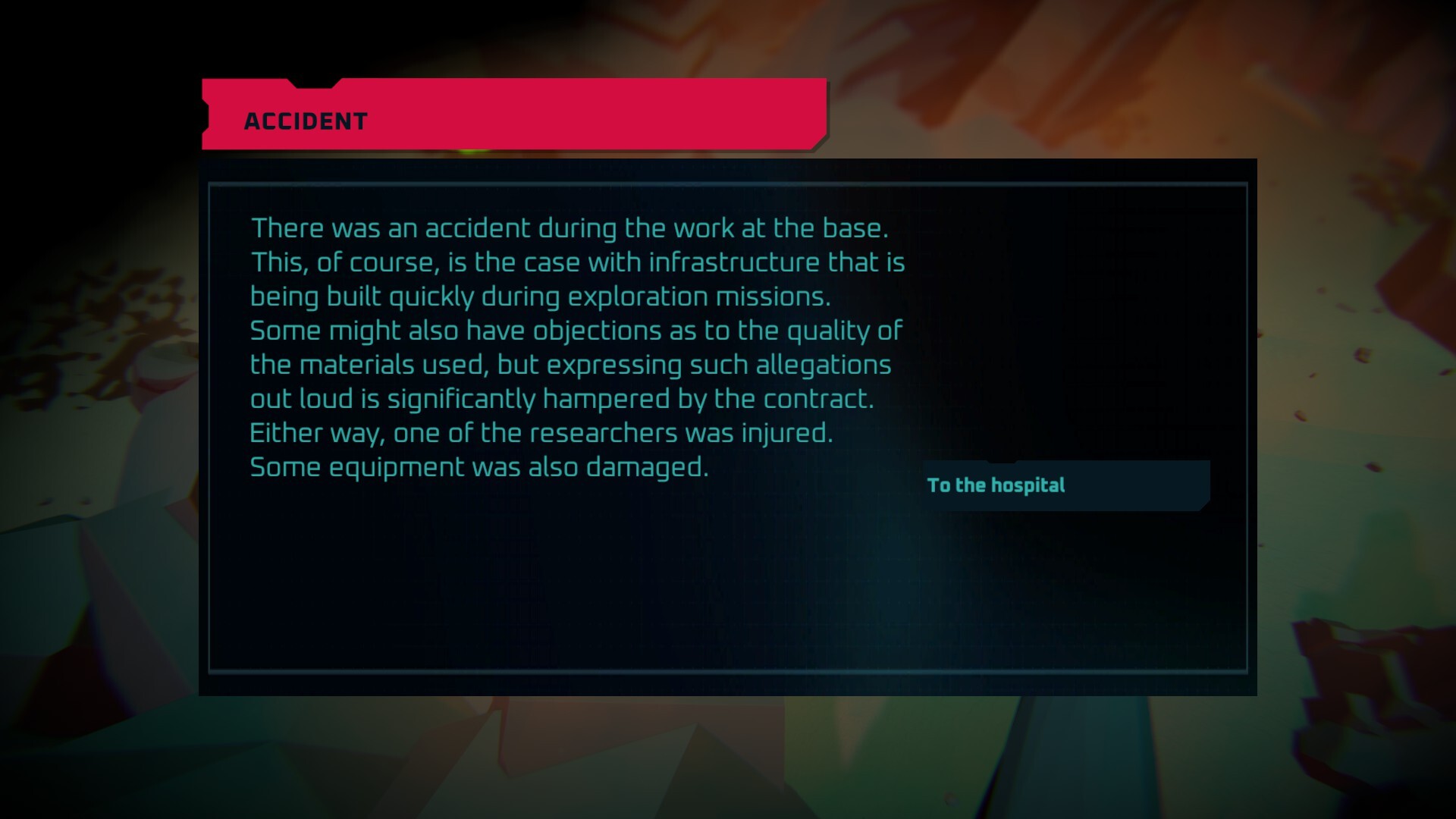
One example we’re sharing shows a fairly simple situation: an accident during work at the base. A researcher gets injured, some equipment is damaged, and in the final report you see the actual consequences — a health risk for the crew and a loss of resources.
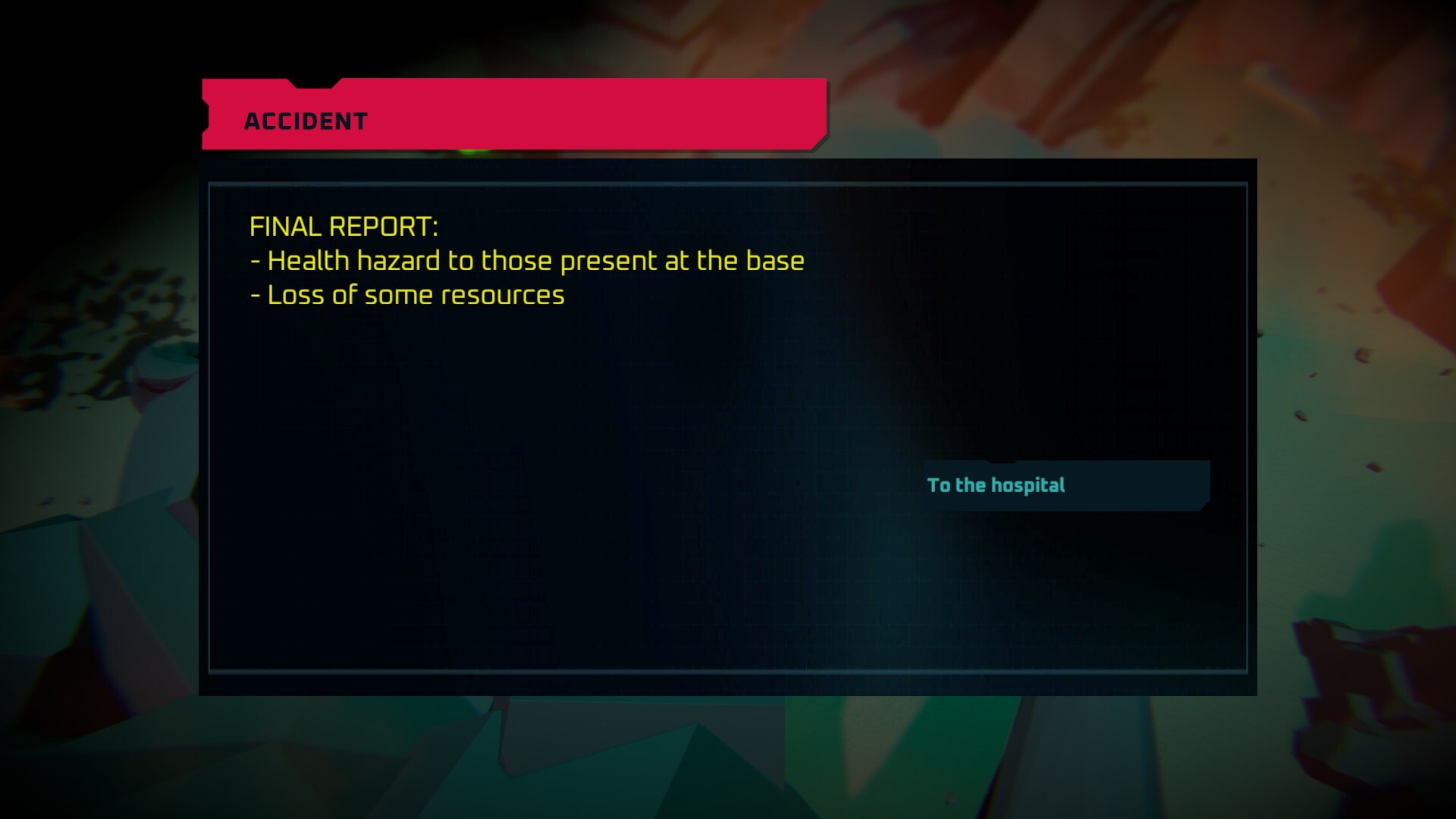
On paper, it’s a small event. In practice, it’s exactly the kind of moment that defines how the expedition feels.
What matters to us is that these events reflect the state of your colony. If you’re rushing construction, relying on questionable materials, or pushing your team too hard, problems will start to appear. Not as one big failure, but as a chain of smaller ones that slowly build pressure.
And when something goes wrong, the player is forced to react. Do you slow things down and take care of your people? Do you focus on salvaging what you can? Or do you keep pushing forward, accepting the risk?
We also want these situations to feel grounded, but with a subtle sense that not everything is fully under control. Sometimes an accident is just an accident. Sometimes… it might not be.
These moments aren’t just there to challenge the player — they help build the tone of Aurora. The expedition doesn’t collapse in one dramatic event. It gets tested every day.
The goal is simple: even small incidents should matter and leave a mark.
Because on Aurora, they always do.