Devlog #2: The Island Comes Alive
Hi everyone!
We’re back with more. Over the course of last month, we have made the islands inhabited and made the survival systems talk to each other, so that hunger, stamina, food, wildlife and your base all push and pull on one another while you play. Animals roam the islands, castaways join your base, and you can crew a boat and sail it into open water.
Here's everything that changed.
Survival
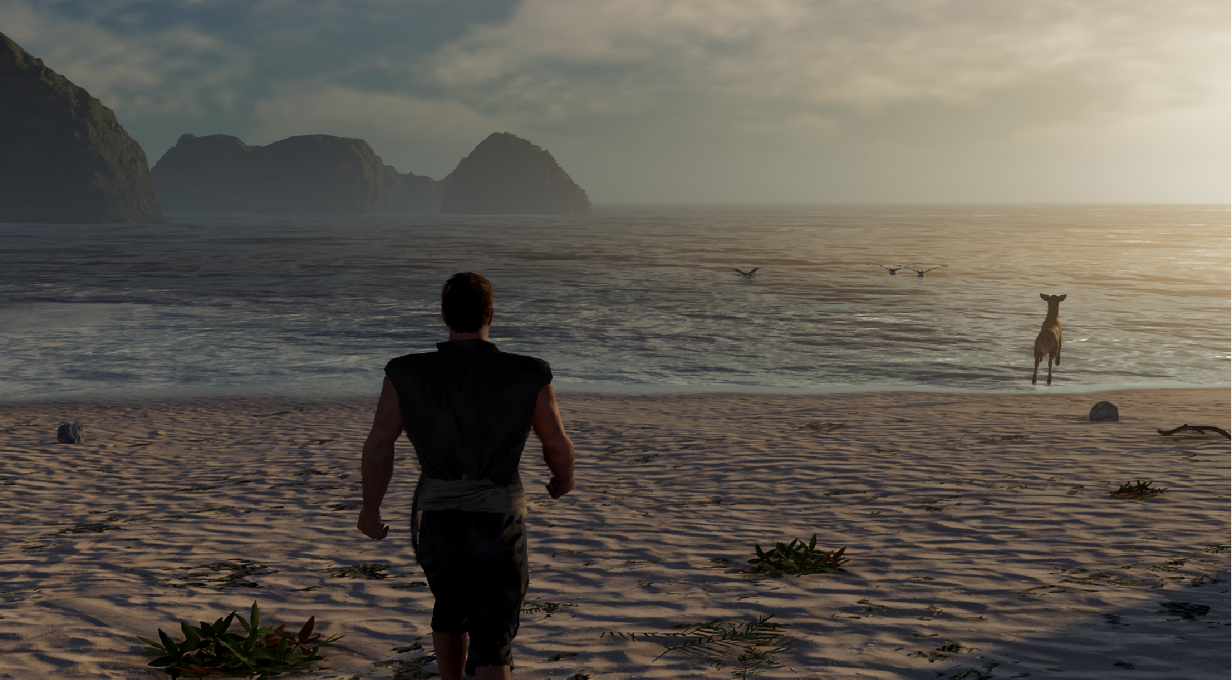
Hunger now decreases over time, and running low has consequences. As it drops, it lowers your maximum health and maximum stamina, and when it reaches zero, it begins draining your health directly. Hunger drains faster in water, then slows again once you dry off by a fire.
Stamina is a separate pool that sprinting, jumping, swimming, attacking and harvesting all spend, and it refills when you stop using it.
Food does more than fill the hunger bar. Raw meat can poison you, a lemon cures the poisoning, and a cooked meal restores more hunger and applies a temporary buff. Sleeping through to dawn in a covered, comfortable shelter gives you a Well Rested buff, and the comfort level of your base sets how strong that bonus is.
We also added a death-and-respawn flow. When you die, you see a death screen and then respawn at your last bed, or at the starting beach if you have none. For now, testers keep their inventory on death and only lose their active buffs.
Underneath all of this is a proficiency system that tracks 15 skills, such as chopping, fighting, sailing, and foraging, each of which levels up the more you use it.
Wildlife and the Living World
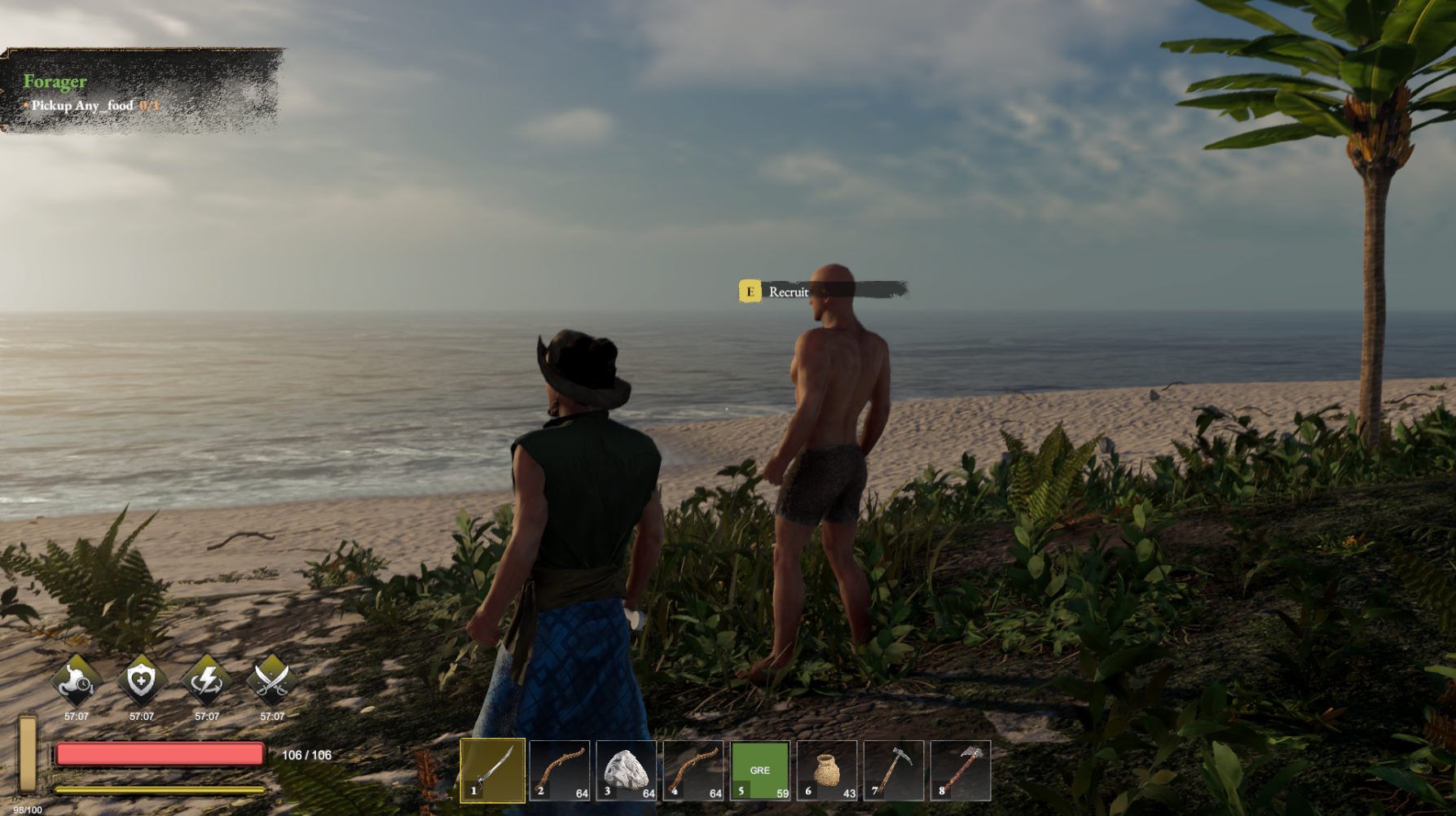
The islands now hold 19 animal species. There are shoreline animals like crabs and birds, inland animals like boars, goats, and snakes, and predators and reptiles near and in the water. Each one runs on AI that senses the player, moves in herds, and decides whether to fight or flee. Most stay neutral until you provoke them, but some can injure you, so wildlife is now a hazard. Killing an animal drops species-specific loot such as meat and rawhide, which feeds back into cooking and crafting.
The world sounds different, too. Each island has a layered jungle and ocean ambiance that shifts with the time of day, and footsteps now change with the surface you walk on, whether sand, grass, jungle floor, or wood, and every player in a session can hear them. Surface detection is still being refined while we finalize the terrain.
Land Combat
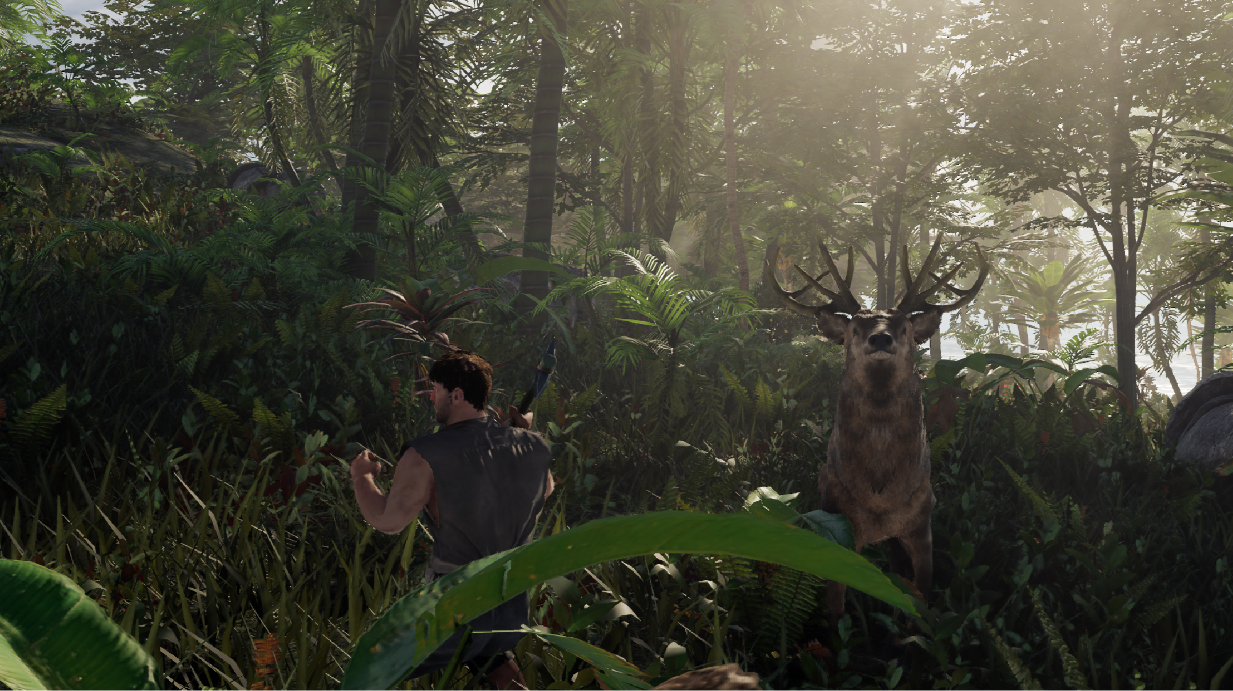
Melee combat supports light and heavy combos, parrying, guard-breaks, and several fighting styles. Both weapons and tools deal damage, and hit timing matters. We are still balancing it
Castaways and Crew
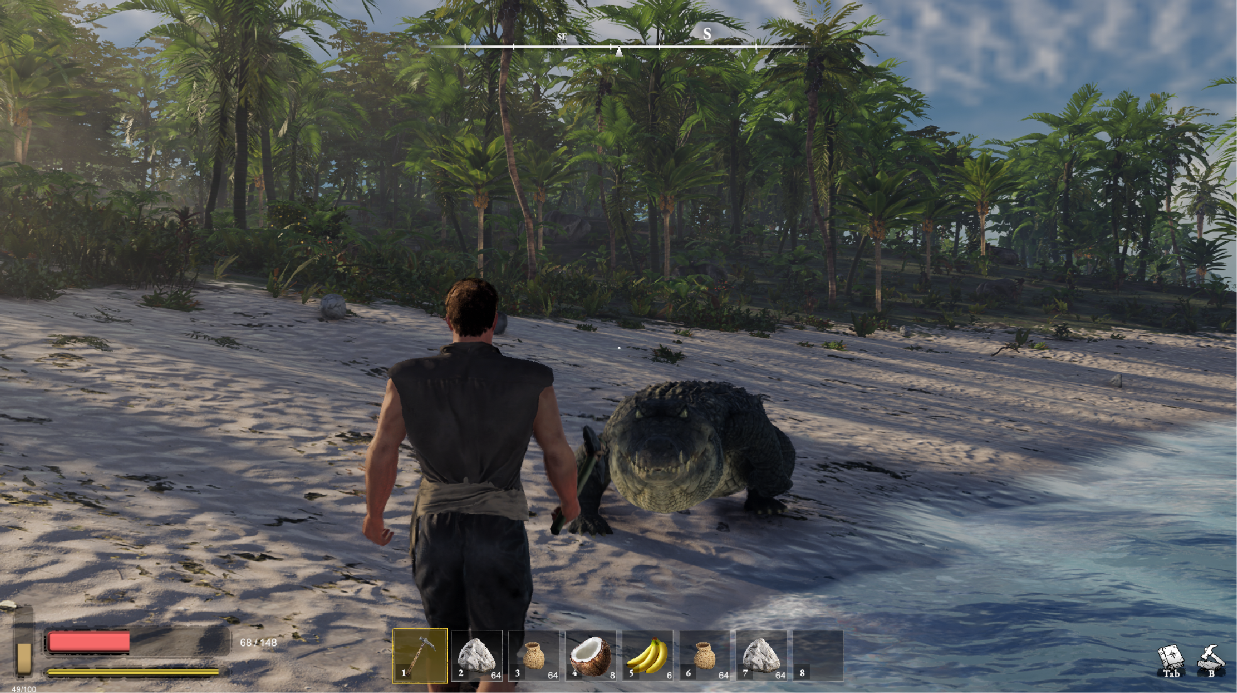
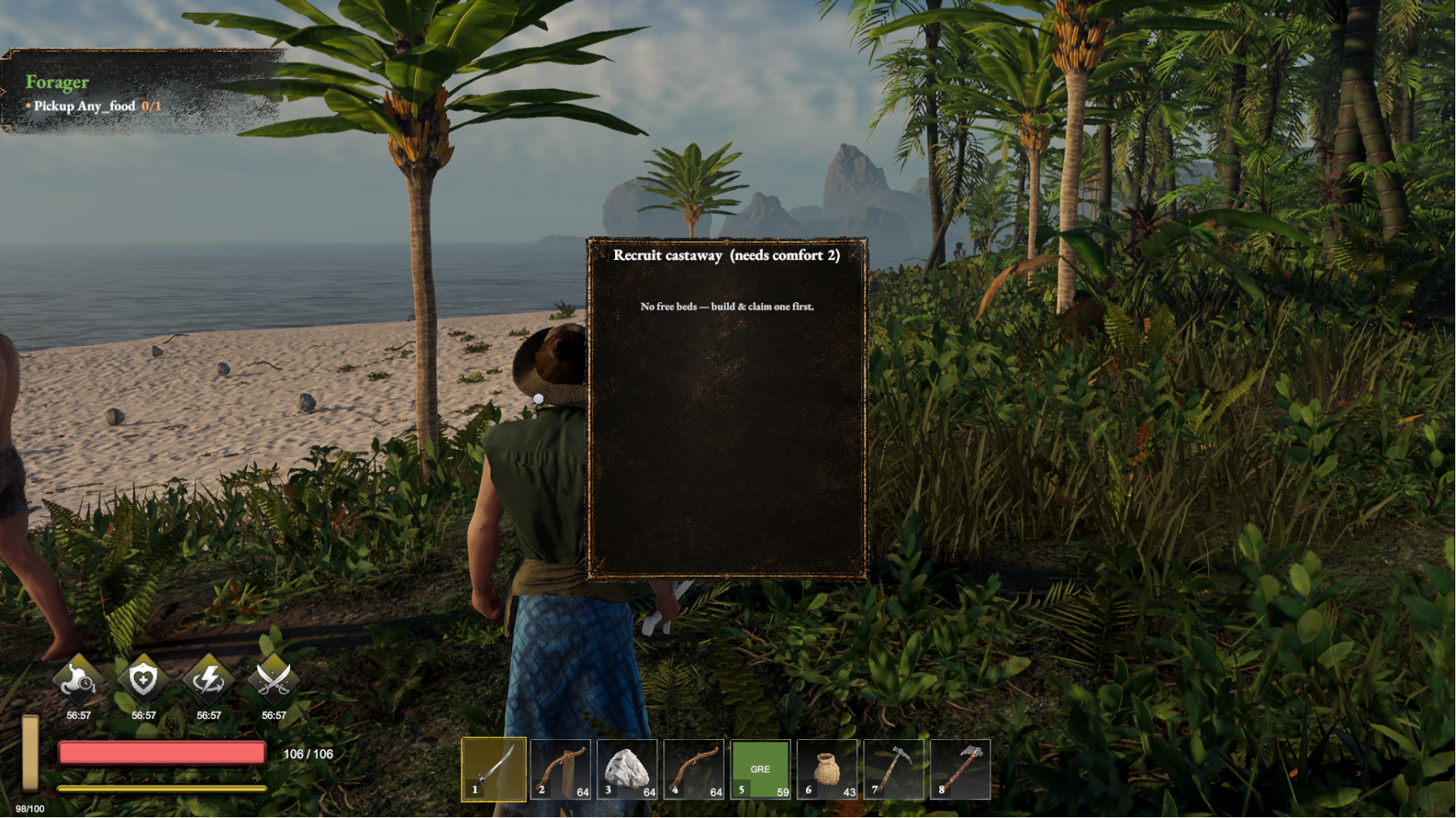
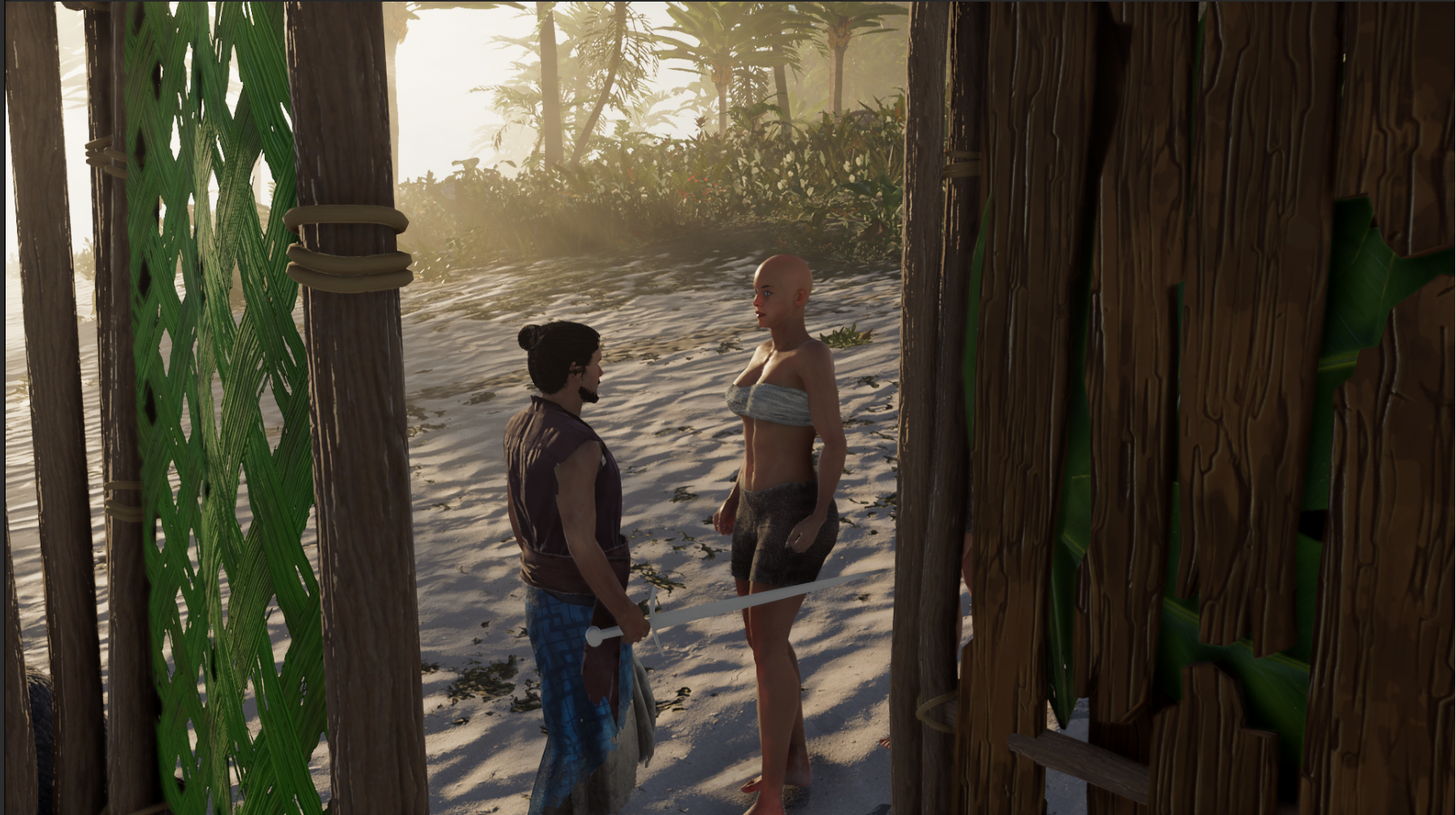
Castaways are stranded NPCs you find on the islands and recruit by talking to them. A recruited worker walks out from your base, chops trees and mines rock, and carries what it gathers back to a storage chest.
Recruiting is gated by your base Comfort level, so you have to build a comfortable enough base before a castaway will join. Storage chests are server-synced containers you can deposit into and withdraw from, and they are the drop-off point your gatherers deliver to. At this stage the crew only gathers and hauls, and deeper roles are planned for later.
Progression, Crafting, and Cooking
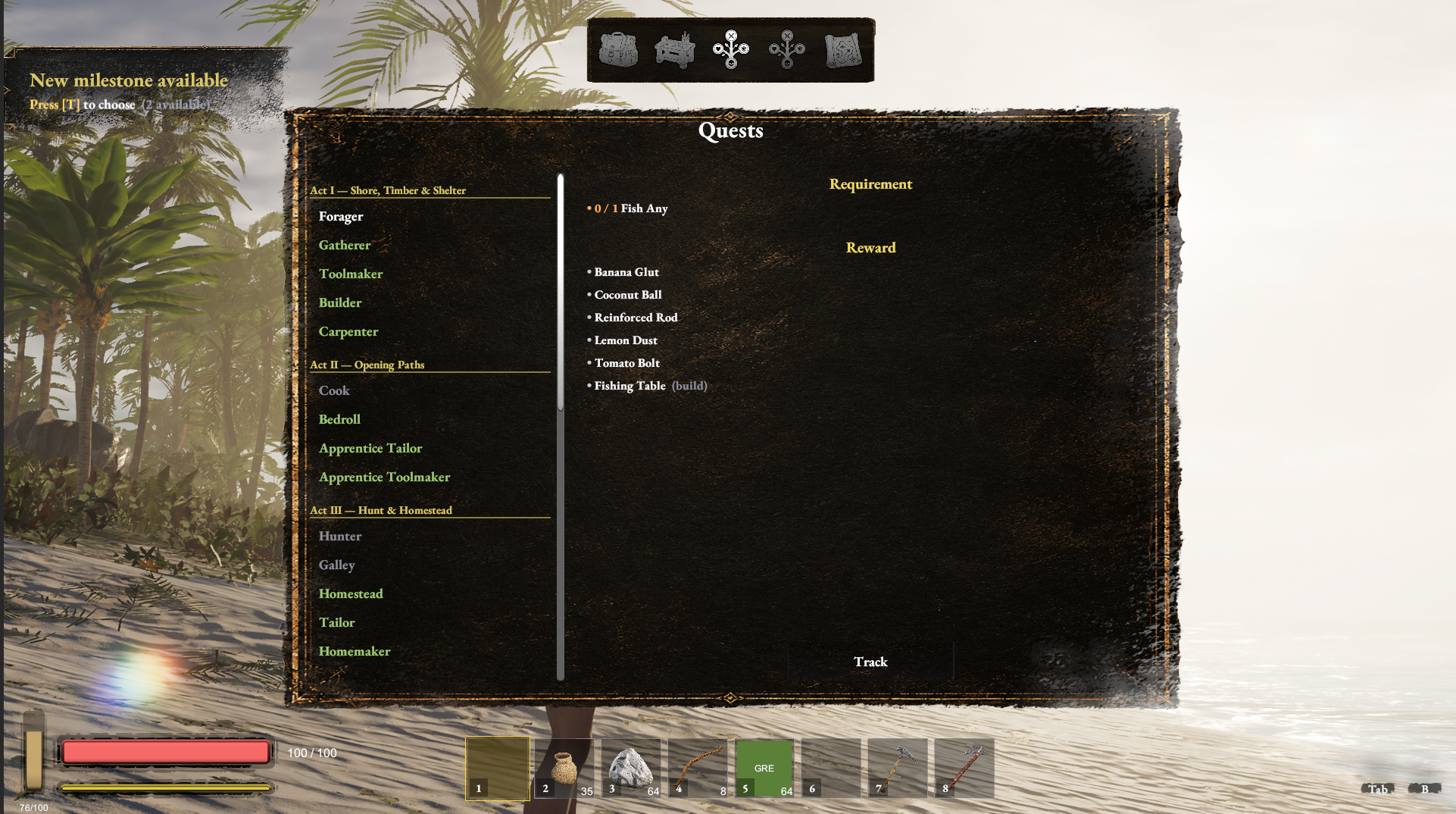
Progression still runs on a tech tree, now presented as a Quests panel that groups nodes into numbered acts. Act I covers Shore, Timber, and Shelter, Act II opens your first perks, and Act III brings the Hut and Homestead. The nodes include Forager, Gatherer, Toolmaker, Builder, Carpenter, Cook, Bedroll, Hunter, Galley, Tailor, and Homemaker, and you advance through them by gathering and building rather than through a separate grind.
There is a primitive thatch tier at the very start, so your first shelter is woven from jute before you craft any tools. Cooking supports multi-ingredient meals that restore more hunger and grant buffs.
Ships & the Open Sea
Naval combat is now in the build. Enemy ships use several AI captain archetypes and switch between combat modes for cannons, mortars, and mobility, firing broadsides, lobbing arcing mortar fire, and leaving explosive barrels behind them. Working vessels now sail, starting with a small boat, the pirogue, that has a functioning sail, and a larger ship is in progress.
The open sea is a hazard in itself. Leaving the shallows for deep water brings currents and instability, and a boat too small for open water can capsize and drown its crew.
Multiplayer & Under the Hood
Co-op runs over Steam and LAN and now supports up to 8 players. The open world streams islands in and out around the player, so the large map stays precise no matter how far you sail. Networking now syncs by area of interest, so the server only updates what is near each player.
Saves cover inventory, tech progress, buildings, and storage, and chests are networked and shared across the crew. We also added a stylized world map with fog of war that fills in as you explore.
Where This Is Heading
Pirates Republic is a game without a single drop of fantasy in it, and that's a line we drew on purpose. There are no spells, no sea monsters, and no cursed gold, only the Caribbean as it stood in 1714 and a crew of nobodies trying to claw a living out of it.
Everything we're building rests on four legs of equal weight. You stay alive against hunger and the wild, you fight for what you want on land and across the water, and you take to the open sea in ships that can drown you as easily as carry you. The fourth leg is Nassau itself, the cluster of huts on a beach that you slowly turn into a pirate republic and run as your own. This was never going to be a management screen bolted onto a survival game. It stands shoulder to shoulder with the rest, and of the four, it's the one you'll watch grow the furthest, as recruiting castaways, climbing the tech tree, and making your settlement worth living in start to add up into a place you truly govern.
That's the game we're set on building. More info in the next devlogs!
The Pirates Republic Team