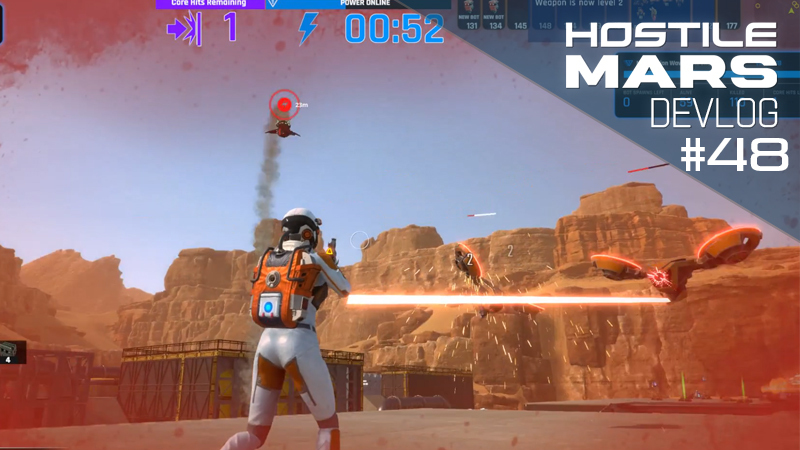
Over the last few months, we’ve moved Hostile Mars into a bi-weekly build sprint format, with a new playable build every two weeks for the team to test and give feedback on. This has helped us tighten the development cycle, implement features more quickly, and put more focus on tuning, progression, and the overall player experience. Much of that work has been aimed at making the game feel sharper, more reactive, and more dangerous by strengthening the connection between combat, automation, base-building, and progression, so that every system feels like it is pushing or pulling on the others. Bots are becoming more threatening, machines are becoming more important, building and repairing your base has more weight, and the world itself is starting to take clearer shape.
Player Threats
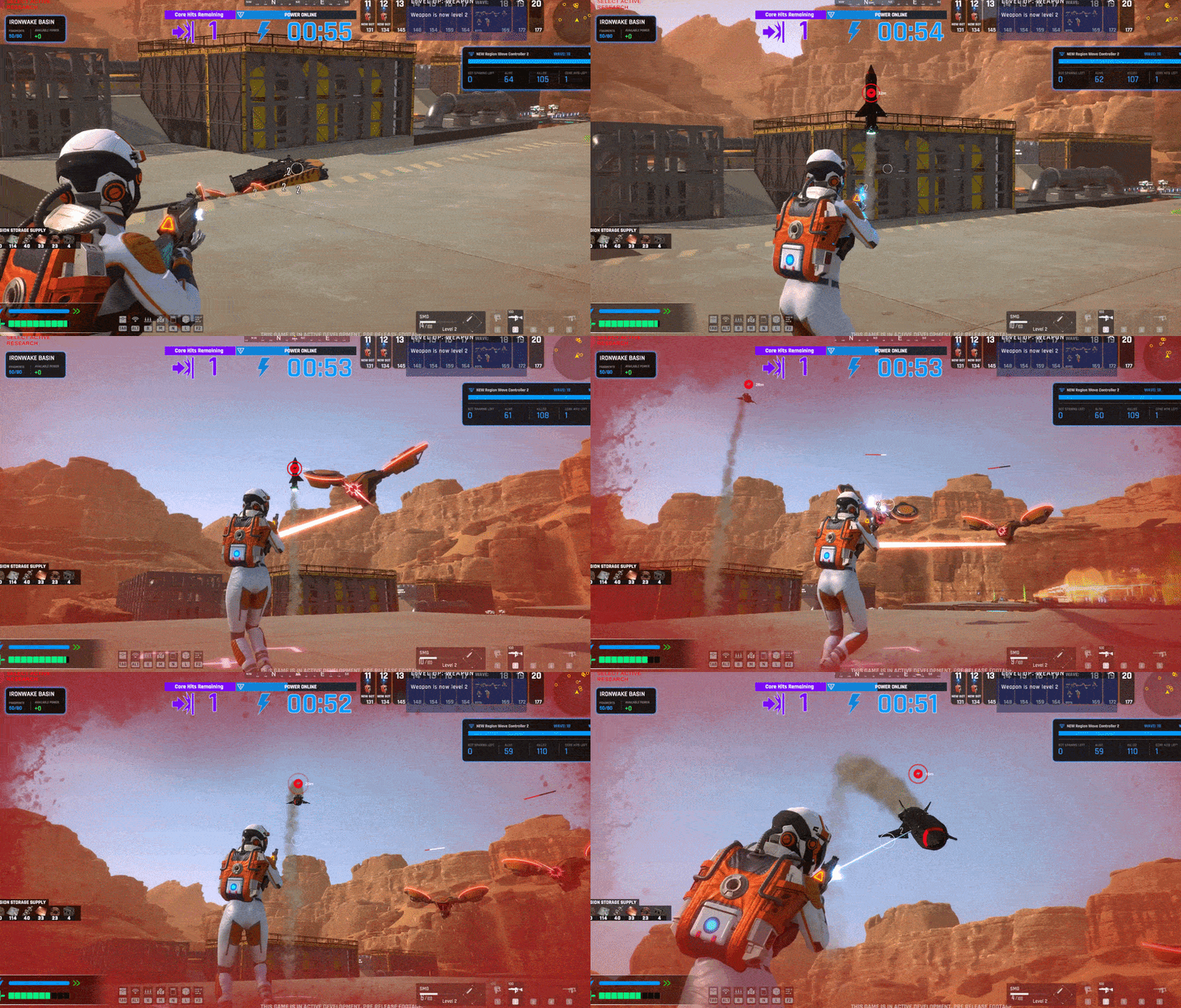
We have implemented several new systems that create more immediate threats to the player during waves. One example is the Hauler payload system. Haulers can carry dangerous payloads that activate when the Hauler dies, unless the player disables them first by shooting off the latches.
One payload example is a player-seeking rocket. If the payload is not disabled, the rocket launches after the Hauler is destroyed and can damage both the player and nearby structures. This gives players a more active combat decision: destroy the enemy quickly, or take the time to disable the payload before finishing it off.
Bot Processor
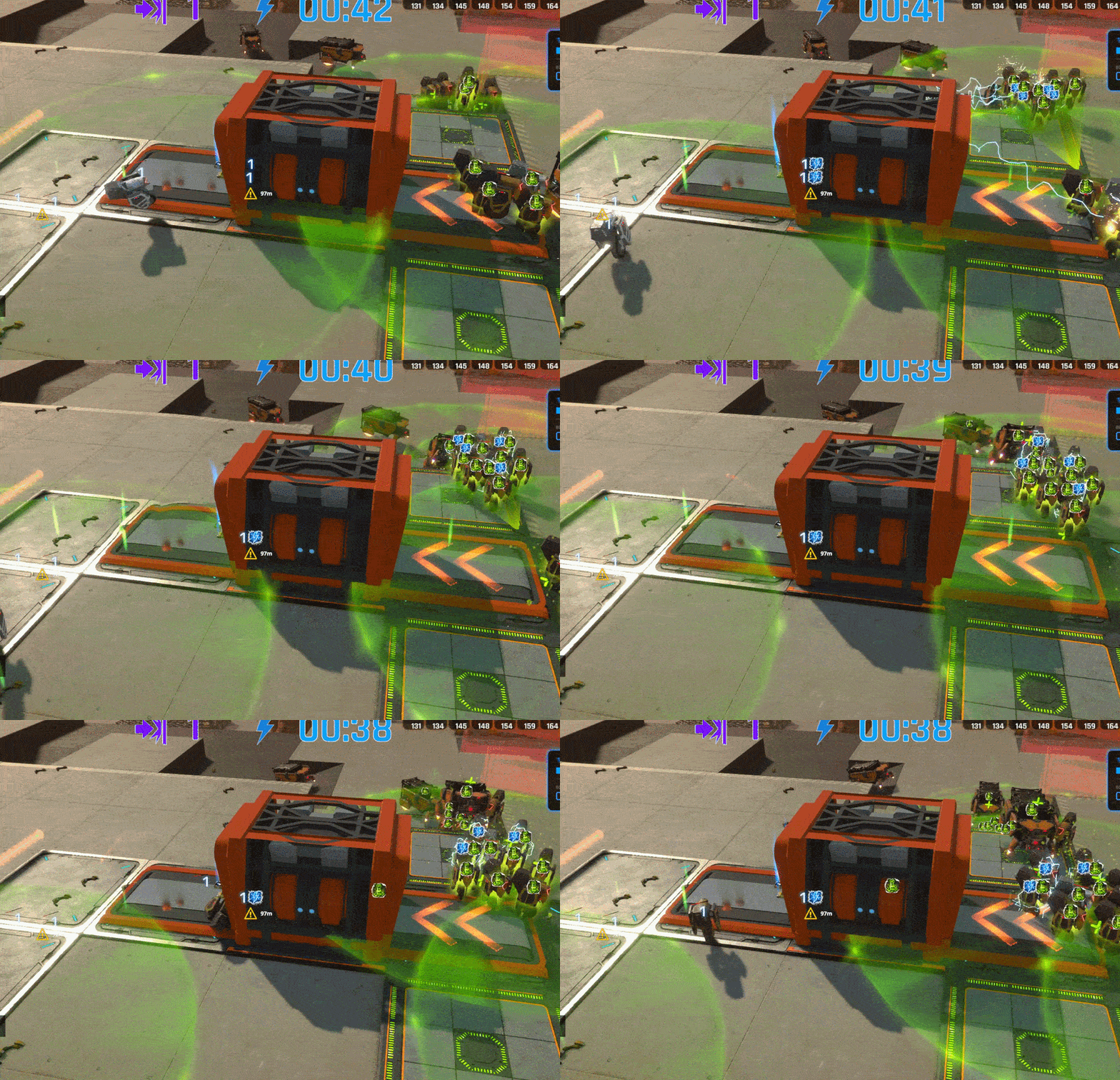
The Bot Processor is a system we have been experimenting with for a while. The core idea is to turn enemies into part of the crafting chain.
Instead of using only traditional item inputs, the Bot Processor uses live bots as crafting ingredients. More specifically, it checks which status effects are currently active on a bot. For example, a recipe may require a live bot that is both Electrified and Acidic. This creates a direct connection between combat, status effects, and production.
Death Spectacle
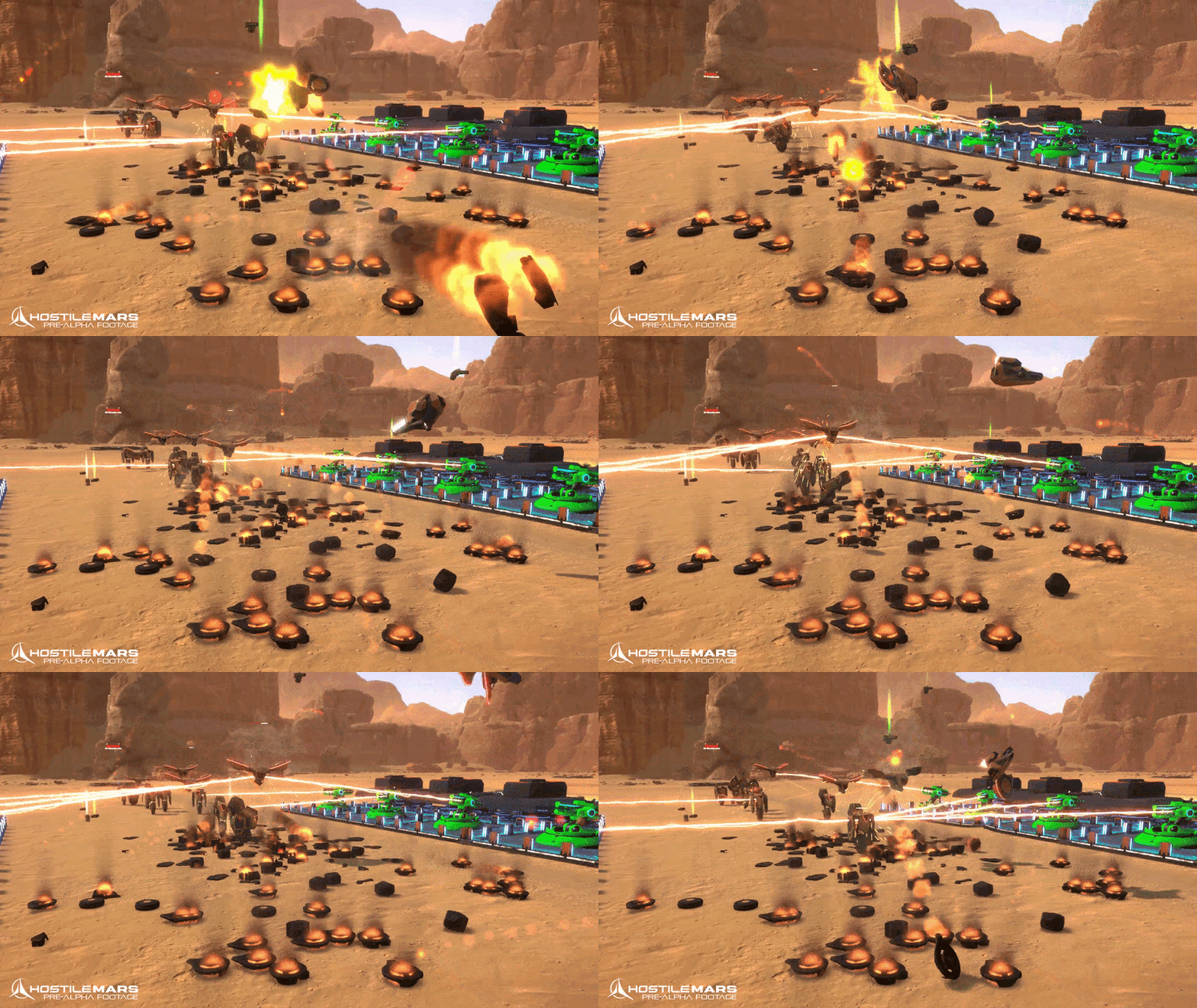
We've added death sequences to several bot types, where before they would just explode in a little smoke puff; they now crash while losing flaming parts and explode into even more parts.
Killing bots has never been this juicy!
Destructive Behavior
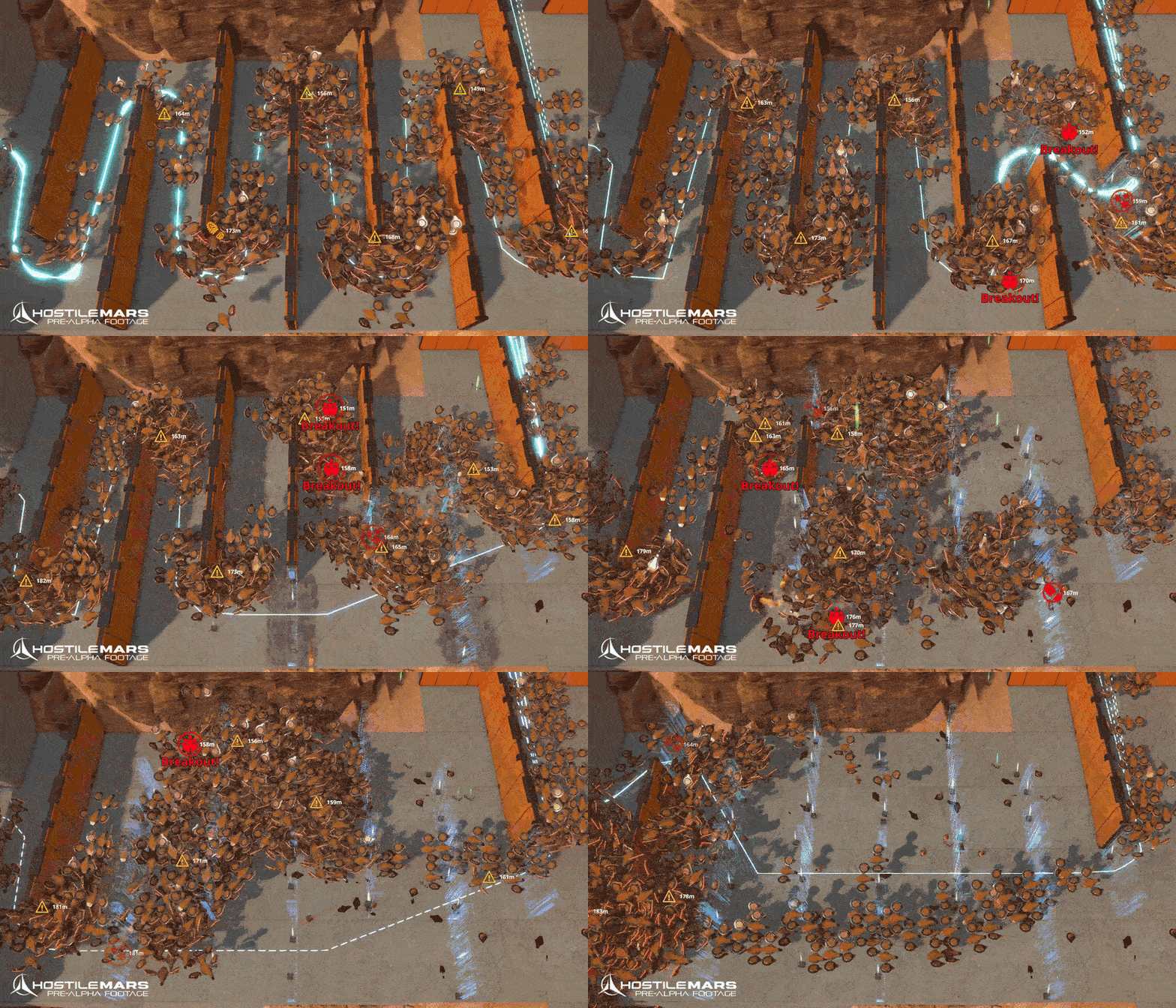
Bots attack structures in two scenarios: when they cannot reach the core from where they are, or when there is a bottleneck due to too many bots struggling to move.
There used to be several inconsistencies and ways to exploit that behavior, but we've been addressing them to make the bots feel more like threatening, murderous machines than mildly aggressive cattle.
Bots self-destruct to destroy buildings while trying to follow the last valid path from a spawner; if your maze is too small to handle a large wave, you'll find out it'll be wrecked!
Conveyors
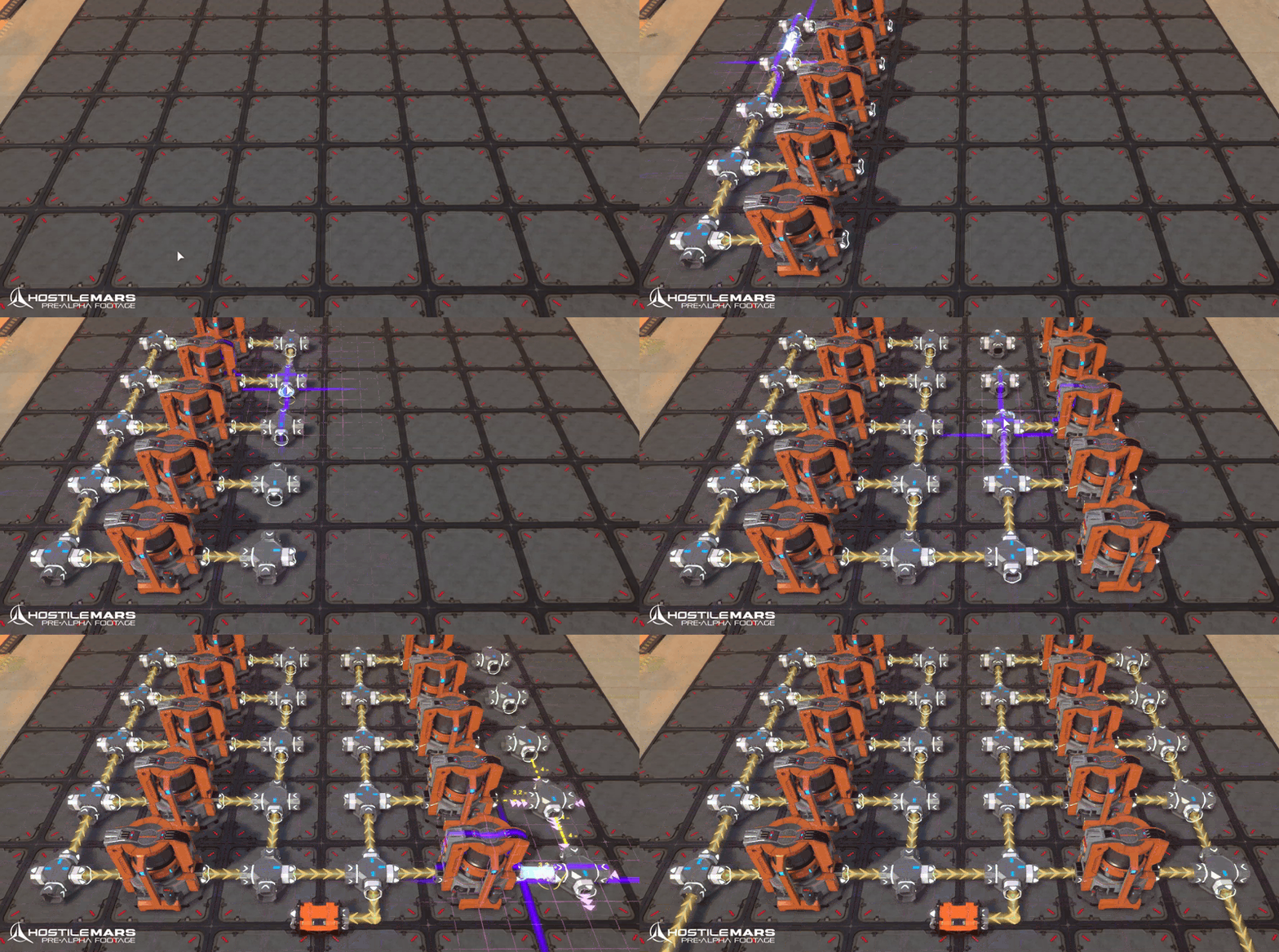
Speaking of conveyors, they received a lot of improvements, from their visuals being much clearer, being selectable, properly checking for placement collisions along their length, and placement rules being more intuitive.
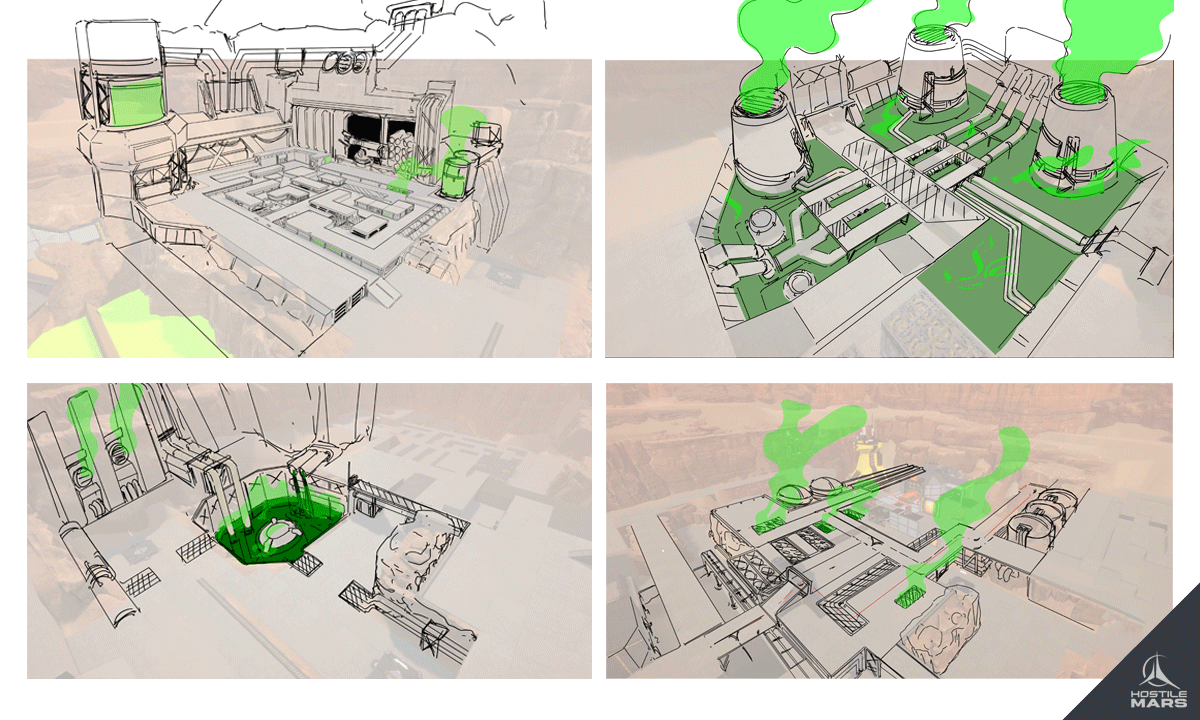
Region 2 Design Blockout
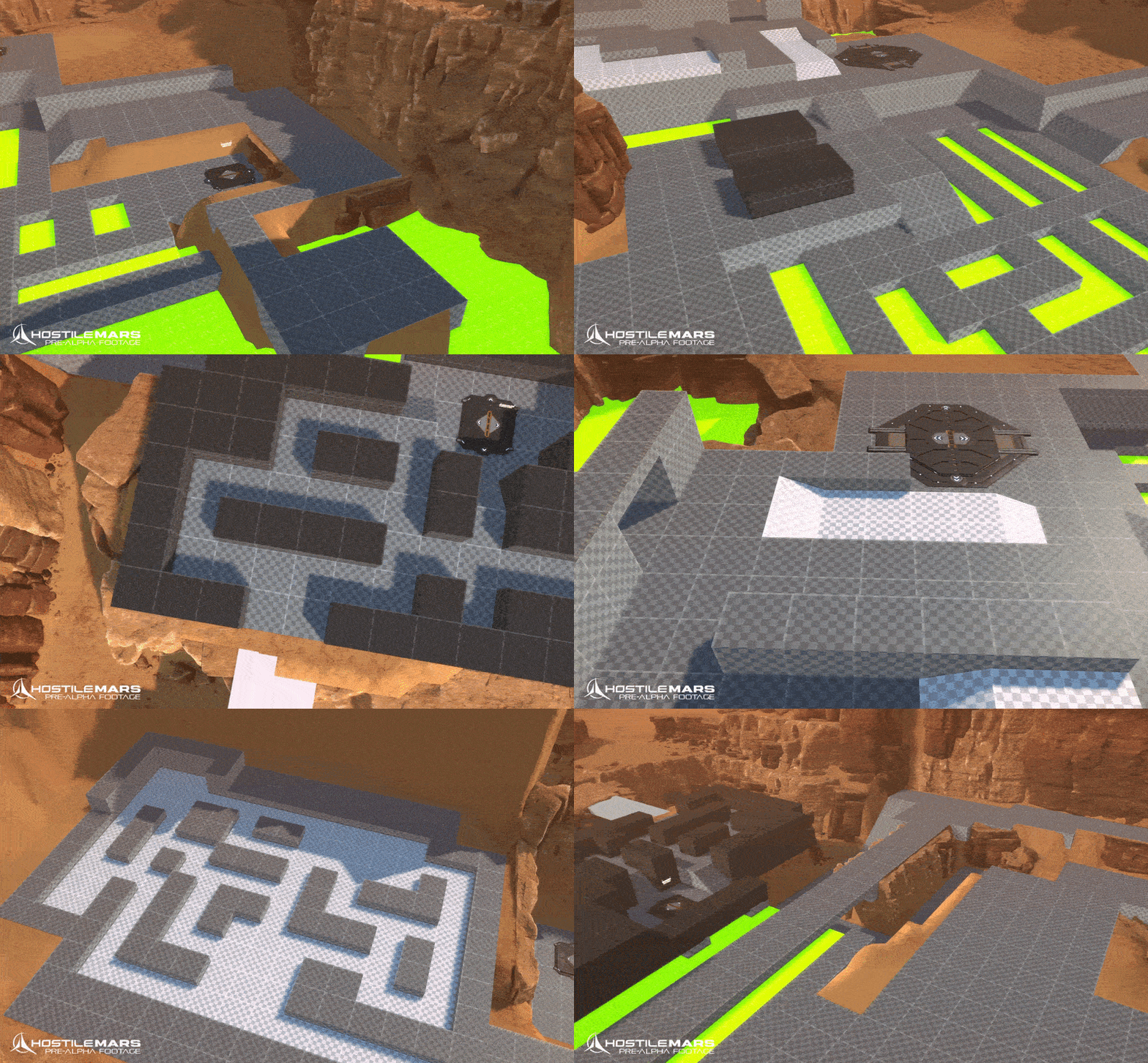
We've been experimenting with level design to see how we could push the various mechanics and how different environments affect the play style.
This is a quick teaser of various gray-boxed areas; maybe you can guess the theme of this region :)
Build Mode: Gizmos and Sounds
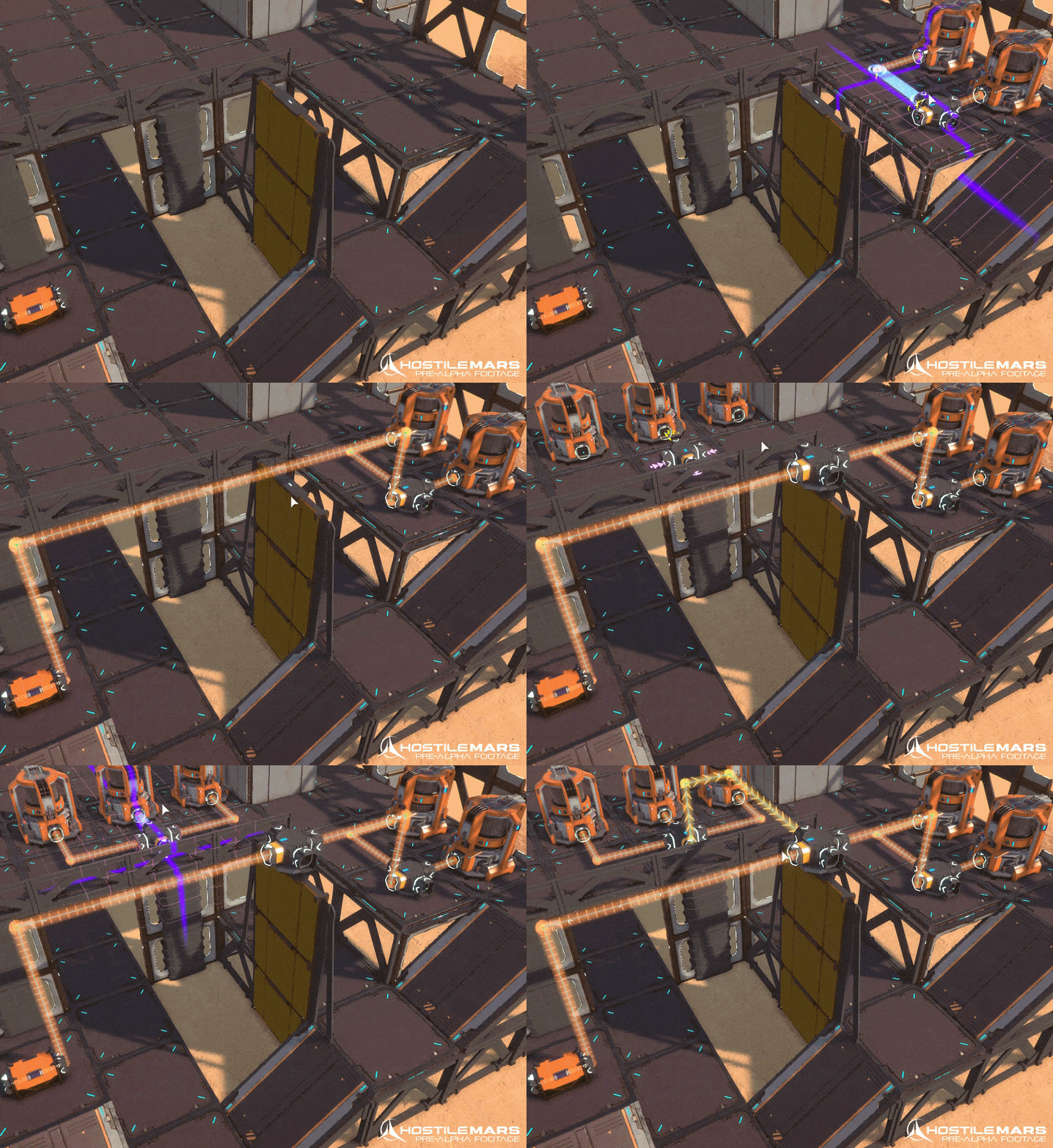
Placing stuff has become easier with the addition of overlays while building. Machine ports show lines to make alignment with other machines easier, conveyors display a sub-grid over panels and altitude lines so you know where your stuff's at.
We've also added a lot of tactile sounds to the snapping, selection, and deletion of buildings to make the experience feel a lot more polished.
Building Health and Repair
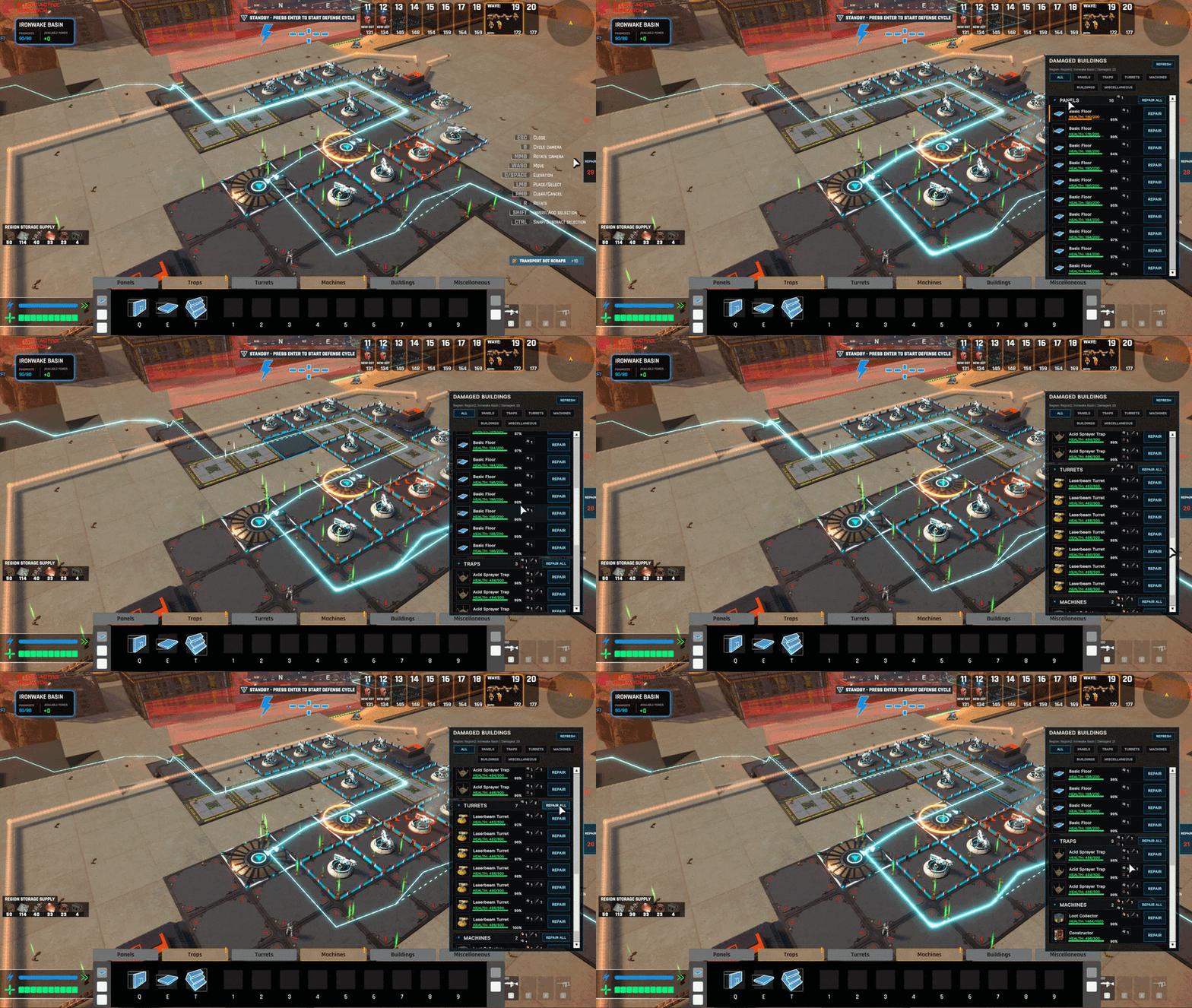
We have updated and implemented the health system for player structures. Buildings can now take damage during waves, and damaged structures can be repaired through a dedicated repair panel.
The repair UI allows players to view building damage across an entire region and repair individual structures as needed. This makes base damage more visible, easier to manage, and more directly tied into the player’s resource economy.
Codex
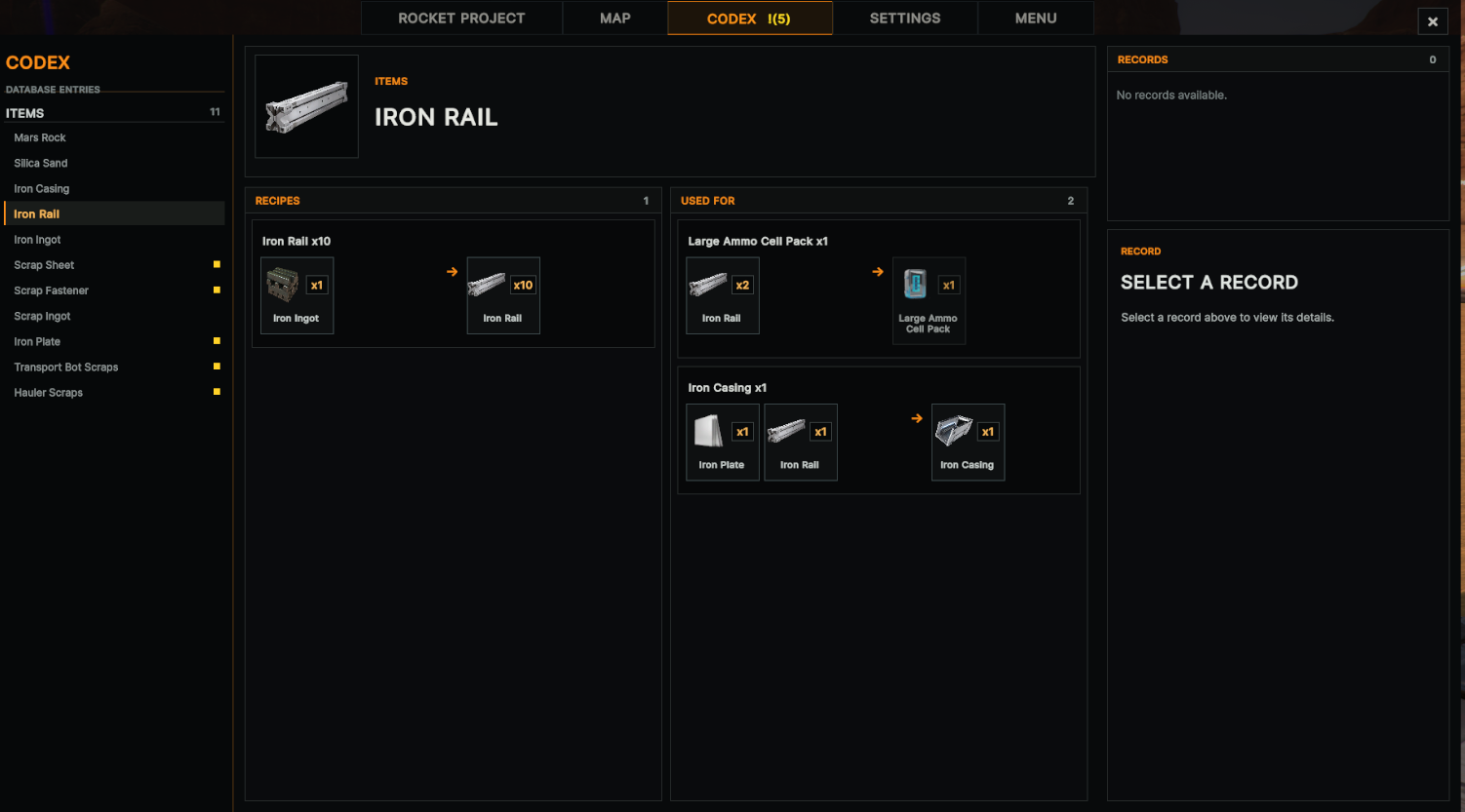
Yep, it's a codex.
Death Reactions
Status effects can now create special outcomes when enemies die. For example, if a bot has the Acidic status effect and is killed with a laser beam, it can trigger an acid explosion.
This explosion can spread Acidic to nearby bots, making it powerful against groups. However, it also destroys nearby pickups, creating a tradeoff between crowd control and resource collection. This helps make status effects feel more meaningful and gives players more tactical choices during combat.
Art
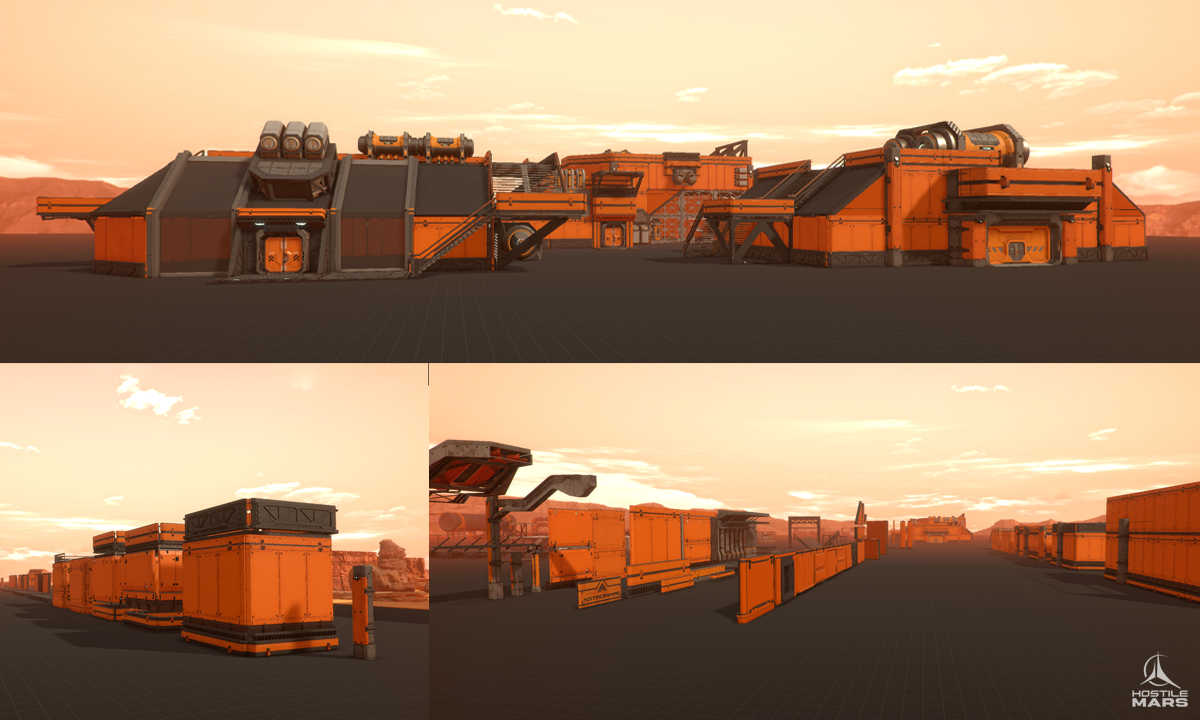
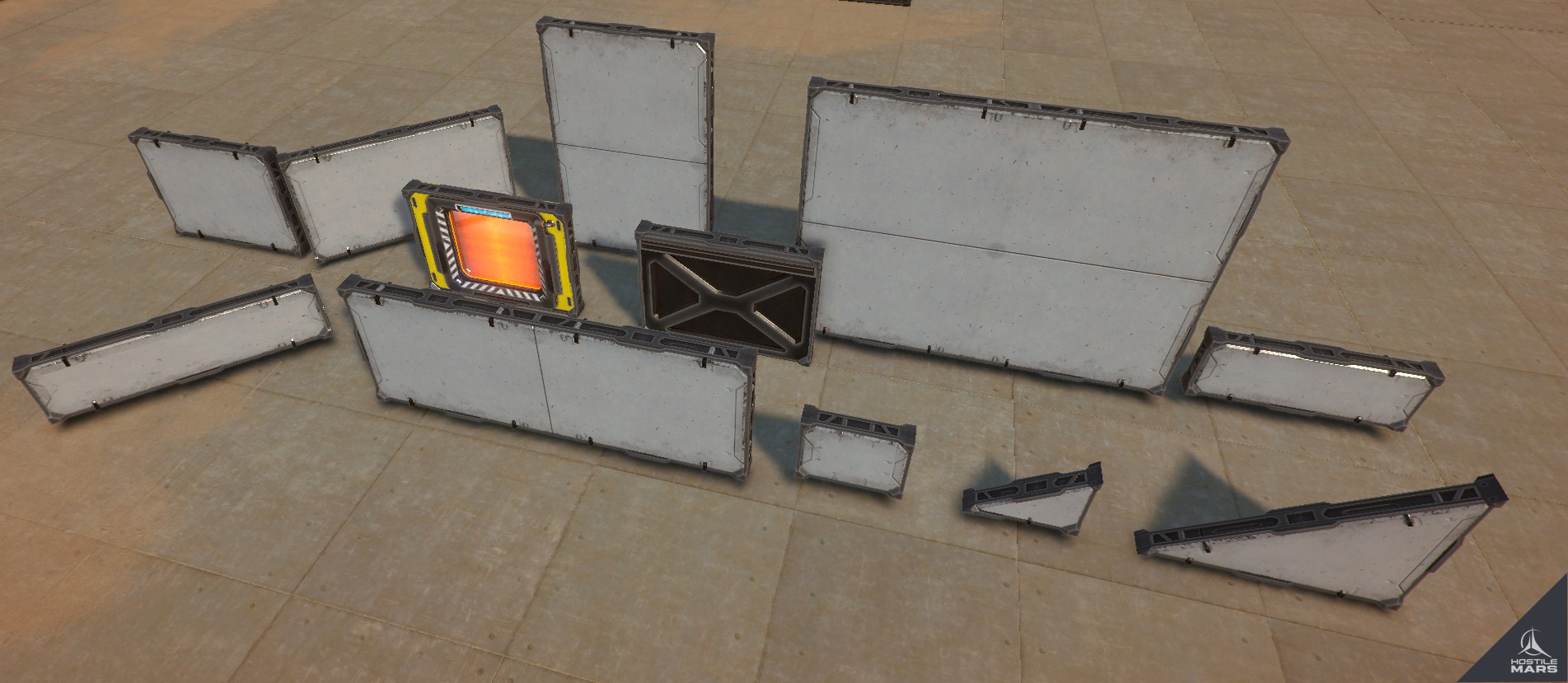
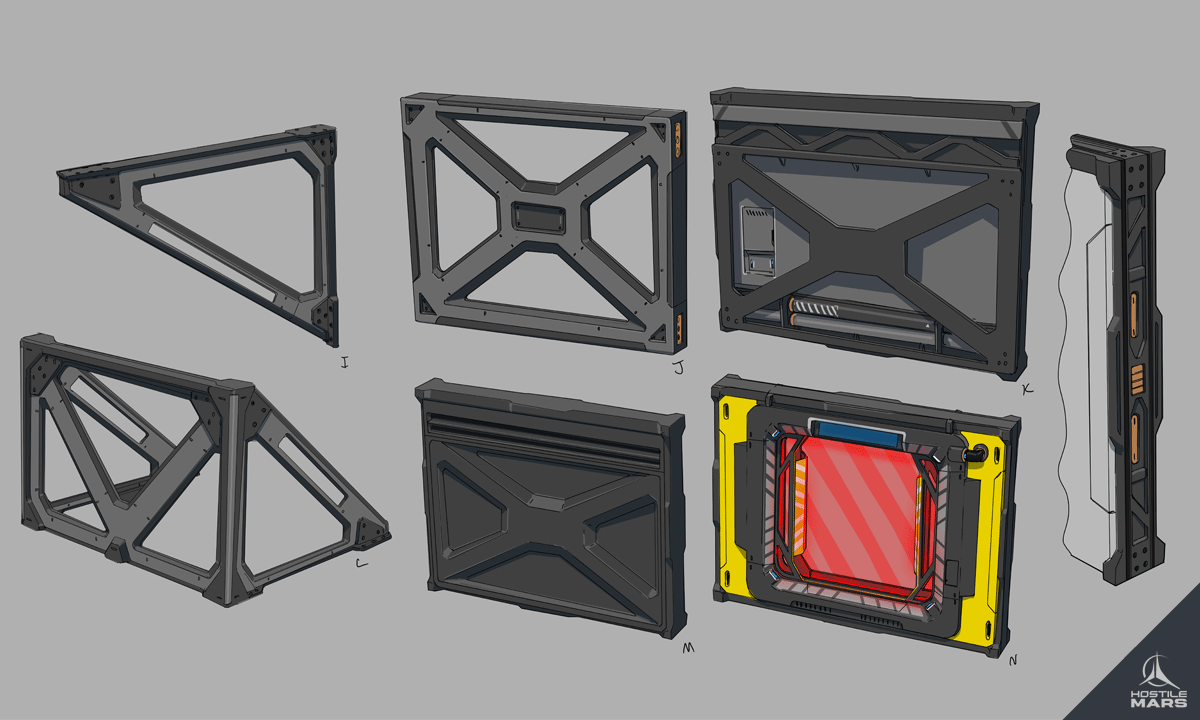
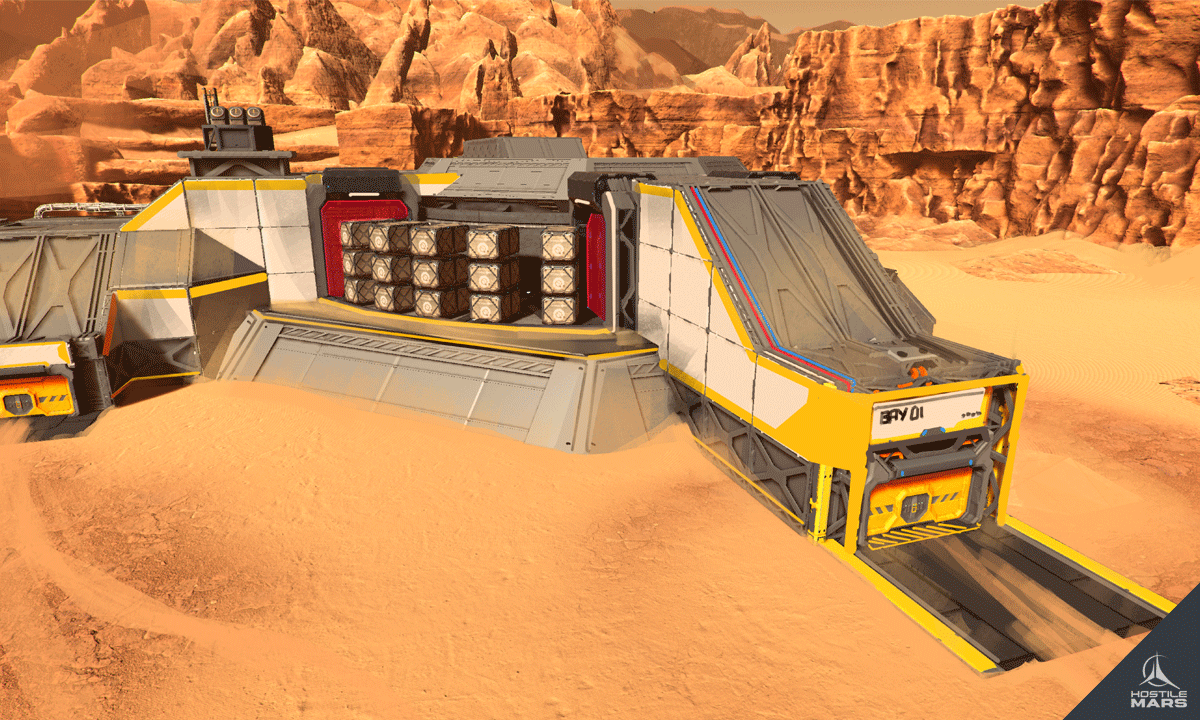
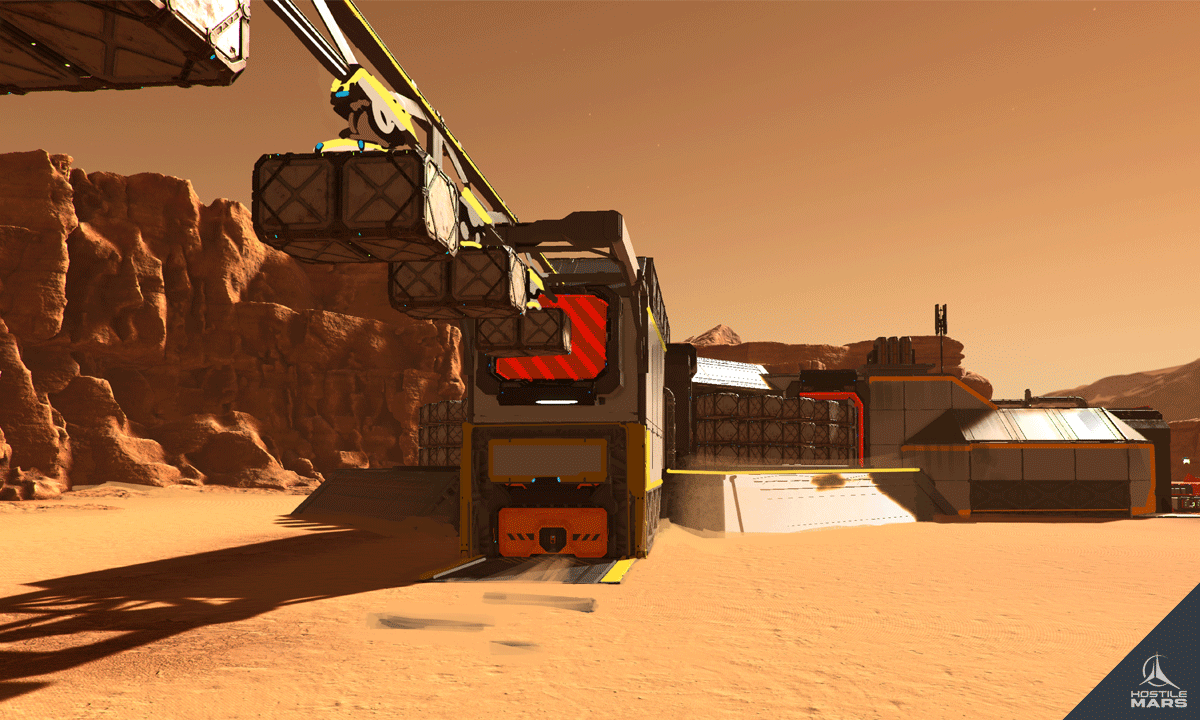
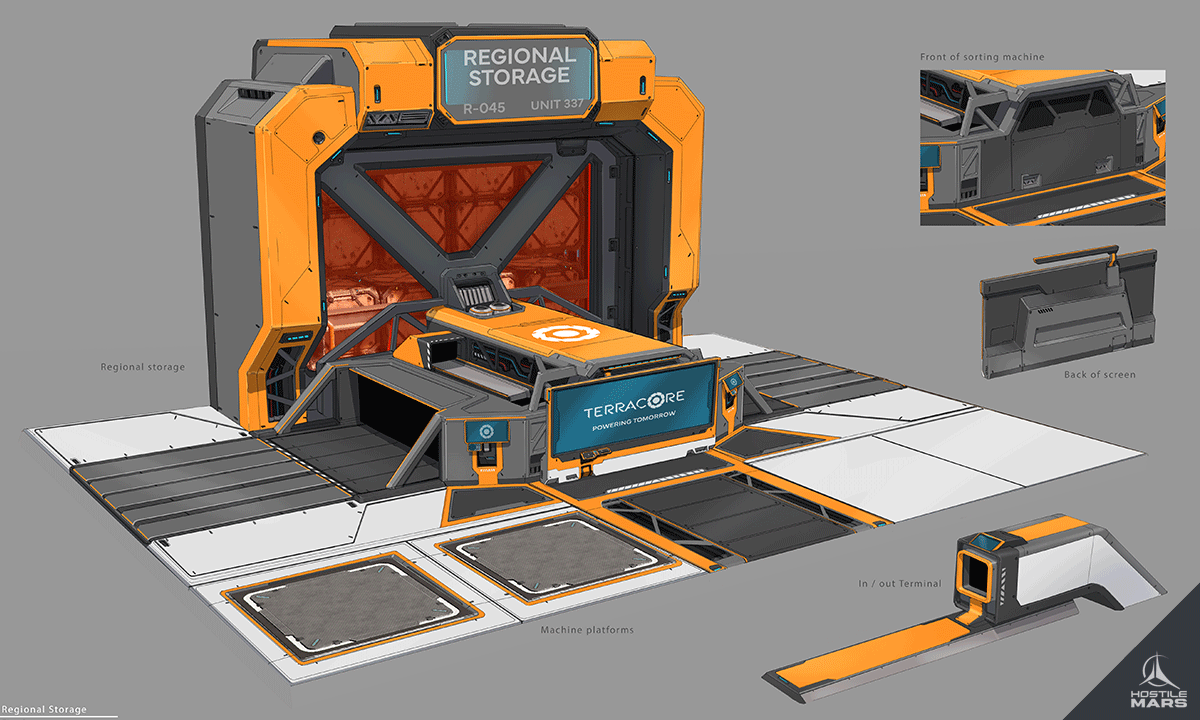
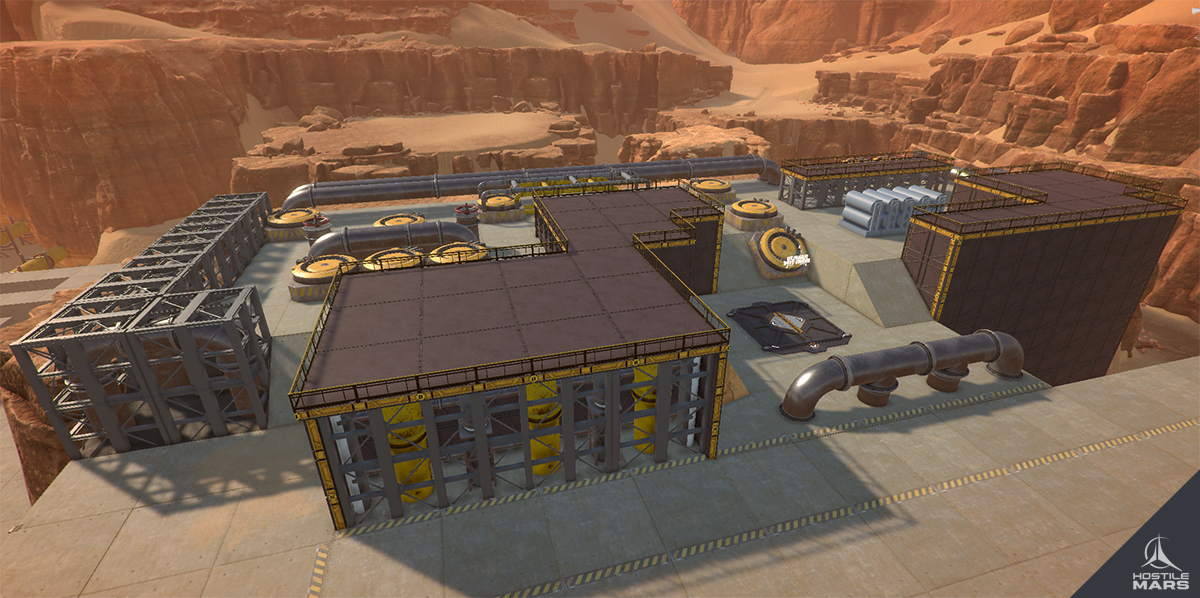
Concept and Models
Closing
There is still a lot to tune, test, break, rebuild, and probably break again, but this stretch of development has pushed Hostile Mars much closer to the game we want it to become: a factory-building survival game where combat is not just something happening beside the automation, but something directly feeding into it, disrupting it, and forcing the player to make better decisions under pressure. More updates are coming soon as we continue building out the systems, regions, enemies, and tools that bring Mars to life.
-HM Team