
Hey Everyone!
Welcome to our first Developer blog for Monster Harvest! On the run up to launch we’ll be looking to post these blogs regularly. They’ll cover things such as challenges we faced; things we think you may just find of interest as well as the triumphs we’ve achieved!
If there’s anything in particular you’re interested in finding out though - jump in the comments and let us know!
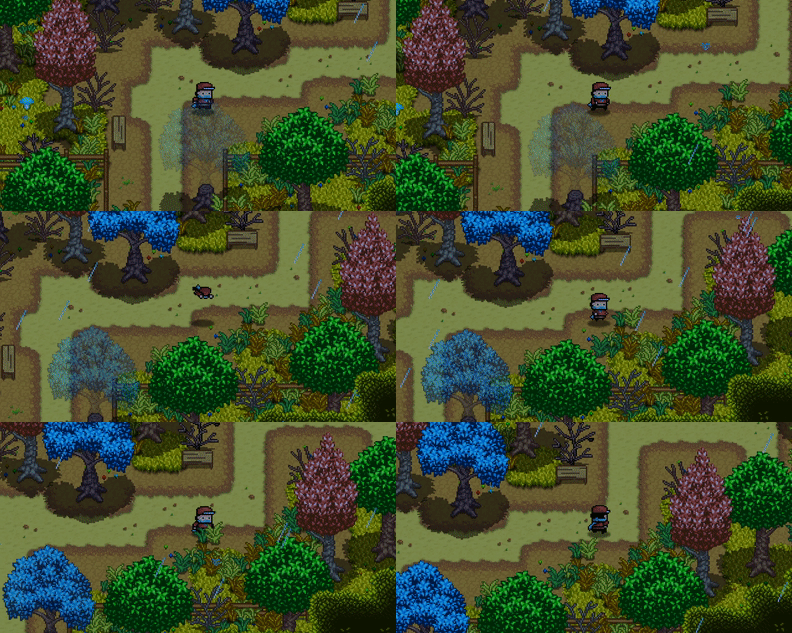
This week we thought we would kick off with what inspired us to make Monster Harvest in pixel art. Games from the 90’s hold some very fond memories for everyone on the team here at Maple Powered Games. Even if we all forget the limitations that era had...! With the 8-bit world of the 90’s being held in glorious nostalgia and firmly at the front of our minds, when setting out to create Monster Harvest, we knew there was only one art style we wanted to create. Our job now was to thread the metaphorical needle and deliver pixel art, but with a modern feel.
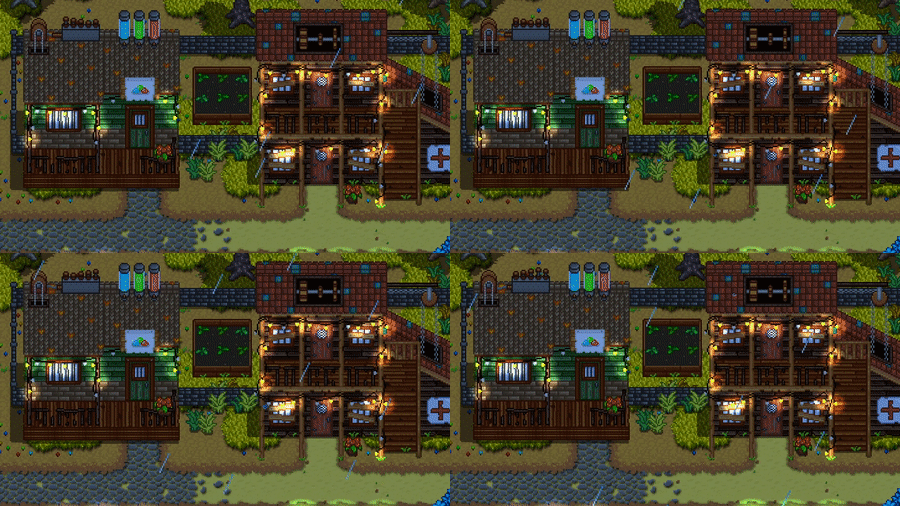
There are two competing ways to create modern pixel art though - Pixel Purism and Hi-Bit:
Pixel Purism is, in our view, an attempt to replicate the technical artistic limitations of older consoles and deliver as similar a visual experience. Usually only minor compromises are made, such as with the game Shovel Knight, which increased to a more realistic 16 colour palette to allow for more skin tones for characters. Other common changes usually include modern widescreen formatting and more subtle things like parallax scrolling.
For Monster Harvest we opted to lean further towards the Hi-Bit technique, a term coined by the developers of OwlBoy, D-Pad Studios. Hi-Bit allows the game to have no restriction on colour palette and uses a large number of shadow effects, lighting effects, and some post processing in order to achieve its style. So… I suppose you could say we were going for beauty over authenticity. But we think it paid off!
Monster Harvest is built in Unity so it’s not purely a 2D game. Instead, it’s a 3D render with the camera locked to a 90-degree angle aiming at the world. The camera is also orthographic and pixel perfect - meaning there's no camera lensing and a post process effect operates to correct any unforeseen errors that may arise. This has a lot of benefits but… also some limitations as well.
Overall, to ensure we’re creating our artistic vision to the best of our ability it’s important to be following a style guide. The style guide for Monster Harvest is pretty extensive but ultimately it focuses on extreme attention to detail and (here's a big one) non-repeating tiles. Pixel art games of the past were limited to using a few basic tiles to build their worlds, but we certainly aren't - so we find that adding as much variety as possible really seems to make the game stand out.
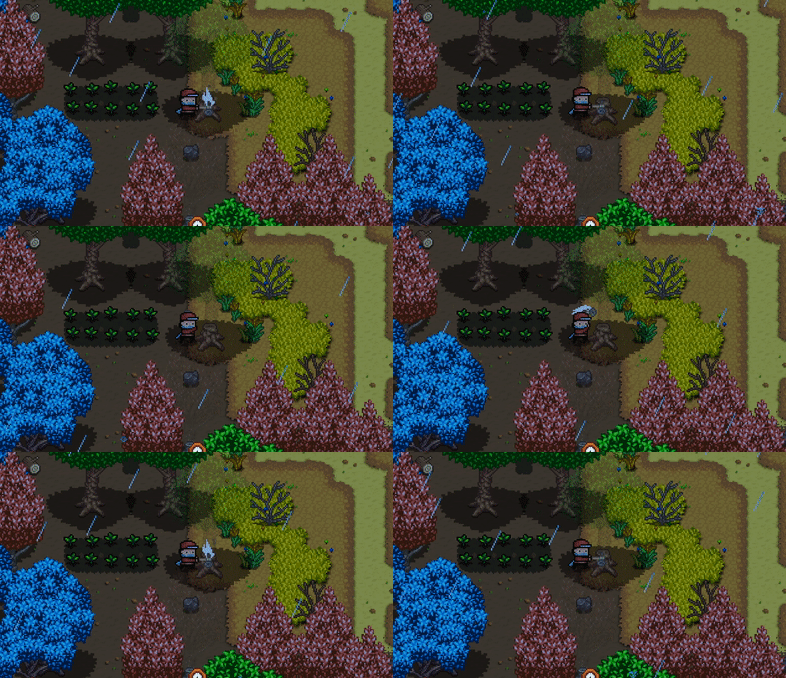
The art in the game has changed a lot since our announcement and the screenshots you can see on the Steam store page. We’ve been defining it and ensuring it’s really our own.
But what does everyone think? Does our super-saturated pixel artwork hit the nail on the head? Does anything stick out? Let us know your thoughts. ːsteamhappyː