Hello!
It may seem like the fixing of the corrupted file is taking forever but we've now actually managed to shoot ahead almost four patches! So time-wise, this has been beneficial. Everything is almost finalised, Dan just needs to put it all back together, get back to the normal dev build cadence, and then we can get the rest of the patch finished up to go out to the demo ( we're soooooo late with this, I know :) ).
This has put us back for early access but we'll look closer at that once we've finished this, and got it out.
11/07/2026
Bumping up our patch version number because soooo much is going into this patch. Essentially most of 228 and 229 will be in this update, so we might actually jump straight to 0.229.0.0 when this is done.
Game State Fix
• Removed a lot of old redundant code so that we're starting with a lean, required-objects-only version of Game State.
• Started porting the Ship's Computer functionality into its own isolated modular system.
• Started porting the Ship State functionality over to the new Ship's Computer system.
• Started porting the Nav Target functionality over to the new Ship's Computer system.
• Started porting the Command Target functionality over to the new Ship's Computer system.
• Started porting the Exploration Data functionality over to the new Ship's Computer system.
• Started porting the Sensors Data functionality over to the new Ship's Computer system.
• Started porting the Alert Condition functionality over to the new Ship's Computer system.
• Started porting the Ship Customisation functionality over to the new Ship's Computer system.
• Started porting the Ship Breadcrumb Trail functionality over to the new Ship's Computer system.
• Started porting the Mission Time functionality over to the new Ship's Computer system.
• Started porting the Galaxy Gen functionality into its own isolated modular system.
• Started porting the Brig/Mute functionality into its own isolated modular system.
• Started porting the Error Messages functionality into its own isolated modular system.
• Started porting the Multiplayer Chat functionality into its own isolated modular system.
• Started porting the Prop Location Saving functionality into its own isolated modular system.
• Started porting the Multiplayer Widget Button Press functionality into its own isolated modular system.
• Started porting the Multiplayer Widget Text Update functionality into its own isolated modular system.
• Started porting the NPC Point Of Interest Tracking functionality into its own isolated modular system.
• Started porting the Dirty Floor Panel Tracking functionality into its own isolated modular system.
New Ship's Computer
In order to track per-ship data, including valve states, tank fill, reactor power, etc etc, I'm building a new "Vessel" C++ class with an associated Ship Registry Subsystem. This new class contains everything that needs to be replicated for the ship in multiplayer, and will also be responsible for spawning and managing the Physics Actor and Visible Proxy Actor for each vessel in the game (starships and shuttles alike). The input/output functionality of this class is built around a Cisco/Bash style CLI as its back-end, so adding a CLI to ship UI's is now trivial. The UI buttons in the game now fire CLI commands to the vessel class in the background instead of using their own per-button functions.
• Created the new Ship Registry Subsystem. Any game system can now send input/output requests to any vessel via its Ship ID.
• Created the new Vessel class, with replicated arrays for all hardware classes (Pips, Valves, Tanks, Cables, Reactors, etc).
• Created a new "Ship Hardware" component that can be added to any actor to have it auto-register with its ship's Vessel registry.
New Galaxy Gen (Genesis) System
Our old Galaxy-gen and System-gen systems were two separate classes, tied directly to Game State as a blueprint component. I am now combining these into a single C++ system called Genesis. Genesis will focus on generating an astrophysically correct Milky Way galaxy and its surrounding Dwarf Galaxies. It already includes 21 million real world stars, including all stars that are visible to the naked eye from Earth, and the 862 stars required to draw the known constellations are isolated in their own cell to ensure accurate constellation rendering.
• Ported the old Galaxy-gen system to C++
• Replaced the old "27 Sectors" approach to per-class stellar cells that are scaled based on apparent magnitude. This greatly increases the visibility of large/bright stars (O, B, WR), while reducing the visibility (and generation cost) of small/feint stars like M and LTY classes.
• Built a new system for collating real world data from various catalogues like HYG and Gaia;
O Class: 3,357
B Class: 58,093
A Class: 324,345
F Class: 951,215
G Class: 1,598,614
K Class: 4,058,175
M Class: 12,567,403
L Class: 1,943
T Class: 911
Y Class: 49
White Dwarf: 197,692
Giant Star: 1,279,966
Wolf-Rayet: 59
Constellation Stars: 862
HII Regions: 8,399
Exoplanets: 6,316
Open Clusters: 1,867
Globular Clusters: 145
Dark Nebulae: 1,790
Planetary Nebulae: 405
Supernova Remnants: 295
Reflection Nebulae: 158
Dwarf Galaxies: 101
• Built a new system for generating galactic structure mathematically rather than relying on a heightmap texture. Yes, this does mean galaxies can now be seed driven, and yes this does also mean we can now have as many unique galaxies as we want in the game. Wormholes anyone?
• Built a new noise generator which mimics the galactic cloud structure as seen in the James Webb infrared galaxy pictures.
• Refined per-class galactic plane height fading based on analysing the real world stellar data.
12/07/26
Upgraded the SteamCore plugin to SteamCore Pro. This gives us greater access to the Steam API for things like achievements and workshop support.
I've used a database of known HII star forming regions to optimise our Milky Way physical structure. We're now generating logarithmic arcs from accurate root locations and it's about as close as we're going to get to the true galactic structure. In all honesty this is probably now more accurate than some 1-2 decade old papers on our galactic structure. Yellow dots are real HII regions, blue dots are procedural ones.
30/07/26
The Game State issue is now fixed permanently, and I've also removed the root cause. We had two circular dependencies that were causing fatal exceptions on engine load, and this is what was causing the crashing. It wasn't actually a physical corruption in the end, it was a race condition that exploded everything when the old system-gen was removed from Game State. Or, when we tried making a macro which cast to Game State. We're now using soft references as much as possible to stop that from happening again.
Only two things need to be polished now. The new unified Genesis galaxy-gen system, and the Ship Registry/Vessel system. Both of these are big systems, but they bring most (if not all) of the features that we were planning to implement over the next few patches. I'll do a full write-up on each system once they're done.
Genesis
The galaxy is now considerably more scientifically accurate. The whole formation process from end-to-end is now fully simulated, including galactic metallicity regions, circumstellar disk formation/composition, disk evaporation, planetesimal formation, pebble accretion, orbit clearing, planetary collisions, moon formation (including collision events), gas accretion, planetary migration, and kuiper belts.
O Class stars for example evaporate their circumstellar disks very quickly, stunting planetary formation, while M Class stars have much longer lived inner disks, resulting in rocky worlds crowding their inner regions. Each class of star now forms class-accurate systems. The net result of this is that gas giants are far more rare around lower mass stars, while A Class stars for example have a penchant for forming many Ice Giants.
We also have multi-star systems now, which was actually an interesting solution to a too-many-gas-giants problem. We were capping gas giants at 13x Jupiter's mass, but once we removed that cap we found systems created brown dwarf companions more frequently, and gas giant distribution fell to match the peer-reviewed numbers.
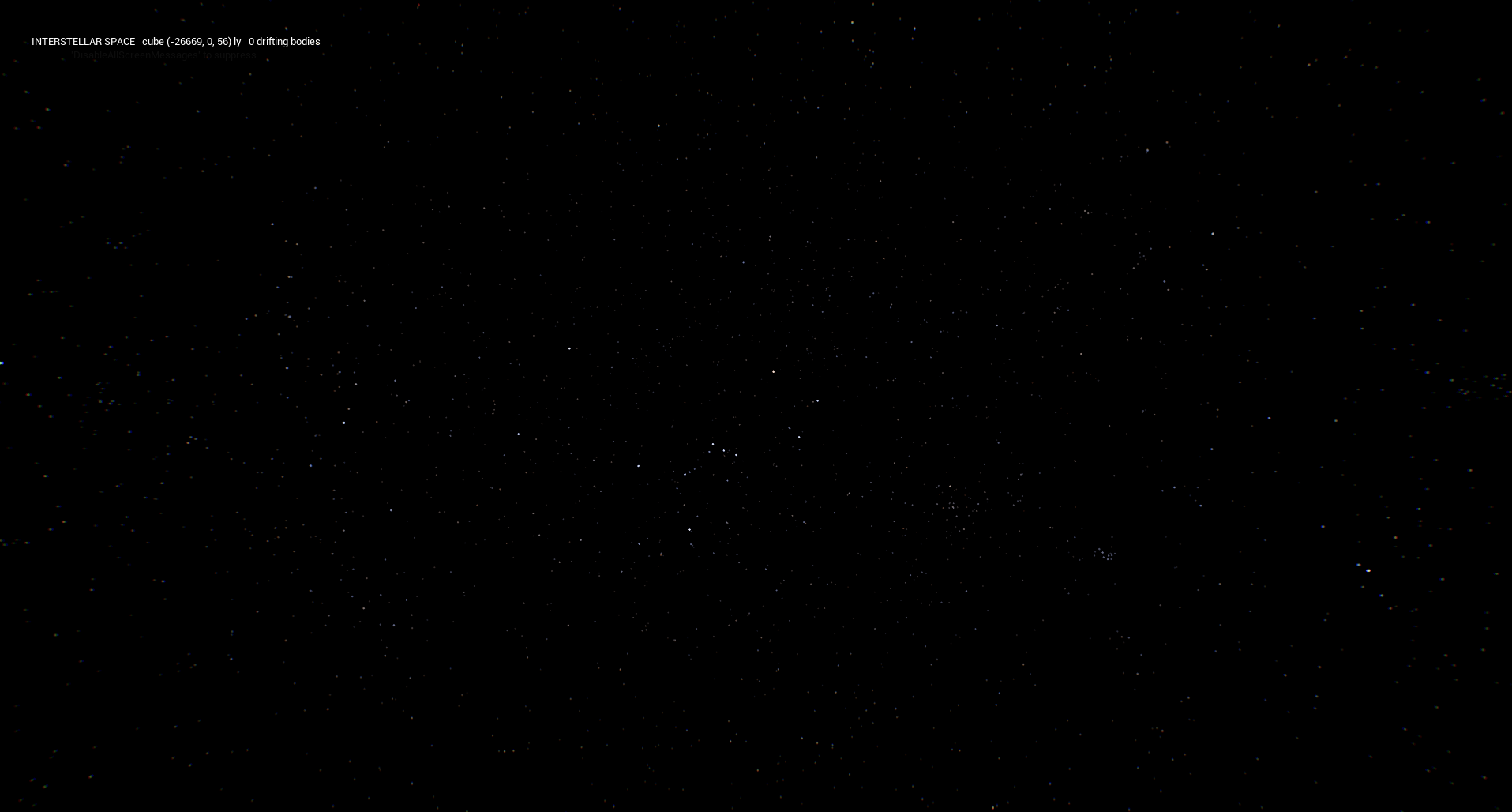
And of course we now have real constellations, as you can see from Orion in the attached screenshot.
Ship Registry/Vessel
Any flyable vessel in the game (starship, shuttle, transport, fighter, etc) now has a dedicated Vessel actor, which holds all of the replicated data for that craft. Not only that, but it also serves as the ship's computer and command processor. This centralised input/output class allows any UI panel to send or receive any data, it just needs a matching ShipID.
Because we've built this with a CLI handler doing all the I/O work, it means we are now also able to add a CLI to any UI screen for proper linux style bash commands. Think hacking gameplay, and the ability to control vessels remotely.
This Vessel actor also has our PID controller built into it, driving RCS thrusters and Autopilot functionality. That means we're pretty much ready to implement sublight flight into the game, with the first sublight features being wormholes and space-based life forms.
What am I working on right now?
Right now I'm merging our existing planets/stars/black holes/etc into the Genesis system, adding planetary rings, and making sure multi-star systems work smoothly with multiple light sources.
I'm also updating all the Magellan's hardware to be compatible with the new Vessel system, so that we can read/control it from the relevant UI panels. Mostly this is just a case of dropping a component onto each actor, but they still need to be configured.
With the crashing all fixed and the two new systems approaching a finished state, we can start looking towards a new dev build. A long time in the making!
We have Giant stars in the game now - here's Betelgeuse.
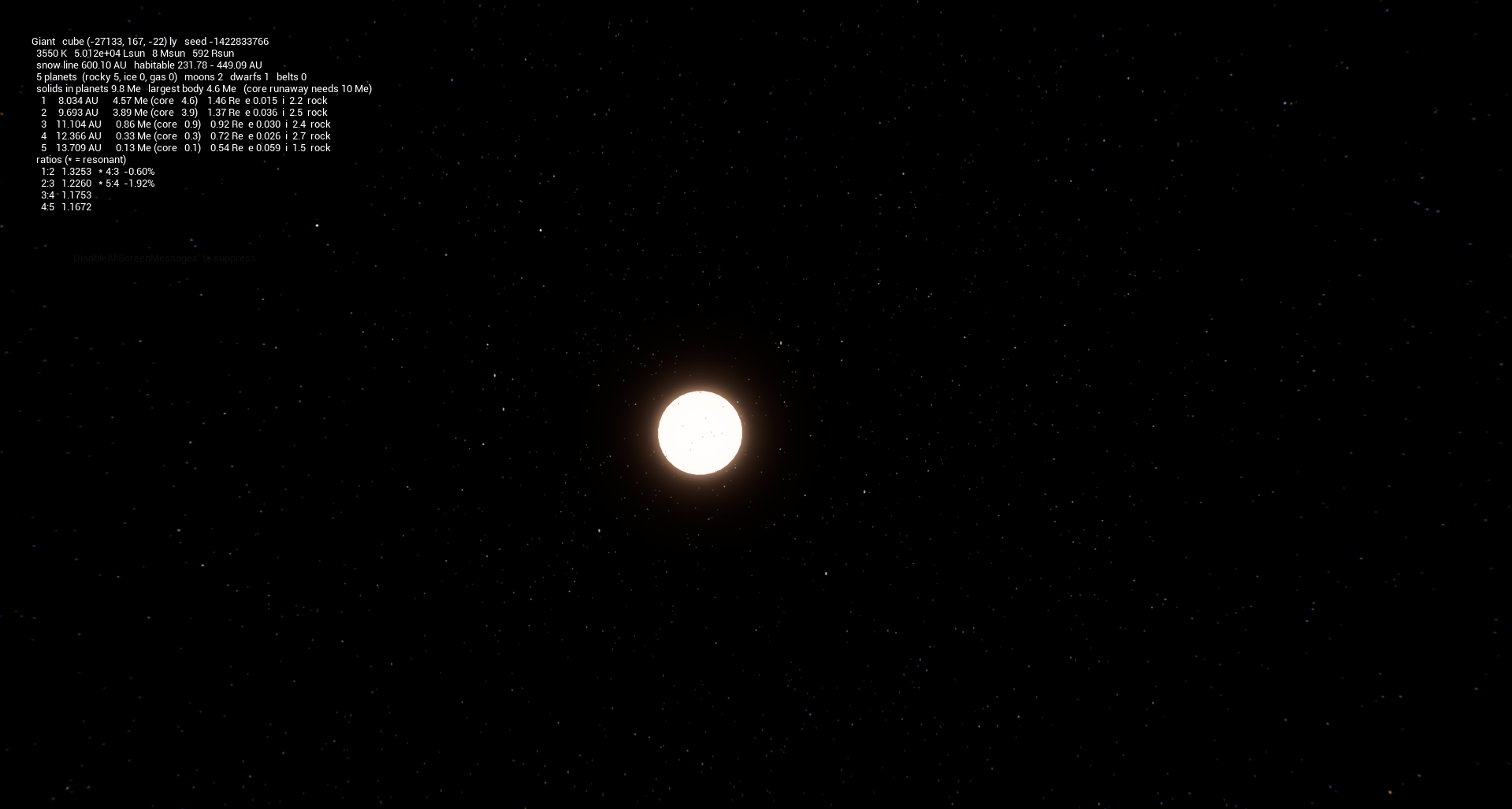
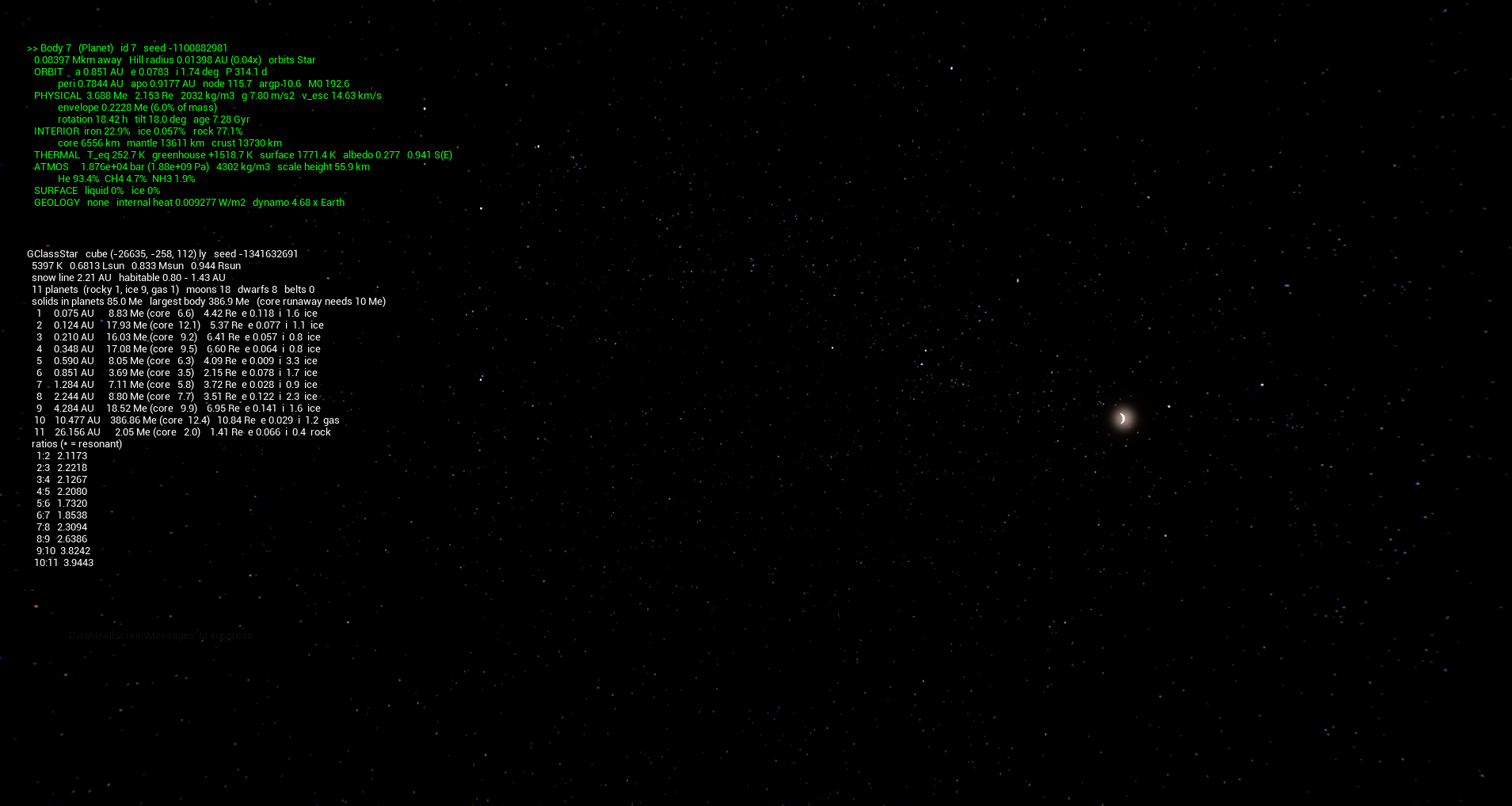
Planetary Data Output - All of this will be used in game.
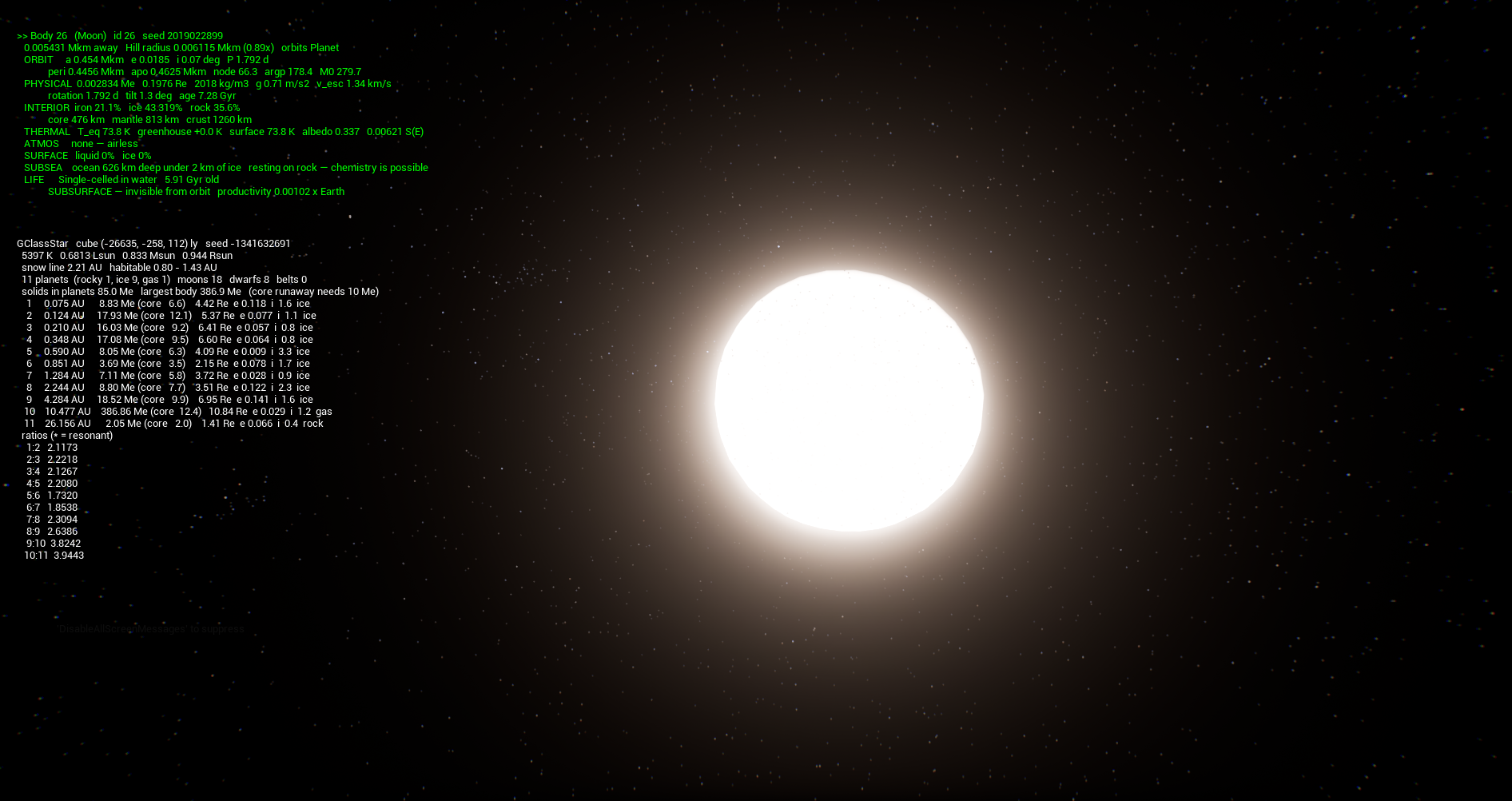
Overly bright because of a lighting bug, but here's a moon with a subsurface ocean and single-celled life
July YouTube Development Streams.
We stopped most streaming while we were getting this big issue sorted out but as with the rest of it, it'll all go back to normal as soon as the patch is out :)
I have every confidence that as of next months update, we'll all be back to normal, and Dan will be very happy to be creating again!
Claire :)