
Hey pilots, welcome back.
In this devlog we’re focusing on something that affects every moment you spend in VR: presence. If your hands clip through the world, if interactions feel “floaty,” or if your body doesn’t seem like it belongs there, immersion breaks instantly.
So we’ve been building (among other things) what we call our Player Presence System: a set of interaction features aimed at making your in-game body feel physically grounded, readable, and believable, while still staying performant and comfortable.
What’s new in this devlog (player-facing)
Hands that stop on surfaces instead of passing through them
Clear feedback when your real hand movement is blocked by the world
Smarter gripping that adapts to different objects
IK-locked interactions for fixed controls like wheels, levers, knobs, and switches
1) Physics-Aware Hands (No More Clipping)
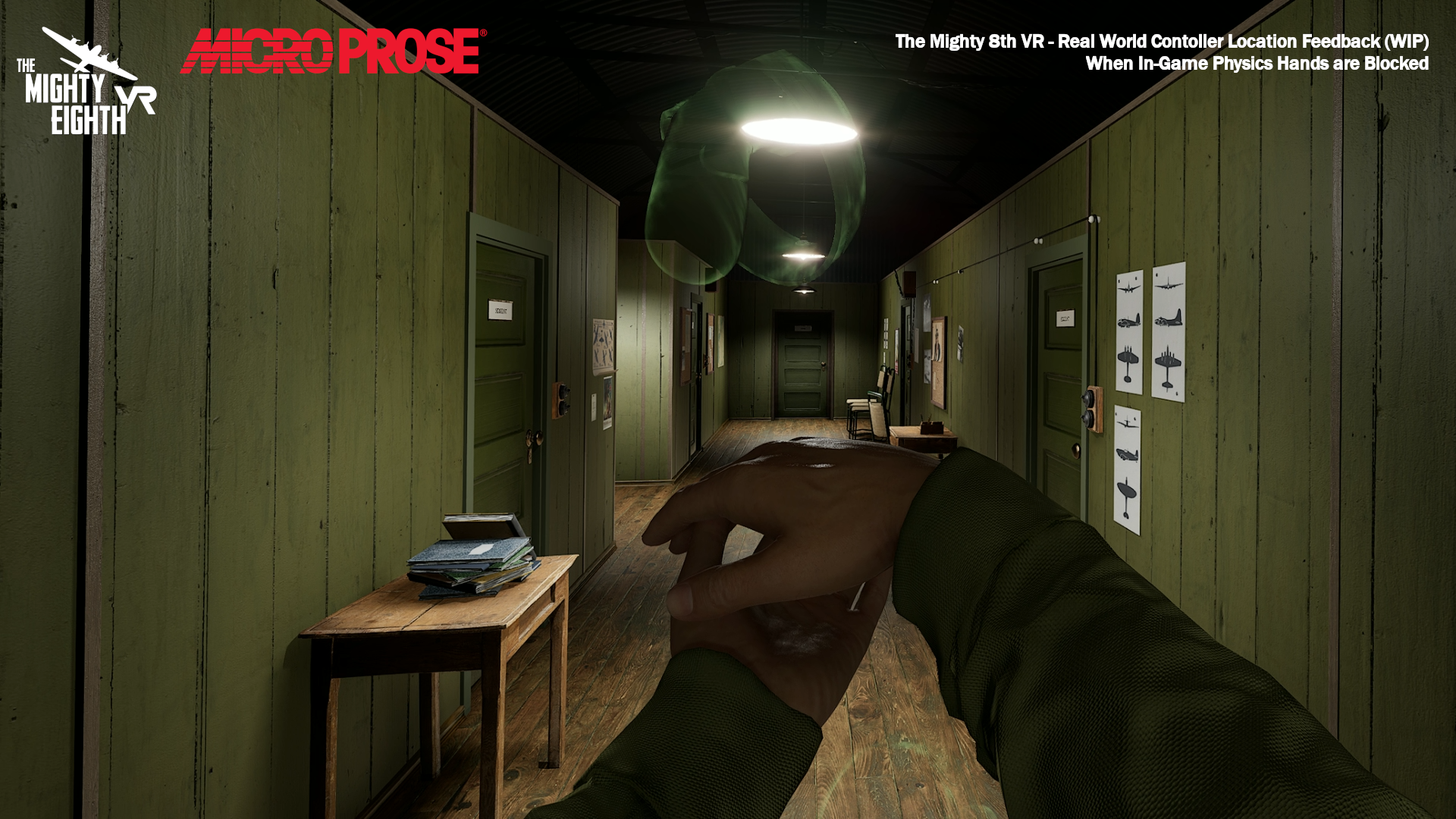
We’ve implemented a hand physics system that prevents your in-game hands from intersecting solid objects. When you push your hand into a surface, the hand stops where it should — giving you that crucial “I’m really here” feeling.
To keep this readable (and avoid confusion), we also show a ghost controller when there’s a noticeable offset between your real-world controller position and your in-world hand position. This is intentional feedback: it tells you, at a glance, where your tracked hand is versus where the in-game hand is being physically constrained.
2) Adaptive Hand Collision for Different Poses
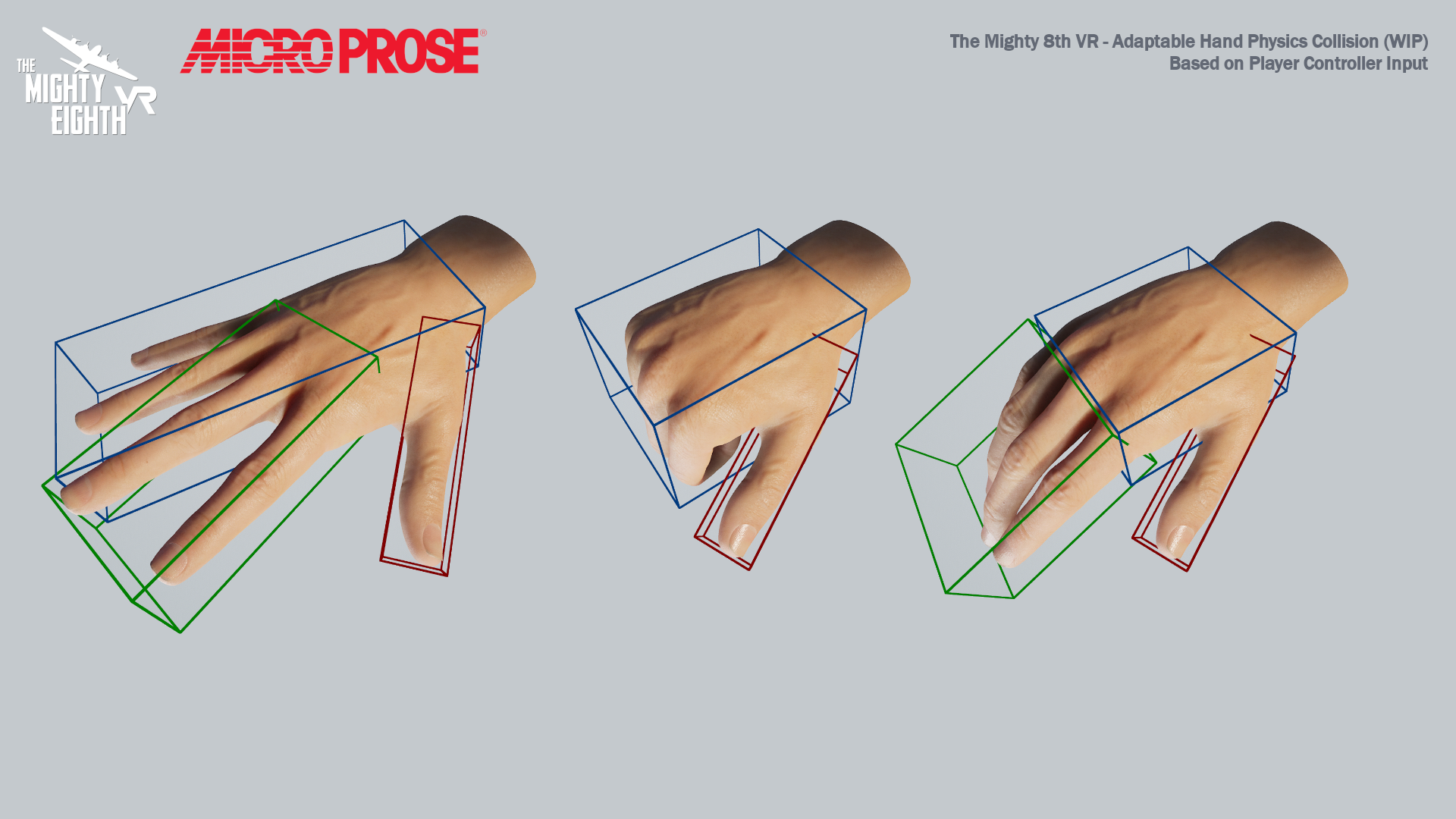
Hands change shape constantly in VR: relaxed, pointing, reaching, gripping.
Instead of treating every pose the same, we swap the hand’s collision profile depending on what you’re doing (based on hand state and input). For performance and stability, we use simple collision primitives that automatically adjust to fit different use cases.
The result is fewer awkward collisions, more predictable contact, and interaction that feels consistent across a wide range of objects.
3) Procedural Grips and Finger Placement
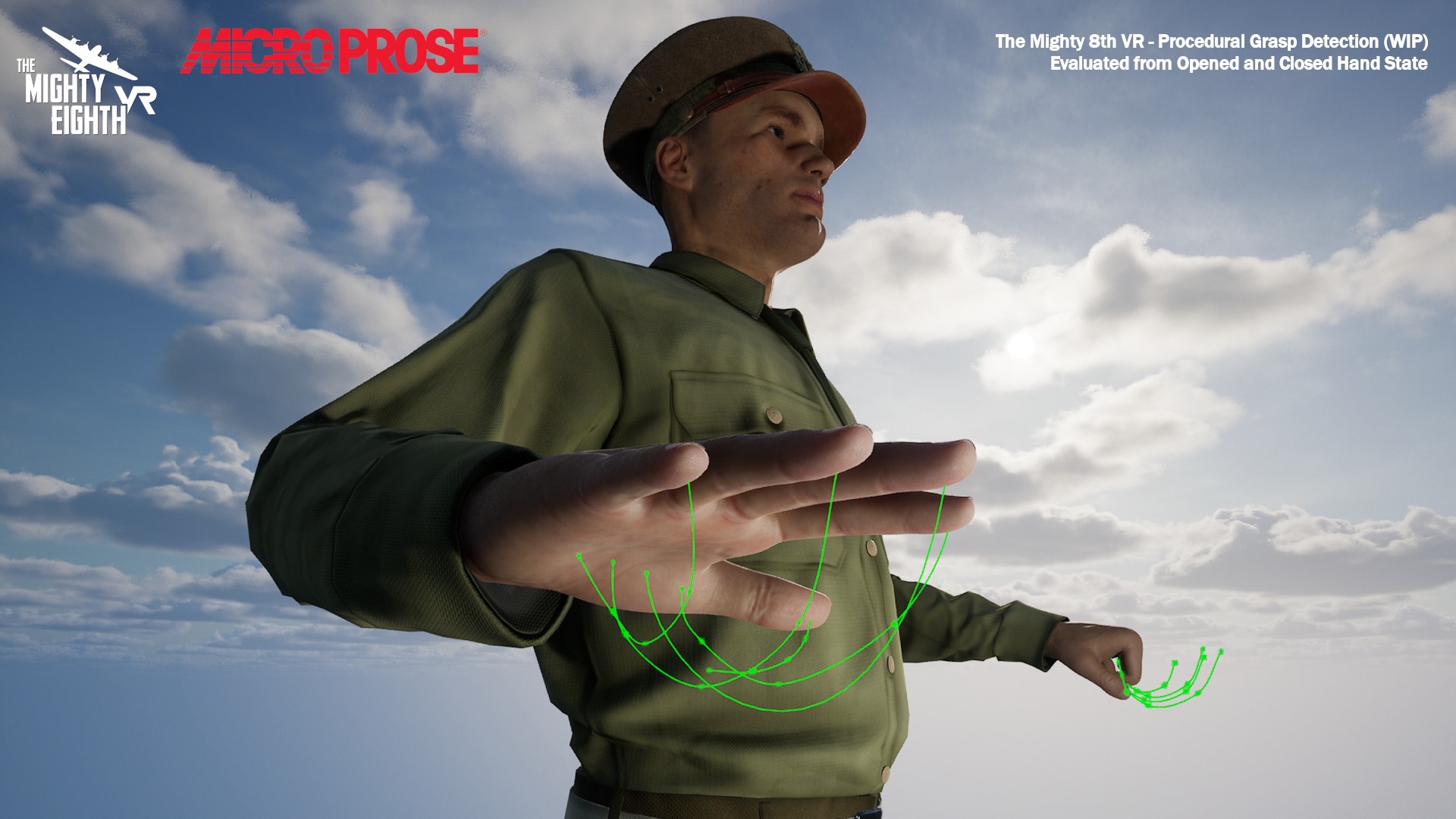
When you grab objects that support it, the hands don’t rely on a single canned animation.
We evaluate the motion from an open-hand state toward a closed-hand state and choose the most appropriate final finger placement for the object you’re grabbing. That means grips can look and feel more natural across different shapes and sizes — especially in close-up VR interaction where your hands are always in view.
4) IK-Locked Interaction for Fixed Controls
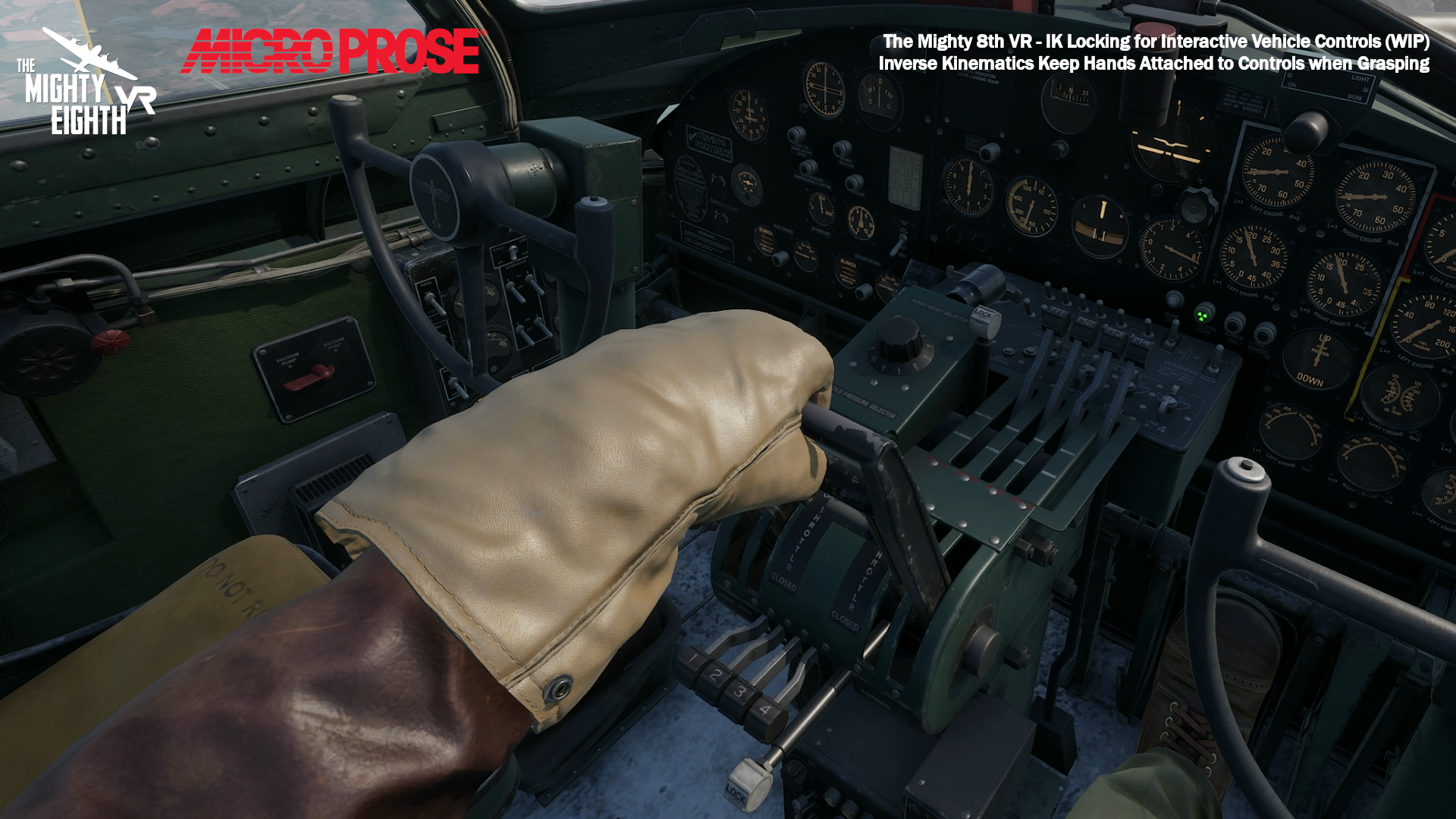
Some interactions should behave differently than freeform grabbing. For fixed controls — steering wheels, knobs, toggles, levers, and cockpit-style inputs — we use a dedicated system that locks the hand to the control via Inverse Kinematics (IK).
This keeps your hand anchored and stable as you operate the control, so the interaction feels precise and intentional rather than slippery or approximate.
Why This Matters (and what we’re watching closely)
Presence isn’t just a “nice-to-have.” It’s a foundation. When interaction feels physical and consistent, teamwork becomes more intuitive, cockpit tasks feel more natural, and moment-to-moment gameplay becomes far more immersive.
This is still active development, and we’ll continue refining it as we test and iterate.
If you like the direction we’re heading, please wishlist The Mighty Eighth VR on Steam. It’s the single most helpful way to support development and makes a real difference in visibility.
Thanks for taking the time to read this far, and we look forward to sharing more with you in the future.