Greetings, horror fans!
It's been a few days since we put ourselves in this fearsome adventure where the Presence is always watching you and playing by its own rules. That's it, this dark entity responds to the player's action, creating many different situations, even if you do exactly the same...
To discover more, we bring you an exclusive interview from Xataka, (originally in Spanish) where we talk about the process of creating The Presence, "the damn thing that still manages to scare them".
Let the horrors begin...
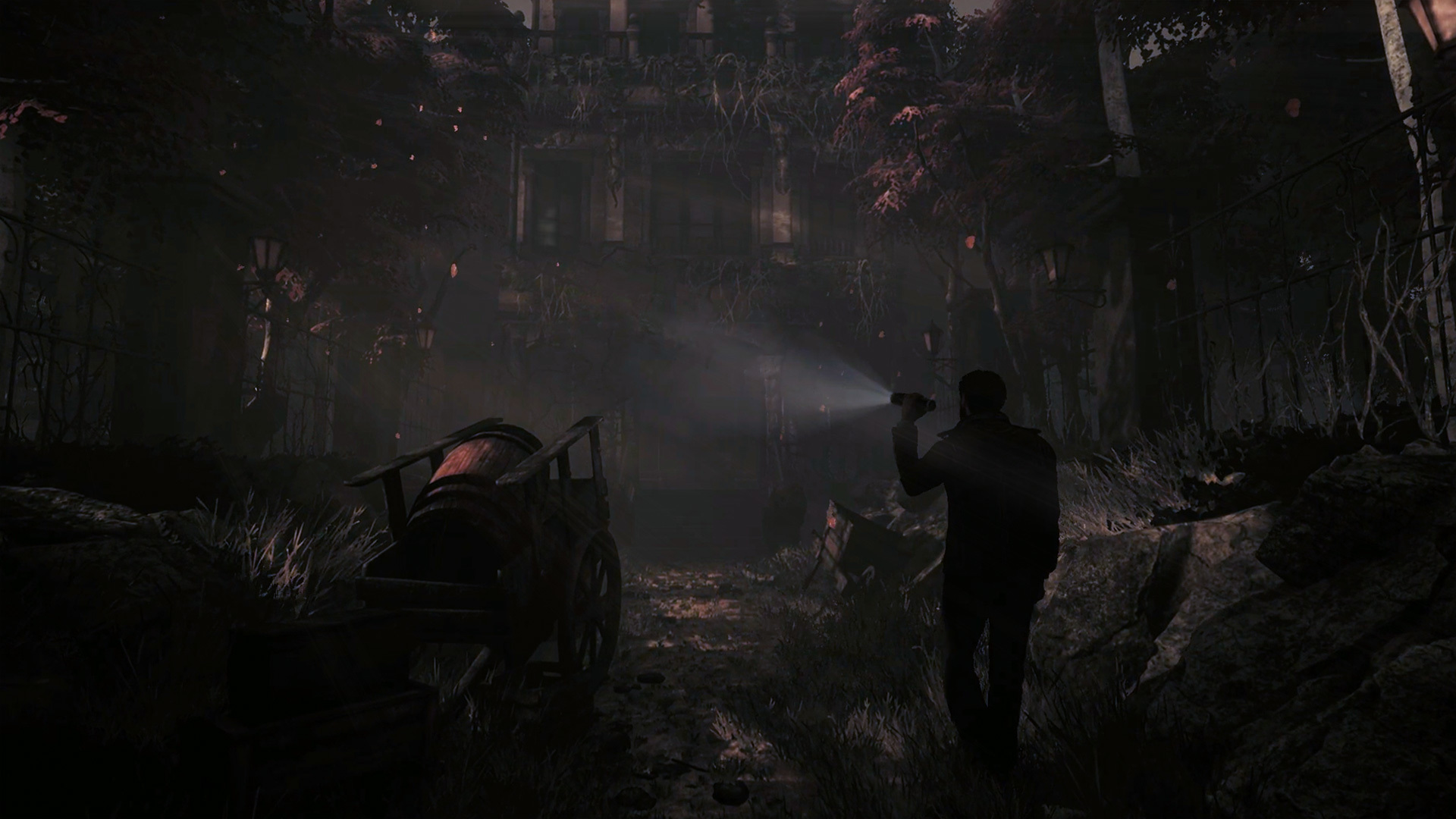
There are many theories that attempt to explain why so many people enjoy scary films and video games. One of the most common brought up by psychologists is 'emotional regulation', a term that describes experiencing an emotion in a controlled setting. When you watch a horror film, you’re expecting scares – you’re ready for them and give in to your reactions. You might scream, cover your eyes, or even jump, but you know everything will be just fine because you're sitting in your living room and you know everything will go back to normal once it’s over.
We also like horror for the same reason that we keep going back to the same pizza place: whenever we go there, we have a good time. Audio-visual genres (comedy, drama, science fiction, etc.) have a degree of predictability and, therefore, of expectation. "Whenever I watch horror movies, I enjoy them", we think to ourselves. And so we watch horror movies.
Now, a Spanish team has developed a video game to put horror fans’ wits to the test, because everything that happens during gameplay is completely unpredictable. Literally. Not even the developers themselves know exactly what might happen. According to the developers, it’s all thanks to an Artificial intelligence that makes sure it’s impossible to predict the scares.
The (evil) Presence
'Song of Horror' is an adventure in psychological terror that takes its cues from legendary titles such as 'Alone in the Dark' and 'Resident Evil'. Everything kicks off with the disappearance of a famous writer ¬– and it’s your job to find him. The search will take players into his home, where it becomes clear that something sinister is hiding within its four walls.
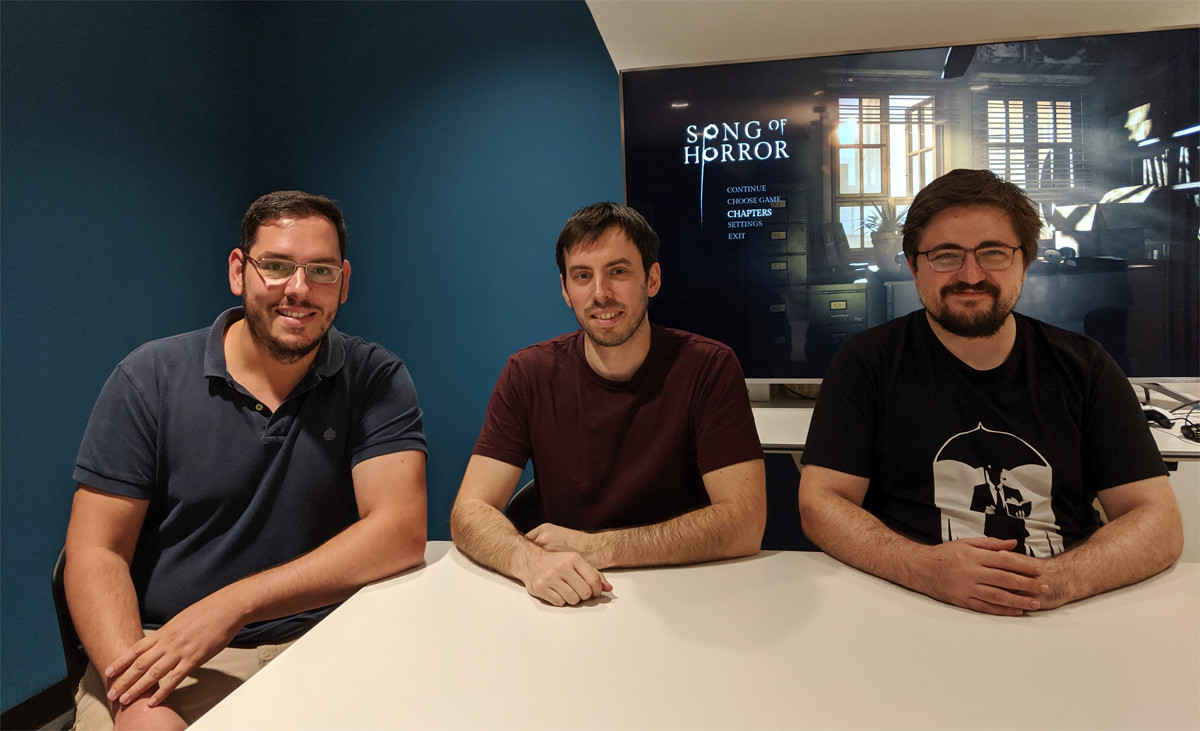
From left to right: David Navarro, Ignacio Fernández and Carlos Grupeli, the creators of 'Song of Horror'
The game's creators, led by Ignacio Fernández, Carlos Grupeli and David Navarro, (who we spoke to for this article) decided to call this sinister something 'The Presence', and tasked it with making your time with the game as unsettling as possible. In the words of Ignacio:
'What I see in 'Song of Horror' that I don't see in other horror games nowadays is the threatening, tense atmosphere that was palpable in the first 'Alone in the Dark'. That feeling of 'this is so scary, if I blow it now I'll have to start all over'. The fear is a bit more mature, more of a constant pressure on you."
One of the ways this is achieved is through permadeath (i.e. if one of the 13 playable characters dies, they are dead forever) and The Presence, which in effect acts as the 'monster' that, according to the experts, all works of horror should feature. Such monsters are often used either so that we can empathize with them and unleash our wild side by siding with the enemy of our beloved characters, or simply out of curiosity to learn more about them (in fact, the philosopher Noël Carroll believes that the process of discovering the monster, of getting to know it and its motives, etc, is another reason why we're hooked on horror as a genre).
Not to contradict any of these experts or philosophers, but the truth is that The Presence doesn't make itself easy to empathize with, especially given that not even its own 'parents' know what it's going to do next.
An AI that plays by its own rules.
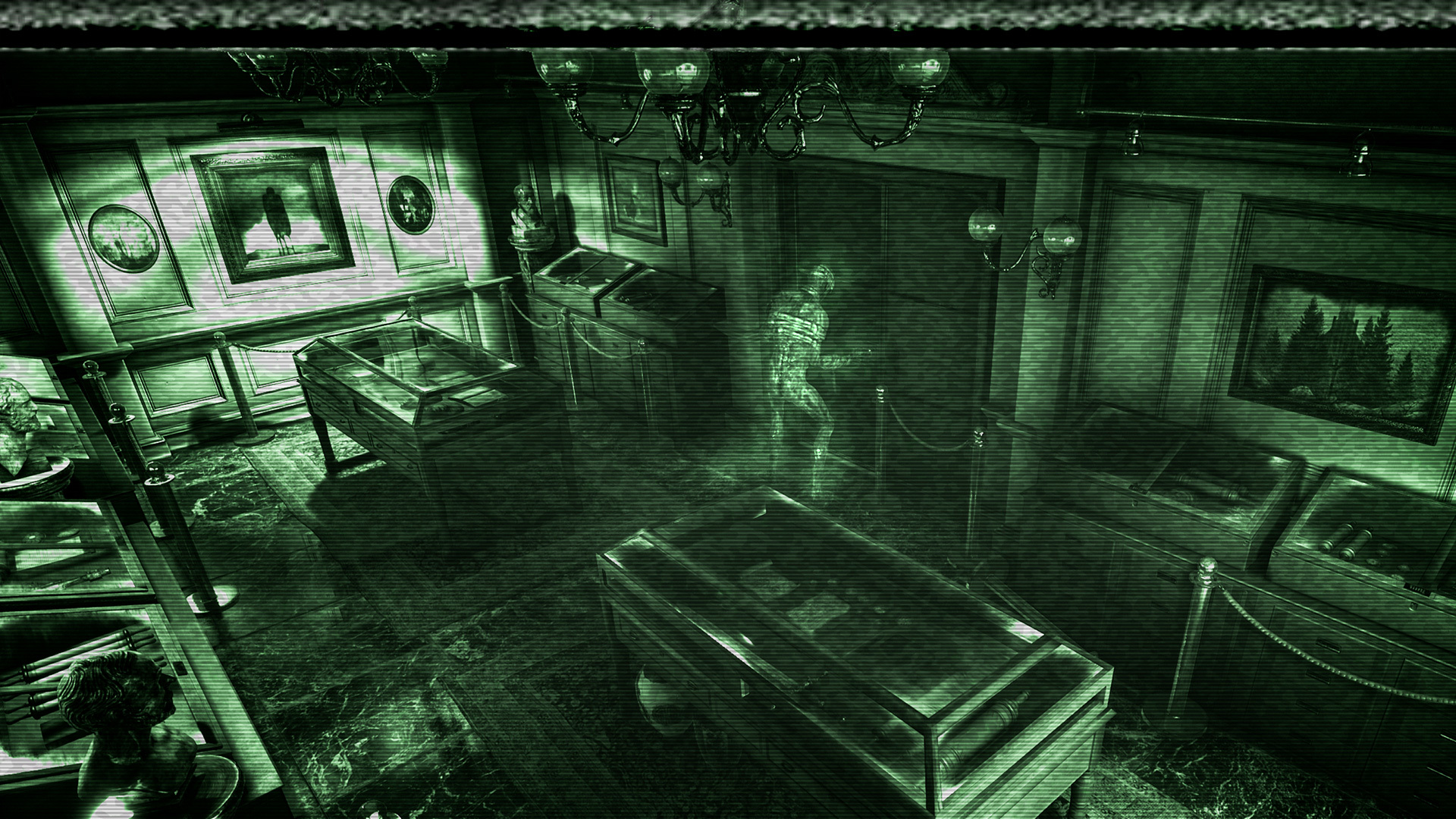
"The Presence watches the player. As the player enters The Presence's territory, it responds to the intrusion and continues to respond in answer to the player's actions: how far they intrude, how quickly, and so on. We always kept the famous 'dog scare' from 'Resident Evil' in mind. The first time you're terrified, the second time, well, you still get a fright, but by the third, you barely react. With The Presence it's different. Even if you do exactly the same thing, it will respond differently. You have no control over it because it plays by its own rules".
It was Carlos who defined The Presence this way. He was the main person in charge of programming the artificial intelligence that brings the monster to life. He explained to us that over the five years it has taken to develop the game, they have input ever more variables, weapons, and tools for the Presence. He spoke of the many factors that 'it' takes into account before making a move: if you attempt to open a door X number of times, if you try X number of light switches, if you spend X number of seconds in a room, if you move quickly or slowly, etc.
The Presence watches you, and every movement you make or thing you do provokes a reaction (or not)
Ignacio notes that, with The Presence, even when a floorboard squeaks as you step in a certain place, it's different from it not squeaking. And with so much granularity and so many variables, our next question was obvious: how did you program something like that? "We're talking about small elements here which, when combined, give rise to a universe of possibilities, basically in an intrinsic way, without us having to force anything", says Carlos. In other words, they basically input a massive number of variables.
To complicate matters even more, each playable character has certain traits which bring their own set of variables to the game. A stealthy character isn't the same as a strong one, and all those circumstances come together to affect the difficulty of the game. For example, if The Presence attacks you by suddenly opening a door, it will be more difficult for you to block it if your character is weaker – but that might just be the character you need to solve a particular puzzle. "Depending on what you're good at, you will have to sacrifice certain traits", Ignacio explains.
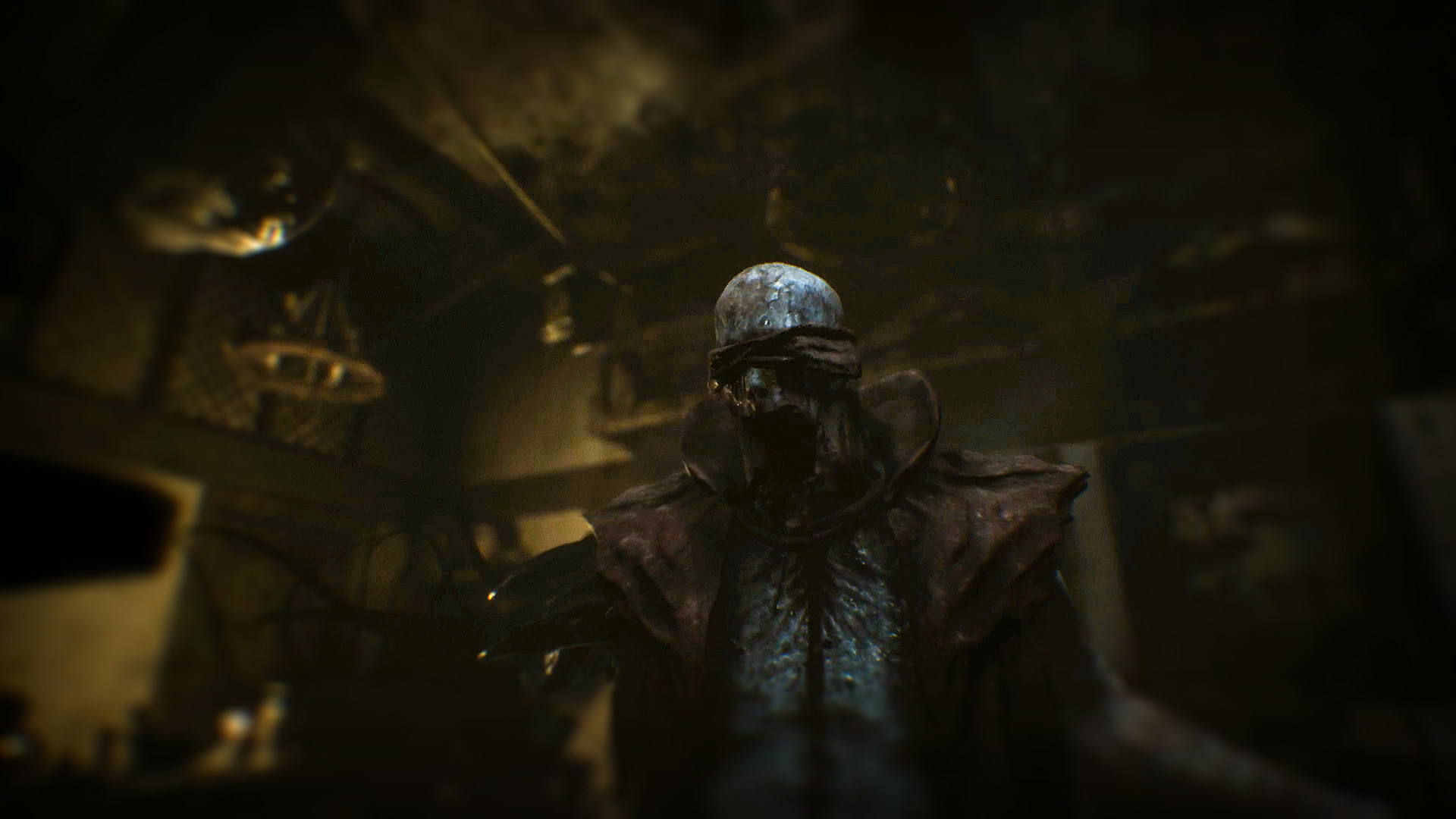
And as if that isn’t enough, The Presence goes even further. It's not the same in the first chapter as it is in the fifth and final chapter of the game. "In each chapter, we've added new elements – some specific to that chapter, and others to The Presence itself. As you enter its territory and learn more about its history, it becomes more aggressive and visually more powerful. From glimpsing a pair of hands to shrouding everything in darkness, the level of visual intensity increases. It becomes more and more apparent", Ignacio notes.
What's it like to design levels that feature so much uncertainty? The developers admit that there are 'unique events' that happen to everyone, no matter what. Ignacio elaborates:
"Sometimes we have to tether The Presence to force certain things to happen during the game. For example, let's say that in one chapter we want the same event to happen in a specific place to all players. Obviously, the game contains the same puzzles, scenes and so on for everyone. What changes is the gameplay. There’s an event in chapter one where we don’t want anything else to happen, so we have to stop The Presence for a bit and release it later. It's a little more tricky".
The same goes for the setting and music: "Each room has a mood, its own background music. But later when The Presence gets involved, it has its own music. When it makes a major appearance, its theme begins and all the others stop. What's more, it usually begins with a bang", Ignacio explains.
For everything else, however, the developers assure us that The Presence makes its own decisions in response to the stimuli it receives at any given time. "Most of the tools The Presence has in its arsenal can be used if not everywhere, then almost everywhere", Ignacio concludes.
"The fun part of testing this game, even though I've played it about 400 times, is that sometimes even now the damn thing still manages to scare us"
According to Carlos, "The fun part of testing this game, even though I've played it about 400 times, is that sometimes even now the damn thing still manages to scare us". To which Ignacio adds, "Not long ago we thought there was a bug because The Presence did a combination of things we hadn't seen before. We checked and it turned out everything was fine, but we had to go over the code with a fine-tooth comb. But these combinations of things unsettle you, they surprise you".
Five years to learn how to make a video game from scratch
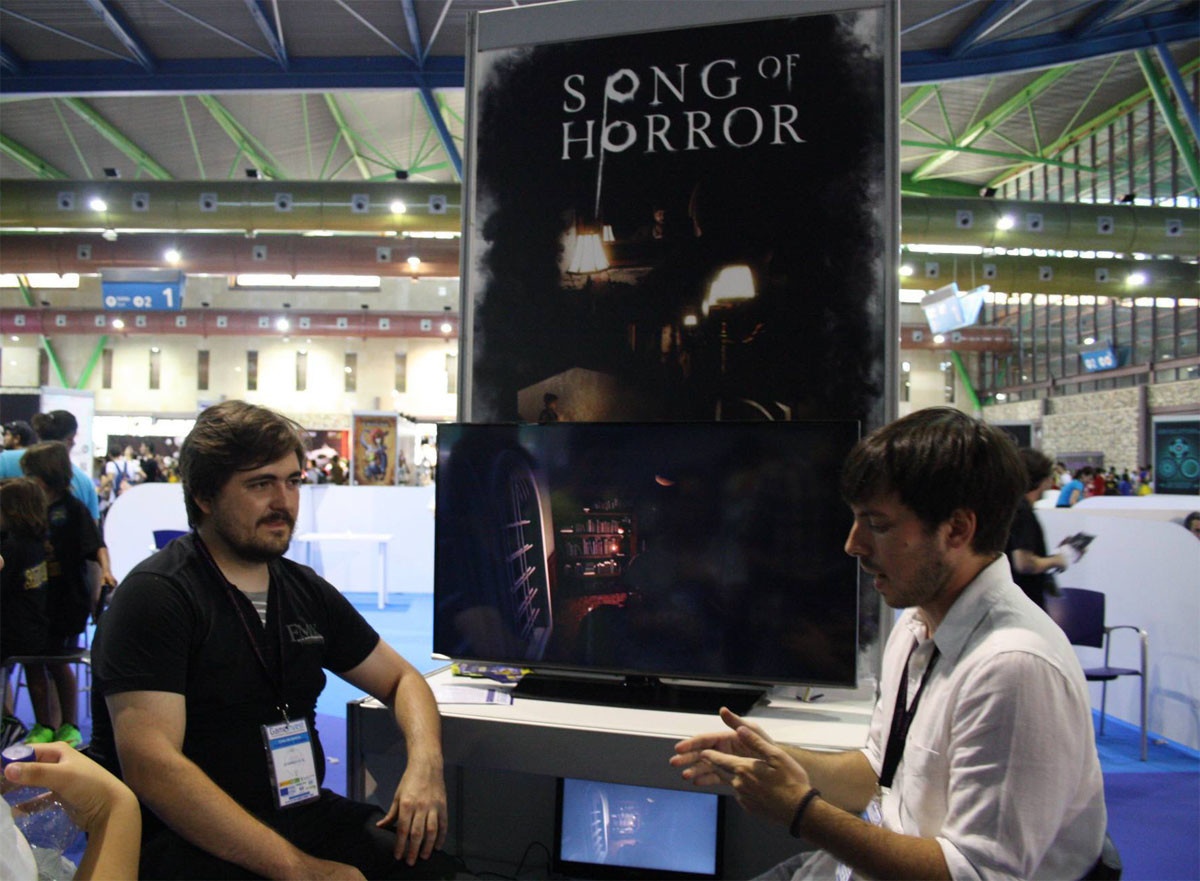
Carlos and Ignacio during one of the first-ever public presentations of 'Song of Horror' at a video games event (2015).
The interesting thing about the boys from Protocol, the developers of 'Song of Horror, is that Ignacio is an architect, Carlos is a computer technician, and David studied Fine Arts. None of them had any prior experience in the world of video games. There was nothing else for it but to start from scratch.
"The first year we were just taking everything in", Ignacio recalls. "We watched people playing and took note of anything strange that happened, or parts that were too boring. We've since polished all that up and, in fact, joke amongst ourselves that we're actually on 'Song of Horror' 2 or 3 thanks to all of the improvements we've made along the way. The second year was the polishing stage, and the other 3 have been about making the game we truly saw in our imaginations", he finishes.
"We've had lots of support, especially with the financial side of things. Our families have made so many sacrifices"
The trio confessed that they did the bulk of the work on the game with Luis, another programmer, and that in total some 15 people worked on developing the game (including collaborators for some specific matters). Meanwhile, they themselves supplied all of the funding (they had two failed rounds on Kickstarter) which, as they explain it, led to some very difficult moments. "Over and above my own and Ignacio's personal savings, the rest of the time we have been lucky that our close family and friends have been able to support us. We've received a lot of support, especially financially. Our families have made many sacrifices for us", Carlos admits.
It's only logical then that they will have encountered problems within the video games industry. "In many areas, I don't think we're taken seriously in the way that cinema is, for example", says David, to which Ignacio adds, "The problem is that ultimately it's a global market, and we're competing with studios that have much larger teams and better funding".
In any event, it's admirable that they've managed to develop such a complex game from scratch and get it off the ground, centered around such an interesting AI concept. As Ignacio himself proudly states, "In monetary terms, we're not an AAA, but when it comes to things that don't depend solely on money, such as the details or the narrative, I believe we measure up just fine".