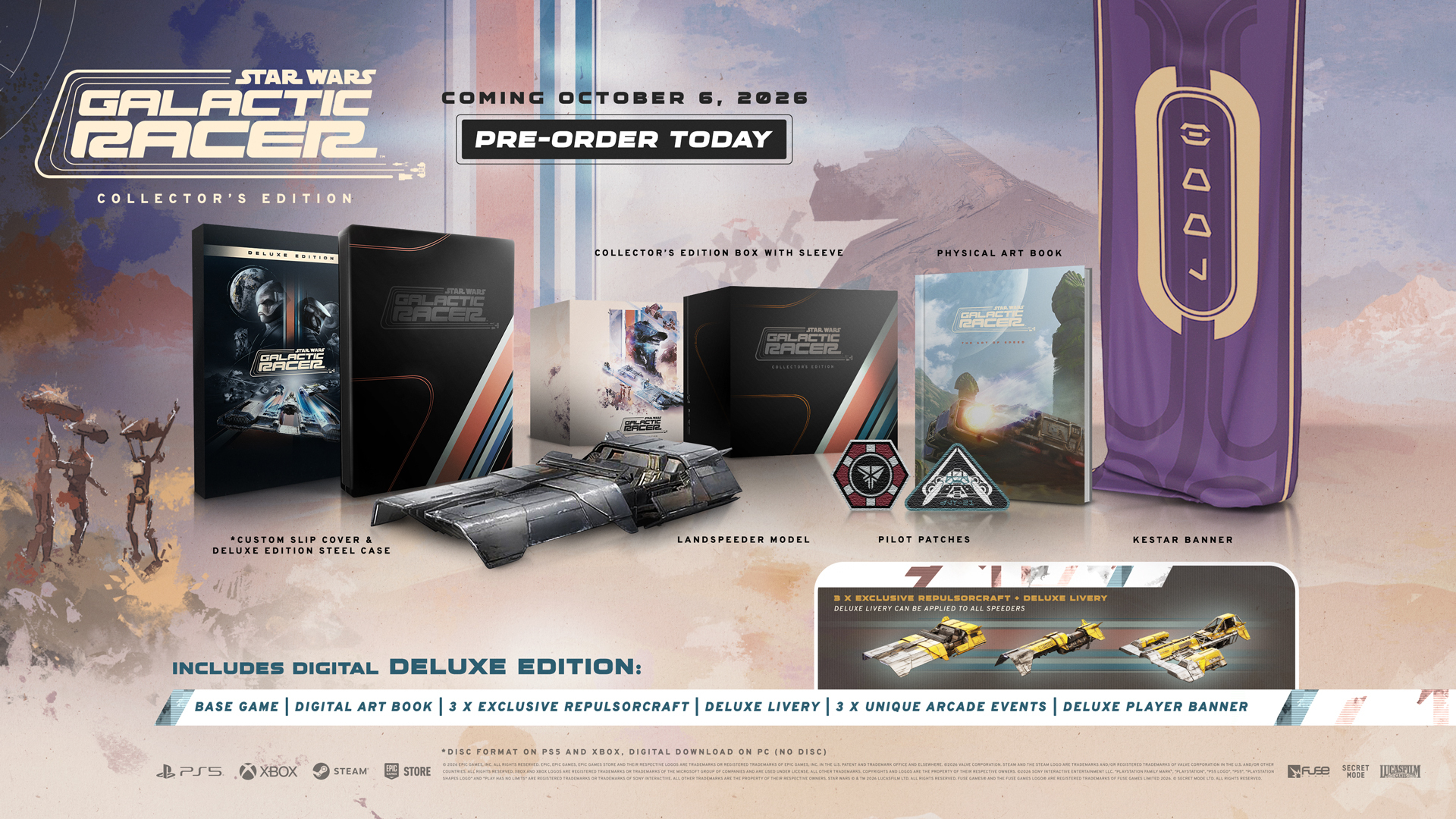
Feel the Speed: Game Feel in STAR WARS: Galactic Racer™
“Game feel” is one of the most important yet hardest-to-define aspects of video game development, especially in racing games. We spoke with Fuse’s Game Director Bill Lane and Design Director Mark Bridges about their approach to physics, responsiveness, impact, and what makes ever
“Game feel” is one of the most important yet hardest-to-define aspects of video game development, especially in racing games. We spoke with Fuse’s Game Director Bill Lane and Design Director Mark Bridges about their approach to physics, responsiveness, impact, and what makes every track exciting to play.
Meet the developers:
Before Fuse, our Game Director Bill Lane studied Engineering at University. After realizing civil engineering wasn’t the passion he wanted to pursue, he landed a role at EA as a QA Tester and worked his way into Criterion, a studio he had been a fan of for many years. From there, he used his engineering knowledge to get a role in Game Design, working on Burnout Paradise, Need for Speed: Hot Pursuit and Most Wanted, before eventually leaving to join Fuse Games. As our Game Director, Bill oversees the design across the entire game, focusing on the long form systems like campaign, multiplayer, and overarching gameplay.
Our Design Director, Mark Bridges, focuses on the second-to-second experiences of the game, i.e. the handling, racing, abilities, parts and upgrades, and how they all interact with each other. Similarly to Bill, Mark worked at Criterion before Fuse, but his first role in the industry was with Firemint, a studio in Australia. Back in the UK, Mark eventually got a role as Handling Designer, which was incredibly well suited to his Physics degree: “I didn’t realise how highly applicable my degree in physics would be in terms of a methodical scientific approach to breaking down experiences. That, also tailored with my interest with amateur dramatics and theatre, made me realise that this was a career path I wanted to go down because it was a useful mix of art and science. I've got to apply my logical thinking brain but also think about player experiences and the emotions that they're feeling and how I can create systems to engage that.”
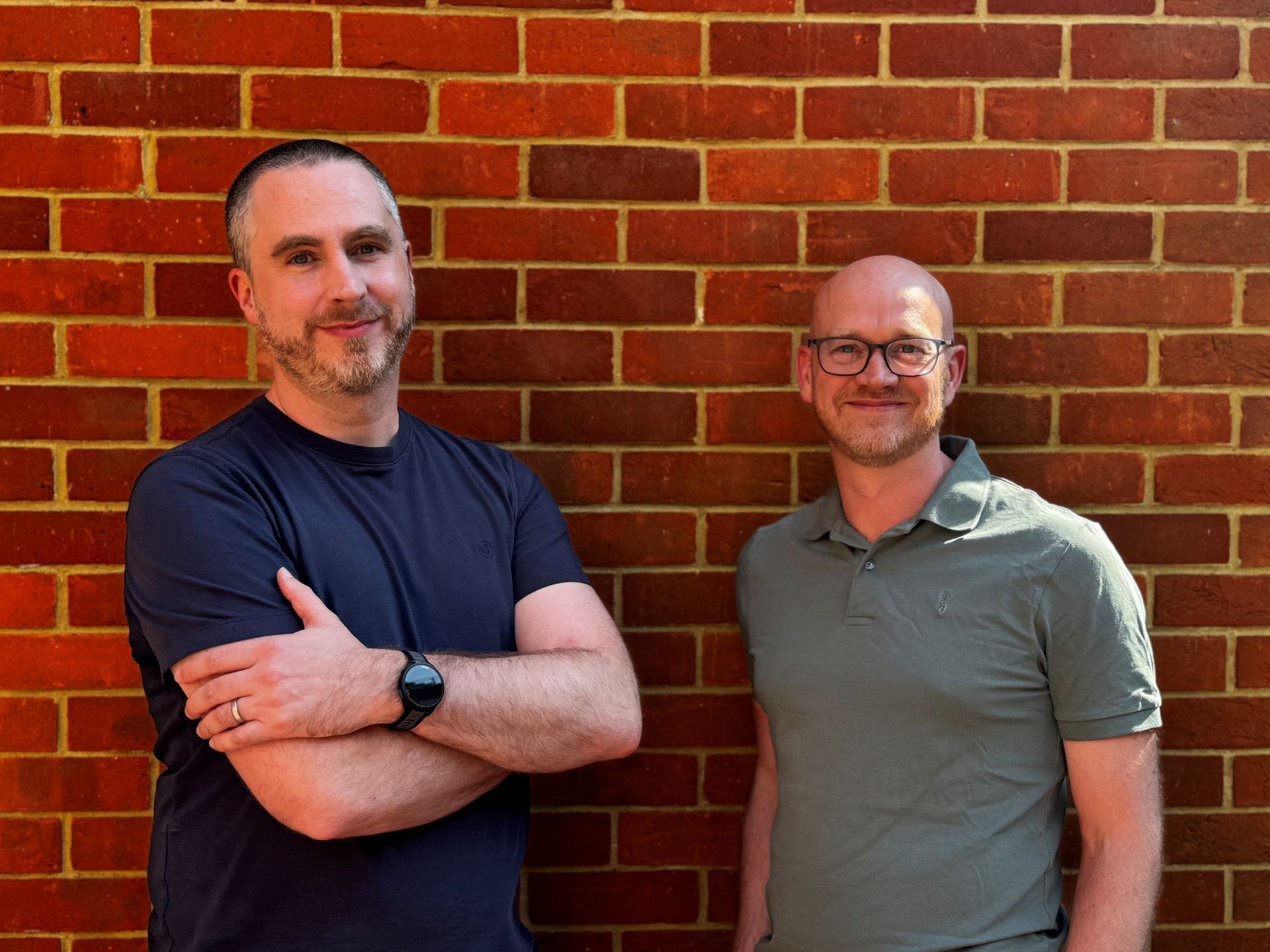 Game Director Bill Lane (right) with Design Director Mark Bridges (left).
Fun fact: Alongside rallying the team as Design Director, Mark also used this theatre skills to bring the character of our titular antagonist Kestar Bool to life in our motion capture shoots.
What actually is ‘game feel’, and why is it important?
Game feel is somewhat of an elusive term in the games industry. Many people equate it to player experience, but our developers see it differently: simply put, it’s the physical sensation of control in a game. But there is so much more to it than that.
“When you experience things in the real world, you get sensory inputs like touch, sight, smell,” Mark answers. “Those are reduced to a smaller set when you’re playing games, but we still have the ambition to deliver those same heady heights of emotion. And to do that, we leverage techniques in the game to deliver that feedback to help hit those same sensations. You often see content creators on YouTube calling out things like camera shakes, and VFX as being game feel. But the core difference between games and other forms of entertainment like cinema is, of course, interaction, the cause-and-effect aspect, when you feel like you are making a tangible impact on a simulated world. That’s where you get game feel.”
Game Director Bill Lane (right) with Design Director Mark Bridges (left).
Fun fact: Alongside rallying the team as Design Director, Mark also used this theatre skills to bring the character of our titular antagonist Kestar Bool to life in our motion capture shoots.
What actually is ‘game feel’, and why is it important?
Game feel is somewhat of an elusive term in the games industry. Many people equate it to player experience, but our developers see it differently: simply put, it’s the physical sensation of control in a game. But there is so much more to it than that.
“When you experience things in the real world, you get sensory inputs like touch, sight, smell,” Mark answers. “Those are reduced to a smaller set when you’re playing games, but we still have the ambition to deliver those same heady heights of emotion. And to do that, we leverage techniques in the game to deliver that feedback to help hit those same sensations. You often see content creators on YouTube calling out things like camera shakes, and VFX as being game feel. But the core difference between games and other forms of entertainment like cinema is, of course, interaction, the cause-and-effect aspect, when you feel like you are making a tangible impact on a simulated world. That’s where you get game feel.”
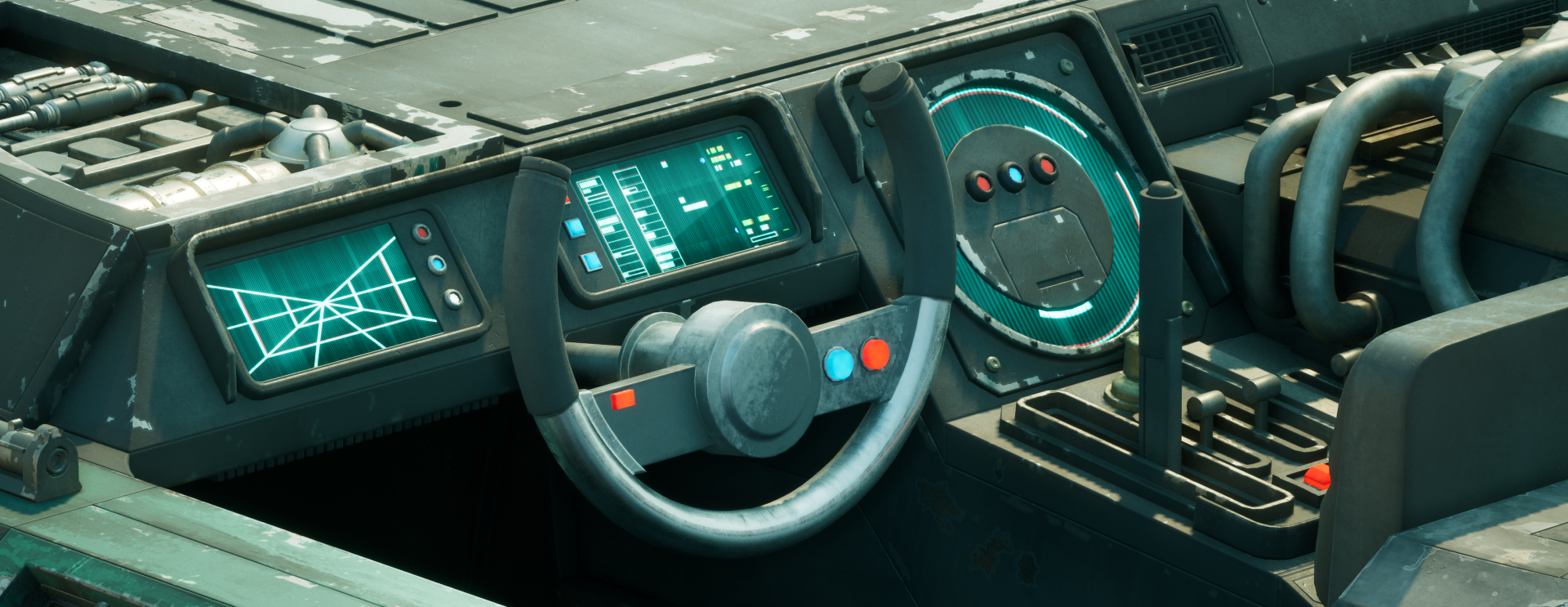 Mark goes on to tell us that there is a unique challenge achieving game feel when it comes to racing games: “We can recreate the strategy and skill from real world racing quite easily by creating NPCs to race against with acceleration profiles and drafting and things like that. But the physical sensation of exhilaration is harder to recreate. It’s fundamental to us at Fuse, as developers, to ask ourselves: how do we create that same set of emotions to crossing a finish line when someone is sat on their sofa at home? We have to trick part of the brain, the amygdala, into thinking that there is a real sense of tension, exhilaration and stress. We want people to feel their hair on the backs of their neck stand up as they cross that line - even if it is just pixels on a screen. Part of that is manufacturing emotions, or similar emotions that you would feel if you were in those races yourself.”
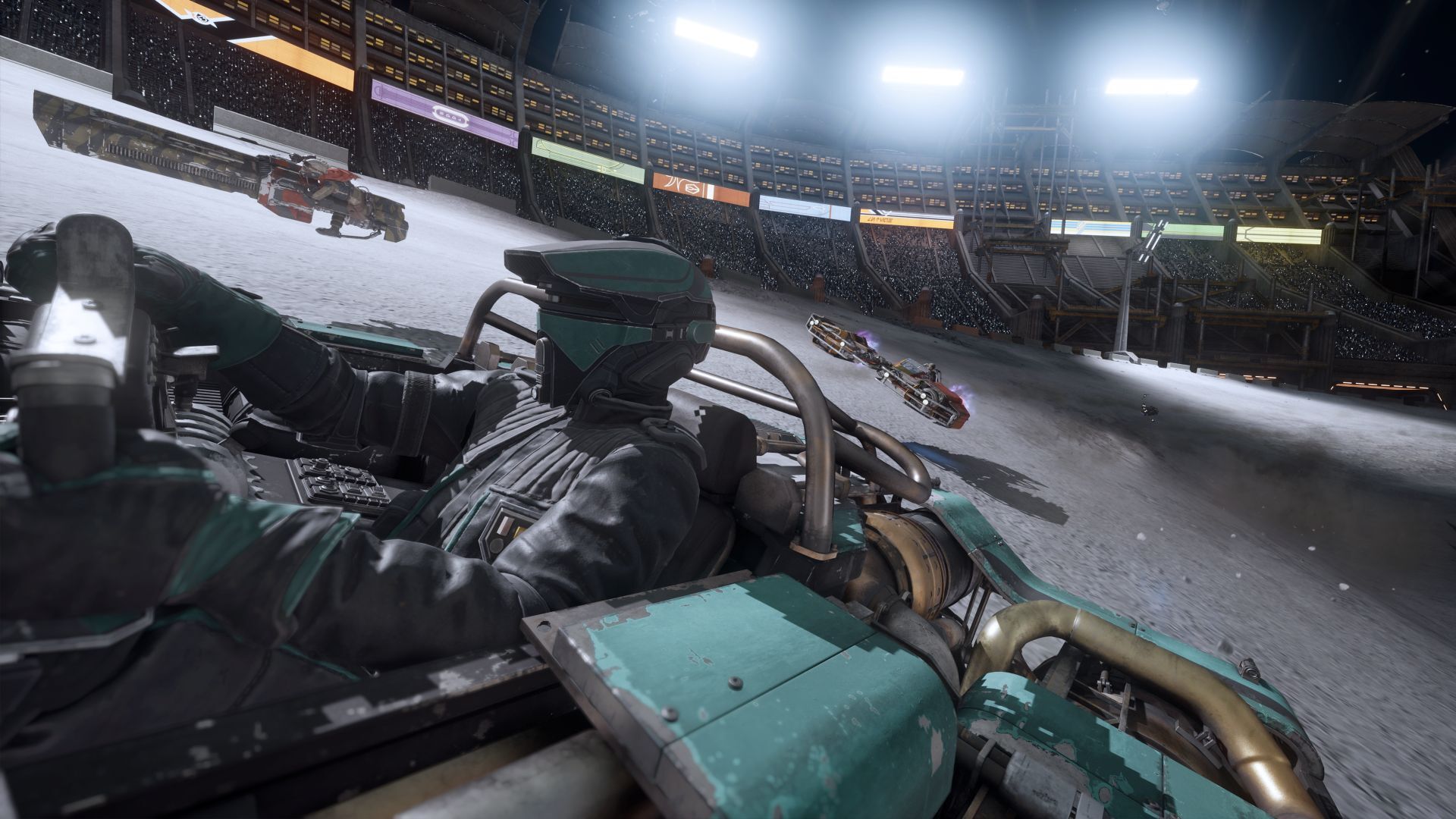 What makes repulsorcraft in Star Wars: Galactic Racer™ feel different to pilot compared to driving a car or motorcycle in a traditional racing game?
“In a lot of ways, the repulsorcraft are similar to traditional cars, bikes or planes,” Mark tells us, “but something that was different, and unique to Star Wars™ is that the traction model is just not present. In fact, one of the first prototypes we built used a traction model that was in line with my history of building wheeled vehicles. If we look back to the earlier Star Wars films, they filmed the repulsorcraft scenes with cars and used mirrors to obscure the tyres, so it initially made sense to model them that way. What we quickly realised is that we were using a traction model that is bound to the surface, but repulsorcraft do not lay their grip onto the ground based on the surface, they do it through technological means. By removing traction, we were able to explore a multitude of terrain types and gradients to build excitement and spectacle as well as challenge. But notably, when you remove traction, what does that unlock? Speed. A lot of speed.”
What makes repulsorcraft in Star Wars: Galactic Racer™ feel different to pilot compared to driving a car or motorcycle in a traditional racing game?
“In a lot of ways, the repulsorcraft are similar to traditional cars, bikes or planes,” Mark tells us, “but something that was different, and unique to Star Wars™ is that the traction model is just not present. In fact, one of the first prototypes we built used a traction model that was in line with my history of building wheeled vehicles. If we look back to the earlier Star Wars films, they filmed the repulsorcraft scenes with cars and used mirrors to obscure the tyres, so it initially made sense to model them that way. What we quickly realised is that we were using a traction model that is bound to the surface, but repulsorcraft do not lay their grip onto the ground based on the surface, they do it through technological means. By removing traction, we were able to explore a multitude of terrain types and gradients to build excitement and spectacle as well as challenge. But notably, when you remove traction, what does that unlock? Speed. A lot of speed.”
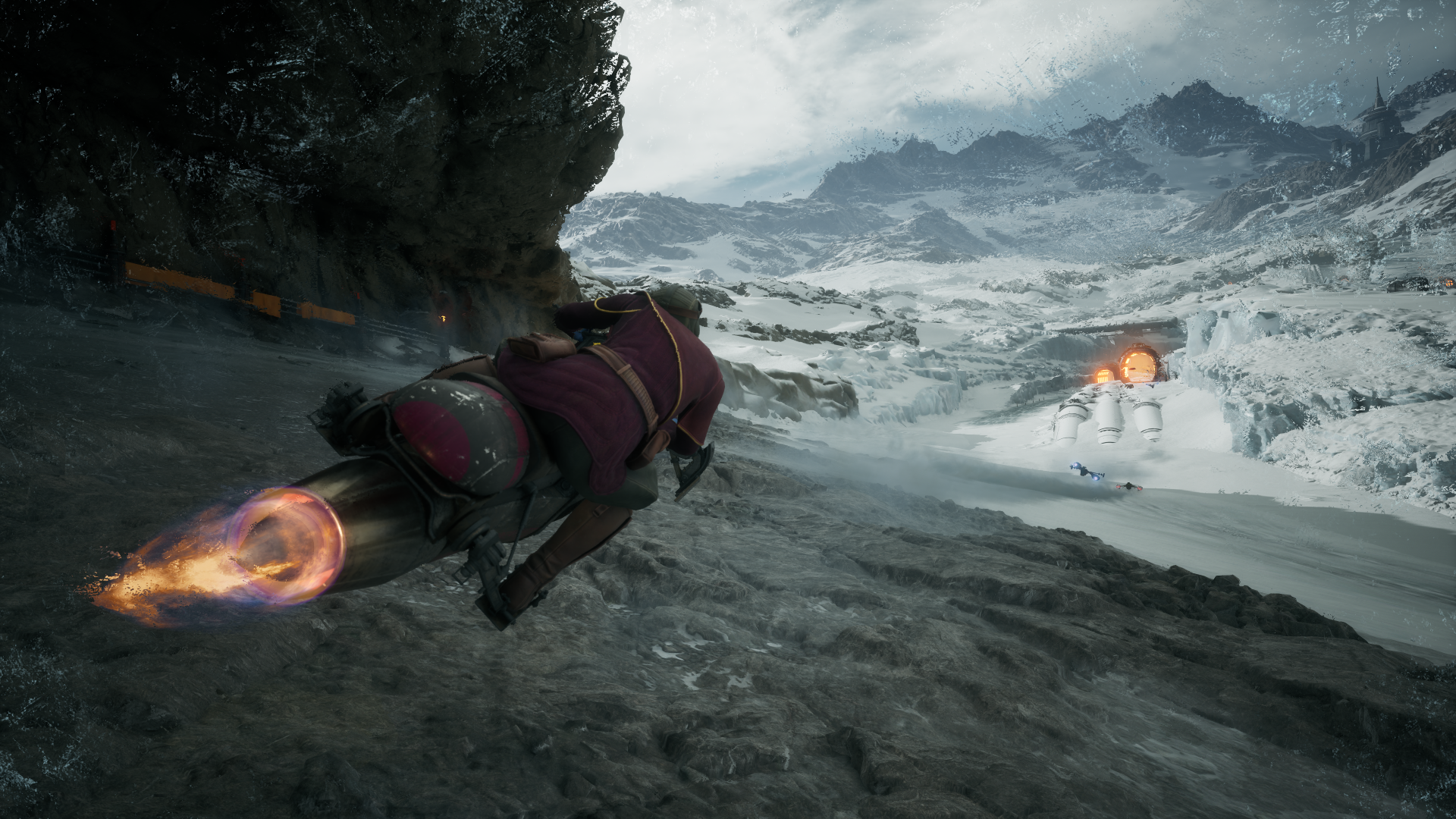 “Interestingly, I think the journey that I went on with this game was realising how similar cars, bikes, planes and repulsorcraft are!” Bill replies, “the vehicles need to be grounded in physical reality more than I initially expected. Landspeeders need to drive like cars, mostly. Speeder bikes need to drive like bikes, mostly. So, when we invented skim speeders, in collaboration with Lucasfilm Games, we didn’t just throw all caution to the wind and create anything. It needed to drive like a plane because that’s a real-world analogue. It needed to be grounded in reality somewhat so we could still achieve that physical simulation to get the player immersed. Podracers are similarly based more on real-world vehicles than I was expecting, but in a different way. They're essentially horse and chariot meets Formula 1. George Lucas was a huge automotive fan, right? So, it was interesting working with Lucasfilm Games on the iteration process and seeing how grounded in reality they wanted each repulsorcraft to be. A lot of our journey with vehicles was about making them feel closer to the real-world simulation so we could capture a strong sense of game feel. Once you’ve nailed that - you have creative license to do some really cool stuff on top.”
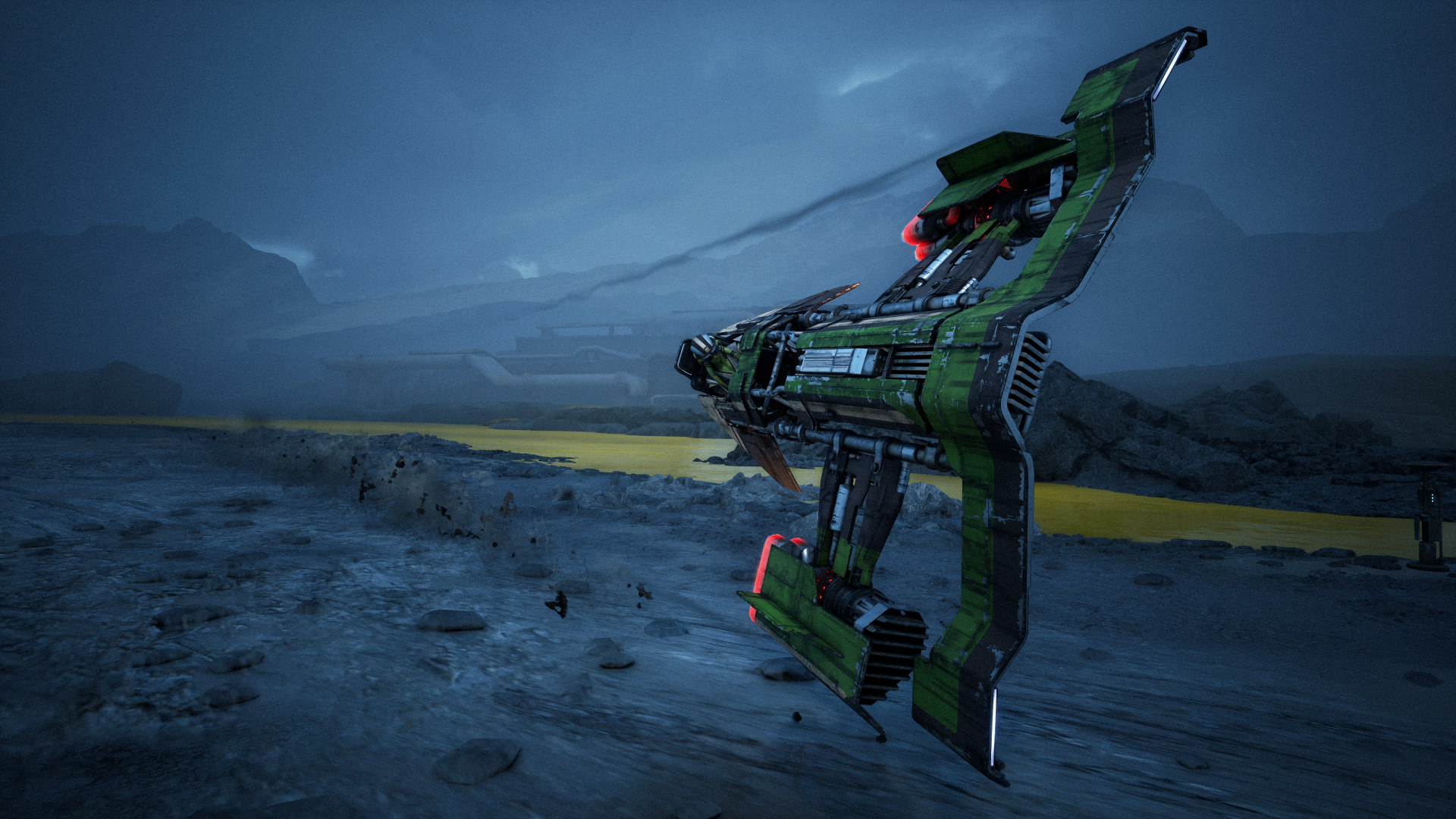 Mark agrees: “That’s right. The vehicles still feel intuitive and familiar to players because they're grounded in both the real-world and the Star Wars galaxy. And the technology, although fantastical, doesn’t feel like a far reach from things. The players can pick up the game and expect it to work in a way that seems sensible, rather than learning a whole new alien paradigm just to play a game. Creating the skim speeder in particular was great in this respect because that was an area we could truly invent within Star Wars. Once we have that grounded experience of how piloting a plane might feel: we can jump off from that and design the skim speeder to have its own DNA - like the fact that it has knife edge capabilities to allow it to snap around corners and take off at speed.”
How did you weave these real-world references into these iconic Star Wars vehicles?
Bill jumps in: “Reference has been so key to our vehicle designs. Obviously, the key reference from the movies has been our most definitive version. But we also looked at real world references: like the footage of Red Bull Air Race and watching planes go through slalom gates for the skim speeder or looking at rally cars and Paris-Dakar off-roaders for landspeeder. For example, the way that the rider animates on speeder bikes is to make sure that the rider is leading the bike's motion, because that’s what happens in real-life. It was incredibly important that our references came both from Star Wars and from the real world.”
Mark agrees: “That’s right. The vehicles still feel intuitive and familiar to players because they're grounded in both the real-world and the Star Wars galaxy. And the technology, although fantastical, doesn’t feel like a far reach from things. The players can pick up the game and expect it to work in a way that seems sensible, rather than learning a whole new alien paradigm just to play a game. Creating the skim speeder in particular was great in this respect because that was an area we could truly invent within Star Wars. Once we have that grounded experience of how piloting a plane might feel: we can jump off from that and design the skim speeder to have its own DNA - like the fact that it has knife edge capabilities to allow it to snap around corners and take off at speed.”
How did you weave these real-world references into these iconic Star Wars vehicles?
Bill jumps in: “Reference has been so key to our vehicle designs. Obviously, the key reference from the movies has been our most definitive version. But we also looked at real world references: like the footage of Red Bull Air Race and watching planes go through slalom gates for the skim speeder or looking at rally cars and Paris-Dakar off-roaders for landspeeder. For example, the way that the rider animates on speeder bikes is to make sure that the rider is leading the bike's motion, because that’s what happens in real-life. It was incredibly important that our references came both from Star Wars and from the real world.”
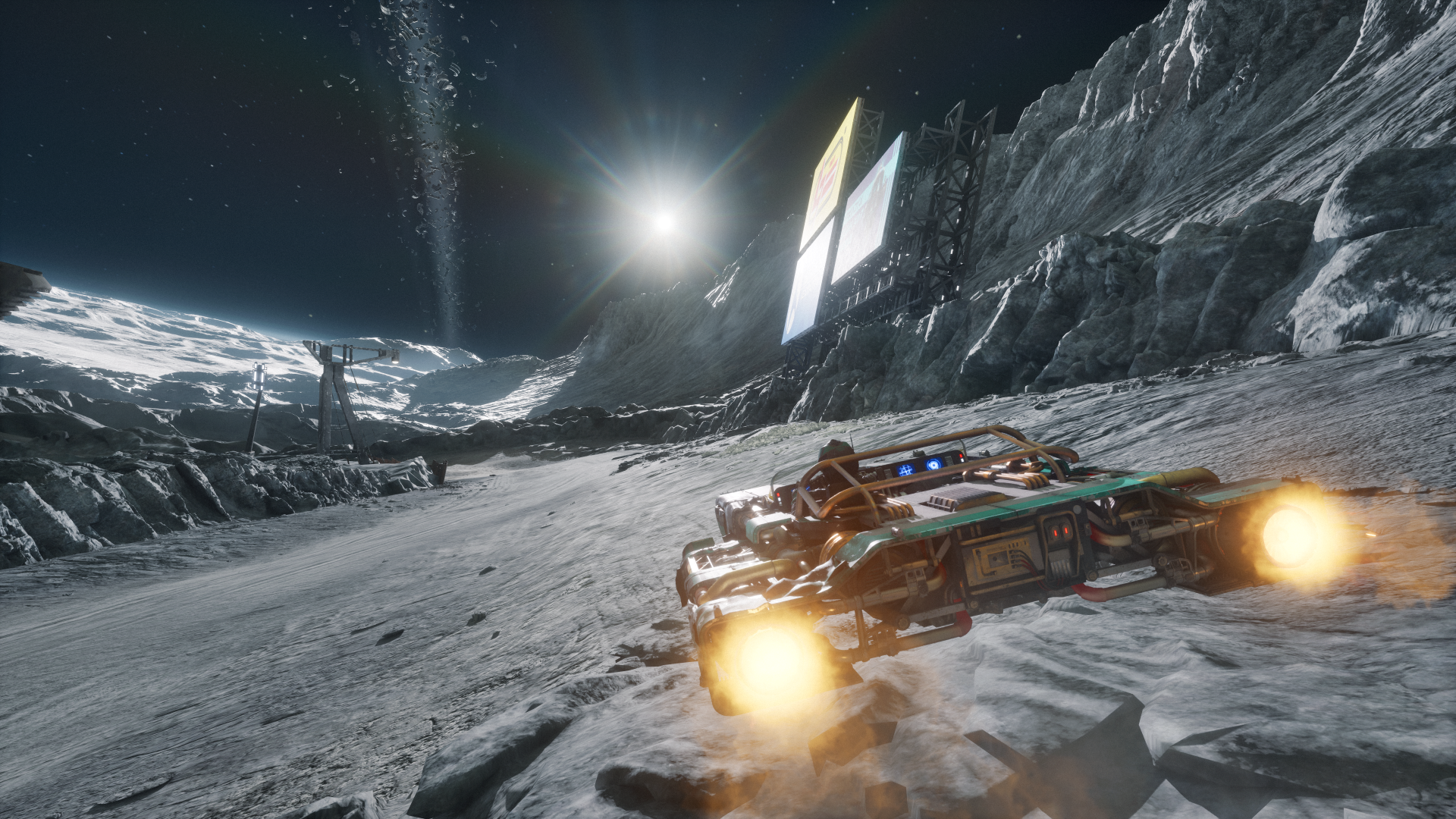 When it comes to a sense of speed in Star Wars: Galactic Racer, which vehicle do you think feels the fastest to pilot?
"The podracer," Mark says. "It was very important for us to make the podracer feel like a pinnacle racing vehicle. We’re fielding so many different expectations with podracers, from the movies, years of comic books, other games, even player’s own imaginations. I think we reached a really nice balance between achieving that pinnacle feel as well as ensuring that as many people as possible can pick up the game and play."
When it comes to a sense of speed in Star Wars: Galactic Racer, which vehicle do you think feels the fastest to pilot?
"The podracer," Mark says. "It was very important for us to make the podracer feel like a pinnacle racing vehicle. We’re fielding so many different expectations with podracers, from the movies, years of comic books, other games, even player’s own imaginations. I think we reached a really nice balance between achieving that pinnacle feel as well as ensuring that as many people as possible can pick up the game and play."
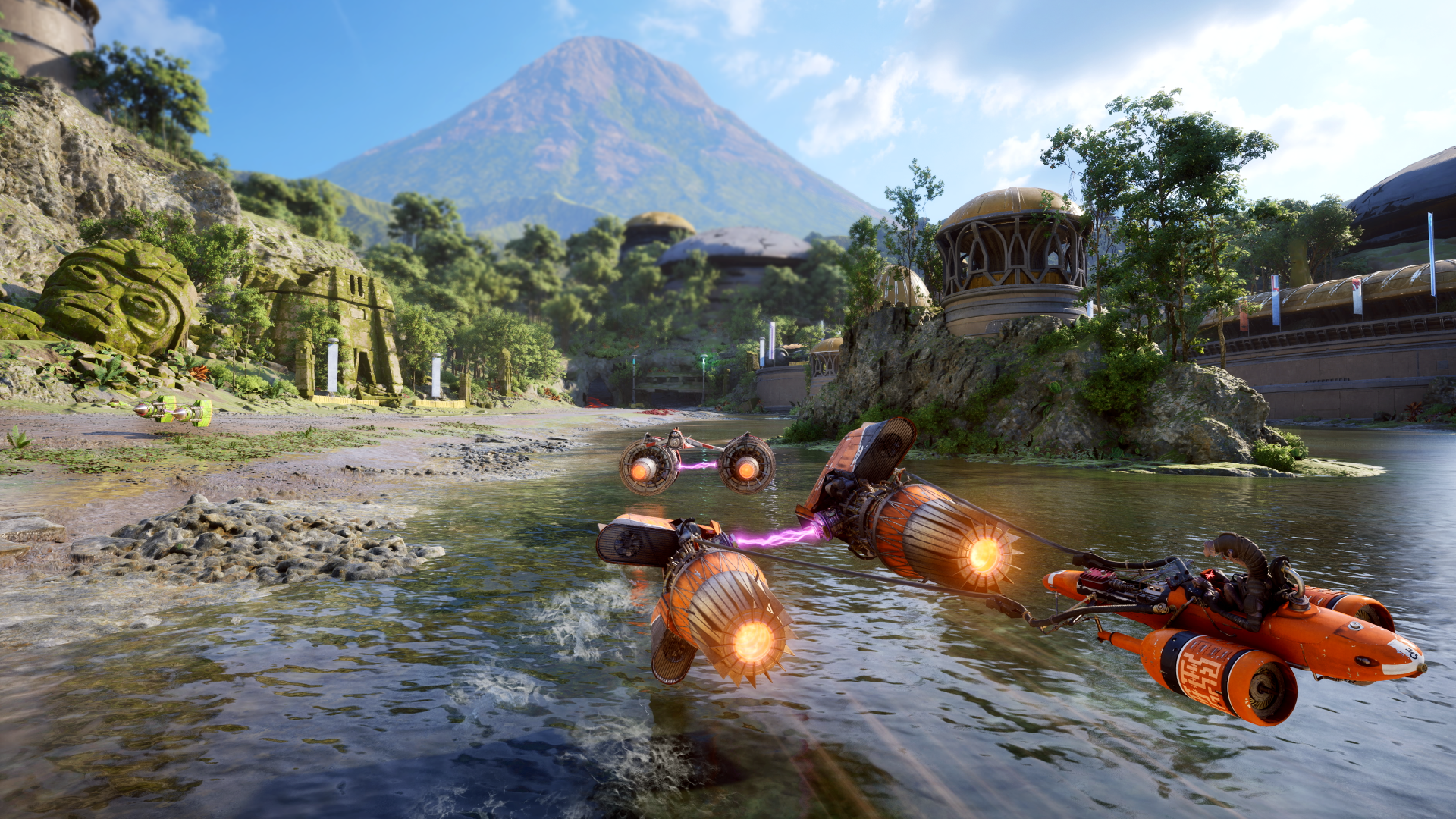 To finish up, what has been the toughest challenge and greatest success when it comes to achieving the game feel that you wanted for Star Wars: Galactic Racer?
“For me, it was getting the balance between expectation of speed, but maintaining appropriate level of challenge,” Mark answers. “That’s been tough. People know how fast these vehicles go. And I’m fairly certain in older games, they took some liberty with speed, but we’ve stayed true to scale and speed. It’s been challenging building a level of tracks that support not only high speeds, but a very wide speed range. We have tracks that you can do at 300 kilometres an hour, and 1000 kilometres an hour - and we have to make sure that it plays well in both of those settings.
"But the greatest challenge overall was reconciling ground detection in vehicles that hover. Vehicles that defy laws of science bring about all sorts of uncomfortable questions: like what effect does undulating terrain have on this vehicle? What happens when you’re going at high speed, versus low speed? What would happen if you're doing these speeds and some of these jumps at the angles you're doing? So, it’s treading the line between intuitive physics that aren’t classically correct but still feel right. Getting that core baseline correct was so important before we started layering abilities, parts and upgrades on top. I think that was my greatest success: allowing myself to have the confidence that we could maintain our core game feel alongside the breadth of new mechanics we brought in.”
To finish up, what has been the toughest challenge and greatest success when it comes to achieving the game feel that you wanted for Star Wars: Galactic Racer?
“For me, it was getting the balance between expectation of speed, but maintaining appropriate level of challenge,” Mark answers. “That’s been tough. People know how fast these vehicles go. And I’m fairly certain in older games, they took some liberty with speed, but we’ve stayed true to scale and speed. It’s been challenging building a level of tracks that support not only high speeds, but a very wide speed range. We have tracks that you can do at 300 kilometres an hour, and 1000 kilometres an hour - and we have to make sure that it plays well in both of those settings.
"But the greatest challenge overall was reconciling ground detection in vehicles that hover. Vehicles that defy laws of science bring about all sorts of uncomfortable questions: like what effect does undulating terrain have on this vehicle? What happens when you’re going at high speed, versus low speed? What would happen if you're doing these speeds and some of these jumps at the angles you're doing? So, it’s treading the line between intuitive physics that aren’t classically correct but still feel right. Getting that core baseline correct was so important before we started layering abilities, parts and upgrades on top. I think that was my greatest success: allowing myself to have the confidence that we could maintain our core game feel alongside the breadth of new mechanics we brought in.”
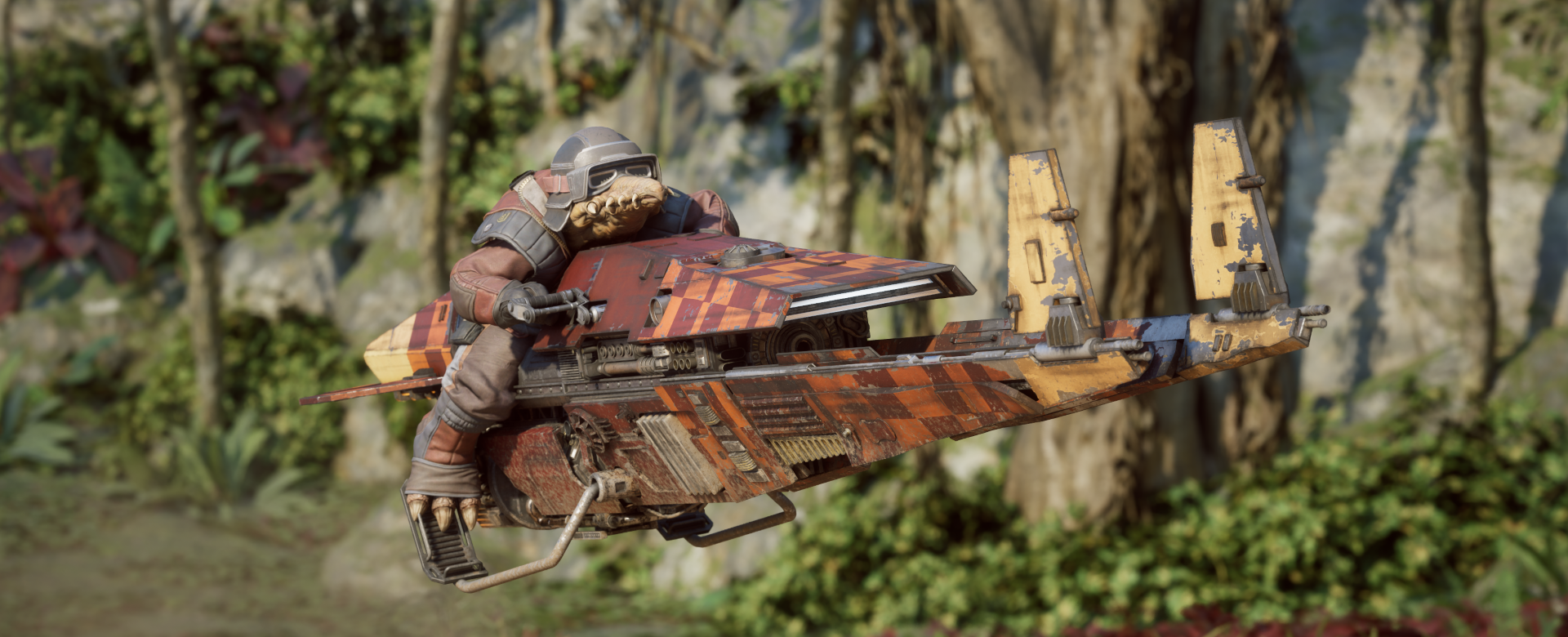 “I’ll defer to Mark, on to what the hardest bit was…” Bill laughs, “but I have to call out three really great successes. Firstly, I’m really proud of the ramjet mechanic. I’ve always loved a good, new boost mechanic, and this one is truly game defining. Also, I want to specifically call out the audio team for contributing to game feel. A huge percentage of what makes something feel satisfying to play is audio - and the team really nailed it. Finally, the sense of speed. We always knew it had to be incredible. That’s what everyone remembers, from the movies to Episode I: Racer. From the start, I was worried we wouldn’t get it but now when we play the game, particularly to the end of the campaign, we get to build that sense of speed and more. It feels like the fastest thing we’ve ever made. Shockingly fast. To the extent that we’re a little worried how players will handle it! But we all know the players will get there. That’s what the journey through the Galactic League is all about: learning how to become an elite racing pilot.”
© & ™ Lucasfilm LTD 2026.
“I’ll defer to Mark, on to what the hardest bit was…” Bill laughs, “but I have to call out three really great successes. Firstly, I’m really proud of the ramjet mechanic. I’ve always loved a good, new boost mechanic, and this one is truly game defining. Also, I want to specifically call out the audio team for contributing to game feel. A huge percentage of what makes something feel satisfying to play is audio - and the team really nailed it. Finally, the sense of speed. We always knew it had to be incredible. That’s what everyone remembers, from the movies to Episode I: Racer. From the start, I was worried we wouldn’t get it but now when we play the game, particularly to the end of the campaign, we get to build that sense of speed and more. It feels like the fastest thing we’ve ever made. Shockingly fast. To the extent that we’re a little worried how players will handle it! But we all know the players will get there. That’s what the journey through the Galactic League is all about: learning how to become an elite racing pilot.”
© & ™ Lucasfilm LTD 2026.
Original post
Game Director Bill Lane (right) with Design Director Mark Bridges (left).
Fun fact: Alongside rallying the team as Design Director, Mark also used this theatre skills to bring the character of our titular antagonist Kestar Bool to life in our motion capture shoots.
What actually is ‘game feel’, and why is it important?
Game feel is somewhat of an elusive term in the games industry. Many people equate it to player experience, but our developers see it differently: simply put, it’s the physical sensation of control in a game. But there is so much more to it than that.
“When you experience things in the real world, you get sensory inputs like touch, sight, smell,” Mark answers. “Those are reduced to a smaller set when you’re playing games, but we still have the ambition to deliver those same heady heights of emotion. And to do that, we leverage techniques in the game to deliver that feedback to help hit those same sensations. You often see content creators on YouTube calling out things like camera shakes, and VFX as being game feel. But the core difference between games and other forms of entertainment like cinema is, of course, interaction, the cause-and-effect aspect, when you feel like you are making a tangible impact on a simulated world. That’s where you get game feel.”
Mark goes on to tell us that there is a unique challenge achieving game feel when it comes to racing games: “We can recreate the strategy and skill from real world racing quite easily by creating NPCs to race against with acceleration profiles and drafting and things like that. But the physical sensation of exhilaration is harder to recreate. It’s fundamental to us at Fuse, as developers, to ask ourselves: how do we create that same set of emotions to crossing a finish line when someone is sat on their sofa at home? We have to trick part of the brain, the amygdala, into thinking that there is a real sense of tension, exhilaration and stress. We want people to feel their hair on the backs of their neck stand up as they cross that line - even if it is just pixels on a screen. Part of that is manufacturing emotions, or similar emotions that you would feel if you were in those races yourself.”
What makes repulsorcraft in Star Wars: Galactic Racer™ feel different to pilot compared to driving a car or motorcycle in a traditional racing game?
“In a lot of ways, the repulsorcraft are similar to traditional cars, bikes or planes,” Mark tells us, “but something that was different, and unique to Star Wars™ is that the traction model is just not present. In fact, one of the first prototypes we built used a traction model that was in line with my history of building wheeled vehicles. If we look back to the earlier Star Wars films, they filmed the repulsorcraft scenes with cars and used mirrors to obscure the tyres, so it initially made sense to model them that way. What we quickly realised is that we were using a traction model that is bound to the surface, but repulsorcraft do not lay their grip onto the ground based on the surface, they do it through technological means. By removing traction, we were able to explore a multitude of terrain types and gradients to build excitement and spectacle as well as challenge. But notably, when you remove traction, what does that unlock? Speed. A lot of speed.”
“Interestingly, I think the journey that I went on with this game was realising how similar cars, bikes, planes and repulsorcraft are!” Bill replies, “the vehicles need to be grounded in physical reality more than I initially expected. Landspeeders need to drive like cars, mostly. Speeder bikes need to drive like bikes, mostly. So, when we invented skim speeders, in collaboration with Lucasfilm Games, we didn’t just throw all caution to the wind and create anything. It needed to drive like a plane because that’s a real-world analogue. It needed to be grounded in reality somewhat so we could still achieve that physical simulation to get the player immersed. Podracers are similarly based more on real-world vehicles than I was expecting, but in a different way. They're essentially horse and chariot meets Formula 1. George Lucas was a huge automotive fan, right? So, it was interesting working with Lucasfilm Games on the iteration process and seeing how grounded in reality they wanted each repulsorcraft to be. A lot of our journey with vehicles was about making them feel closer to the real-world simulation so we could capture a strong sense of game feel. Once you’ve nailed that - you have creative license to do some really cool stuff on top.”
Mark agrees: “That’s right. The vehicles still feel intuitive and familiar to players because they're grounded in both the real-world and the Star Wars galaxy. And the technology, although fantastical, doesn’t feel like a far reach from things. The players can pick up the game and expect it to work in a way that seems sensible, rather than learning a whole new alien paradigm just to play a game. Creating the skim speeder in particular was great in this respect because that was an area we could truly invent within Star Wars. Once we have that grounded experience of how piloting a plane might feel: we can jump off from that and design the skim speeder to have its own DNA - like the fact that it has knife edge capabilities to allow it to snap around corners and take off at speed.”
How did you weave these real-world references into these iconic Star Wars vehicles?
Bill jumps in: “Reference has been so key to our vehicle designs. Obviously, the key reference from the movies has been our most definitive version. But we also looked at real world references: like the footage of Red Bull Air Race and watching planes go through slalom gates for the skim speeder or looking at rally cars and Paris-Dakar off-roaders for landspeeder. For example, the way that the rider animates on speeder bikes is to make sure that the rider is leading the bike's motion, because that’s what happens in real-life. It was incredibly important that our references came both from Star Wars and from the real world.”
When it comes to a sense of speed in Star Wars: Galactic Racer, which vehicle do you think feels the fastest to pilot?
"The podracer," Mark says. "It was very important for us to make the podracer feel like a pinnacle racing vehicle. We’re fielding so many different expectations with podracers, from the movies, years of comic books, other games, even player’s own imaginations. I think we reached a really nice balance between achieving that pinnacle feel as well as ensuring that as many people as possible can pick up the game and play."
To finish up, what has been the toughest challenge and greatest success when it comes to achieving the game feel that you wanted for Star Wars: Galactic Racer?
“For me, it was getting the balance between expectation of speed, but maintaining appropriate level of challenge,” Mark answers. “That’s been tough. People know how fast these vehicles go. And I’m fairly certain in older games, they took some liberty with speed, but we’ve stayed true to scale and speed. It’s been challenging building a level of tracks that support not only high speeds, but a very wide speed range. We have tracks that you can do at 300 kilometres an hour, and 1000 kilometres an hour - and we have to make sure that it plays well in both of those settings.
"But the greatest challenge overall was reconciling ground detection in vehicles that hover. Vehicles that defy laws of science bring about all sorts of uncomfortable questions: like what effect does undulating terrain have on this vehicle? What happens when you’re going at high speed, versus low speed? What would happen if you're doing these speeds and some of these jumps at the angles you're doing? So, it’s treading the line between intuitive physics that aren’t classically correct but still feel right. Getting that core baseline correct was so important before we started layering abilities, parts and upgrades on top. I think that was my greatest success: allowing myself to have the confidence that we could maintain our core game feel alongside the breadth of new mechanics we brought in.”
“I’ll defer to Mark, on to what the hardest bit was…” Bill laughs, “but I have to call out three really great successes. Firstly, I’m really proud of the ramjet mechanic. I’ve always loved a good, new boost mechanic, and this one is truly game defining. Also, I want to specifically call out the audio team for contributing to game feel. A huge percentage of what makes something feel satisfying to play is audio - and the team really nailed it. Finally, the sense of speed. We always knew it had to be incredible. That’s what everyone remembers, from the movies to Episode I: Racer. From the start, I was worried we wouldn’t get it but now when we play the game, particularly to the end of the campaign, we get to build that sense of speed and more. It feels like the fastest thing we’ve ever made. Shockingly fast. To the extent that we’re a little worried how players will handle it! But we all know the players will get there. That’s what the journey through the Galactic League is all about: learning how to become an elite racing pilot.”
© & ™ Lucasfilm LTD 2026.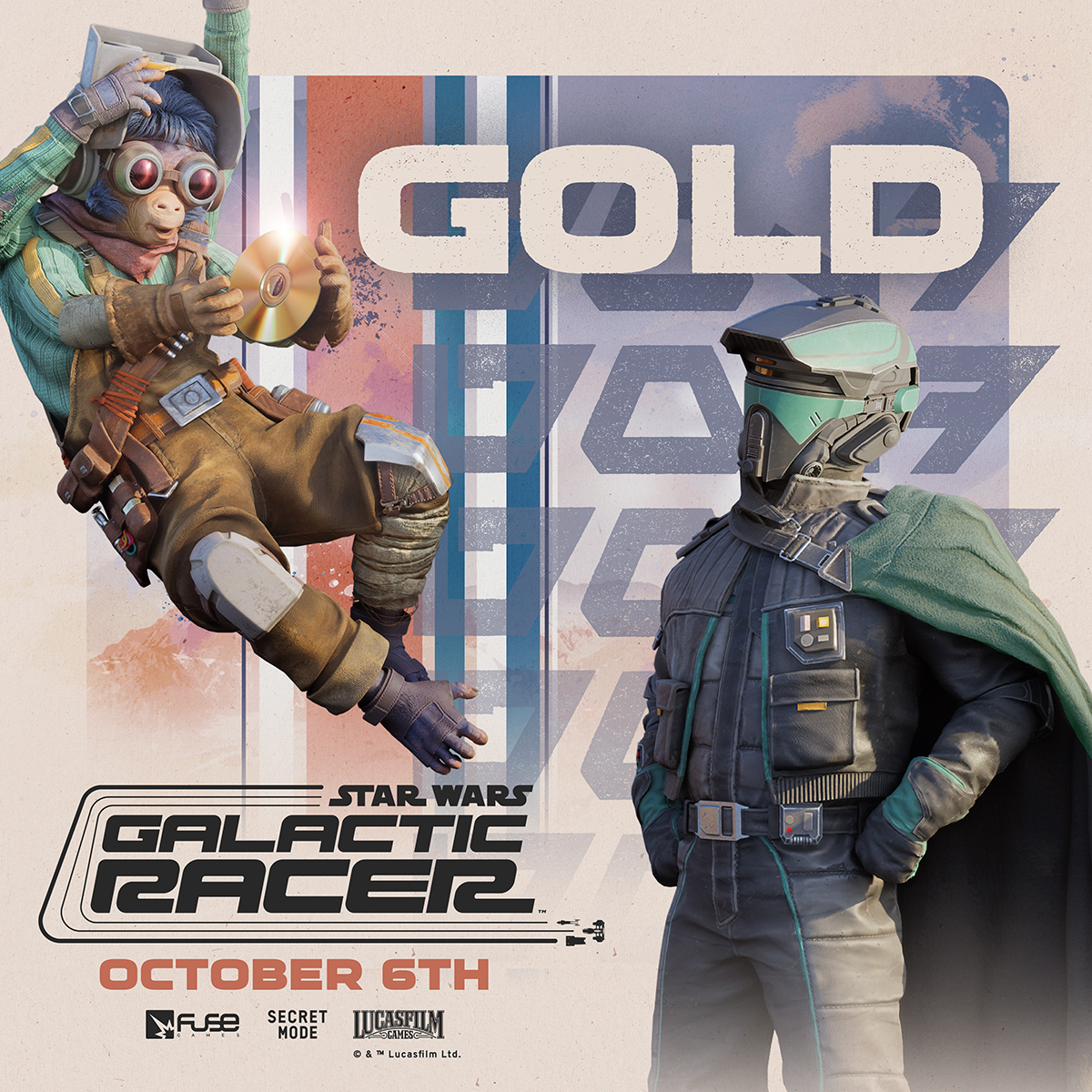 But what does "Going Gold" actually mean and why is this such a major milestone?
Here's what Matt Webster, CEO and co-founder of Fuse Games, had to say about this achievement:
"Going Gold is a traditional term in gaming that denotes when a game is finished and ready for release to manufacture. It refers to the days where a Gold disc was created as a master to then press physical copies.
For a team, it's a significant milestone. It represents all the effort, talent, sacrifice, and learning that's poured in to creating a video game. The finalling process in development is a real challenge. We're wired to see all that's wrong with our creation and want to make everything even better but, as we look ahead to release, we're thrilled with the game that we've made as an expression of the vision that we brought together just after we started Fuse in 2023.
We want to bring the best expression of our vision that we can to players, bringing art and science together to get through our quality targets, through the QA and certification processes at publishers and first party partners to reach Gold is worth a celebration and so we're sharing that with you all today. We can't wait to see and hear what you think of the game we've built."
Star Wars: Galactic Racer will be launching worldwide on October 6th and is available to pre-order today!
But what does "Going Gold" actually mean and why is this such a major milestone?
Here's what Matt Webster, CEO and co-founder of Fuse Games, had to say about this achievement:
"Going Gold is a traditional term in gaming that denotes when a game is finished and ready for release to manufacture. It refers to the days where a Gold disc was created as a master to then press physical copies.
For a team, it's a significant milestone. It represents all the effort, talent, sacrifice, and learning that's poured in to creating a video game. The finalling process in development is a real challenge. We're wired to see all that's wrong with our creation and want to make everything even better but, as we look ahead to release, we're thrilled with the game that we've made as an expression of the vision that we brought together just after we started Fuse in 2023.
We want to bring the best expression of our vision that we can to players, bringing art and science together to get through our quality targets, through the QA and certification processes at publishers and first party partners to reach Gold is worth a celebration and so we're sharing that with you all today. We can't wait to see and hear what you think of the game we've built."
Star Wars: Galactic Racer will be launching worldwide on October 6th and is available to pre-order today!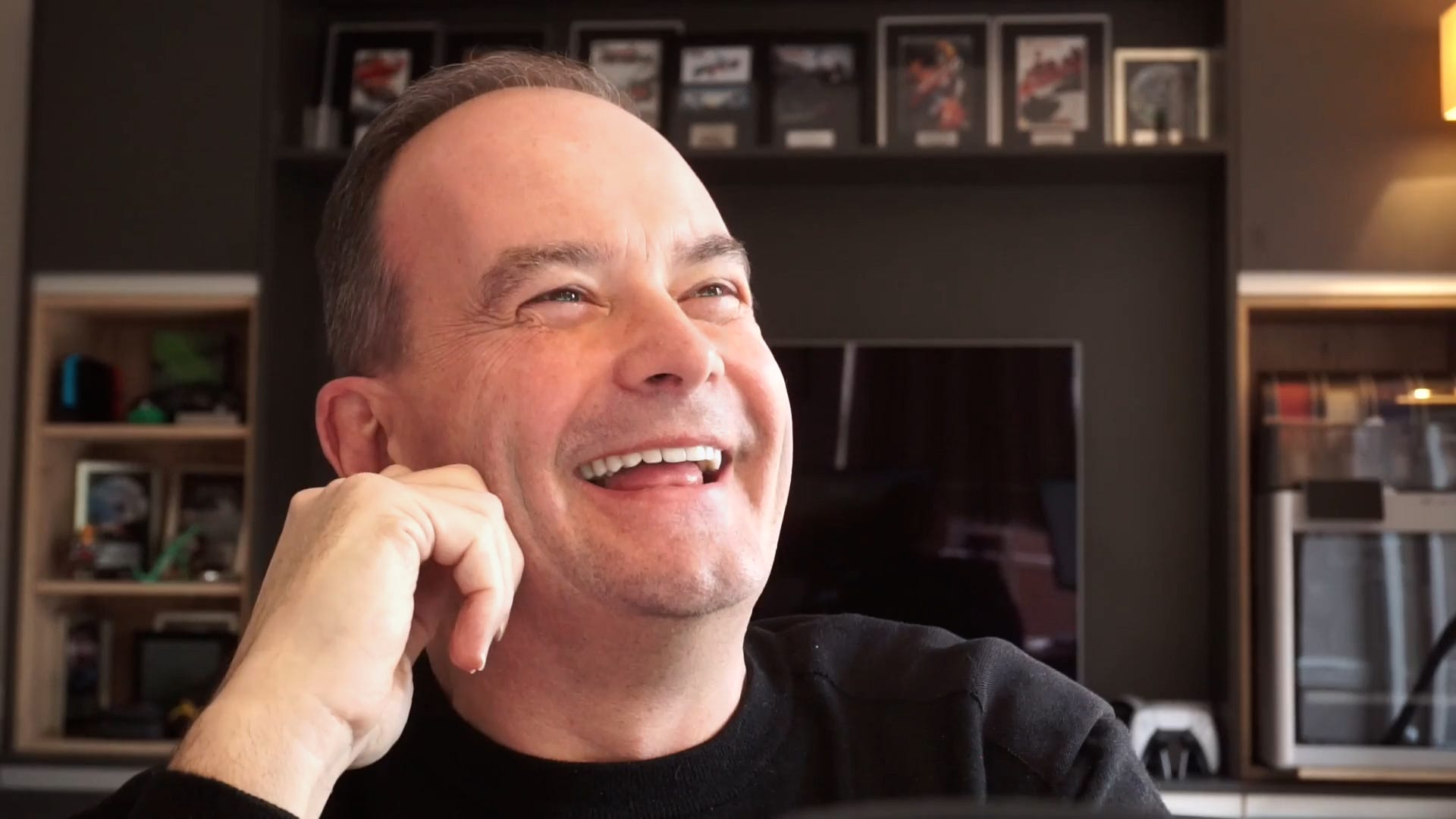 Throughout my 32-year career at Electronic Arts I was incredibly fortunate to work on, and help build, a number of great teams, and great teams create great games. Whilst working on the Burnout series, the real power of game ‘feel’ struck me - that sense of deep connection and satisfaction with how you control a vehicle, or a character, in a video game. Games are an interactive entertainment medium, so the quality of those interactions, for me, are extraordinarily important. It helps suspend disbelief and is a huge part of the fantasy fulfilment that games have for players.
A racing game has to make players believe that they can expertly handle a vehicle at very high-speed at the edge of control. It also has to be approachable in that many people can immediately get an exciting speed fantasy and yet have accessible depth that compels players to strive for mastery. The feeling of risk and reward needs to be compelling, and players must feel they are making meaningful, consequential decisions, and learning to get better every time they play.
All of my experience over the years enabled me to bring lessons learned from the past into a new future. Together with four co-founders, when we founded Fuse Games, our goal was to create a world-class, genre leading studio that ‘fuses' uncompromising attention with game feel and innovative play, and compelling technical and visual / audio execution. To do that we needed to build a modern, high-performing team that combines deep experience with fresh game making talent - we want to have a studio that’s built to last. Star Wars: Galactic Racer™ is the first representation of Fuse Games to the world, making it an incredibly special project.
Throughout my 32-year career at Electronic Arts I was incredibly fortunate to work on, and help build, a number of great teams, and great teams create great games. Whilst working on the Burnout series, the real power of game ‘feel’ struck me - that sense of deep connection and satisfaction with how you control a vehicle, or a character, in a video game. Games are an interactive entertainment medium, so the quality of those interactions, for me, are extraordinarily important. It helps suspend disbelief and is a huge part of the fantasy fulfilment that games have for players.
A racing game has to make players believe that they can expertly handle a vehicle at very high-speed at the edge of control. It also has to be approachable in that many people can immediately get an exciting speed fantasy and yet have accessible depth that compels players to strive for mastery. The feeling of risk and reward needs to be compelling, and players must feel they are making meaningful, consequential decisions, and learning to get better every time they play.
All of my experience over the years enabled me to bring lessons learned from the past into a new future. Together with four co-founders, when we founded Fuse Games, our goal was to create a world-class, genre leading studio that ‘fuses' uncompromising attention with game feel and innovative play, and compelling technical and visual / audio execution. To do that we needed to build a modern, high-performing team that combines deep experience with fresh game making talent - we want to have a studio that’s built to last. Star Wars: Galactic Racer™ is the first representation of Fuse Games to the world, making it an incredibly special project.
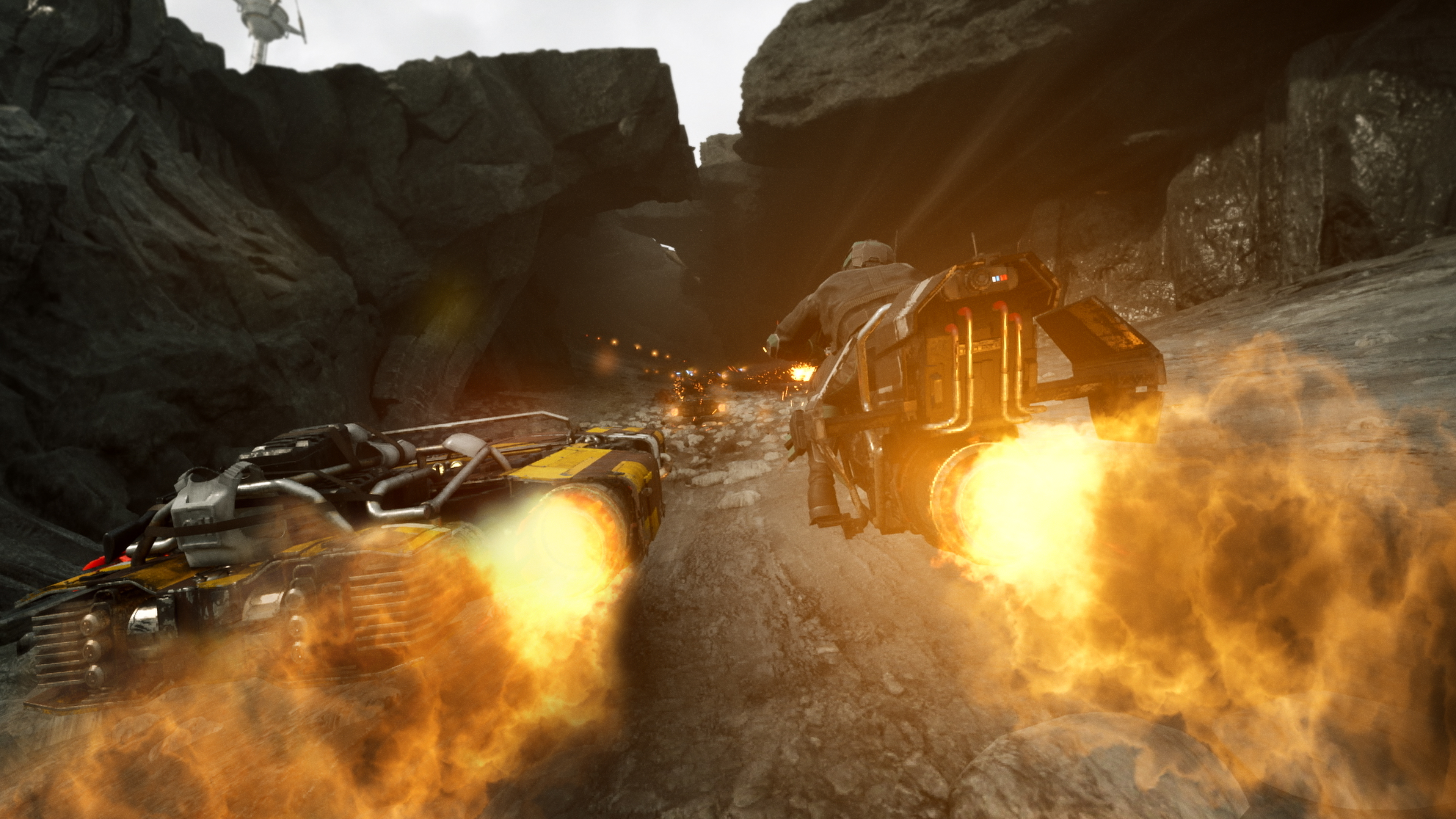 We’re fortunate enough to have worked in collaboration with the incredible folks at Lucasfilm Games before, so an idea for Fuse’s first game was to bring our love of racing and our love of Star Wars™ together. And like many good ideas, the more we thought about it, the more we fell in love with it! Presenting and sharing our ideas with Lucasfilm Games led to a creative collaboration that became the concept for Star Wars: Galactic Racer. This close partnership has extended over the years of development, and as we looked ahead to launch, we’re reminded how exciting, and humbling, it is to be part of the team building a new Star Wars racing game after such a long time.
In Galactic Racer, the fantasy is to be an elite racing pilot in the Star Wars galaxy. We want players to feel that fantasy, to be wowed by incredible speed, and to be totally immersed in an emerging racing series in a galaxy far, far away. We want to see the creativity of players creating builds that suit how they want to race. Learning how these vehicles handle and how vehicle parts, upgrades and abilities come together in builds that they can pit against the environments across the Outer Rim and beyond. Earning rewards from challenging risks and pushing themselves to compete against new and familiar faces.
© & ™ Lucasfilm LTD 2026.
We’re fortunate enough to have worked in collaboration with the incredible folks at Lucasfilm Games before, so an idea for Fuse’s first game was to bring our love of racing and our love of Star Wars™ together. And like many good ideas, the more we thought about it, the more we fell in love with it! Presenting and sharing our ideas with Lucasfilm Games led to a creative collaboration that became the concept for Star Wars: Galactic Racer. This close partnership has extended over the years of development, and as we looked ahead to launch, we’re reminded how exciting, and humbling, it is to be part of the team building a new Star Wars racing game after such a long time.
In Galactic Racer, the fantasy is to be an elite racing pilot in the Star Wars galaxy. We want players to feel that fantasy, to be wowed by incredible speed, and to be totally immersed in an emerging racing series in a galaxy far, far away. We want to see the creativity of players creating builds that suit how they want to race. Learning how these vehicles handle and how vehicle parts, upgrades and abilities come together in builds that they can pit against the environments across the Outer Rim and beyond. Earning rewards from challenging risks and pushing themselves to compete against new and familiar faces.
© & ™ Lucasfilm LTD 2026.