
Build 0.991.50.2155
Hey folks! The August update has passed Beta and is now live! This includes some future-proofing work for system builders and ship modelers, as well as catalog adjustments made from community notes and the addition of the first-of-its-kind exosatellite CD-35 2722 B b. We've writt
Hey folks!
The August update has passed Beta and is now live! This includes some future-proofing work for system builders and ship modelers, as well as catalog adjustments made from community notes and the addition of the first-of-its-kind exosatellite CD-35 2722 B b. We've written up extra details on some of the more involved additions for your perusal below:
New Spacecraft Material Config Options:
[p align="start"]Spacecraft material definitions now support two new features: texture gamma correction and green channel inversion for DirectX normal maps.[p align="start"]SpaceEngine expects all input textures and colors to be in linear values (albedo). Most modern PBR textures are authored to this standard, but almost all older/non-PBR textures are not, and need to be converted to linear values for use in SpaceEngine. Otherwise, they will look too light/washed out. SE now supports this via the DiffGamma and EmisGamma parameters for diffuse and emissive textures, respectively. Assigning them a negative number, like -1, will cause sRGB->linear conversion to be used (this is what you want most of the time). Positive values will use a simple fixed power gamma correction, using the provided value as the exponent.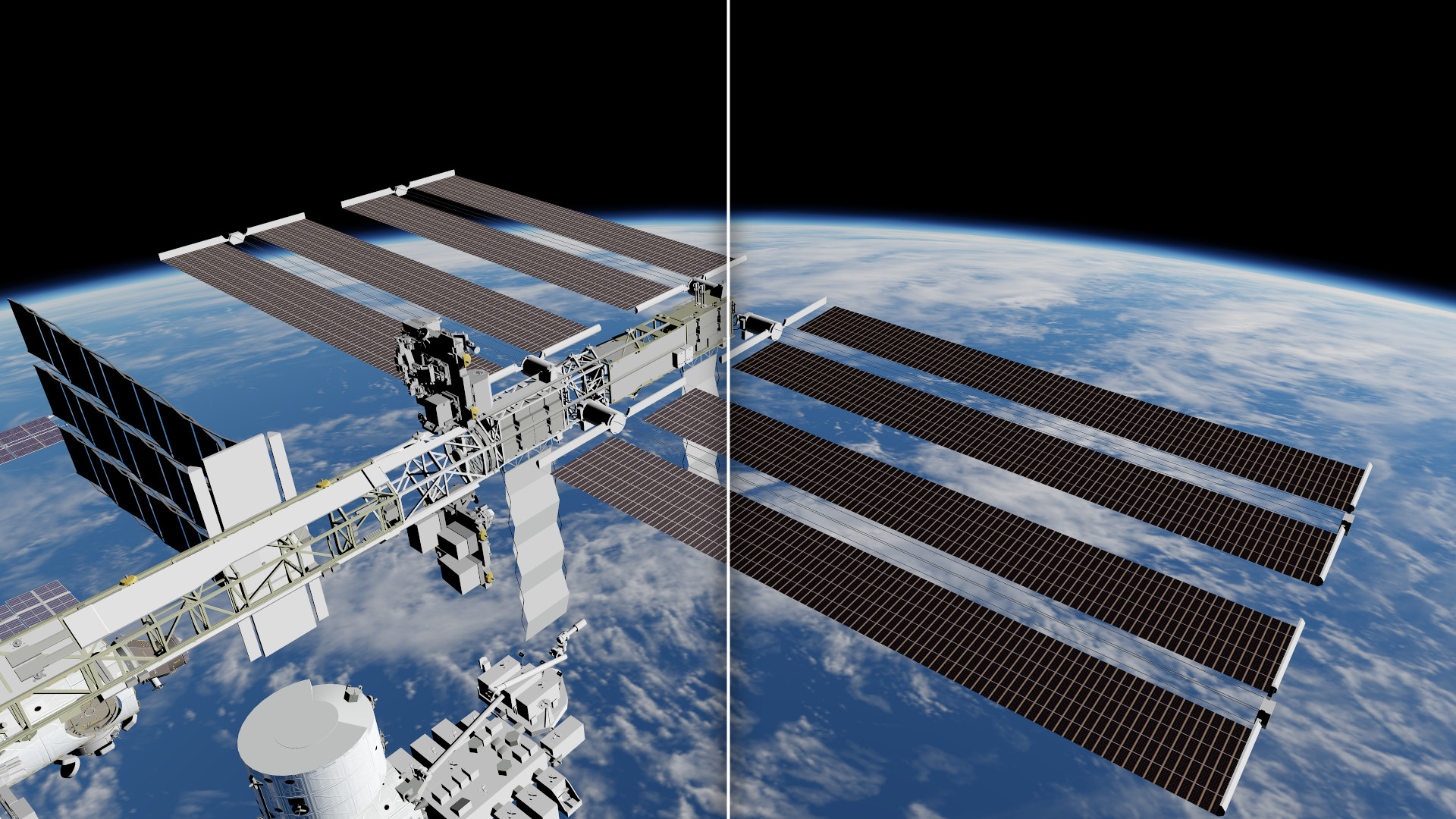 Comparison of textures without and with gamma correction. Note how the solar panels are realistically dark after gamma correction is applied (before/after on the left/right respectively).
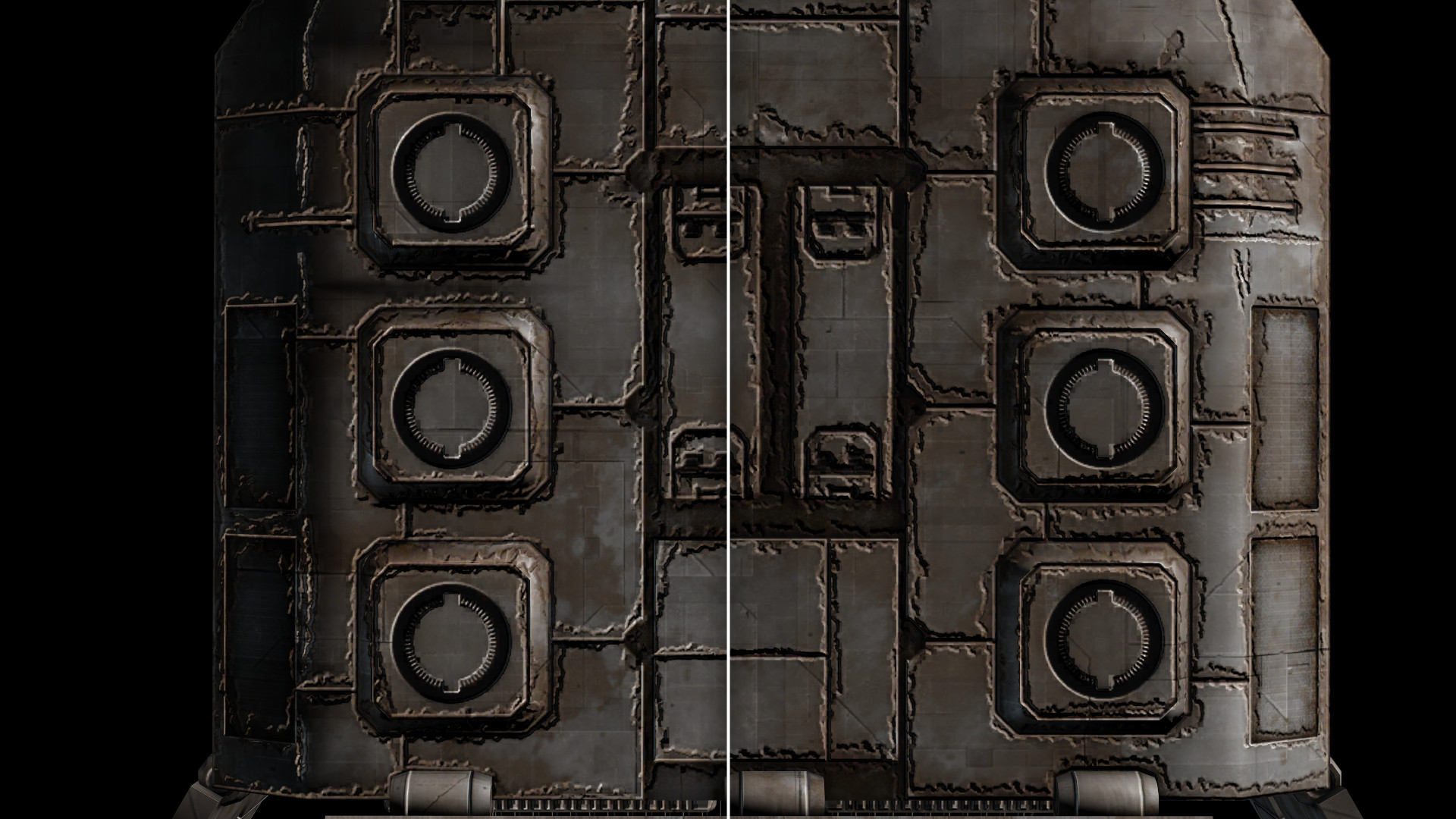 Comparison of a DirectX normal map without and with green channel inversion. Note how before conversion, the geometry is illuminated from the upper right while the normals are illuminated from the bottom right. After conversion, the lighting is consistent and correct (before/after on the left/right respectively).
[c]DiffGamma -1.0 //values less than 0 use the same sRGB to linear correction EmisGamma 1.8 //other values use a simple power gamma correction (output=input^gamma) DirectXNormMap true //converts DirectX normal maps to OpenGL by inverting the green channel[/c]
With the given values, DiffGamma will apply the sRGB > linear conversion, EmisGamma will apply a 1.8 power gamma correction, and DirectXNormMap will flip the green values of the assigned normal map.
New Catalog Addition: The First Exosatellite
An object discovered in the CD-35 2722 system by Hoy et al. (2026) has been deemed the first “planetary-mass exosatellite.” The 0.92 Jupiter mass object orbits a 31 Jupiter mass L4-type brown dwarf, which itself orbits a 0.4 solar mass M1V dwarf star. Since the planetary-mass object orbits a brown dwarf, which is neither a star nor a planet, whether this object should be labelled a planet or a moon is subject to some debate. The object has astronomers questioning taxonomy and classification in this low-mass regime. For now, the team that made this discovery labeled it an “exosatellite,” the first of its kind. While moons are a common occurrence in our own solar system, astronomers have yet to discover a true 'exomoon' in another star system. The CD-35 2722 exosatellite feels like a big step forward in the hunt for true exomoons!
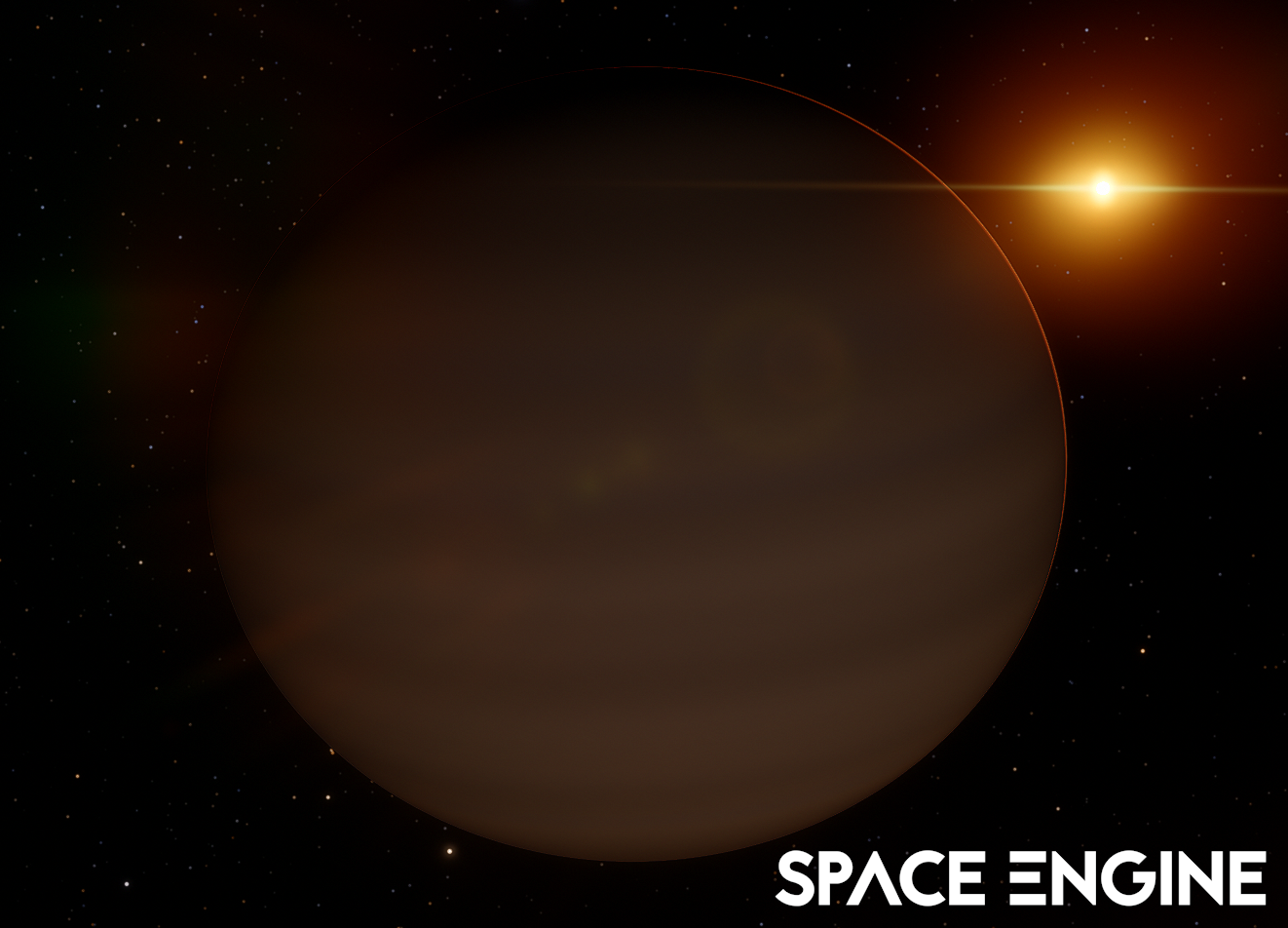 CD-35 2722 B b, as it appears in SpaceEngine, with its brown dwarf host in the background.
Star Browser Gas Giant Fix
[p align="start"]Of final note is a fix related to gas giants in the Star Browser. Previously, searching for pressure ranges that included 1.0 atm would return every gas giant in range. While this presented as a technical bug, this was actually its correct behavior! In SpaceEngine, we use the conventional astrophysics definition for the 'surface' of a gas giant: the layer where atmospheric pressure equals 1.0 atm. So the surface pressure of gas giants is always 1.0 atm, by definition. But this isn't very helpful for the Star Browser's purposes, so we fixed the interaction. The Star Browser will now ignore gas giants when searching for worlds with a surface pressure range including 1.0 atm.Changelog:
M-type brown dwarfs and L-type main sequence stars now have correct labels
Planetary mass “star” objects with spectral type M and later will now be labeled as planemos
Spacecraft materials now support gamma adjustment for Diff/Emis maps and green channel inversion for DirectX normal maps. The following parameters have been added for use in .sml files (see above for more information)
DiffGamma/EmisGamma: values greater than 0 behave as a simple power gamma adjustment, while values below 0 instead use a fixed piecewise sRGB to linear conversion
DirectXNormMap: a boolean that inverts the green channel if set to “true” (DirectX and OpenGL normal maps have flipped green values)
Fixed a bug where searching in the Star Browser for a planet with a pressure range that included 1.0 atm returned every gas giant in the search radius
Updated the CD-35 2722 system and added the newly discovered exosatellite CD-35 2722 B b
Updated Jupiter’s size and shape with the latest Juno data
Corrected Titan’s mass
Updated distance to M 99
Fixed distance, size, and orientation of Ring Nebula
Added Ring Nebula’s central star as a catalog object
Fixed distance, size, and orientation of California Nebula
Reduced luminosity of Pleiades Nebula for increased realism
Updated distance to Puppis A
Added newly published properties for The Garnet Star
Corrected orbital parameters of Mu Ara’s planets
Removed liquid ocean from Wolf 1061 c
Updated Gliese 777 system (removed extra planets, added missing d planet, updated properties for b and c planets)
Updated the exoplanet catalogs with 27 new host stars, 30 new planets, and five new brown dwarf candidates
Added 12 new binary asteroid systems, updated some binary system names
Added newly assigned name to 1999 JB80: Karolinadziadura
Catalog Additions:
Binary Asteroids:
Nysa
Nash
Korankei
Tippett
2002 TC302
2014 GX53
1999 SY8
2013 HU156
2000 AO1
2003 SD106
Harwood
1999 BG2
Brown Dwarf Candidates:
HD 16760 b
KMT-2023-BLG-0332L b
TIC 52059926 b
TIC 9344899 b
TOI-6884 b
Exoplanets:
Gliese 3378 b
HD 5388 b
TOI-3457 b
TOI-707 b
GJ 777 A d
HD 125136 b
HD 126105 b
HD 127195 b
HD 127195 c
HD 190360 d
HIP 10090 b
HIP 10090 c
HIP 39330 b
HIP 8923 b
HIP 98599 b
KMT-2023-BLG-1592L b
NGTS-38 b
OGLE-2023-BLG-0766L b
TIC 150070085 b
TOI-1533 b
TOI-1533 c
TOI-2147 b
TOI-3664 b
TOI-4034 b
TOI-6019 b
TOI-6564 b
TOI-791 b
TOI-791 c
BET Pic d
CD-35 2722 B b
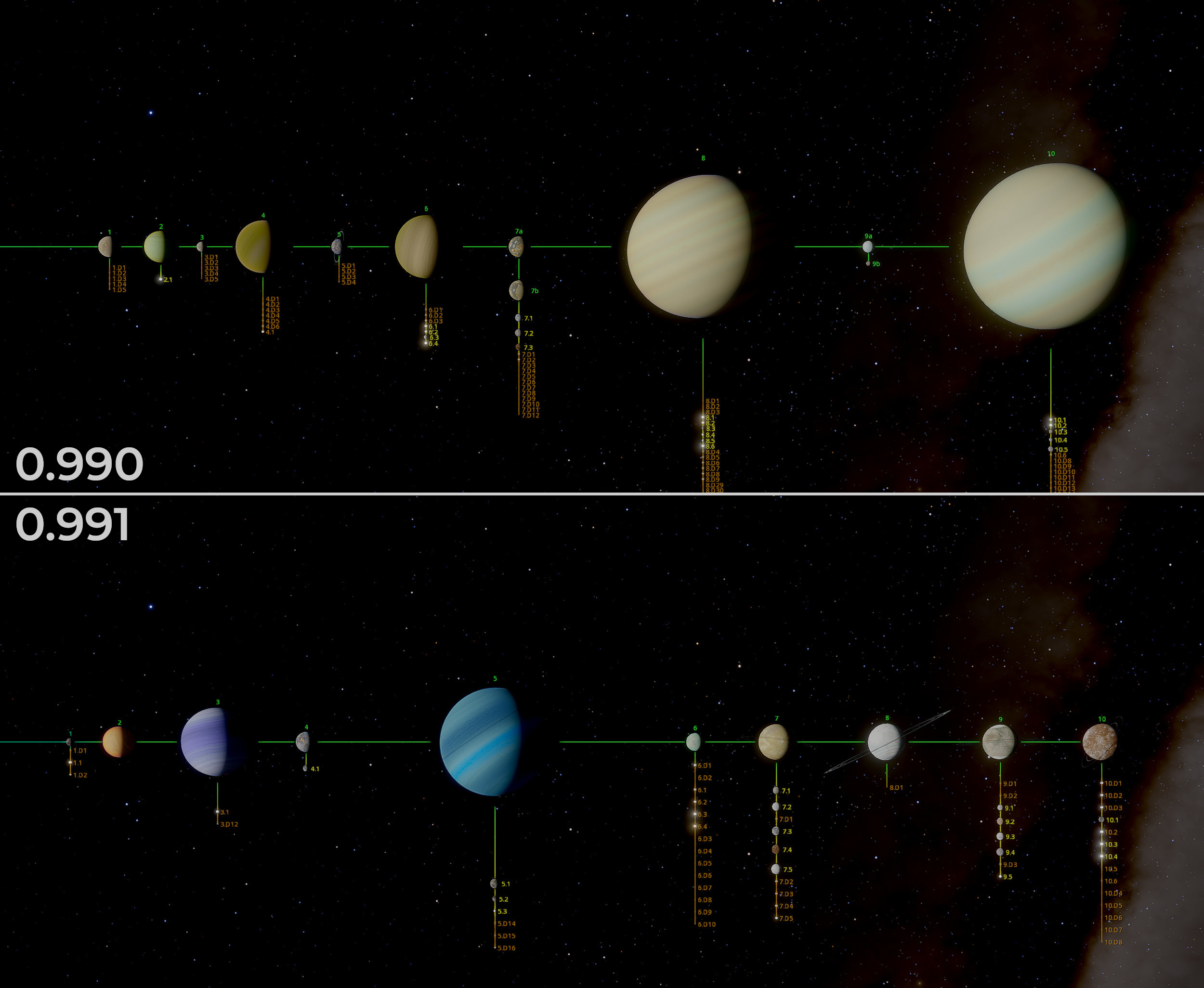 Comparison of the 'same' system between 0.990 and 0.991
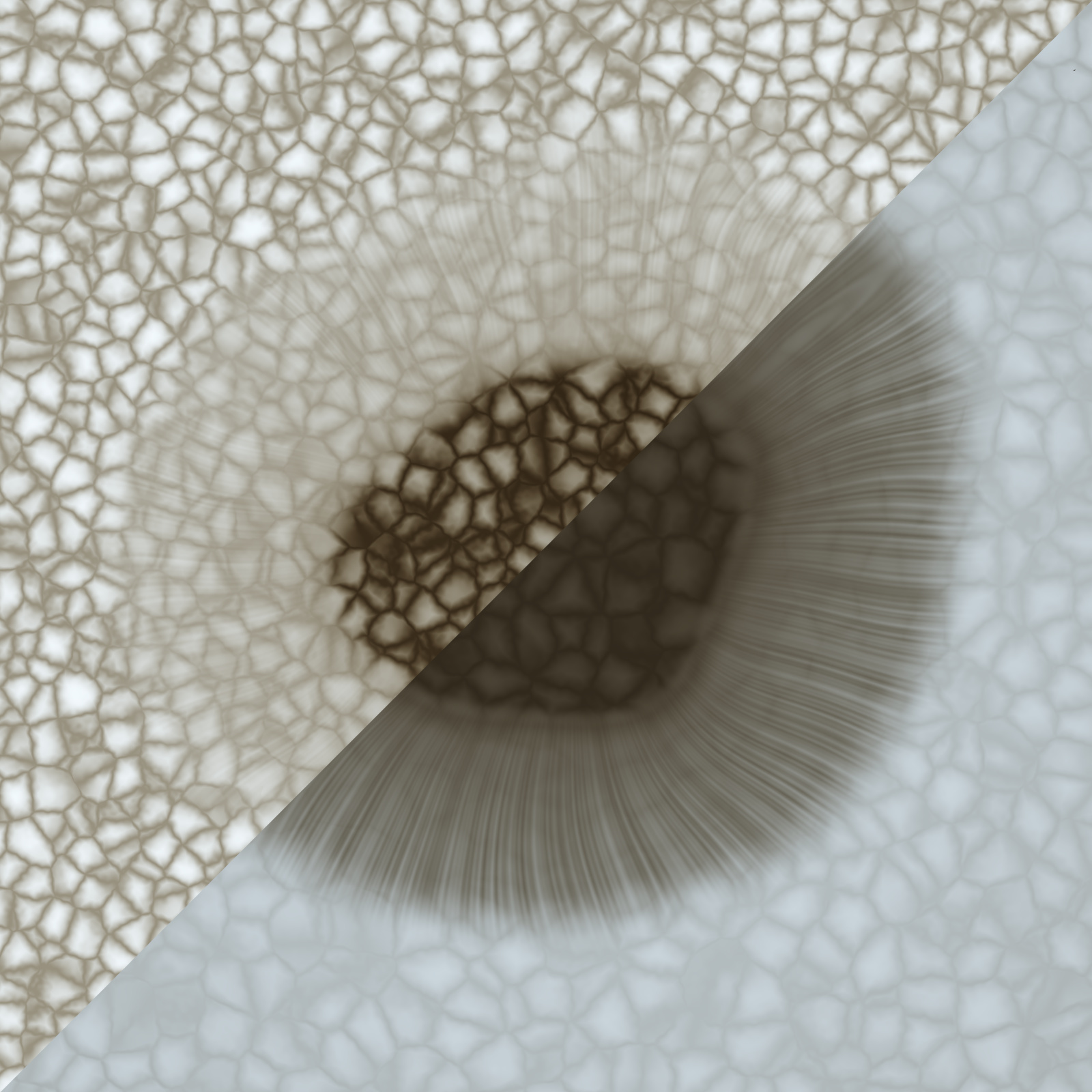 A comparison of granules and sunspots on a G2V star in 0.990 (left) and 0.991 (right).
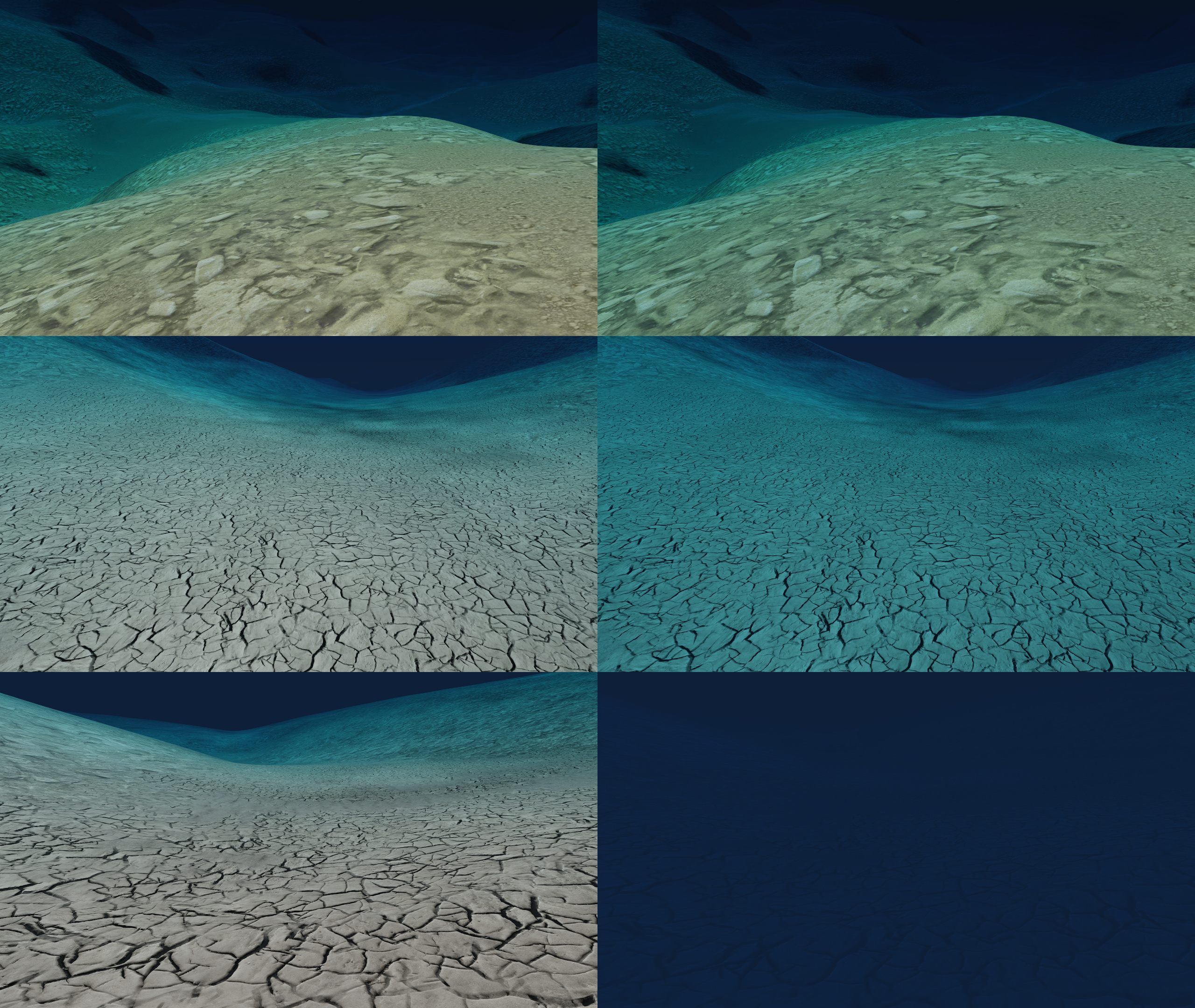 Sea floor images from a variety of depths, showing their appearance in 0.990 (left) and 0.991 (right).
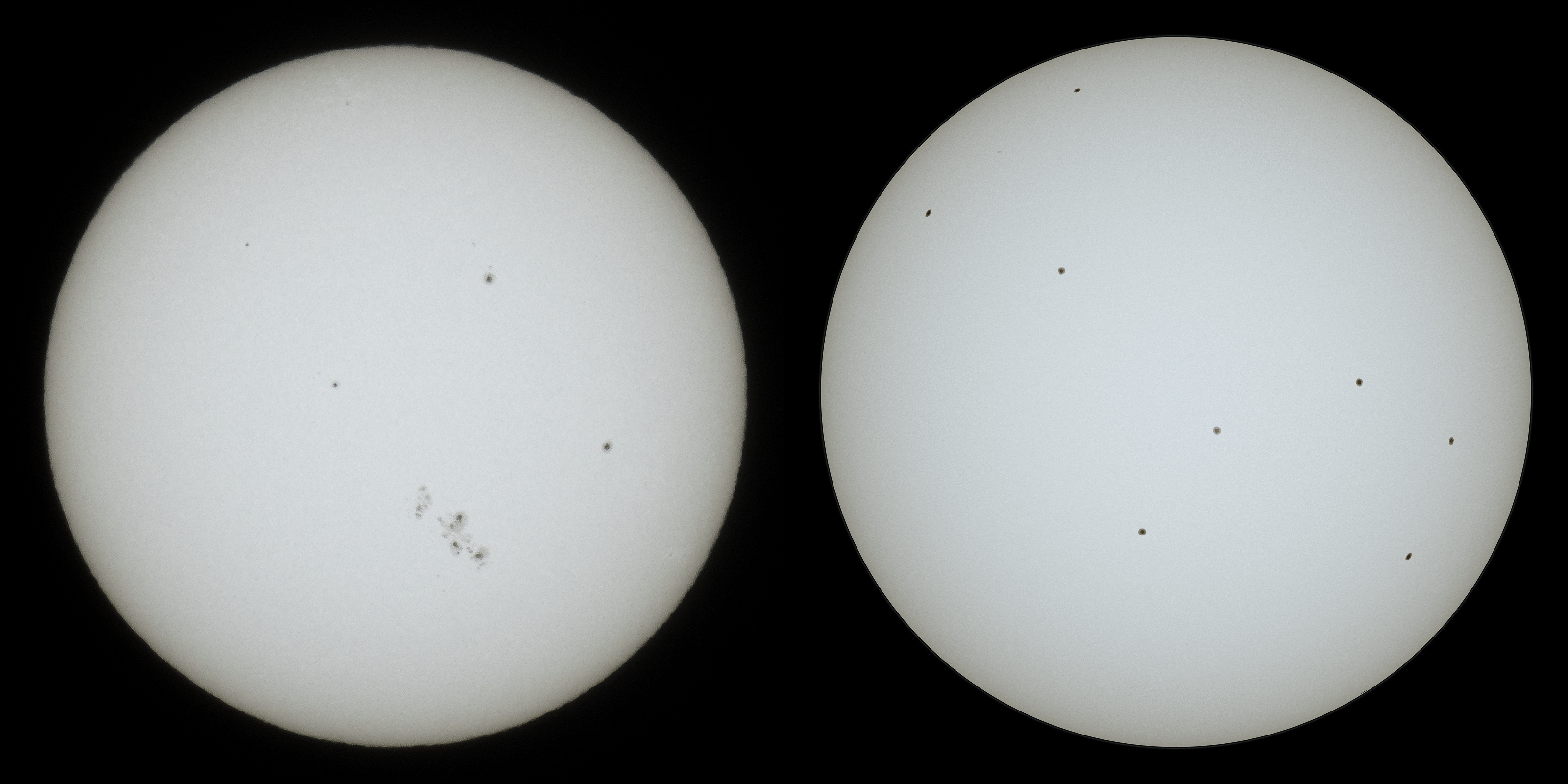 Left: A real photo of the Sun taken by one of our own team members. Right: The Sun in SpaceEngine version 0.991 with the revised granulation and sunspot temperatures.
Further updates to the accuracy of star surfaces are being worked on for future release.
Left: A real photo of the Sun taken by one of our own team members. Right: The Sun in SpaceEngine version 0.991 with the revised granulation and sunspot temperatures.
Further updates to the accuracy of star surfaces are being worked on for future release.
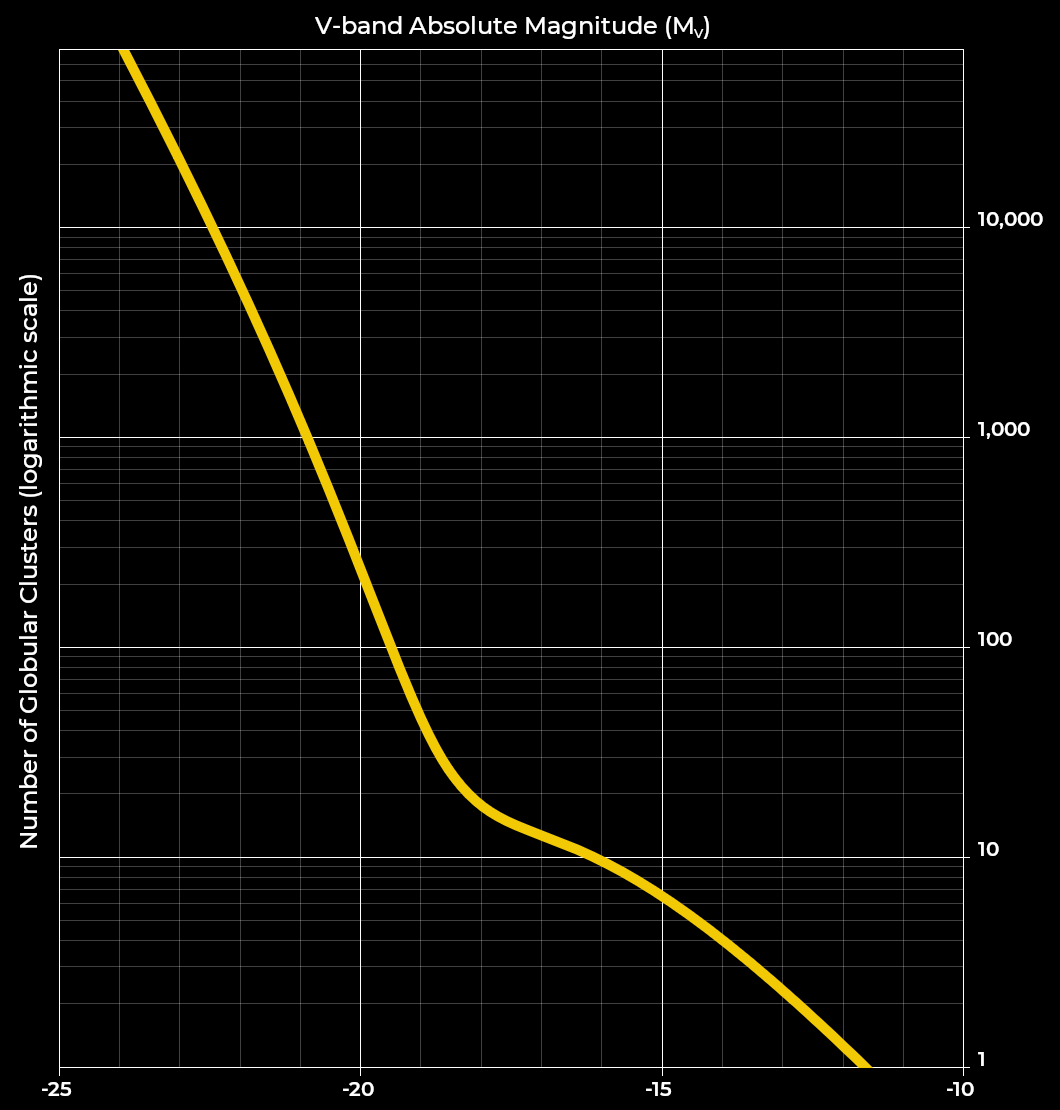 This graph shows the number of globular clusters (Y axis) that generate in elliptical galaxies in 0.991 as a function of galaxy absolute visual magnitude (X axis).
Lenticular galaxies (type S0) also have their GCS generation based on a SF relation, using a single SF value that's fairly typical of the type. The SF of spiral galaxy GCSs in nature varies based on a number of variables that are beyond what SE can accurately accommodate at present, so their GC populations scale with the square of the galaxy's radius. In all cases, this results in a more realistic number of globular clusters than in 0.990.
The generation of GC luminosities has also been significantly improved. In previous versions of SpaceEngine, GC luminosity generation used a normal distribution (i.e. a Gaussian function or bell curve) with respect to luminosity. In reality, the luminosities of a galaxy's GCs follow a normal distribution with respect to absolute magnitude. This seemingly simple change results in much more realistic and natural looking GC systems, as visible in the comparison image below.
This graph shows the number of globular clusters (Y axis) that generate in elliptical galaxies in 0.991 as a function of galaxy absolute visual magnitude (X axis).
Lenticular galaxies (type S0) also have their GCS generation based on a SF relation, using a single SF value that's fairly typical of the type. The SF of spiral galaxy GCSs in nature varies based on a number of variables that are beyond what SE can accurately accommodate at present, so their GC populations scale with the square of the galaxy's radius. In all cases, this results in a more realistic number of globular clusters than in 0.990.
The generation of GC luminosities has also been significantly improved. In previous versions of SpaceEngine, GC luminosity generation used a normal distribution (i.e. a Gaussian function or bell curve) with respect to luminosity. In reality, the luminosities of a galaxy's GCs follow a normal distribution with respect to absolute magnitude. This seemingly simple change results in much more realistic and natural looking GC systems, as visible in the comparison image below.
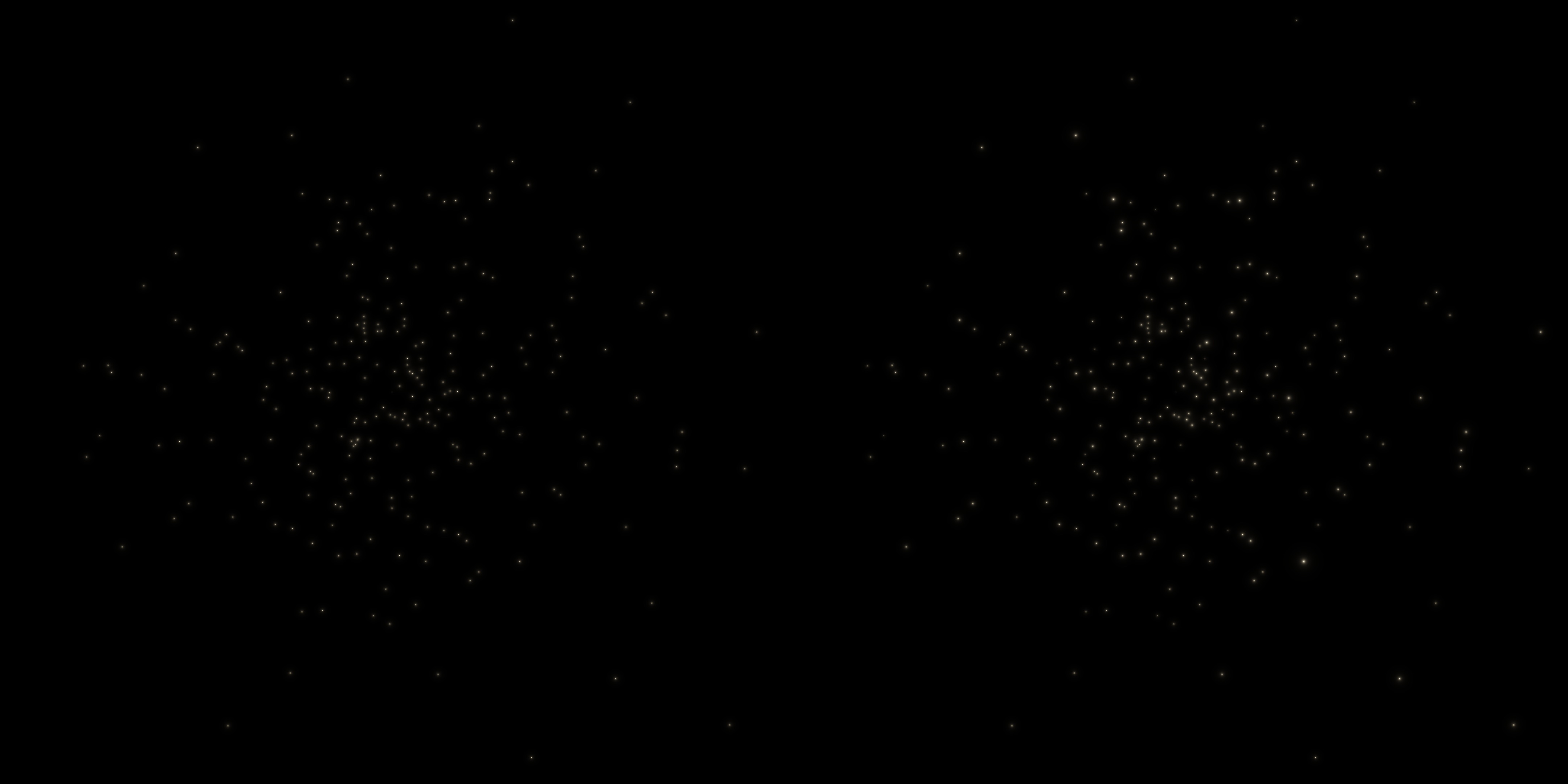 A comparison between globular cluster luminosity generation in 0.990 (left) and 0.991 (right). View the blog post
 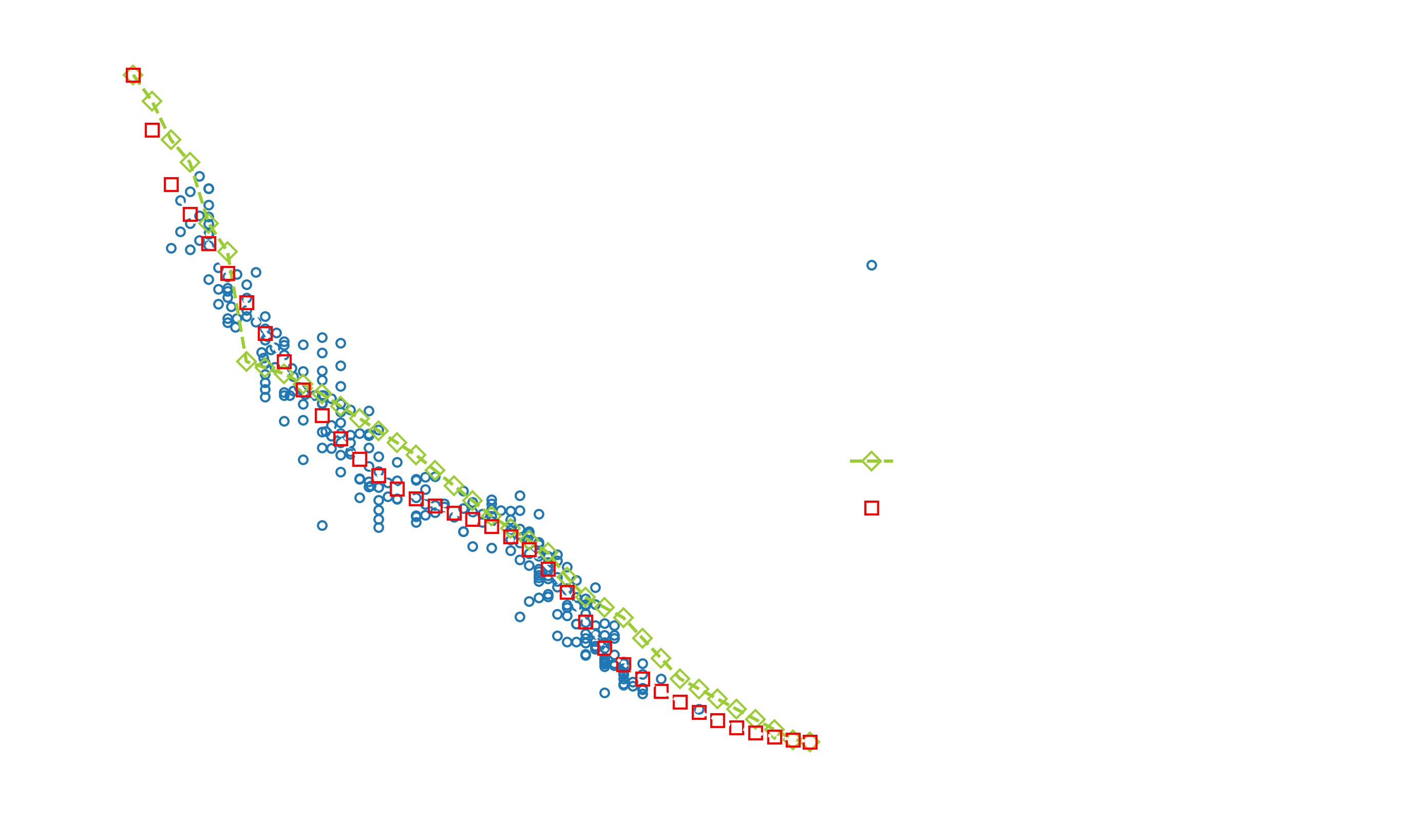 Effective temperature (T_eff ) as a function of spectral type for Ultra Cool Dwarfs. The relationship used in SpaceEngine 0.990 is shown with green diamonds, and the new relationship in 0.991 is shown with red squares. The new relationship is based on data from
 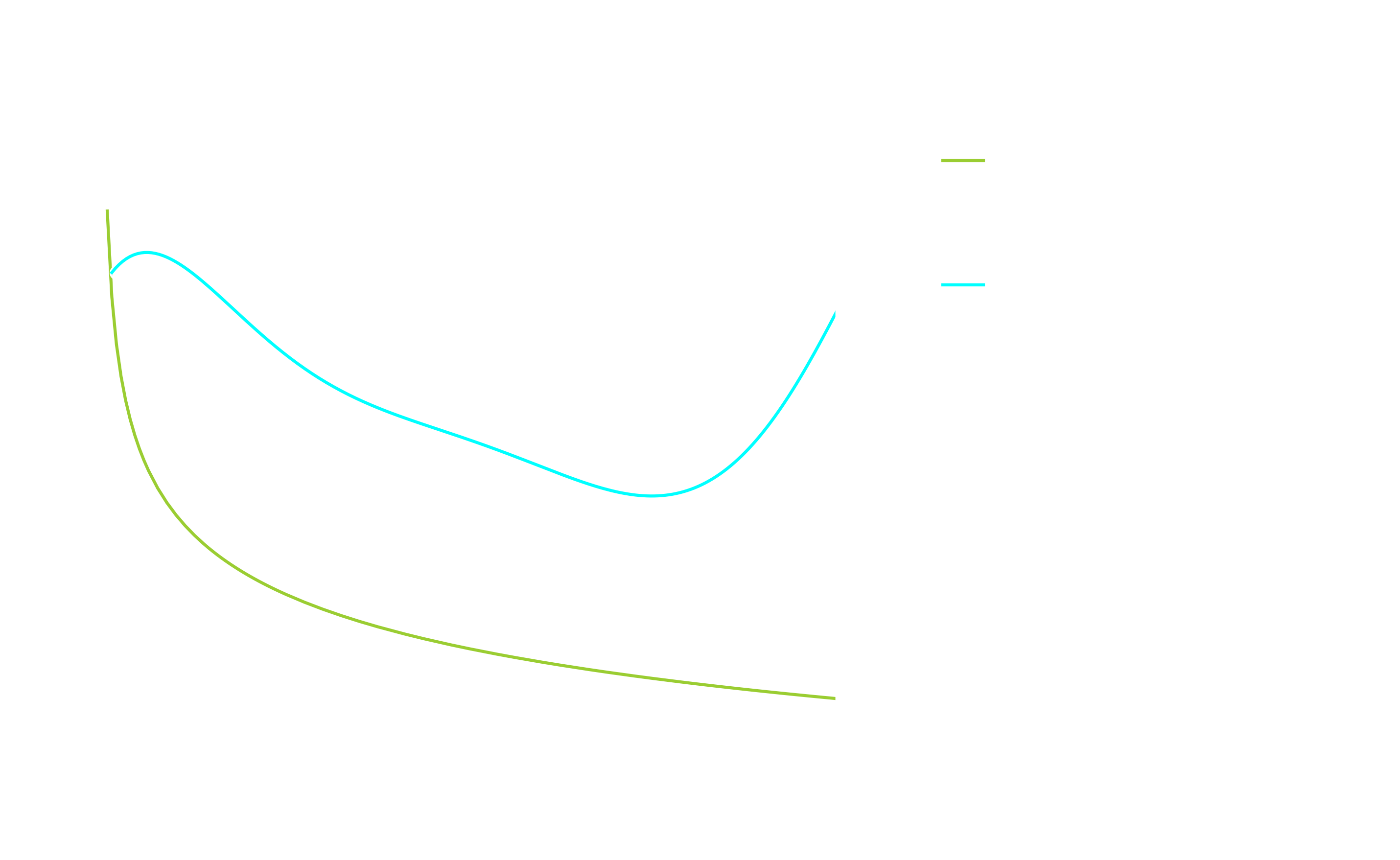 Radius as a function of mass for the typical mass range of field-age (5 Myr) brown dwarfs. The old SpaceEngine radius relationship is shown in green, and the new, revised relationship is shown in cyan. This relationship is a 6th-degree polynomial fit to data from the Sonora brown dwarf evolutionary models (